
Best Fins for Powerful Waves
Control. Hold. Confidence When It’s Firing.
When the surf turns powerful — long-period groundswell, steep faces, hollow take-offs — your fins matter more than ever.
Too small? You’ll slide.
Too upright? You’ll feel twitchy at speed.
Too flexible? You’ll lose drive when you need it most.
This guide breaks down the best surfboard fins for powerful waves, based on wave type, board style, and rider weight — so you can lock into your line with total confidence.
New to surfboard fins? Start with the complete Surfboard Fin Guides overview.
What Makes a Fin Good in Powerful Waves?
Powerful waves demand three things:
Hold – So you don’t skip out mid-face
Drive – So you generate speed without pumping
Stability at Speed – So you feel planted when it’s running
The key variables that deliver this:
What Fin Features Matter in Powerful Surf?
When waves have real power, certain fin characteristics make a big difference.
More Surface Area
Bigger fins create more grip in the water, which helps you stay stable at higher speeds and prevents sliding out on steep faces.
More Rake (Swept-Back Shape)
A fin with more sweep allows for longer, smoother, drawn-out turns — ideal when carving through powerful sections.
Stiffer Construction
Stiffer materials (like solid fiberglass) give you stronger projection and better response when pushing hard through critical sections.
Slightly Larger Overall Size
Increasing fin size in bigger surf adds control and confidence when the board is under heavy load.
In powerful waves, the goal isn’t looseness — it’s control, hold, and clean drive.
If you surf Australian reef breaks, points, or overhead beachies — this is your zone.
Best Thruster Fins for Powerful Waves
Why Thrusters Excel in Power
Thrusters are the most predictable setup when waves get serious. In powerful conditions, you want:
Larger fin template
More rake
Solid fiberglass construction
Controlled flex (not soft)
Ideal Template
Base: ~4.75"–5.0"+ (depending on weight)
Deeper tip
Swept-back outline
Eveley Recommendation
For surfers riding thrusters in solid surf, a slightly larger Pro Glass fin provides the drive and control needed when the waves have real push. Here are two dependable choices, designed to deliver strong projection and reliable hold when conditions get powerful.
These larger-area sets increase hold without making the board feel sticky.
Thruster Fin Size Guide for Powerful Waves
When the surf gets bigger and more powerful, it often helps to slightly increase your fin size for added control and hold.
Under 65kg
Everyday surf: 4.5" fins
Bigger, more powerful waves: 4.6"–4.75" fins
A small size increase adds stability without sacrificing responsiveness.
65–80kg
Everyday surf: 4.6"–4.75" fins
Step-up for power: 4.8" fins
This gives you extra hold when the waves are overhead or running fast.
80–95kg
Everyday surf: 4.8" fins
Step-up for power: 5.0" fins
Sizing up improves rail hold and confidence at higher speeds.
95kg+
Everyday surf: 5.0" fins
Step-up for powerful surf: 5.4" Big Boy fins
The added surface area keeps the board stable and controlled under heavy load.
Larger fins like Big Boy thruster fins provide extra hold in powerful surf.
Simple rule:
When the waves get bigger and more powerful, go slightly larger for more hold and confidence.
If it’s overhead and pushing — size up.
Best Quad Fins for Powerful Waves
Why Quads Shine in Power
Quads deliver:
More down-the-line speed
Strong rail hold
Excellent barrel control
In powerful waves, you want:
Large front fins
Smaller but not tiny rear trailers
Balanced foil (not overly loose)
Ideal Setup
Front: Medium–Large
Rear: 80–85% of front area
Eveley Recommendation
Twin Fins for Powerful Waves
Twins in powerful surf? Yes — if chosen correctly.
Avoid:
Tiny upright twins
Super-flex templates
Choose:
Larger surface area
Slight rake (not ultra-upright)
Optional small stabiliser
Eveley Recommendation
5.4" Twin Keels – Pro Glass
For overhead surf, pairing with a small trailer increases confidence.
Best Longboard Fins for Powerful Waves
In powerful waves, longboard fins must prioritise hold and projection.
Look For:
9"–10"+ template
More rake than pivot
Stiffer glass construction
Eveley Recommendation
These provide drawn-out control rather than twitchy pivot.
Powerful Waves by Type (What to Choose)
Hollow Beach Break
Large thruster
Raked quad
No tiny rears
Reef Break
Quad for speed and hold
Stiff glass construction
Long Point Break
Raked thruster
Larger longboard fin (if logging)
Common Mistakes in Powerful Surf
❌ Riding everyday small-wave fins
❌ Using too upright a template
❌ Going too flexible
❌ Downsizing for “looseness”
When waves have power — you want control first.
Quick Setup Guide
Powerful Wave Fin Setup Comparison
Large Thruster
Speed: High
Hold: High
Best For: Reliable all-round control in powerful surf
A larger thruster setup gives you strong hold and predictable control when the waves are solid and steep.
Quad (Large Front Fins)
Speed: Very high
Hold: High
Best For: Barrels and fast down-the-line waves
Quads with bigger front fins generate serious speed while still holding strong through hollow sections.
Twin + Trailer
Speed: High
Hold: Medium to high
Best For: Performance twin setups in punchy surf
Adding a small stabiliser to a twin increases control while keeping that fast, lively feel.
Single Fin (9–10”+)
Speed: Moderate
Hold: High
Best For: Powerful point breaks and drawn-out lines
A larger single fin offers smooth control and strong hold when trimming on bigger, running waves.
FAQ — Powerful Wave Fin Selection
Should I size up my fins in bigger surf?
Yes. If waves are overhead and powerful, increasing fin area improves control.
Are carbon fins better in heavy waves?
Stiffer constructions project well, but high-quality fiberglass (Pro Glass / Volan) provides more predictable hold.
Are quads better than thrusters in powerful surf?
Quads often feel faster and hold rail better in barrels. Thrusters offer more predictable top-turn control.
What if my board feels tracky?
You may have oversized rears or too much rake for your surfing style.
Final Takeaway
Powerful waves reward commitment — and punish poor setup.
If you want:
Rail hold at speed
Projection through long arcs
Confidence under pressure
Choose more area, more rake, more control.
When it’s solid — size up.
Classic Longboard Fin Guide
How to Choose the Right Classic Longboard Fin for Trim, Flow & Noseriding
If you ride a traditional longboard — whether it’s a 9’0” cruiser or a 10’+ log — your center fin determines how your board truly feels underfoot.
The right classic longboard fin gives you:
Smooth, drawn-out trim
Predictable rail-to-rail flow
Reliable noseride hold
Clean, stylish arcs
The wrong one makes your board feel stiff, tracky, or unstable on the nose.
This guide breaks down everything you need to know — template types, sizes, rake, flex, materials, and positioning — so you can dial in your board properly.
New to surfboard fins? Start with the complete Surfboard Fin Guides overview.
What Is a Classic Longboard Fin?
A classic longboard fin is typically:
8"–10.5"+ in depth
Designed for single fin boxes
Balanced between pivot and rake
Optimised for trim, flow and control
Unlike modern performance longboard fins, classic templates prioritise:
Glide
Rail engagement
Smooth transitions
Noseride stability
If you're riding a traditional log, stepdeck, or mid-length, this is your foundation.
The 4 Main Classic Longboard Fin Templates
1️⃣ Balanced / 4A Template (The Gold Standard)
Best for: All-round classic longboarding
Feel: Smooth, neutral, predictable
The 4A-style template is the most versatile classic design ever made. It blends moderate rake with balanced base and tip area.
What it gives you:
Stable trim
Clean cutbacks
Reliable nose control
Works in small to shoulder-high surf
Eveley Picks:
If you’re unsure what to choose — start here.
2️⃣ Pivot Template (Tighter Turning Control)
Best for: Tail control, pocket surfing
Feel: Tight, responsive, direct
Pivot fins are more upright with a wider base and less rake.
What it gives you:
Quick tail response
Tighter turns
More vertical surfing
Strong hold in steeper pockets
Trade-off: Slightly less flowing arcs than a raked template.
If your board feels too “tracky” or slow to redirect, a pivot fin will wake it up.
3️⃣ Raked / Flow Template (Drawn-Out Glide)
Best for: Smooth carves & stylish trim
Feel: Drawn-out, flowing, classic
More rake = longer turning arcs.
What it gives you:
Maximum glide
Flowing cutbacks
Classic aesthetic
Smooth rail transitions
Trade-off: Slightly less pivot in tight pockets.
For cruisy point waves and clean walls, this is pure style.
4️⃣ Logger / Noserider Template (Maximum Hold)
Best for: Dedicated noseriding
Feel: Locked-in, stable, committed
These are deeper (often 10.5"+) with significant area near the tip.
What it gives you:
Strong nose hold
Reduced tail slide
Stability in slower waves
Traditional log feel
Trade-off: Reduced manoeuvrability.
If you’re cross-stepping with intent — this is your weapon.
What Size Classic Longboard Fin Should You Choose?
General Size Guide
If your board is 8’6” to 9’0”, you’ll usually want an 8” to 9” fin.
If your board is 9’0” to 9’6”, a 9” to 10” fin is the sweet spot.
If your board is 9’6” to 10’ or longer, go with a 10” to 10.5” (or bigger) fin.
As a simple rule:
Longer board = bigger fin.
But size also depends on:
Tail width
Rider weight
Wave size
Desired looseness
Quick Rule:
Smaller fin = more manoeuvrable
Larger fin = more stable and nose-friendly
For deeper analysis, see Longboard Fin Setup Guide — Single, 2+1 & Performance Options
Fin Material: Why Pro Glass & Volan Matter
Most classic longboard fins are fiberglass.
At Eveley, we use:
Pro Glass → responsive, balanced flex
Volan Pro Glass → more traditional feel
Volan feel: Smooth, dampened, classic glide
Standard Pro Glass: Slightly more responsive
Material changes how the fin loads and releases through turns — especially noticeable in clean point waves.
Fin Placement: The Most Overlooked Adjustment
Moving your fin changes everything.
Slide Forward:
Looser feel
Quicker turns
Less nose hold
Slide Back:
More stability
Stronger nose hold
Longer arcs
Even 5–10mm makes a difference.
If your board feels wrong, adjust placement before buying another fin.
Single Fin vs 2+1 — Does It Change the Choice?
Yes.
If riding a 2+1 setup:
Smaller center fin (7"–8")
Side bites add hold and drive
More performance-oriented feel
If riding true single:
Larger center fin (9"–10.5")
Rail engagement + tail control
Maximum classic glide
For a full breakdown, read:
How to Match Fin Template to Your Surf Style
You Like:
Trim & flow → 4A or Raked
Tight pocket turns → Pivot
Cross-stepping & hang fives → Logger
All-round versatility → 4A
If you're riding classic Australian point waves, a balanced 4A-style fin is often the most versatile choice.
Common Classic Longboard Fin Mistakes
Going too small for traditional logs
Using heavy rake in beach breaks
Setting fin too far forward for noseriding
Ignoring rider weight
Correct template + correct size + correct placement = magic.
Recommended Eveley Classic Longboard Fins
For traditional glide and trim:
Each is tuned for smooth rail engagement, balanced flex and reliable nose control.
Classic Longboard Fin FAQs
What is the most versatile longboard fin?
A 9"–10" 4A-style template is the most balanced and adaptable option.
Does more rake mean more speed?
Not exactly. It means longer, smoother arcs — which can feel faster in trim.
Is a 10" fin too big for a 9’0” board?
Usually no — but it depends on tail width and rider weight.
Should beginners go bigger?
Yes. More surface area = more stability.
Does Volan make a difference?
Yes — it provides a more traditional glide feel.
Final Word
Your longboard is only as good as the fin underneath it.
If you want:
Clean trim
Controlled carves
Reliable noseriding
Classic flow
Start with the right template — then fine-tune size and placement.
When in doubt?
Go balanced. Adjust position. Refine from there.
And remember — the best longboarders don’t just ride waves.
They trim them.
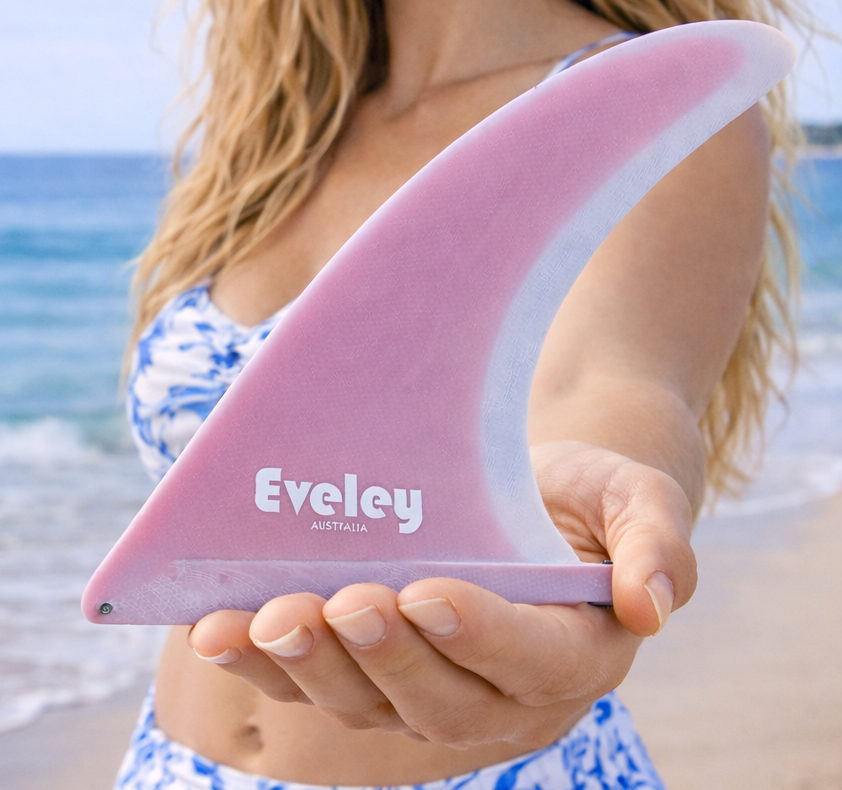
Best Fins for Small Waves — Generate Speed in Weak Surf
If your board feels slow in small waves, your fins are the problem.
Small surf doesn’t reward control.
It rewards speed, release, and projection.
Most surfers run their “good wave” fins in weak conditions — and wonder why their board feels dead.
This guide explains exactly:
What fin templates work in small waves
When to switch from thruster to quad
Why twins feel faster
How fin size affects speed
Which Eveley fins are built for weak Australian beach breaks
New to surfboard fins? Start with the complete Surfboard Fin Guides overview.
If you want more speed when there is none — read on.
Why Small Waves Feel Sluggish
Weak waves lack:
Steep face angles
Natural pocket energy
Strong water flow over the fins
If your fins create too much hold or drag, the board simply won’t accelerate.
In small surf, the goal is:
✔ Reduce drag
✔ Increase projection
✔ Maintain flow
✔ Improve release
Control comes second.
The 5 Rules of Small Wave Fin Setup
This is where most brand guides stop. We won’t.
1️⃣ Slightly Smaller Fins = Immediate Speed
Large fins create stability — but also resistance.
In weak surf:
Drop half a size
Or use a slightly reduced base template
For example:
→ 4.5" Progressive Thruster Fins – Pro Glass
Excellent for lighter surfers or groveller boards in weak beach breaks.
Smaller fins free the tail and increase acceleration.
2️⃣ Rake Generates Speed Through Flat Sections
More rake = longer turning arc = more projection.
Upright templates pivot well but can feel sticky in soft waves.
For clean down-the-line speed:
→ 4.45" Raked Thruster Fins
Designed for flow and drive in softer surf.
This is one of the most overlooked small-wave adjustments.
3️⃣ Quad Setups Are Often Faster Than Thrusters
Removing the centre fin reduces drag.
That alone increases speed.
Quads:
Accelerate faster
Hold through flat sections
Feel looser off the bottom
Strong small-wave option:
→ 4.6" / 4.2" Classic Quad Fins – Natural Pro Glass
For heavier surfers or wider boards:
→ 5.2" / 4.35" Big Boy Quads – Black Pro Glass
In weak Australian beach breaks, quads often outperform thrusters.
4️⃣ Twin Fins = Maximum Glide
If pure speed is your goal — twins win.
Less drag.
Less resistance.
More freedom.
Drive-focused twin:
→ 5.4" Twin Keels – Midnight Purple Pro Glass
More responsive modern twin:
→ 5.7" Upright Twin Fins – Natural Pro Glass
In knee-to-waist high surf, twins are often the fastest option available.
5️⃣ Flex Matters More Than You Think
Overly stiff fins feel dead in weak waves.
Balanced Pro Glass construction gives:
Controlled flex
Energy storage through turns
Clean rebound
This helps maintain speed when the wave doesn’t provide it.
Carbon-only fins can feel too rigid in soft surf.
Thruster vs Quad vs Twin in Small Waves
Which Setup Is Fastest in Small Waves?
🔹 Thruster — Controlled Speed
Feel: Stable and predictable
Speed: Good
Best for: Everyday small surf
A thruster is your dependable option. It won’t feel lightning-fast, but it gives you confidence through turns and holds when the wave gets steeper. If you want reliability over looseness, this is your baseline setup.
🔹 Quad — Noticeably Faster
Feel: Quick and drivey
Speed: High
Best for: Down-the-line speed in weak waves
Remove the center fin and the board immediately feels freer. Quads accelerate faster and carry speed through flat sections — exactly what weak surf demands. If your board feels sticky in small waves, this is often the fix.
Popular Quad Fin Setup: 4.3" / 3.8" Freedom Quad Fins – Natural Pro Glass | Futures Compatible
🔹 Twin — Fastest & Most Playful
Feel: Loose, skatey, flowing
Speed: Maximum
Best for: Pure glide and fun sessions
Nothing feels faster in weak surf than a twin. Less drag. More freedom. More glide. It turns small waves into something worth surfing — but with less control than a thruster.
The Simple Rule
If the waves lack power:
Twin for maximum speed
Quad for balanced speed + control
Thruster for stability
Small waves reward speed — not resistance.
Small Wave Fin Size Guide (Practical Version)
Under 65kg → Small / reduced template
65–80kg → Medium but raked
80kg+ → Drive-oriented quad or standard size
If your board feels sticky — size down before sizing up.
The Biggest Small-Wave Mistake
Running high-hold, large-base fins designed for overhead surf.
Small waves require adjustment.
Your board isn’t slow.
Your fin setup probably is.
Best Fins for Small Waves — Quick Picks
For everyday weak beach breaks:
• Raked medium thruster
• Balanced quad setup
For groveller boards:
• Smaller thruster
• Upright twin
For pure glide and fun:
• Twin keel setup
FAQs
What are the best fins for small waves?
Smaller, slightly raked thrusters — or quad/twin setups — generate the most speed in weak surf.
Should I use a quad in small waves?
Often yes. Removing the center fin reduces drag and increases acceleration.
Are twin fins better in weak waves?
For speed and glide — absolutely. For control — less so.
Should I size down my fins?
If you’re between sizes, yes. Small waves reward looseness.
What material works best?
Balanced fiberglass construction (like Pro Glass) maintains speed better than overly stiff carbon in weak conditions.
Why Eveley Small Wave Fins Work in Australian Conditions
Australian beach breaks are:
Often soft
Frequently underpowered
Rarely perfect
Eveley templates are designed around:
Real-world everyday surf
Balanced flex
Practical sizing
Performance without stiffness
They are not pro-tour only templates.
They’re built for real sessions.
Small wave sessions often mean longer time in the water, so comfortable gear makes a difference. Lightweight board shorts help you stay comfortable while paddling and moving around the board.
The Tropical Print Board Shorts – Lightweight Surf & Swim Wear are designed for all-day surf comfort.
Final Takeaway
In small waves:
Speed > Control.
If the surf lacks power, your fins shouldn’t add resistance.
Change your fin setup — and your board will feel like a different shape.
Twin Fin vs Thruster — Speed vs Control
New to surfboard fins? Start with the Beginner’s Guide to Surfboard Fins – Types, Sizes & Setups Explained for a simple introduction to fin types and sizing.
Which Setup Actually Suits Your Surfing?
Every surfer eventually asks it:
Should I ride a twin fin… or stick with a thruster?
The short answer?
Twin = speed, glide, flow
Thruster = control, predictability, vertical attack
But that’s only half the story.
The real difference lies in how water exits the tail — and how you generate drive.
New to surfboard fins? Start with the complete Surfboard Fin Guides overview.
Let’s break it down properly.
What Is a Twin Fin?
A twin fin setup uses:
• Two side fins
• No center fin
That missing center fin changes everything.
Without it:
Drag is reduced
Water exits cleaner
The tail releases faster
Speed builds earlier
If you want maximum glide, start with a performance-balanced twin like:
👉 5.5" Power Twin Fins – Pro Glass (FCS II Compatible)
5.5" Power Twin Fins – Natural Pro Glass | Futures™ Compatible Twin Fin Set
Or for classic fish drive:
👉 5.4" Twin Keels – Pro Glass (Futures Compatible)
Twins reward smooth rail surfing.
They don’t like hesitation.
What Is a Thruster?
A thruster uses:
• Two side fins
• One centre fin
The centre fin acts as a pivot point.
It stabilises the tail.
It adds control.
It makes vertical surfing easier.
A balanced template like:
👉 4.5" Classic Thruster Fins – Pro Glass (FCS Compatible)
is designed for predictability in pocket surfing and punchy beach breaks.
Why Twin Fins Feel Faster
Three reasons:
1️⃣ Reduced Drag
No center fin = less turbulence.
2️⃣ Earlier Acceleration
Twins generate speed high on the face quickly.
3️⃣ Rail-Based Drive
Speed comes from engaged rail, not tail pivot.
Twins feel alive.
They encourage flow.
Why Thrusters Feel More Controlled
The centre fin:
Prevents over-rotation
Adds hold at high load
Stabilises tight pocket turns
Makes recovery easier
If your style is vertical, tight, and aggressive — thrusters offer forgiveness.
Speed vs Control in Real Waves
Small, Clean Waves
Twin advantage.
They generate speed where thrusters feel sticky.
Punchy Beach Breaks
Thruster advantage.
Control matters in shifting peaks.
Long Point Break Walls
Twin advantage.
Drawn-out arcs feel effortless.
Heavy Hollow Surf
Thruster advantage.
Centre fin adds stability under pressure.
Twin vs Thruster Turning Feel
TwinThrusterDrawn-out arcsTight pivot turnsRail-drivenTail pivot-drivenFlow surfingAttack surfingGlide focusControl focus
If you like carving lines → twin.
If you like hitting lips vertically → thruster.
The Hidden Middle Ground: Twinzer
Love twin speed but want more hold?
A Twinzer setup adds small forward canards to improve water flow and control.
Start with:
👉 3.25" Twinzer Canard Fins – Natural Pro Glass (FCS Compatible)
Twinzer gives you twin freedom with added projection.
It sits between twin and quad in feel.
Who Should Ride a Twin?
✔ Surfers prioritising speed
✔ Flow-style riders
✔ Fish board owners
✔ Intermediate surfers building rail control
✔ Clean point break surfers
Who Should Ride a Thruster?
✔ Vertical pocket surfers
✔ Competition-style riders
✔ Heavy beach break regulars
✔ Surfers wanting predictability
Designed for Australian Conditions
Australian waves demand adaptability.
Beach breaks require control.
Points reward speed.
That’s why many surfers own both.
Twins for clean days.
Thrusters for power days.
Common Myths
Myth: Twins can’t turn vertically.
→ Incorrect. Template and technique matter.
Myth: Thrusters are slower.
→ Not necessarily — they just generate speed differently.
Myth: Twins are only for retro boards.
→ Modern performance twins are highly refined.
How to Choose
Ask yourself:
Do I want:
Immediate speed and glide? → Twin
Predictable control under pressure? → Thruster
If unsure, start with:
👉 5.5" Power Twin Fins
or
👉 4.5" Classic Thruster Fins
Test both.
Your style will decide.
Final Takeaway
This isn’t about which setup is “better.”
It’s about which suits:
Your waves
Your board
Your approach
Twin = freedom and flow.
Thruster = structure and control.
Choose the tool that amplifies your style.
Futures™ is a registered trademark of Futures Fins. Eveley Surf is not affiliated with or endorsed by Futures Fins. All compatibility references are for descriptive purposes only.
All the Eveley Twin Fins
All the Eveley Keel Fins
All the Eveley Thruster Fins
Twinzer Fins Explained
Why Twinzers Feel Faster, Smoother — and More Controlled Than Standard Twins
Twins are fast.
Quads are controlled.
Thrusters are predictable.
But Twinzer setups?
They sit in the sweet spot between glide and grip.
If you love twin speed but want more projection and rail hold, start with the right canards:
👉 3.25" Twinzer Canard Fins – Natural Pro Glass (FCS Compatible)
New to surfboard fins? Start with the complete Surfboard Fin Guides overview.
What Is a Twinzer Setup?
A Twinzer uses:
• Two main twin fins
• Two smaller forward canard fins
The canards pre-condition water flow before it reaches the rear twins.
If you're building or tuning a modern performance twin, pair your canards with:
👉 5.5" Power Twin Fins – Pro Glass (FCS II Compatible)
or
👉 5.4" Twin Keels – Pro Glass (Futures Compatible)
The rear twin template dramatically affects how the Twinzer feels.
How Twinzer Fins Actually Work
Twinzers:
Reduce turbulence
Increase lift efficiency
Improve projection
Maintain glide
For surfers currently riding a traditional twin setup like:
👉 Upright Twin Fins – Natural Pro Glass
Adding canards transforms the board’s hold without losing freedom.
Twinzer vs Standard Twin
If you’re currently riding:
and feeling occasional slide at high speed, Twinzer canards add rail security without introducing centre-fin drag.
Twinzer vs Quad
If you're debating between a quad and a Twinzer, read:
👉 Quad vs Thruster — Which Fin Setup Is Faster?
Then compare with a quad set like:
👉 Classic Quad Fins – Natural Pro Glass (FCS Compatible)
Twinzers feel more fluid.
Quads feel more planted.
How to Tune a Twinzer Setup
Small changes matter.
To increase projection:
Use larger rear twins like the Power Twin
To loosen feel:
Reduce canard size slightly
To maximise hold:
Increase rear rake
If you’re unsure where to start:
👉 How to Choose the Right Fin Size for Your Board
Designed for Australian Conditions
Fast beach breaks reward:
Early speed generation
Rail control
Clean projection
Twinzers excel here — especially when paired with:
👉 Power Twin Fins – Pro Glass Series
When Not to Use a Twinzer
If your style is tight vertical snaps, you may prefer:
👉 4.5" Classic Thruster Fins – Pro Glass
Different tools. Different feel.
Final Takeaway
Twinzers are engineered flow systems.
Pair the right canards with the right twin template, and you unlock:
More speed
More projection
More hold
Smoother transitions
Start here:
👉 3.25" Twinzer Canard Fins – Natural Pro Glass
Futures™ is a registered trademark of Futures Fins. Eveley Surf is not affiliated with or endorsed by Futures Fins. All compatibility references are for descriptive purposes only.
Quad Fin Setup and Performance Explained
The Real Reason Quads Feel Faster (And When They Don’t)
New to surfboard fins? Start with the complete Surfboard Fin Guides overview.
If you’ve ever felt a board suddenly come alive down the line, hold a rail at high speed, or accelerate without pumping — chances are you were riding a quad setup.
But quad performance isn’t magic.
It’s geometry.
And the biggest factor most surfers misunderstand?
Fin placement.
This guide breaks down exactly how quad fins work, how placement changes speed and control, and how to tune your setup for Australian conditions.
Quick Answer: What Does Quad Fin Placement Actually Change?
Quad fin placement directly affects:
Down-the-line speed
Rail hold at high velocity
Pivot vs drive balance
Release timing
Tail sensitivity
How the board feels in hollow vs open-face waves
Move the rears back → more hold + drive
Move them forward → more release + pivot
It’s that simple.
And that important.
How Quad Fins Work (Compared to Thrusters)
A quad removes the center fin and replaces it with two rear fins.
This creates:
• Less drag (no center fin turbulence)
• Cleaner water flow off the tail
• More rail-to-rail acceleration
• Stronger hold on the engaged rail
Without the center fin acting as a brake, water exits straighter and faster.
That’s why quads feel quicker.
But that speed depends entirely on where those rear fins sit.
The 4 Critical Quad Placement Variables
1. Front Fin Placement (Lead Fins)
These control:
Initial drive
Entry into turns
Rail engagement
More forward → looser feel
Further back → stronger drive off bottom turns
Most modern shortboards place fronts between 10.75"–11.5" from tail.
2. Rear Fin Distance From Tail
This is the most misunderstood variable.
Rear fins placed:
• Further back (closer to tail)
Maximum hold
Stronger projection
Better in hollow waves
• Further forward
Looser feel
Faster direction changes
More skatey
For powerful Australian beach breaks, slightly further back rear placement improves control in punchy surf.
3. Rear Fin “Spread” (Distance From Front Fins)
The closer the rears sit to the fronts:
More pivot
More thruster-like feel
The further apart they are:
More drive
More drawn-out arcs
Greater hold at speed
Wide spread = high-line speed machine
Tighter cluster = performance feel
4. Toe-In and Cant
These subtle angles change everything.
More toe-in:
Tighter turning radius
More responsiveness
Slightly more drag
Less toe-in:
Straighter projection
Maximum speed
Cleaner down-the-line flow
High-performance quads often use:
Slightly less toe on rear fins
Slightly less cant on rears than fronts
This keeps speed high while maintaining control.
Why Quads Feel Faster
Three reasons:
1. No Center Fin Drag
The middle fin on a thruster disrupts clean water exit. Removing it reduces turbulence.
2. Rail-Based Drive
Quads generate speed from the rail engaged fins — not the tail pivot.
3. Straighter Water Exit
Water flows between the fins and off the tail faster.
Less resistance = more speed.
When Quad Placement Goes Wrong
A quad can feel:
• Tracky
• Stiff
• Hard to pivot
• Or unpredictable
Usually because:
Rear fins too far back (too much hold)
Rear fins too large
Too much toe
Too much cant
Placement errors are often blamed on the fin template — when geometry is the real issue.
Quad Setups for Different Board Types
Shortboards (Performance)
Balanced front template
Smaller rears
Moderate spread
Slightly reduced rear cant
Goal: Speed without losing vertical attack capability.
Fish & Twin-Plus-Quad Hybrids
Larger fronts
Small, upright rears
Wider rear spread
Goal: Maximum drive with release on demand.
Step-Ups & Hollow Waves
Rears slightly further back
Reduced toe
Stronger hold profile
Goal: Rail control at high velocity.
Quad vs Thruster Placement Philosophy
A thruster uses the centre fin to control how the board pivots. That middle fin acts like a steering point, making turns feel predictable and controlled. This is why thrusters are generally better for tight, vertical surfing in the pocket.
A quad doesn’t have a centre fin. Instead, the two fins near the rails create drive and speed. Because there’s less drag through the middle of the tail, quads accelerate faster down the line and feel quicker on open faces. The trade-off is that they pivot differently — they rely more on rail engagement than a central turning point.
In simple terms:
Thruster = tighter, more predictable vertical turns. Thrusters suit tight pocket surfing.
Quad = more speed and faster rail-to-rail acceleration. Quads reward clean lines and projection.
How to Tune Your Quad Without Moving Boxes
You can simulate placement adjustments by:
• Increasing rear fin size → more hold (like moving back)
• Decreasing rear size → more release (like moving forward)
• Upright rear template → pivot feel
• Raked rear template → drive feel
Template + size effectively mimic placement shifts.
Designed for Australian Conditions
Beach breaks here demand:
Speed between sections
Rail hold in punchy walls
Control in shifting peaks
Quads excel when tuned correctly.
The wrong setup feels stiff.
The right setup feels unstoppable.
Common Myths About Quad Placement
Myth 1: Quads don’t turn vertically
→ Incorrect. Placement + rear sizing determines vertical capability.
Myth 2: All quads are faster than thrusters
→ Only when rear placement is optimised.
Myth 3: Bigger rear fins always mean more control
→ Too big kills responsiveness.
FAQs: Quad Fin Placement
Are quad rears supposed to be smaller?
Usually yes — they fine-tune hold without overpowering the front drive fins.
Can I run equal-sized quads?
Yes, but expect more hold and less pivot.
Do quads work in small waves?
Absolutely — especially on wider-tailed boards.
Why does my quad feel stiff?
Likely rear fins too large or too far back.
Final Takeaway
Quad performance isn’t just about “four fins.”
It’s about:
Rear distance from tail
Spread from front fins
Toe-in
Cant
Template pairing
Get placement right and a quad becomes:
Fast. Controlled. Predictable. Explosive.
Get it wrong and it feels like a different board.
Popular Quad Fin Setups
4.3" / 3.8" Freedom Quad Fins – Natural Pro Glass | Futures Compatible
Eveley Quad Fins
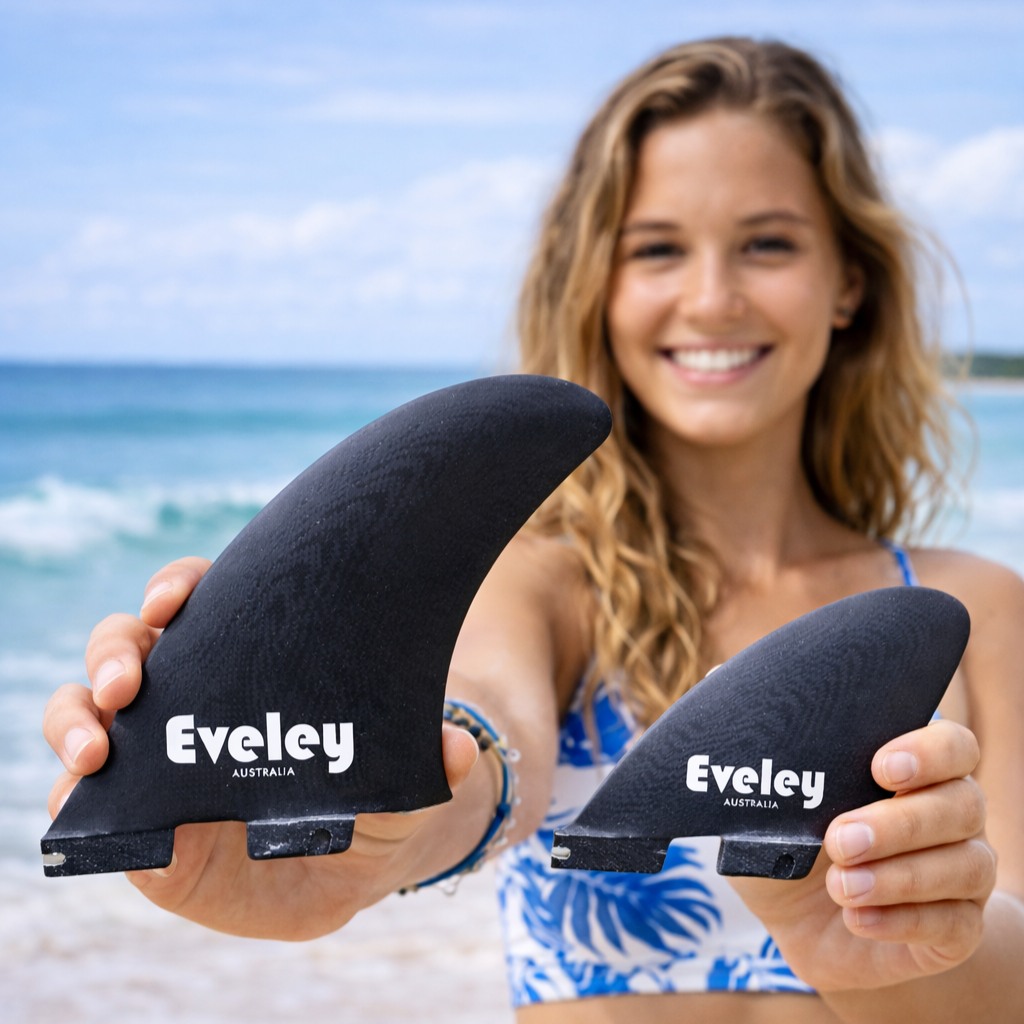
Thruster Fin Size Chart (Quick Guide)
This Thruster Fin Size Guide is a quick reference for choosing the right fin size based on surfer weight.
New to surfboard fins? Start with the complete Surfboard Fin Guides overview.
If you want a deeper explanation of how fin size affects performance, read the full
Thruster Fin Size Guide — How to Choose the Right Size for Maximum Performance
Most surfers ride thruster fins between 4.4" and 5.0", with the correct size depending primarily on surfer weight.
Use the chart below to find your ideal size.
Thruster Fin Size Chart (By Surfer Weight)
If you weigh under 55kg, you’ll generally suit an Extra Small (XS) thruster set. These fins are usually around 4.3 inches tall.
If you’re between 55–65kg, go with a Small (S) set. These are typically about 4.4 to 4.5 inches tall.
If you weigh 65–75kg, a Medium (M) thruster is the standard choice. Expect fins around 4.6 to 4.7 inches tall.
If you’re 75–90kg, you’ll usually need a Large (L) set. These are generally 4.75 to 5.0 inches tall.
If you’re over 90kg, look at Extra Large (XL) thrusters, which are typically 5.0 inches or bigger.
In short, your body weight determines the fin size first. The inch measurement refers to the height of the side fins, which directly affects hold and control.
This applies whether you're using:
FCS style dual tab
Futures single tab
Glass-on thrusters
How Thruster Fin Size Affects Performance
Smaller thruster fins provide:
Faster release
Less drag
Quicker turns
Larger thruster fins provide:
More hold
Stronger drive
Greater control
Correct fin size gives the best balance between speed and control.
Recommended Thruster Fin Sizes
These Eveley Pro Glass thruster sets match the size ranges in the chart above.
Small to Medium Riders
• 4.5" Thruster Fins – Pro Glass
Balanced control and predictable turning.
Medium Riders
• 4.75" Performance Thruster Fins – Pro Glass
A dependable all-round thruster size offering drive and clean projection.
Large Riders
• 5.4" Big Boy Thruster Fins – Pro Glass
Extra hold and control for larger surfers.
For an overview of thruster fins see the Thruster Fins Explained guide.
Eveley Thruster Fins
Futures™ is a registered trademark of Futures Fins. Eveley Surf is not affiliated with or endorsed by Futures Fins. All compatibility references to Futures Fins are for descriptive purposes only.
Thruster Fin Size Guide — How to Choose the Right Size for Maximum Performance
New to surfboard fins? Start with the complete Surfboard Fin Guides overview.
Fin size is the single biggest factor in how your thruster setup feels.
Too small? The board slides and lacks drive.
Too big? It feels stiff and slow to release.
If your board has ever felt “almost right” but not perfect, fin size is usually the reason.
This guide explains exactly how to choose the correct thruster fin size based on weight, board type, and wave conditions.
Why Thruster Fin Size Matters More Than Template
Template changes how a board turns.
Size changes how it performs.
Fin height and surface area control:
Hold
Drive
Speed through turns
Release
Stability at speed
The wrong size creates constant micro-adjustments in your surfing.
The right size disappears beneath you.
Thruster Fin Size by Surfer Weight
Your body weight is the starting point.
Here’s the proven sizing range for front thruster fins:
Under 55 kg: 4.25" – 4.5"
55–70 kg: 4.5" – 4.7"
70–85 kg: 4.7" – 5.0"
85–100 kg: 5.0" – 5.3"
100 kg+: 5.3" – 5.6"+
Heavier surfers require more surface area to control rail pressure and generate drive.
Lighter surfers need less fin to keep the board responsive.
Larger surfers often benefit from Big Boy thruster fins
What Happens If Your Thruster Fins Are Too Small?
Tail slides unpredictably
Loss of drive out of bottom turns
Board feels skatey at speed
Hard to control in overhead surf
Small fins can feel fun in weak waves — but unstable in power.
What Happens If Your Thruster Fins Are Too Large?
Slower rail-to-rail transitions
Harder to release off the top
Reduced responsiveness
Board feels stiff in small surf
Oversized fins kill flow.
The board will feel secure — but not alive.
Thruster Fin Size vs Wave Conditions
Size isn’t only about weight.
Wave power matters.
Small, Weak Waves
You can size down slightly.
Less drag
Faster release
Looser feel
Overhead or Powerful Waves
Stay true to weight range or slightly size up.
Increased hold
Better control at speed
Stronger bottom turn drive
Thruster Center Fin — Should It Match the Sides?
In a standard thruster:
Side fins are the primary drivers
The center fin adds control and pivot
Most thruster sets use equal sizing.
But some performance setups use:
Slightly smaller center fin for extra release
Slightly larger center fin for added hold
Advanced surfers experiment here.
Beginners should stick to balanced sets.
4.5" Progressive Thruster Fins – Black Pro Glass | FCSII Compatible Set
Performance vs Everyday Thruster Sizes
You can think of thruster sizing in three categories:
Performance (Smaller Range)
Faster release
Looser feel
Better for progressive surfing
Balanced (Middle of Range)
Everyday surf
Most versatile option
Recommended for most surfers
Control (Upper End of Range)
Powerful waves
Heavier surfers
Maximum hold and drive
Thruster Fin Height vs Base — What Matters More?
Height influences:
Hold
Rail engagement
Stability
Base length influences:
Drive
Acceleration
Projection
Two fins can share the same height but feel completely different due to base width.
That’s why total surface area is the true measurement — but height is the easiest sizing reference.
The Most Common Thruster Sizing Mistake
Most surfers buy fins based on:
Brand
Template name
What pros use
They ignore size.
The result?
A mismatch between body weight and fin surface area.
Correct size first.
Template second.
Make sure your fins match your board's system. See the Futures-compatible fins guide for compatibility details.
Quick Thruster Fin Size Checklist
Ask yourself:
Does my board feel stiff? → Consider sizing down.
Does my tail slide unexpectedly? → Consider sizing up.
Do I struggle in overhead waves? → You may need more surface area.
Do turns feel forced instead of flowing? → Check fin size before blaming the board.
Thruster Fin Size for Different Board Types
High-Performance Shortboards
Stay accurate to weight range.
Hybrid / Grovellers
You can often size slightly down for speed.
Step-Ups
Size true or slightly up for control in power.
When to Break the Rules
Advanced surfers sometimes intentionally:
Run undersized fins for looseness
Oversize for powerful reef waves
Mix templates while keeping size consistent
But if you’re unsure — stay in your weight bracket.
Final Verdict: Start With Size, Not Hype
Thruster fin size determines:
How much power you can generate
How confidently you can commit
How easily your board releases
If you want a measurable performance improvement, check your fin height first.
It’s the simplest upgrade most surfers overlook.
Frequently Asked Questions
Does fin size affect speed?
Yes. Too large increases drag. Too small reduces drive. Correct sizing maximises usable speed.
Should beginners use larger fins?
Generally yes — slightly more surface area improves stability.
Can I mix different sized side fins?
Not recommended unless experimenting at an advanced level.
Does fin size matter more than material?
Yes. Size determines performance category. Material fine-tunes feel.
For larger surfers see Big Boy Thruster Fins Guide
Summary
Thruster fin size should match surfer weight, wave power, and board type. Most surfers fall within 4.5"–5.3" front fin height. Correct sizing improves drive, hold, and responsiveness while preventing stiffness or instability.
New to surfboard fins? Start with the Beginner’s Guide to Surfboard Fins – Types, Sizes & Setups Explained for a simple introduction to fin types and sizing.
Futures™ is a registered trademark of Futures Fins. Eveley Surf is not affiliated with or endorsed by Futures Fins. All compatibility references are for descriptive purposes only.
Eveley Thruster Fins
Pivot vs 4A vs Logger – Which Longboard Fin Should You Choose?
Understanding Hold, Trim, and Turning Across Three Classic Templates
New to surfboard fins? Start with the complete Surfboard Fin Guides overview.
When choosing a longboard center fin, three classic templates dominate the conversation:
Pivot
4A
Logger
Each design delivers a different balance of:
Tail hold
Turning control
Trim glide
Noseriding stability
Understanding the differences between a pivot vs 4A vs logger longboard fin allows you to tune your board for your waves — rather than guessing.
This guide explains how each template behaves in real surf and which surfers benefit most from each design.
The Three Templates Explained
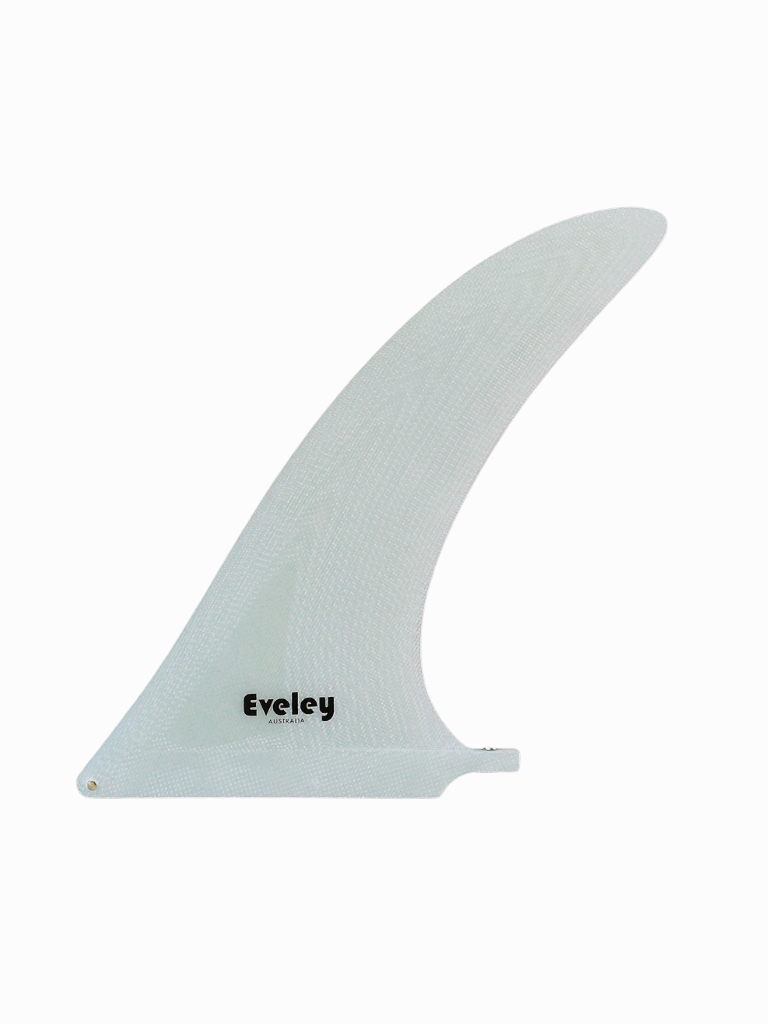
1. Pivot Fin
A pivot fin is built around:
An upright outline
A wide base
Controlled release
It is designed to:
Anchor the tail
Promote smooth turning arcs
Maintain trim stability
A 10" pivot is often considered the most balanced traditional longboard option.
2. 4A Fin
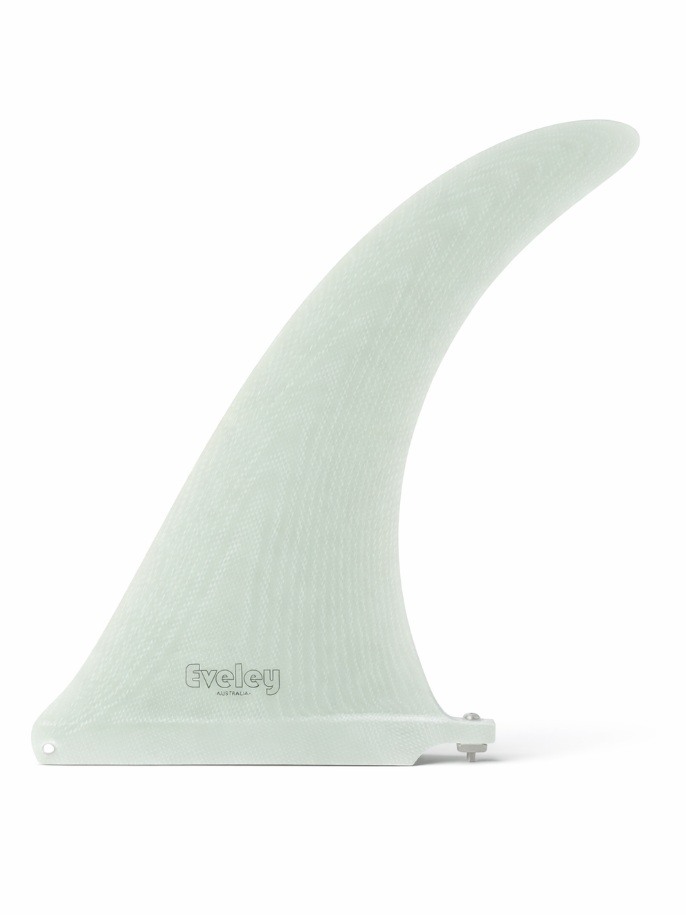
The 4A template blends:
Full base for drive
Moderate rake
Rounded tip for predictable release
It sits between pivot stability and performance flow.
The 4A is widely regarded as the most versatile longboard fin template ever created.
3. Logger Fin
The logger template is purpose-built for:
Maximum noseriding hold
Strong tail anchoring
Traditional trim stability
It typically has:
Greater depth (10.5"+ common)
More upright area
Increased surface surface area overall
This design prioritises hold over manoeuvrability.
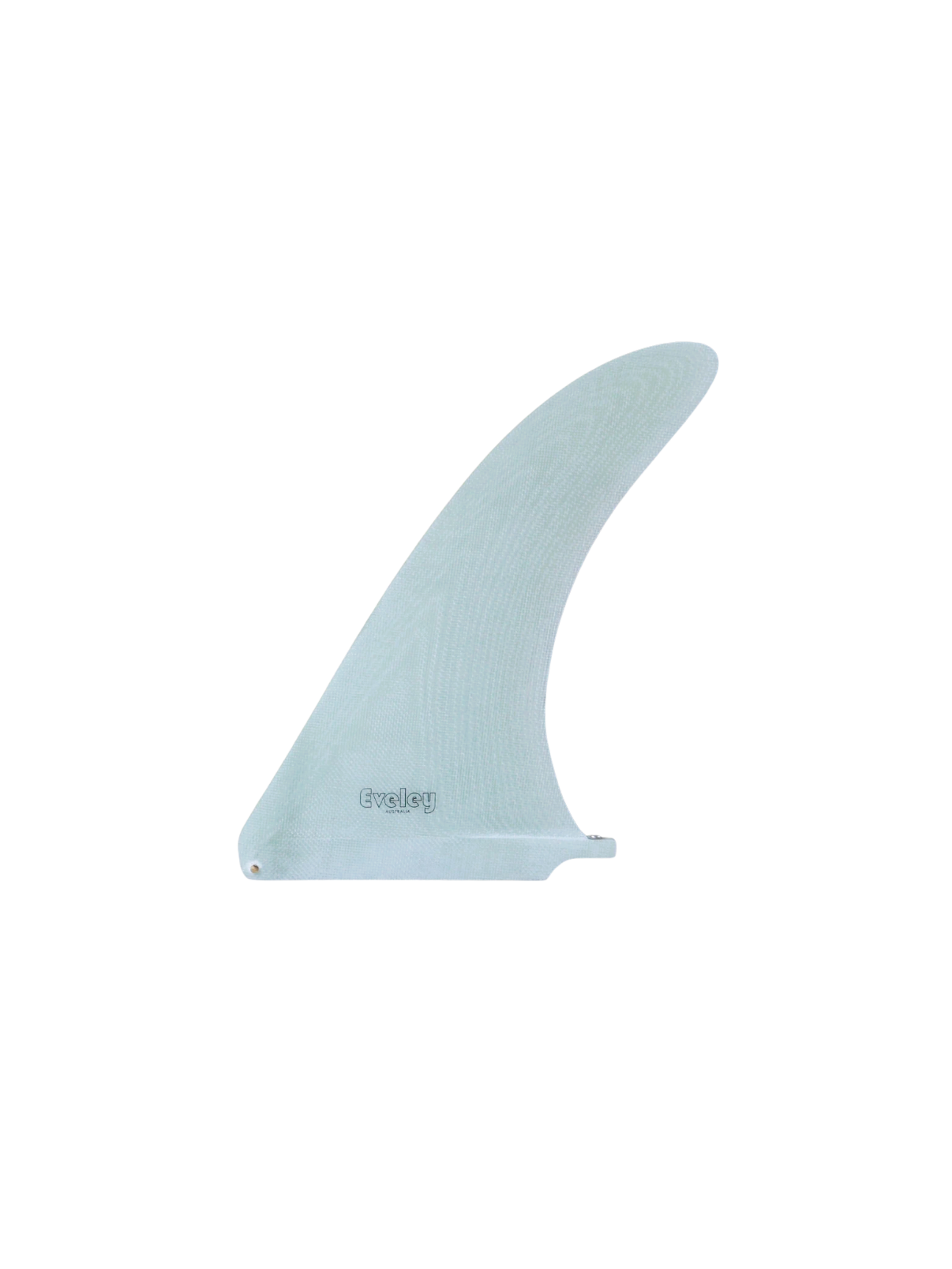
Tail Hold Comparison
Maximum Hold: Logger
If your goal is:
Long nose rides
Steep pocket stability
Classic traditional style
The logger fin provides the strongest tail anchor.
Strong but Versatile Hold: Pivot
A pivot fin offers:
Dependable pocket control
Enough stability for moderate noseriding
Better turning freedom than a logger
For most surfers, this feels balanced.
Balanced Hold: 4A
The 4A provides:
Reliable tail stability
Slightly less anchor than a logger
More drive and flow through turns
It holds well without feeling locked in.
Turning Response
Fastest & Smoothest: 4A
Because of its moderate rake, the 4A:
Initiates turns smoothly
Maintains speed through arcs
Feels natural rail-to-rail
It is ideal for surfers blending trim with turning.
Controlled & Stable: Pivot
The pivot template:
Turns predictably
Draws clean arcs
Feels stable rather than loose
It suits surfers who want reliability over aggression.
Most Planted: Logger
The logger:
Turns more slowly
Encourages longer arcs
Feels locked and traditional
Not ideal for dynamic, performance-style surfing.
Trim & Glide
Best Overall Flow: 4A
The 4A maintains:
Down-the-line speed
Smooth transitions
Balanced feel
It excels in mixed conditions.
Classic Stability: Pivot
The pivot provides:
Strong trim control
Reliable tracking
Stable pocket feel
Less free-flowing than a 4A, but very predictable.
Maximum Stability: Logger
The logger prioritises:
Planted trim
Strong directional control
Traditional glide
It sacrifices looseness for hold.
Noseriding Performance
Logger Template
Provides the strongest noseriding stability and pivot control, making it ideal for traditional longboard surfing.
4A Template
Offers moderate to strong stability, with a more balanced feel that allows smoother turning while still supporting noseriding.
If nose riding is your main goal, the logger leads.
If you want nose riding plus versatility, pivot or 4A may be better.
Board Type Recommendations
Heavy Traditional Logs (9'4"+)
Best choice:
Logger for maximum stability
Pivot for balanced control
Performance Longboards
Best choice:
4A for drive and responsiveness
Everyday All-Round Surfing
Best choice:
4A or 10" Pivot
They provide the widest usable range.
Quick Decision Guide
Choose Logger if you:
Prioritise noseriding
Surf clean point waves
Ride heavy traditional logs
Choose Pivot if you:
Want classic control
Blend trim with smooth turning
Surf varied conditions
Choose 4A if you:
Want the most versatile everyday fin
Value flow and drive
Mix turning with occasional noseriding
FAQ’s – Pivot vs 4A vs Logger Longboard Fin
Which fin holds the best?
The logger provides the most tail hold.
Which fin is most versatile?
The 4A is generally the most adaptable across conditions.
Is a pivot fin better than a 4A?
Neither is universally better — the pivot offers more stability, while the 4A offers more drive and flow.
Conclusion
In the debate of pivot vs 4A vs logger longboard fin, there is no single “best” template — only the best fit for your style.
The Logger maximises hold and nose time.
The Pivot balances stability and turning control.
The 4A offers the broadest everyday versatility.
Understanding how these templates differ allows you to build a longboard setup that matches your waves, your board, and your approach to surfing.
Click here to shop the Eveley Pivot Fin
Click here to shop the Eveley International 4A Fin
Click here to shop the Eveley Logger Fin
Click here to shop all the Eveley Center Fins
4A vs Logger – Which Longboard Fin Holds Better?
Comparing Pivot Control, Trim Stability, and Noseriding Performance
New to surfboard fins? Start with the complete Surfboard Fin Guides overview.
Few longboard fin debates are as common as:
4A vs Logger — which longboard fin holds better?
Both templates are trusted classics.
Both are designed for single-fin longboards.
But they deliver different levels of:
Tail hold
Trim stability
Turning control
Noseriding performance
If you’re deciding between a 10″ International 4A fin and a 10.5″ Logger fin, this guide explains exactly how they differ — and which one suits your board and waves.
Understanding the Templates
What Is a 4A Fin?
The 4A template is widely considered the most versatile longboard fin ever designed.
It features:
A full base for drive
Moderate rake for drawn-out turning arcs
A rounded tip for smooth release
The 4A blends hold and manoeuvrability, making it ideal for surfers who want both trim and turning freedom.
What Is a Logger Fin?
A Logger template is purpose-built for:
Maximum tail anchoring
Traditional noseriding
Classic trim stability
It typically has:
Greater depth (often 10″–10.5″+)
A more upright profile
Increased surface area
This design emphasises hold over agility.
Which Fin Holds Better in the Pocket?
Pure Tail Hold
If the goal is:
Maximum stability while perched on the nose
Strong tail anchor in steep pockets
👉 The Logger fin holds better.
The extra depth and upright area increase resistance against side-slip.
In traditional peeling waves, this translates to:
Longer nose rides
Greater stability
Reduced drift
Balanced Hold for Everyday Surf
If you want:
Reliable hold
But not at the expense of turning
👉 The 4A holds more than enough for moderate noseriding while remaining easier to manoeuvre.
For most surfers, the 4A offers the best balance between control and flow.
Turning Response Comparison
4A Turning Feel
The 4A:
Pivots smoothly
Maintains trim speed through arcs
Feels predictable rail-to-rail
It allows the board to:
Turn without feeling stiff
Maintain glide
Transition naturally between trim and cutback
Logger Turning Feel
The Logger:
Turns more slowly
Draws longer arcs
Feels planted and stable
It excels in:
Controlled, classic surfing
Down-the-line trimming
Minimal radical direction changes
If you prefer dynamic turning, the Logger may feel restrictive.
Noseriding Performance
When the Logger Wins
In:
Clean point waves
Steep pocket sections
Traditional log surfing
The Logger’s added area provides:
Strong tail lock
Extended tip time
Increased lift at slow speeds
This is where the Logger clearly outperforms the 4A.
When the 4A Is Enough
In:
Shoulder-high everyday waves
Mixed beach break conditions
Surfers blending trim and turns
A 10″ 4A provides:
Reliable tail hold
Occasional noseriding stability
Much greater versatility
For many surfers, this makes it the better all-round choice.
Board Type Matters
Heavy Traditional Logs (9'4"+)
Best choice:
Logger fin
Maximises the board’s natural trim and stability.
Performance Longboards
Best choice:
4A pivot fin
Balances hold with quicker turning response.
Mid-Length Single-Fins
Best choice:
4A template
Maintains flow without excessive stiffness.
Fin Size Comparison
10″ 4A Fin
Tail Hold: Strong and reliable in most waves
Turning Speed: Turns smoothly and reasonably quickly
Trim & Glide: Feels fast and flowing down the line
Noseriding: Holds well for casual to moderate nose rides
Versatility: Very adaptable — works in a wide range of conditions
10.5″ Logger Fin
Tail Hold: Maximum hold — very stable in the pocket
Turning Speed: Slower and more drawn-out turns
Trim & Glide: Extremely stable and planted feel
Noseriding: Best choice for long, secure nose rides
Versatility: More specialised — best for traditional style surfing
In simple terms:
The 4A is the better all-round fin.
The Logger is better if your priority is maximum nose-riding stability.
Which Fin Should You Choose?
Choose the 4A if you:
Want an everyday all-round fin
Blend trim with turning
Surf varied conditions
Choose the Logger if you:
Prioritise noseriding
Ride traditional logs
Surf clean peeling waves regularly
FAQ
Does a Logger fin always hold better than a 4A?
Yes, in pure noseriding scenarios.
But the 4A often holds sufficiently while offering better manoeuvrability.
Is a 4A better for beginners?
Often yes, because it provides balanced performance without feeling stiff.
Can you nose ride effectively with a 4A?
Absolutely — especially in the 10″ size range.
Conclusion
In the debate of 4A vs Logger longboard fin — which holds better?
The answer is clear:
For maximum tail anchor and dedicated noseriding, the Logger holds better.
For balanced trim, turning freedom, and everyday versatility, the 4A is often the smarter choice.
Most surfers benefit from the 4A’s versatility.
Dedicated traditionalists will appreciate the Logger’s uncompromising hold.
Understanding how each template behaves allows you to tune your longboard for your waves — not just follow tradition.
Click here to shop the Eveley 10” International 4A fin
Click here to shop the Eveley 10.5” Logger fin
Click here to see all the Eveley Center fins
Do Side Fins Help Longboard Performance?
When 2+1 Setups Improve Control — And When They Don’t
New to surfboard fins? Start with the complete Surfboard Fin Guides overview.
Many longboarders eventually ask: Do side fins help longboard performance?
The short answer is: yes — but not always.
Side fins (often called side bites) can increase hold, control, and responsiveness. But they also change glide, trim feel, and the classic flow of a single fin.
This guide explains:
How side fins change longboard dynamics
When a 2+1 setup improves performance
When a single fin is actually better
How to choose the right side fin size
By the end, you’ll know whether side fins suit your board, waves, and style.
What Is a 2+1 Longboard Setup?
A 2+1 setup uses:
One larger center fin
Two smaller side fins
It blends the stability of a single fin with some of the responsiveness of a thruster.
This configuration is common on:
Performance longboards
Hybrid shapes
Boards surfed in steeper, faster waves
How Side Fins Change Longboard Performance
1. Increased Rail Hold at Speed
Side fins engage when the board is put on rail.
They provide:
Extra grip in steeper sections
More control during powerful bottom turns
Reduced slide in critical pockets
This makes them particularly useful in punchy beach breaks.
2. Tighter Turning Radius
With side fins assisting the rail, the board:
Responds faster to foot pressure
Feels more reactive off the bottom
Turns more vertically
For surfers transitioning from shortboards, this can feel more familiar.
3. Added Stability in Larger Surf
In overhead or fast conditions, a single fin can feel:
Loose under pressure
Slightly delayed in response
Side fins add predictability and security when waves demand precision.
The Trade-Off: What You Lose With Side Fins
1. Reduced Glide
Single fins are known for:
Smooth trim
Minimal drag
Effortless down-the-line speed
Side fins increase drag slightly, which can:
Reduce that classic flowing sensation
Diminish glide in weaker waves
2. Less Pure Single-Fin Feel
Traditional longboarding is built around:
Trim
Flow
Drawn-out arcs
A 2+1 setup shifts the feel toward performance turning rather than classic style.
3. Slightly Reduced Noseriding Stability
Because side fins encourage turning and rail engagement, they can:
Decrease pure tail anchor effect
Reduce extended tip-time in clean peeling waves
For dedicated noseriding, a larger single fin often performs better.
When Side Fins Help Most
Side fins are ideal when:
Surf is steep or fast
You prefer tighter turning arcs
Your board has more rocker
You surf aggressively off the tail
They are especially effective on:
Performance longboards
Lighter glassed boards
Boards under 9'2"
When a Single Fin Is Better
A single fin is usually superior when:
Surf is small and weak
You prioritise trim and glide
You focus on classic noseriding
You ride heavier traditional logs
For traditional longboarding, the simplicity of one center fin often delivers the best overall feel.
Choosing the Right Side Fin Size
Side fins are typically:
Small (2.5"–4")
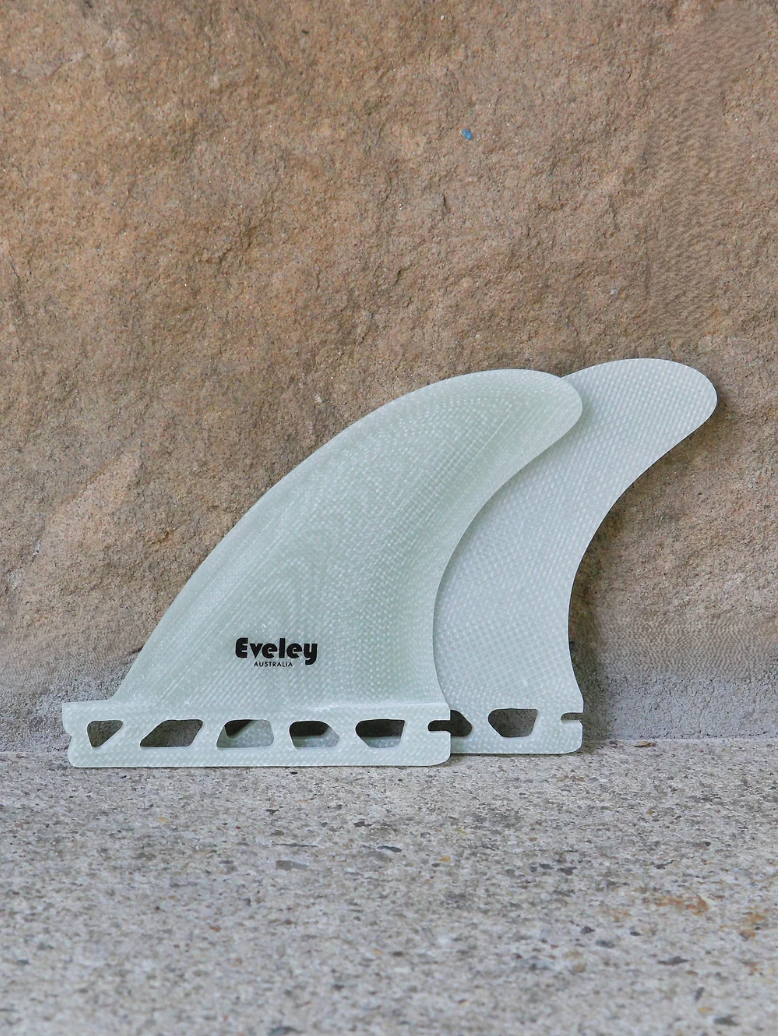
Larger side fins:
Increase hold and control
Make the board feel more performance-oriented
Smaller side fins:
Preserve glide
Maintain more single-fin character
Most surfers find moderate-sized side fins strike the best balance.
Board Type Matters
Traditional Logs (9'4"+, heavy glass)
Best setup:
Single fin (9.5"–10"+)
Side fins often unnecessary.
Performance Longboards
Best setup:
2+1 configuration
8.5"–9" center fin
Small stabiliser side fins
Delivers control without losing longboard feel entirely.
Mid-Lengths
Side fins can improve:
Rail engagement
Drive through turns
Stability at speed
FAQ’s – Do Side Fins Help Longboard Performance?
Do side fins make a longboard faster?
In steeper waves, yes — by improving drive and control.
In weak waves, they may slightly reduce glide.
Are side fins better for beginners?
They can provide added stability and predictability, especially in faster surf.
Do side fins hurt noseriding?
For dedicated noseriding, a larger single fin often provides better tail hold.
Conclusion
So, do side fins help longboard performance?
Yes — when you need more control, tighter turning, and confidence in faster waves.
But for classic trim, glide, and traditional noseriding, a balanced single fin remains the purest and most versatile setup.
The right answer depends on:
Your board
Your waves
Your surfing style
Understanding how side fins change performance allows you to tune your longboard for the conditions — rather than guessing.
Popular Side Fins
3.6" Classic Side Surfboard Fins – Mid Blue Pro Glass | Futures Compatible
Click here to see all The Eveley Side Fins
Best All-Round Longboard Fin Setup
The Perfect Balance of Speed, Turning, Trim, and Noseriding
New to surfboard fins? Start with the complete Surfboard Fin Guides overview.
Finding the best all-round longboard fin setup is about balance.
Most surfers don’t ride perfect point waves every day—and few want a board that only excels at one thing.
An effective everyday setup must combine:
Smooth trim speed
Predictable turning control
Enough hold for casual noseriding
Adaptability across changing surf conditions
This guide explains the single most versatile longboard fin configuration, why it works in real waves, and how to fine-tune it for your board and style.
What “All-Round” Really Means in Longboard Surfing
1. Versatility Across Wave Types
True all-round performance means the board feels comfortable in:
Weak beach breaks
Clean points
Shoulder-high everyday surf
A specialised noserider fin may hold perfectly in the pocket
but feel slow and stiff in softer waves.
The all-round goal is:
Balanced glide without sacrificing manoeuvrability.
2. Balance Between Turning and Stability
Longboard fins exist on a spectrum:
Small performance fins → fast turning, less hold
Large pivot fins → maximum stability, slower response
The best everyday setup sits between these extremes.
3. Real-World Surfing Over Perfection
Most sessions involve:
Mixed wave quality
Changing tide and wind
Varying sections on the same wave
So the ideal setup must feel predictable everywhere,
not perfect in one scenario.
The Best All-Round Longboard Fin Configuration
Single Fin Around 9"–9.5"
For most surfers, the most versatile setup is:
A single center fin in the 9" to 9.5" range
Why this works:
Enough surface area for stability and trim
Still small enough to turn smoothly
Capable of moderate noseriding
Fast in weak surf yet controlled in clean waves
This size range consistently delivers the widest usable performance window.
Balanced Pivot-Style Template
The most effective template blends:
Full base for drive
Moderate rake for smooth turning arcs
Rounded tip for predictable release
Often called a 4A-style pivot template,
this design remains the benchmark for everyday longboarding.
Neutral Fin Placement
Positioning the fin:
Centered in the box
creates the most balanced feel.
From there:
Move back for more noseriding hold
Move forward for quicker turning
Small adjustments (10–15 mm) make noticeable differences.
When to Choose a 2+1 Setup Instead
While a single fin suits most surfers,
a 2+1 configuration can improve control in certain situations.
Benefits of 2+1
Increased hold in steeper waves
More predictable turning at speed
Added confidence for progressing surfers
Trade-offs
Slightly less glide
Reduced classic single-fin flow
This setup is often preferred on performance longboards
rather than traditional logs.
Matching Setup to Board Type
Traditional Logs (9'4"+, heavy glass)
Best all-round choice:
9.5" single pivot fin
Delivers:
Smooth trim
Reliable hold
Casual noseriding ability
Performance Longboards
Best choice:
8.5"–9" single fin
or2+1 setup with small side bites
Provides:
Faster turning
Better control in punchy surf
Mid-Length Single-Fin Boards
Best choice:
8.5"–9" balanced template
Maintains:
Flowing lines
Manageable turning radius
Wave Conditions and Fin Setup
Small, weak surf
Use:
Slightly larger single fin (~9.5")
for glide and stability.
Clean shoulder-high waves
Use:
Standard 9" balanced fin
for the perfect mix of trim and turning.
Steeper, faster waves
Consider:
2+1 configuration
for extra hold and confidence.
Common Mistakes When Choosing an All-Round Setup
Going too large
→ Feels stiff in everyday waves.
Going too small
→ Loses trim speed and stability.
Over-specialising for noseriding
→ Limits versatility in real conditions.
Recommended Eveley Fin Style for Everyday Surfing
For true all-round performance:
9"–9.5" balanced pivot-style center fin
Traditional fiberglass construction for smooth flex
Neutral placement with small tuning adjustments
This combination delivers the widest usable range
across boards, waves, and surfing styles.
FAQ – Best All-Round Longboard Fin Setup
What is the most versatile longboard fin size?
Most surfers find 9" to 9.5" provides the best balance of speed, turning, and stability.
Is a single fin better than 2+1 for everyday surfing?
For classic feel and trim, yes.
For steeper waves and sharper turning, 2+1 may help.
Can one setup really work in all waves?
No setup is perfect everywhere,
but a 9" balanced single fin comes closest for most surfers.
Conclusion
The best all-round longboard fin setup isn’t extreme—it’s balanced.
A 9"–9.5" pivot-style single fin, placed near the center of the box, delivers the ideal mix of:
Glide
Control
Turning freedom
Occasional noseriding
It’s the configuration that works most often, in the most waves, for the most surfers—
which is exactly what “all-round” performance should mean.
Click here to see all the Eveley Center Fins
Click here to see all the Eveley Side Fins
Longboard Fin Size Guide
How to Choose the Right Center Fin Size for Speed, Hold, and Noseriding
New to surfboard fins? Start with the complete Surfboard Fin Guides overview.
Choosing the correct fin size is one of the most important—and most misunderstood—decisions in longboard surfing.
The center fin controls stability, turning radius, trim speed, and noseriding hold, meaning the wrong size can make even a perfectly shaped board feel slow, stiff, or unstable.
This longboard fin size guide explains:
What each fin size actually does in the water
How rider weight and board length affect sizing
Which sizes suit noseriding, performance turning, or everyday trim
How to fine-tune placement for maximum control
By the end, you’ll know exactly which fin size to ride for your board and style.
Why Fin Size Matters More Than Most Surfers Think
1. The Fin Is the Board’s Anchor
On a single-fin longboard, the center fin provides:
Directional stability
Resistance to side-slip
Control without using rail pressure alone
Too small → the tail slides and feels loose.
Too large → the board feels stiff and hard to turn.
Correct sizing creates balanced glide and control.
2. Size Directly Changes Turning Radius
Fin depth determines how tightly a longboard can pivot:
Smaller fins → tighter turns, faster rail transitions
Larger fins → longer drawn-out arcs and stronger hold
This is why performance longboards ride smaller fins, while classic logs use larger pivot fins.
3. Noseriding Depends on Surface Area
When walking forward, the fin must hold the tail in the wave face.
More surface area equals:
Greater lift at slow speed
Reduced tail drift
Longer, more stable nose rides
This is the key physics behind large noserider fins.
Standard Longboard Fin Size Ranges
8"–8.5" Center Fins
Feel: Loose, fast, highly manoeuvrable
Best for:
Performance longboards
Smaller, lighter surfers
Beach-break surfing
Surfers who turn more than they nose ride
Trade-off:
Less hold for extended tip time.
9"–9.5" Center Fins
Feel: Balanced speed, turning, and stability
This is the most versatile longboard fin size range.
Best for:
Everyday longboarding
Mixed turning and trimming
Occasional noseriding
Mid-weight surfers
For many surfers, this is the ideal starting size.
9.5"–10" Center Fins
Feel: Strong hold with smooth, drawn-out turns
Best for:
Traditional longboards
Clean point waves
Frequent noseriding
Heavier boards and surfers
This range delivers the classic longboard glide most surfers expect.
10"+ Center Fins
Feel: Maximum stability and tail anchoring
Best for:
Dedicated noseriders
Heavy glassed logs
Steep, peeling waves
Surfers focused on long tip time
These fins sacrifice manoeuvrability for pure noseriding control.
Example: 11" International 4A Center Fin – Pink on White Pro Glass
How Rider Weight Affects Fin Size
Lighter surfers (under ~70 kg)
Can ride smaller fins without losing hold
Typical range: 8.5"–9.5"
Mid-weight surfers (70–90 kg)
Most balanced range: 9"–10"
Heavier surfers (90 kg+)
Need larger fins for stability and lift
Typical range: 9.5"–10.5"+
Weight changes how deeply the rail and fin sit in the water—
so correct sizing restores hydrodynamic balance.
Matching Fin Size to Board Length
8'6"–9'0" boards
Usually suit 8.5"–9.25" fins
9'1"–9'6" boards
Typical range: 9"–9.75"
9'7"–10'+ logs
Often need 9.75"–10.5"+
for proper noseriding hold.
A simple rule:
Longer board = larger fin.
Fin Size by Surfing Style
Performance Turning
Choose:
8"–9" fin
Moderate rake
Forward box placement
Result → quicker response and tighter arcs.
Everyday Trim & Flow
Choose:
9"–9.5" fin
Balanced template
Neutral placement
Result → smooth glide with reliable control.
Dedicated Noseriding
Choose:
9.75"–10.5"+ pivot fin
Upright template
Back-of-box placement
Result → maximum tail hold and longer nose rides.
Fine-Tuning with Fin Placement
Moving the fin only 10–20 mm changes feel dramatically.
Back in the box
More hold
Better noseriding
Slower turning
Forward in the box
Easier turning
Looser feel
Reduced tip stability
Best method:
Start centered → adjust in small steps.
Common Longboard Fin Size Mistakes
Choosing too small for noseriding
→ causes tail slide and instability.
Choosing too large for performance boards
→ makes turning feel stiff and slow.
Ignoring surfer weight
→ leads to poor balance even with correct board length.
Recommended Eveley Fin Sizes by Goal
Performance feel: ~8.5"–9" center fin
All-round longboarding: ~9"–9.5" fin
Classic noseriding: ~9.75"–10.5"+ pivot or logger fin
These ranges match the real hydrodynamic demands of longboard surfing rather than guesswork.
FAQ – Longboard Fin Size Guide
What size fin should a beginner use?
Most beginners do best with a 9"–9.5" fin for balanced stability and turning.
Is a bigger fin always better for noseriding?
Generally yes—up to the point where turning becomes too stiff.
Most surfers find the sweet spot around 10".
Can I use the same fin in different waves?
Yes, but adjusting fin placement can fine-tune hold versus manoeuvrability.
Conclusion
The correct fin size transforms how a longboard feels under your feet.
Whether you want tight performance turns, smooth everyday trim, or long stable nose rides, the answer starts with choosing the right depth and surface area.
For most surfers:
9"–9.5" = best all-round size
10"+ = best for serious noseriding
Dial in size and placement, and your longboard will deliver the
speed, glide, and control classic surfing is built on.
Popular Center Fins
11" International 4A Center Fin – Blue on White Pro Glass
Click here to see all the Eveley Center Fins
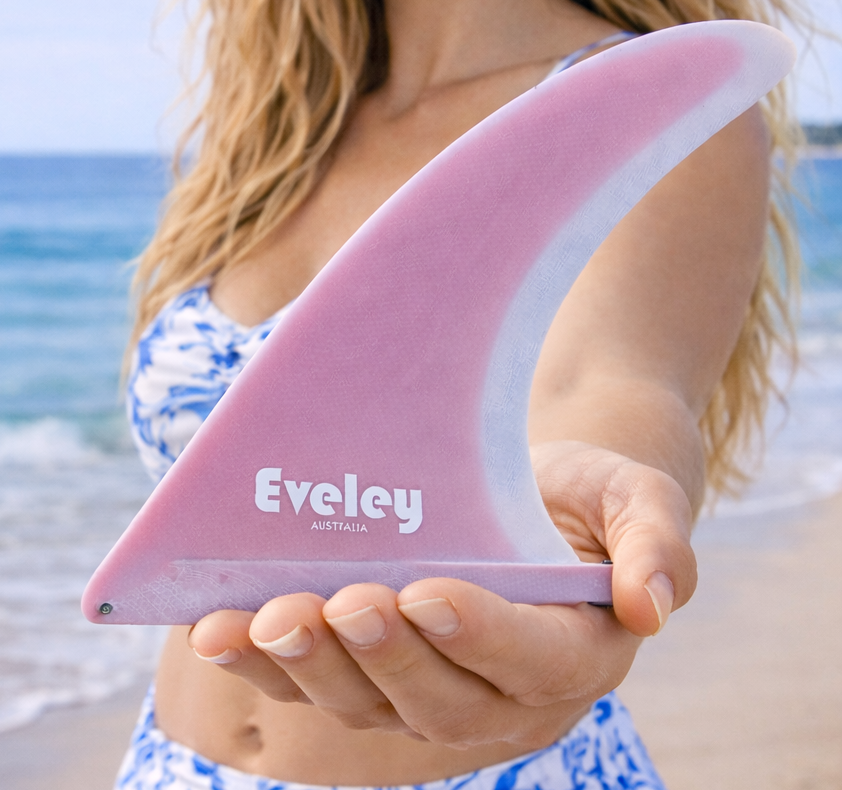
Best Longboard Fin for Noseriding
Complete Guide to Hold, Lift, and Classic Trim
New to surfboard fins? Start with the complete Surfboard Fin Guides overview.
Finding the best longboard fin for noseriding is one of the most important decisions a traditional surfer can make.
While board shape, rocker, and rail design all influence tip time, the center fin controls stability, lift, and hold when you step to the nose.
The right fin:
Anchors the tail in the pocket
Prevents side-slip at slow speeds
Maintains smooth trim while perched forward
This guide explains exactly which fin shapes work for noseriding, why they work, and how to choose the perfect size and template for your board and waves.
What Makes a Fin Good for Noseriding?
1. Surface Area Creates Hold
Noseriding requires the tail to stay locked in the wave face.
Large fins with more area and deeper depth increase resistance and prevent drift.
Key takeaway:
More area = more hold = longer nose time.
2. Upright Templates Increase Stability
Classic noserider fins are:
Tall
Wide-based
Relatively upright (less rake)
This geometry keeps the board tracking straight and stable while walking forward.
Highly raked fins may feel fast, but they:
Reduce pivot resistance
Allow tail slide
Shorten nose rides
3. Foil and Flex Matter
Traditional fiberglass (like ProGlass or Volan) provides:
Smooth, predictable flex
Controlled rebound through trim
Better connection to the wave face
Overly stiff fins can feel tracky, while soft plastic fins lack hold.
Classic Fin Templates for Noseriding
The Hatchet Fin
Recognisable by its square tip and massive area, the hatchet is the most specialised noseriding fin.
Strengths
Maximum tail lock
Exceptional hold in steep pockets
Longest possible nose rides
Limitations
Slower turning
Less versatile in weak waves
Best for:
Dedicated noseriders and steep, peeling waves.
The 4A-Style Pivot Fin
The 4A template is the gold standard balance of:
Hold
Pivot
Smooth trim
It features:
Full base
Moderate rake
Rounded tip
This makes it the most versatile noseriding fin ever designed.
Best for:
Traditional longboards and surfers wanting nose time without sacrificing turning.
The Flex Noserider Fin
Some fins blend upright area with subtle flex to create:
Lift at low speed
Smooth projection when trimming
Easier rail-to-rail transitions
These suit surfers who mix:
Walking
Trimming
Smooth cutbacks
Choosing the Right Fin Size
General Rule
For noseriding:
Bigger is better — within reason.
Typical sizing:
9"–9.5" → performance longboards, lighter surfers
9.5"–10" → classic all-round noseriding
10"+ → heavy boards, serious tip riding
If unsure:
Choose the larger option for better hold.
Fin Placement for Maximum Nose Time
Moving the fin:
Back in the box → more hold, longer nose rides
Forward in the box → easier turning, less stability
Noseriding setup rule:
Start near the back and adjust forward slightly if turning feels stiff.
Wave Type and Fin Choice
Small, weak waves
Use:
Larger fin
Upright template
More surface area
This maintains lift at slow speed.
Clean point waves
You can ride:
4A-style pivot fins
Slightly smaller sizes
Because the wave provides natural hold.
Steep pocket noseriding
Choose:
Hatchet or large pivot fin
Maximum depth and base
For total tail control in the curl.
Common Mistakes When Choosing a Noseriding Fin
Too small
→ Causes side-slip and short nose rides.
Too much rake
→ Feels fast but unstable on the tip.
Cheap plastic construction
→ Lacks flex control and hold.
Best Eveley Fin Styles for Noseriding
Ideal Eveley options include:
9"–10" 4A-style center fins for balanced hold and turning
Large pivot fins for classic trim and stability
Traditional fiberglass construction for smooth flex response
These designs match the core physics of successful noseriding.
FAQ: Best Longboard Fin for Noseriding
What size fin is best for noseriding?
Most surfers achieve the best results with 9.5" to 10" center fins.
Are hatchet fins better than 4A fins?
Hatchets provide maximum hold, while 4A fins offer better turning balance.
Should beginners use a larger fin?
Yes. Larger fins increase stability and confidence when learning to nose ride.
Conclusion
The best longboard fin for noseriding is one that maximises:
Tail hold
Upright stability
Smooth fiberglass flex
For most surfers, this means a 9.5"–10" 4A-style pivot fin placed toward the back of the fin box.
This setup delivers the timeless feeling every longboarder is chasing:
Effortless trim, locked-in hold, and long, controlled walks to the nose.
Here are some excellent Noserider fins from the Eveley Range:
shop the 10" Pivot Center Fin, Volan Pro Glass here.
shop the 10" Santa Monica Center Fin here.
shop the 10" Classic Center Fin here.
Quad vs Thruster — Which Fin Setup Is Faster?
New to surfboard fins? Start with the complete Surfboard Fin Guides overview.
The real-world speed, control, and feel differences between quad and thruster surfboard fins
The debate between quad vs thruster fins has shaped modern surfboard design for decades.
Both setups are proven, both are fast in the right conditions, and both can transform how a board feels under your feet.
But the key question most surfers ask is simple:
Which fin setup is actually faster — quad or thruster?
The honest answer is nuanced.
Speed in surfing depends on drag, drive, hold, and release, and each fin configuration balances these forces differently.
This guide explains the true performance differences so you can choose the fastest setup for your board, waves, and surfing style.
The Core Design Difference
Thruster (Three Fins)
The thruster uses:
Two side fins for drive and hold
One centre fin for stability and pivot
This creates a balanced, controlled feel that allows powerful vertical surfing and predictable turning.
Key traits:
High control
Strong pivot off the bottom
Reliable hold in steep waves
Slightly increased drag from the centre fin
Quad (Four Fins)
A quad removes the centre fin and replaces it with two rear stabiliser fins near the rails.
This changes water flow dramatically:
Less central drag
More rail-driven speed
Faster down-the-line projection
Key traits:
Higher natural speed
Long, drawn-out drive
Smooth rail-to-rail flow
Reduced pivot tightness
Raw Speed: Which Is Faster?
Straight-line speed → Quad wins
With no centre fin creating drag, quads:
Accelerate faster
Maintain speed through flat sections
Feel naturally quicker in weak waves
This is why quads dominate in:
Small surf
Mushy point breaks
Long running walls
Speed in powerful turns → Thruster can match or exceed
Thrusters generate speed differently:
Compression through the bottom turn
Release and projection through the top turn
In steep, powerful waves, this controlled energy can feel faster than a quad, even if straight-line glide is lower.
Why Quads Feel Faster in Small Waves
Small waves lack push.
Speed must come from reduced drag and efficient planing.
Quads help by:
Eliminating centre-fin resistance
Keeping water flowing cleanly along the rail line
Holding speed across soft sections
Result:
Quads create speed where thrusters may stall.
Why Thrusters Excel in Steep Waves
Steep waves provide natural energy.
Control becomes more important than glide.
Thrusters deliver:
Predictable pivot in the pocket
Strong vertical attack
Controlled release under pressure
This allows surfers to:
Surf tighter arcs
Hit the lip more vertically
Maintain confidence in hollow sections
In these conditions, control equals usable speed.
Turning Style Changes Perceived Speed
Speed is not only physical — it’s how fast surfing feels.
Quad turning feel
Longer rail lines
Smoother, drawn-out carves
Continuous projection
This creates a sensation of effortless glide.
Thruster turning feel
Tighter arcs
Faster direction change
Explosive top turns
This feels more dynamic and aggressive, even if glide speed is lower.
Wave-Type Speed Comparison
Small, weak waves → Quad faster
Best for:
Knee-to-waist-high surf
Soft beach breaks
Long, slow points
Reason:
Low drag maintains momentum.
Everyday chest-to-head-high surf → Close call
Performance depends on:
Board design
Fin size
Surfing approach
Many surfers switch between both setups here.
Powerful or hollow waves → Thruster faster in control
Thrusters allow:
Later drops
Tighter pocket surfing
Faster recovery after turns
This produces functional speed, not just glide.
Fin Placement and Hydrodynamics
Centre fin drag (thruster)
The centre fin:
Adds resistance
Stabilises direction
Enables tight pivot
This slows trim speed slightly but improves manoeuvrability.
Rail-line drive (quad)
Rear quad fins:
Sit closer to rails
Channel water efficiently
Increase projection
This produces continuous acceleration down the line.
Competitive Surfing vs Free Surfing
Competition surfing → Thrusters dominate
Judging rewards:
Vertical turns
Critical pocket surfing
Rapid direction change
Thrusters enable this style best.
Free surfing → Quads increasingly popular
Many surfers prefer:
Speed in weak waves
Flowing carves
Reduced effort generation
Quads suit modern everyday conditions.
Common Myths
“Quads are always faster”
False.
They are faster in trim and weak surf, not always in powerful turns.
“Thrusters are outdated”
False.
They remain the most versatile high-performance setup ever created.
“You must choose one forever”
Also false.
Most experienced surfers use both, depending on conditions.
How to Choose Between Quad and Thruster
Choose a quad if you want:
Maximum down-the-line speed
Better performance in weak surf
Long carving turns
Reduced drag feeling
Choose a thruster if you want:
Tight vertical turns
Control in steep or hollow waves
Predictable all-round performance
Competition-style surfing
Expert Reality: Speed Depends on the Surfer
The fastest setup is the one that lets you maintain momentum.
For example:
Rail-carving surfers often feel faster on quads
Vertical pocket surfers feel faster on thrusters
Technique matters as much as hardware.
The Hybrid Solution: Convertible Boards
Many modern boards allow:
Five-fin setups
Switching between quad and thruster
This flexibility lets surfers:
Tune speed vs control
Adapt to daily conditions
Learn both performance styles
Frequently Asked Questions
Are quads better for beginners?
Often yes in small waves, because added speed helps maintain momentum.
Do thrusters turn sharper?
Yes.
The centre fin enables tighter, more vertical arcs.
Should I own both setups?
For most surfers, yes.
Different waves reward different fin configurations.
Large thruster setups like Big Boy thruster fins.
Popular quads like 4.9" / 3.1" DTR Quad Fins – Black on Natural Pro Glass | FCS II Compatible
Summary
In the quad vs thruster fins comparison, quads generally provide greater straight-line speed and glide, especially in weak surf, due to reduced center-fin drag and enhanced rail drive.
Thrusters, however, deliver superior control, tighter turning, and functional speed in steep or powerful waves, making them the most versatile high-performance setup.
The fastest real-world choice depends on wave energy, board design, and surfing style, which is why many surfers rotate between both configurations.
New to surfboard fins? Start with the Beginner’s Guide to Surfboard Fins – Types, Sizes & Setups Explained for a simple introduction to fin types and sizing, and the Thruster Fins Explained guide.
Delve deeper
How Fin Templates Affect Performance
The Right Fin for Your Board in Australia
See the Beginner’s Guide to Surfboard Fins as a starting point.
If you're unsure what size fins your surfboard needs, our Surfboard Fin Guidesexplains how fin size affects speed, control and turning performance.
Choosing the correct surfboard fin size is the single biggest factor affecting how your board performs in real surf.
More than template shape, rake, or construction — fin size determines hold, drive, looseness, and overall control.
Surfboard Fins Guide: How to Choose the Right Fin Size
Why Fin Size Matters More Than You Think
Surfboard fins create lift, resistance, and directional stability.
Too small, and the board feels skittish, slide-prone, and under-powered.
Too large, and it feels stiff, slow to turn, and difficult to release.
Correct sizing produces the balance every surfer wants:
Predictable hold in turns
Efficient drive through the bottom turn
Clean release off the top
Stable speed control in steeper waves
Because of this, fin size is the foundation decision before considering templates or materials.
The Three Measurements That Define Fin Size
1. Base Length
The base is the bottom edge of the fin where it meets the board.
Longer base → more drive and acceleration
Shorter base → quicker pivot and looseness
Drive-oriented surfing (carves, drawn-out turns) benefits from longer bases.
2. Height (Depth)
Height controls hold and control in the wave face.
Taller fins → stronger hold, better in powerful waves
Shorter fins → looser feel, easier release
Heavier surfers and steeper waves usually require greater height.
3. Surface Area
Surface area combines base and height into a single measure of overall resistance.
Larger area → stability and projection
Smaller area → speed and freedom
Most fin size charts are effectively surface-area charts matched to rider weight.
The Core Rule: Match Fin Size to Rider Weight
Across nearly all fin systems, sizing follows the same principle:
Rider WeightTypical Fin SizeUnder 55 kgExtra Small55–70 kgSmall70–85 kgMedium85–100 kgLarge100 kg+Extra Large
Why weight matters:
Heavier surfers apply more force through turns and need greater fin area for control and hold.
If you are between sizes:
Choose smaller for looseness and small waves
Choose larger for power, control, and bigger surf
Board Type Changes the Equation
Fin size is not chosen in isolation.
Board volume, length, and intended surfing style all influence the correct size.
Shortboards
Performance shortboards rely heavily on fins for control.
Most surfers ride Medium or Large thrusters
Undersizing makes the board slide out under pressure
Oversizing makes it track and feel stiff
Rule: Stay close to your weight-based size.
Fish & Twin Fins
Fish and twins generate speed from planing surface, not just fins.
Twins typically run larger individual fins
Total surface area is still balanced to rider weight
Common mistake:
Choosing twins that are too small, causing uncontrolled slide.
Quad Setups
Quads distribute hold across four smaller fins.
Rear fins fine-tune release vs control
Heavier surfers often need larger fronts, not just larger rears
Longboards
Longboard fin sizing is based more on board length than rider weight.
General rule:
Fin height (inches) ≈ board length (feet) + 1
Examples:
9'0" board → ~10" center fin
8'0" board → ~9" fin
Heavier surfers or noseriders may go larger for hold.
Wave Type Also Affects Fin Size
Small, weak waves
Smaller fins help create:
Faster release
Easier speed generation
Looser turning radius
Many surfers drop one size down in weak surf.
Medium everyday surf
Use your standard weight-matched size.
This provides the best all-round balance.
Powerful or hollow waves
Larger fins improve:
Hold at speed
Control in steep faces
Confidence under pressure
Serious surf almost always rewards slightly larger fins.
Thruster vs Quad vs Twin — Size Differences
Thruster
Most predictable sizing.
Follow weight chart closely.
If you need more drive consider Big Boy thruster fins
Quad
Front fins usually match thruster size.
Rear fins are smaller stabilisers.
Changing rear size is a key tuning tool:
Smaller rears → looser, faster
Larger rears → more hold and drive
Twin
Twins require substantially larger individual fins because there is no center fin.
This is why twin fins often feel:
Fast
Skatey
Sensitive to size changes
For more control add a stabilizer fin like the 3.5" Classic Stabilizer Fin
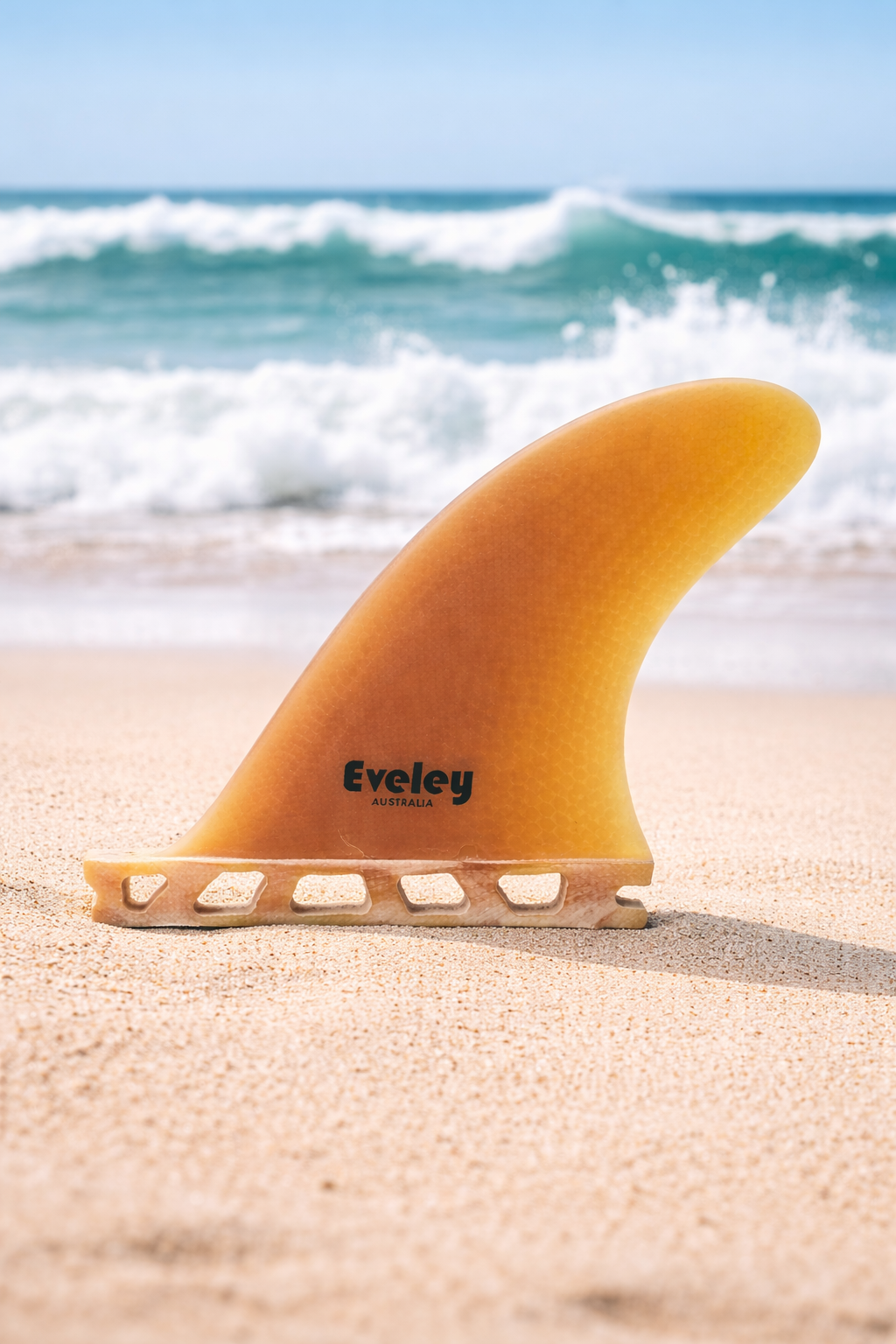
Common Fin Size Mistakes
Riding fins that are too small
Symptoms:
Sliding in bottom turns
No projection out of turns
Loss of confidence in steeper waves
Most common beginner error.
Oversizing for small waves
Symptoms:
Board feels sticky
Hard to generate speed
Slow rail-to-rail response
Ignoring rear-fin size in quads
Rear fins dramatically affect feel.
Small adjustments make large performance differences.
How to Dial In the Perfect Size
Follow this simple three-step method:
Step 1 — Start with rider-weight size
Use the standard chart as your baseline.
Step 2 — Adjust for board style
High-performance shortboard → stay true to size
Fish or twin → ensure adequate surface area
Longboard → match board length rule
Step 3 — Tune for conditions
Small waves → size down
Big or hollow waves → size up
After a few sessions, your ideal range becomes obvious.
Expert Tip: Is Using One Fin Size Normal?
Most experienced surfers don’t use just one fin size.
They rotate between two neighbouring sizes depending on conditions.
Example:
Medium for everyday surf
Large for powerful waves
This small change can transform board performance.
Surfboard Fin Setup Guides
Frequently Asked Questions
Does fin size affect speed?
Yes.
Too large slows release; toosmall loses drive.
Correct size provides maximum usable speed.
Should beginners use bigger fins?
Usually yes.
Slightly larger fins increase stability and control, accelerating progression.
Can fin size fix a bad board?
Not completely — but correct sizing can dramatically improve feel and usability.

Having the right fins improves performance, but comfort matters too. Lightweight surf clothing helps you stay relaxed and move naturally in the water.
See Tropical Print Board Shorts – Lightweight Surf & Swim Wear for lightweight quick-drying surf shorts.
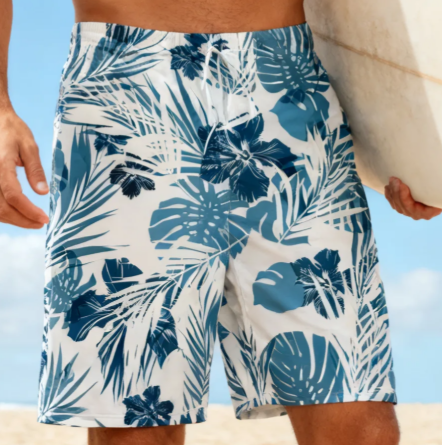
Summary
Choosing the correct surfboard fin size is primarily determined by rider weight, then refined by board type and wave conditions.
Proper sizing delivers the essential balance of drive, hold, release, and control that defines real-world surf performance.
Most surfers benefit from owning two adjacent fin sizes to adapt across conditions.
Looking for high-performance fiberglass fins?
Browse the Eveley Surfboard Fin Collection, including thruster, twin and longboard fin setups designed for Australian surf conditions.

Choose the Right Surfboard Fin Setup
The complete guide to selecting surfboard fins for speed, control, and real-world performance
Choosing the right surfboard fins is one of the most important — and most misunderstood — decisions in surfing.
Board shape matters. Waves matter. Skill level matters.
But fins are the final control system that determines how your board actually feels under your feet.
This guide is the master entry point to the Eveley Authority Series.
If you read only one article about fins, this is the one.
By the end, you’ll know:
How fin setups change performance
Which configuration suits your board and waves
How size, template, and material affect feel
The simplest way to choose the correct fins every time
New to surfboard fins? Start with the complete Surfboard Fin Guides overview.
Comfortable gear makes a big difference to how you surf. Lightweight board shorts help you move freely and dry quickly between sessions.
See Tropical Print Board Shorts – Lightweight Surf & Swim Wear for a comfortable surf-ready option designed for warm-water sessions.
Why Surfboard Fins Matter More Than Most Surfers Think
Modern surfboards are designed assuming the correct fins are installed.
Without the right fins, even a perfectly shaped board will feel:
Slow to accelerate
Hard to turn
Unstable at speed
Dead through flat sections
Fins control three core performance elements:
1. Drive
How efficiently the board converts pressure into forward speed.
2. Hold
How securely the rail stays engaged during turns and at speed.
3. Release
How easily the tail breaks free for direction change or manoeuvres.
Every fin setup is simply a different balance of these three forces.
The Five Core Surfboard Fin Setups
Understanding fin setups starts with recognising the five dominant configurations used in modern surfing.
Single Fin
One centre fin only
Smooth, flowing turns
Maximum trim speed
Minimal pivot and release
Best for: longboards, mid-length cruisers, clean waves.
Twin Fin
Two side fins, no center stabiliser
Fast, loose, skate-like feel
Easy acceleration
Reduced hold in steep surf
Best for: fish shapes, playful waves, stylish surfing.
Thruster (Three Fin)
Two side fins + centre fin
Balanced drive, control, and release
Most predictable turning behaviour
Best for: performance shortboards and everyday conditions.
This is the world’s most widely used setup.
Quad
Four fins, no center fin
Fast down the line
Strong hold in powerful surf
Reduced pivot compared to thruster
Best for: hollow waves, speed generation, modern hybrids.
2 + 1
Longboard centre fin + small side fins
Blend of trim stability and turning control
Best for: performance longboarding and variable conditions.
The Simplest Way to Choose the Right Fin Setup
Most surfers overcomplicate fin choice.
In reality, the decision can be reduced to three quick questions.
1. What board are you riding?
Longboard → Single or 2 + 1
Fish → Twin or quad
Shortboard → Thruster or quad
Mid-length → Single, twin, or 2 + 1 depending on style
2. What waves are you surfing?
Small and weak → Twin or quad for speed
Average beach break → Thruster for balance
Powerful or hollow → Quad for hold and drive
Clean point waves → Single fin for flow
3. What style do you want?
Smooth and classic → Single
Fast and loose → Twin
Controlled performance → Thruster
Speed and projection → Quad
Answer those three questions and you’re 90% of the way there.
Fin Size: The Most Overlooked Performance Factor
Even with the correct setup, wrong fin size ruins performance.
General sizing rule
Light surfers → Smaller fins
Medium surfers → Medium fins
Heavy surfers → Larger fins
But weight is only part of the equation.
Also consider:
Board width and volume
Wave power
Desired turning radius
Too small: slides, lack of drive
Too large: stiff, hard to turn
Correct size = controlled speed with responsive turning.
Fin Template: How Shape Changes Feel
Template refers to the outline and rake of the fin.
Upright template
Tighter turning radius
Faster direction change
Ideal for small waves
Raked template
Longer drawn-out turns
More hold at speed
Better for powerful surf
Wide base template
Strong acceleration
Extra drive in weak waves
Template is where fine-tuning performance really happens.
Fin Material: Flex, Response, and Durability
Material determines how the fin loads and releases energy.
Fibreglass / Pro Glass
Predictable flex
Strong drive
Durable
Preferred by experienced surfers
Composite / plastic blends
Lighter
More forgiving
Lower cost
Good for beginners
For real performance surfing, solid fibreglass remains the benchmark.
Common Fin Selection Mistakes
1. Using the fins that came with the board
Stock fins are generic, not optimised.
2. Choosing based on looks
Template and size matter far more than colour.
3. Ignoring wave type
The same board often needs different fins for different days.
4. Oversizing for “more hold”
This usually creates stiffness, not control.
After choosing your fin setup, the next step is confirming compatibility. See the Futures Compatible Fins Explained guide to make sure your fins will fit correctly.
Quick Reference: Best All-Round Choices
If you just want the safest performance option:
Shortboard: medium thruster
Fish: medium twin or quad
Longboard: 2 + 1 with 7–9" centre fin
Step-up waves: performance quad
These combinations work in the widest range of real-world conditions.
How to Progress Your Fin Knowledge
This master guide connects to the full Eveley Authority Series:
Next articles explore:
Each guide builds on the principles explained here.
Final Thoughts
Choosing surfboard fins isn’t about hype or branding.
It’s about matching equipment to waves, board, and style.
Remember the core rule:
Right setup → right size → right template → right material
Get those four elements correct and your board will feel
faster, smoother, and more responsive immediately.
That’s the real power of choosing the right surfboard fins.
Futures™ is a registered trademark of Futures Fins. Eveley Surf is not affiliated with or endorsed by Futures Fins. All compatibility references are for descriptive purposes only.
Click here to shop The Eveley Fin Range
Surfboard Fins Australia — Complete Buyer’s Guide
New to surfboard fins? Start with the Beginner’s Guide to Surfboard Fins – Types, Sizes & Setups Explained for a clear introduction to surfboard fin types, sizing and common setups.
Choosing the right surfboard fins can completely change how your board feels in the water. From trim speed and turning control to noseriding stability and wave adaptability, surfboard fins play a major role in real-world surfing performance.
The Eveley Surfboard Fins Guides hub brings together clear, practical knowledge on:
• different surfboard fin setups and configurations
• choosing the correct surfboard fin size
• tuning longboard performance with side fins and center fins
• compatibility between surfboard fin systems
• surfboard fin materials, templates and flex behaviour
Each guide is written to help surfers understand surfboard fins and make confident equipment choices based on real performance—not guesswork.
Start Here: Core Fin Setup Guides
These foundational articles explain the biggest performance decisions surfers face.
How to Choose the Right Surfboard Fin Setup
Understand how thruster, quad, twin, single, and 2+1 configurations change speed, control, and turning feel.How to Choose the Right Fin Size for Your Board
Learn the single most important factor affecting stability, manoeuvrability, and wave control.Quad vs Thruster — Which Fin Setup Is Faster?
A real-world comparison of drive, release, and hold across different wave types.FCS vs Futures — Full Compatibility & Performance Guide
Clear explanation of fin systems, interchangeability, and what actually matters in the water.
Longboard Fin Mastery
Longboard performance depends heavily on center fin size, placement, and side-fin support.
These guides focus specifically on longboard tuning.
Single Fin vs 2+1 Longboard Setup — Which Should You Choose?
Do Side Fins Help Longboard Performance? 2+1 vs Single Fin Explained
Longboard Fin Buyer Guide: Sizes, Shapes & 2+1 Setup Explained
Longboard Fins Guide Australia – Single, 2+1 & Performance Explained
Longboard Fin Placement Explained — How Moving Your Fin Changes Everything
For surfers refining glide, trim, and pocket control, this cluster forms the complete longboard reference.
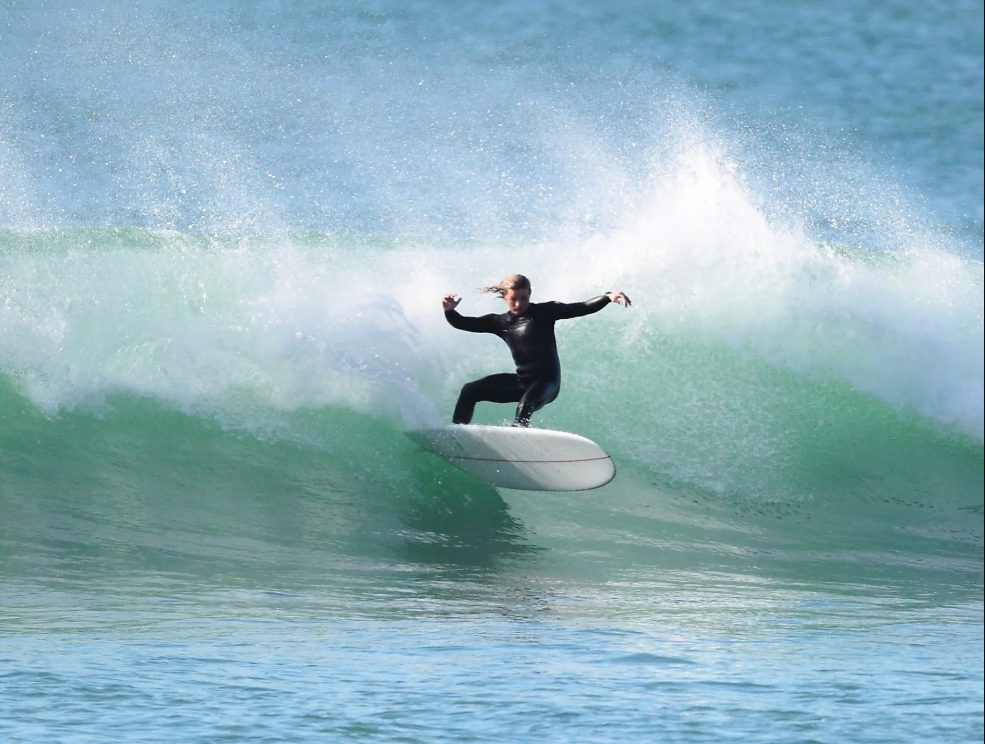
Performance & Shortboard Fin Guides
These articles cover faster, more reactive board designs and changing wave energy.
Together, they explain how fin design shapes speed, projection, and release in performance surfing.
Materials, Templates & Design Explained
Understanding fin construction helps surfers choose equipment that performs consistently in real conditions.
Topics include:
Fiberglass vs Honeycomb Surfboard Fins – Real Performance Differences
Surfboard Fin Materials Guide – Fiberglass vs Honeycomb vs Carbon Surfboard Fins Explained
These guides build the deeper knowledge behind why fins feel different, not just which to buy.
Buyer Guides & Practical Advice
For surfers ready to choose equipment, these articles focus on real decisions.
Explore Eveley Surfboard Fins
Once you understand fin performance, the next step is choosing reliable equipment built for real surf.
Browse:
Longboard center fins for trim, glide, and noseriding control
Side fins and quad rears for drive, stability, and tuning
Surfboard hardware and accessories for installation and adjustment
All Eveley fins are designed around balanced templates, solid Pro Glass construction, and dependable real-world feel across varied conditions.
Popular Center Fins
Popular Twin Fins
Popular Keel Fins
Popular Thruster Fins
If you ride a thruster setup, choosing the right fin size makes a major difference to how your board performs. These Eveley Pro Glass thruster sets cover the most common size ranges.
Small Thrusters
• 4.45" Raked Thruster Fins
Best suited to lighter surfers or boards that benefit from fast release and responsiveness.
Balanced Everyday Thrusters
• 4.5" Classic Thruster Fins – Pro Glass
A versatile thruster template designed for predictable control and smooth carving.
• 4.5" Progressive Thruster Fins – Black Pro Glass | FCSII Compatible Set
The perfect everyday thruster setup.
Medium Thrusters (Most Common Size)
• 4.75" Performance Thruster Fins – Pro Glass
A proven all-round fin size offering the right balance of speed, drive and control.
Large Thrusters Larger surfers should consider Big Boy thruster fins
• 5.4" Big Boy Thruster Fins – Pro Glass
Built for larger surfers or powerful conditions where extra hold is needed.
Popular Quad Fins
4.3" / 3.8" Freedom Quad Fins – Natural Pro Glass | Futures Compatible
4.9" / 3.1" DTR Quad Fins – Black on Natural Pro Glass | FCSII Compatible
4.9" / 3.1" DTR Quad Fins – Deep Blue on Green Pro Glass | FCSII Compatible
4.9" / 3.1" DTR Quad Fins – Solid Black Pro Glass | FCSII Compatible
4.9" / 3.1" DTR Quad Fins – Bright Green Pro Glass | FCS II Compatible
Popular Side Fins
3.6" Classic Side Surfboard Fins – Mid Blue Pro Glass | Futures Compatible
3.7" Classic Side Surfboard Fins – Natural Pro Glass | Futures Compatible
See The Eveley Fin Range
Futures™ is a trademark of Futures Fins. Eveley Surf is not affiliated with or endorsed by Futures Fins. All compatibility references to Futures Fins are for descriptive purposes only.
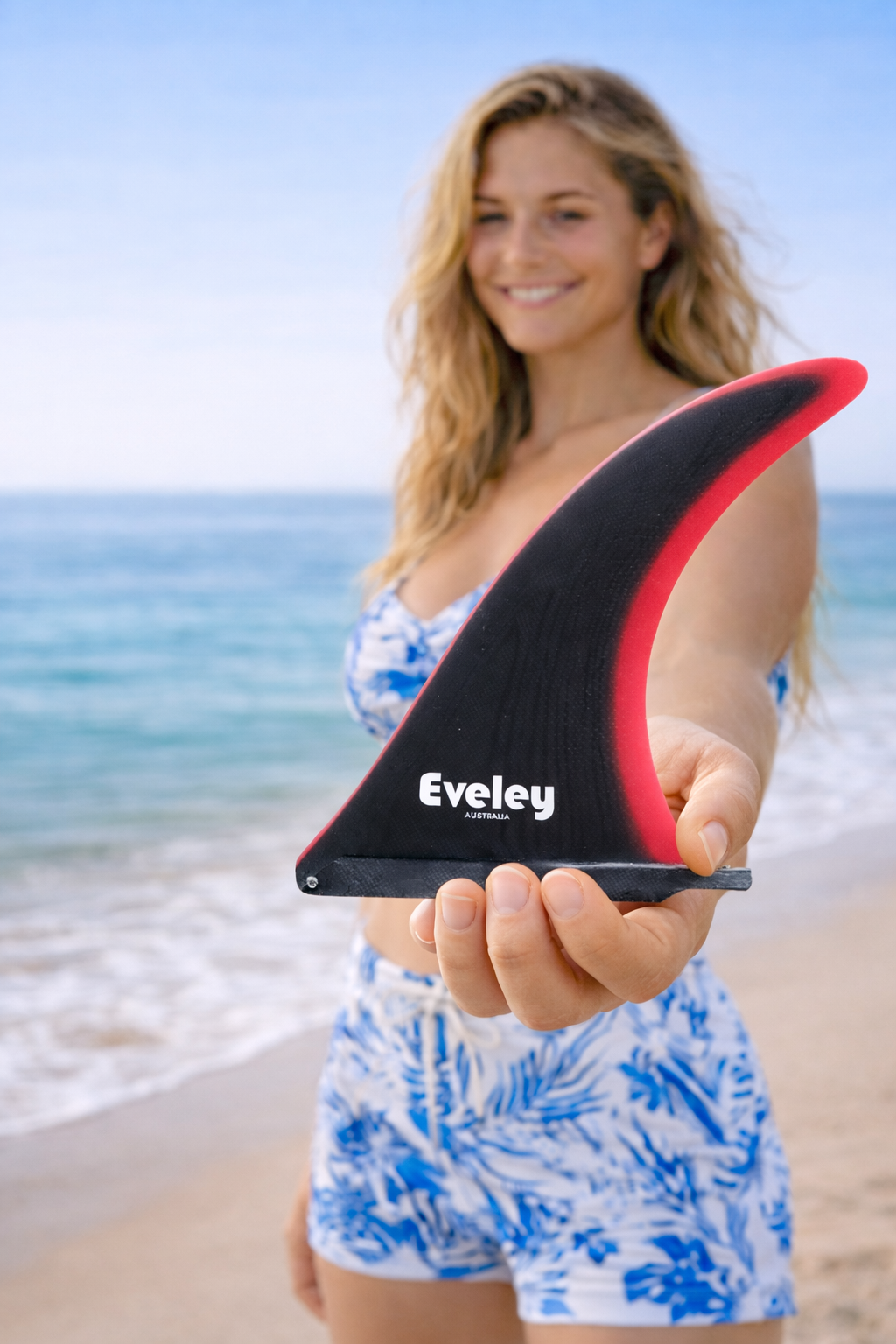
Single Fin vs 2+1 Longboard Setup — Which Should You Choose?
Few equipment choices influence longboard performance more than fin configuration.
While board design, rocker, and rails shape the overall character of a longboard, the decision between a single fin and a 2+1 setup ultimately determines how the board trims, turns, holds the pocket, and responds to changing wave energy.
Both configurations are deeply rooted in longboard history and remain widely used today—but they serve different surfing styles, wave types, and performance goals.
This guide explains the real-world differences between single fin and 2+1 longboard setups so you can choose the configuration that best matches your surfing.
New to surfboard fins? Start with the complete Surfboard Fin Guides overview.
What Is a Single Fin Longboard Setup?
A single fin configuration uses one center fin mounted in a sliding center fin box, with no side fins installed.
This is the traditional longboard arrangement that defined classic surfing through the 1960s and remains the benchmark for:
trim speed
glide
smooth, flowing turns
stable noseriding
Because water flows cleanly along the rail line without interruption from side fins, the board feels:
fluid, predictable, and timeless underfoot.
Performance Characteristics of a Single Fin
Strengths
Maximum trim speed and glide
Smooth, drawn-out turning arcs
Strong hold during noserides
Clean, uninterrupted rail engagement
These qualities make the single fin ideal for surfers seeking:
traditional style
cross-stepping flow
extended tip time
Limitations
Compared with multi-fin setups, single fins provide:
slower turning response
less drive through steep sections
reduced control in powerful surf
This does not make them worse—only different in purpose.
What Is a 2+1 Longboard Setup?
A 2+1 configuration combines:
one center fin in the sliding box
two smaller side fins near the rails
This hybrid design blends traditional longboard glide with modern responsiveness and control.
Today, the 2+1 is the most common all-round longboard setup.
Performance Characteristics of a 2+1
Strengths
Faster turn initiation
Increased drive through bottom turns
Greater hold in steeper waves
Improved control in varied conditions
These traits allow longboards to surf:
more vertically, more dynamically, and across a wider range of waves.
Trade-offs
Adding side fins slightly reduces:
pure trim glide
smoothness of drawn-out turns
maximum noseride stability
The feel becomes more responsive, less purely classic.
How Wave Type Influences the Best Choice
Small, clean point waves
Best suited to:
Single fin or loose 2+1
Why:
prioritises glide and trim
supports traditional style
enhances noseriding control
Everyday beach breaks
Best suited to:
2+1 setup
Why:
added drive in weak sections
better control on steeper drops
more forgiving across conditions
Powerful or fast waves
Best suited to:
Responsive 2+1
Why:
stronger hold at speed
tighter turning radius
improved stability in critical sections
How Surfing Style Affects the Decision
Traditional longboard style
Choose:
Single fin
Because it delivers:
smooth trim lines
flowing rail turns
classic noseride stability
Progressive longboard style
Choose:
2+1
Because it enables:
sharper top turns
quicker redirection
performance-oriented manoeuvres
Can One Board Do Both?
Yes.
Many longboards include:
a sliding center fin box
removable side fin boxes
This allows surfers to switch between:
pure single fin feel
versatile 2+1 performance
Simply changing fins can transform the board’s behaviour without replacing the board itself.
Fin Size Still Matters
Regardless of configuration:
larger center fins increase hold and stability
smaller center fins increase turning freedom
Correct sizing ensures the chosen setup performs as intended, rather than feeling stiff or unstable.
Why Fiberglass Construction Remains the Standard
Serious longboard surfers consistently prefer solid fiberglass (Pro Glass) fins because they provide:
predictable flex
smooth energy release
long-term durability
This consistency is especially important when comparing:
single fin glide
2+1 responsiveness
Material stability ensures the differences you feel are true performance changes, not construction inconsistencies.
Recommended Eveley Fins for This Setup
The following Eveley fin templates match the performance characteristics discussed in this guide. Each option is built from solid Pro Glass for consistent flex, durability, and real-world surf reliability.
10" International 4A Center Fin
Classic swept template designed for trim speed, glide, and stable noseriding.
→ Shop 10" International 4A Center Fin
9.25" Classic Center Fin
Balanced all-round template blending smooth turning with dependable hold.
→ Shop 9.25" Classic Center Fin
3.6" Classic Side Fins (Pair)
Supportive side bites adding control and drive to versatile 2+1 setups.
→ Shop 3.6" Classic Side Fins (Pair)
Explore the full Eveley fin range to fine-tune your board’s feel, speed, and control across different wave conditions.
Frequently Asked Questions
Is a single fin better for beginners?
Often yes.
Single fins provide stable, predictable trim, which can feel easier for early longboard progression.
Does a 2+1 reduce noseriding ability?
Slightly.
Side fins add control but can reduce the pure hold and glide of a dedicated single fin.
Which setup is most versatile overall?
The 2+1 configuration generally handles the widest range of waves and surfing styles.
Supporting Knowledge Hub Articles
Longboard Fins Guide Australia – Single, 2+1 & Performance Explained
Conclusion
Choosing between a single fin and a 2+1 longboard setup is not about right or wrong—it is about matching equipment to:
wave conditions
surfing style
desired board feel
Single fins deliver timeless glide, flow, and noseride stability.
2+1 setups provide versatility, control, and modern responsiveness.
Understanding these differences allows surfers to tune performance with precision—often by simply changing fins rather than boards.
Mastering this choice leads to: greater control, better wave matching, and a more refined longboard experience.
Popular Center Fins
11" International 4A Center Fin – Blue on White Pro Glass
Popular Side Fins
3.6" Classic Side Surfboard Fins – Mid Blue Pro Glass | Futures Compatible
Longboard Fin Placement Explained — How Moving Your Fin Changes Everything
New to surfboard fins? Start with the complete Surfboard Fin Guides overview.
Longboard surfers often focus on fin size and template, yet fin placement inside the sliding center fin box can produce changes just as significant as switching fins entirely.
A movement of only a few millimetres can alter:
turning radius
trim speed
noseride stability
overall board control
Understanding how placement affects performance allows surfers to fine-tune feel in real wave conditions without buying new equipment.
This guide explains exactly what happens when you move your longboard fin forward or back—and how to find the ideal position for your board, waves, and surfing style.
Why Fin Placement Matters So Much on Longboards
Unlike shortboards, longboards rely heavily on directional stability and rail engagement to generate speed and maintain control.
Because the center fin acts as the board’s primary tracking and pivot point, shifting its position changes:
how easily the board turns
how firmly it holds trim
how stable it feels during noseriding
Think of fin placement as the balance control between glide and manoeuvrability.
Moving the Fin Back — Stability, Hold, and Noseride Control
Positioning the fin toward the tail increases the distance between the pivot point and the surfer’s stance.
This produces a noticeably different feel in the water.
Performance effects of a rearward position
Greater directional stability in trim
Stronger hold during noserides
Smoother, more drawn-out turns
Increased sense of control in steeper sections
Because the board resists quick rotation, it feels:
secure, predictable, and traditionally “locked in.”
When to move the fin back
Rearward placement works best for:
traditional logs and noseriders
clean point waves
surfers prioritising trim and flow
cross-stepping and tip time
This is the classic longboard feel many surfers seek.
Moving the Fin Forward — Looseness, Speed, and Turning Freedom
Sliding the fin toward the nose shortens the turning radius and reduces drag behind the tail.
Even small adjustments create a noticeably looser response.
Performance effects of a forward position
Faster rail-to-rail transitions
Tighter turning arcs
Increased acceleration out of turns
Reduced noseride hold and trim stability
The board begins to feel:
livelier, quicker, and more performance-oriented.
When to move the fin forward
Forward placement suits:
performance longboards
steeper beach breaks
surfers using top turns and cutbacks
smaller center fins or 2+1 setups
This adjustment helps longboards behave more like larger shortboards.
How Much Movement Makes a Difference?
One of the most surprising realities of longboard tuning is:
very small changes matter.
Practical guideline
Adjust in 5–10 mm increments only
Test each position for multiple waves
Avoid large jumps that hide the ideal balance point
Because water flow changes subtly, patience reveals the best setting.
Matching Placement to Fin Size
Fin placement and fin size always work together, not separately.
Large center fins
Usually perform best slightly back
Maintain hold and trim control
Prevent excessive stiffness
Smaller performance fins
Often benefit from slightly forward placement
Restore manoeuvrability
Improve responsiveness in turns
Balancing size + position creates the correct overall feel.
Placement Differences in Single Fin vs 2+1 Setups
Single fin longboards
Placement is the primary tuning method, affecting:
noseride control
turning freedom
trim speed
Small changes are very noticeable.
2+1 longboards
Side fins already add:
grip
drive
turning response
So the center fin placement becomes a fine-tuning control rather than the only adjustment.
Wave Conditions and Ideal Fin Position
Small, soft waves
Better with the fin slightly back to:
maintain trim speed
improve glide
stabilise weak-energy surfing
Clean point waves
Best near the middle to slightly back, offering:
balanced turning
reliable noseride hold
smooth rail flow
Steep or powerful surf
Often improved by moving the fin slightly forward to:
tighten turning radius
reduce drag on take-off
increase control in critical sections
Wave energy should always guide final placement.
Common Fin Placement Mistakes
Leaving the fin in the factory middle position forever
Many surfers never experiment, missing:
major performance gains
better noseriding
improved turning feel
Moving the fin too far at once
Large adjustments make it impossible to feel:
subtle balance points
true board response
Ignoring placement when changing fin size
Every new fin should be re-tuned in the box for best performance.
Why Fiberglass Flex Still Matters
Regardless of placement, solid fiberglass (Pro Glass) construction ensures:
predictable flex through turns
consistent response at different speeds
long-term durability in real surf
This stability makes placement adjustments clear and meaningful, rather than vague or inconsistent.
Recommended Eveley Fins for This Setup
The following Eveley fin templates match the performance characteristics discussed in this guide. Each option is built from solid Pro Glass for consistent flex, durability, and real-world surf reliability.
10" California Dreaming Center Fin
Classic swept template designed for trim speed, glide, and stable noseriding.
→ Shop 10" California Dreaming Center Fin
9" International 4A Center Fin
Balanced all-round template blending smooth turning with dependable hold.
→ Shop 9" International 4A Center Fin
7.2" Flow Flex Center Fin
Responsive performance template enabling tighter turns and quicker release.
→ Shop 7.2" Flow Flex Center Fin
Explore the full Eveley fin range to fine-tune your board’s feel, speed, and control across different wave conditions.
Frequently Asked Questions
How far should a longboard fin be from the tail?
Most surfers begin near the middle of the box, then adjust forward or back in small increments to match feel and wave type.
Does fin placement affect noseriding?
Yes.
Moving the fin backward increases hold and stability, making noseriding noticeably easier.
Can fin placement replace changing fin size?
Sometimes.
Small placement adjustments can mimic larger or smaller fin behaviour, making it the first tuning step before buying a new fin.
Conclusion
Longboard fin placement is one of the most powerful yet overlooked tuning tools in surfing.
Moving the fin back increases stability, glide, and noseride control
Moving it forward unlocks speed, looseness, and tighter turning
Small adjustments reveal the true balance point of the board
By learning to fine-tune placement—combined with the right fin size and fiberglass construction—surfers can transform longboard performance without changing boards.
Mastering this simple adjustment leads to:
greater control, smoother flow, and more responsive surfing in every wave condition.