
Quad Fin Setup Explained – Speed, Hold & When to Ride a Quad Setup
New to surfboard fins? Start with the complete Surfboard Fin Guides overview.
Quad fins have become one of the most popular surfboard setups because they deliver speed, drive, and powerful rail hold without the drag of a centre fin.
From high-performance shortboards to twin + trailer hybrids and modern mid-lengths, quad setups allow surfers to generate exceptional down-the-line speed and fast projection through turns.
In this guide you’ll learn:
• What quad fins are
• Why they feel faster than thrusters
• When to ride a quad instead of a thruster
• How to choose the right quad fin size
• Which boards work best with quad setups
What Is a Quad Fin Setup?
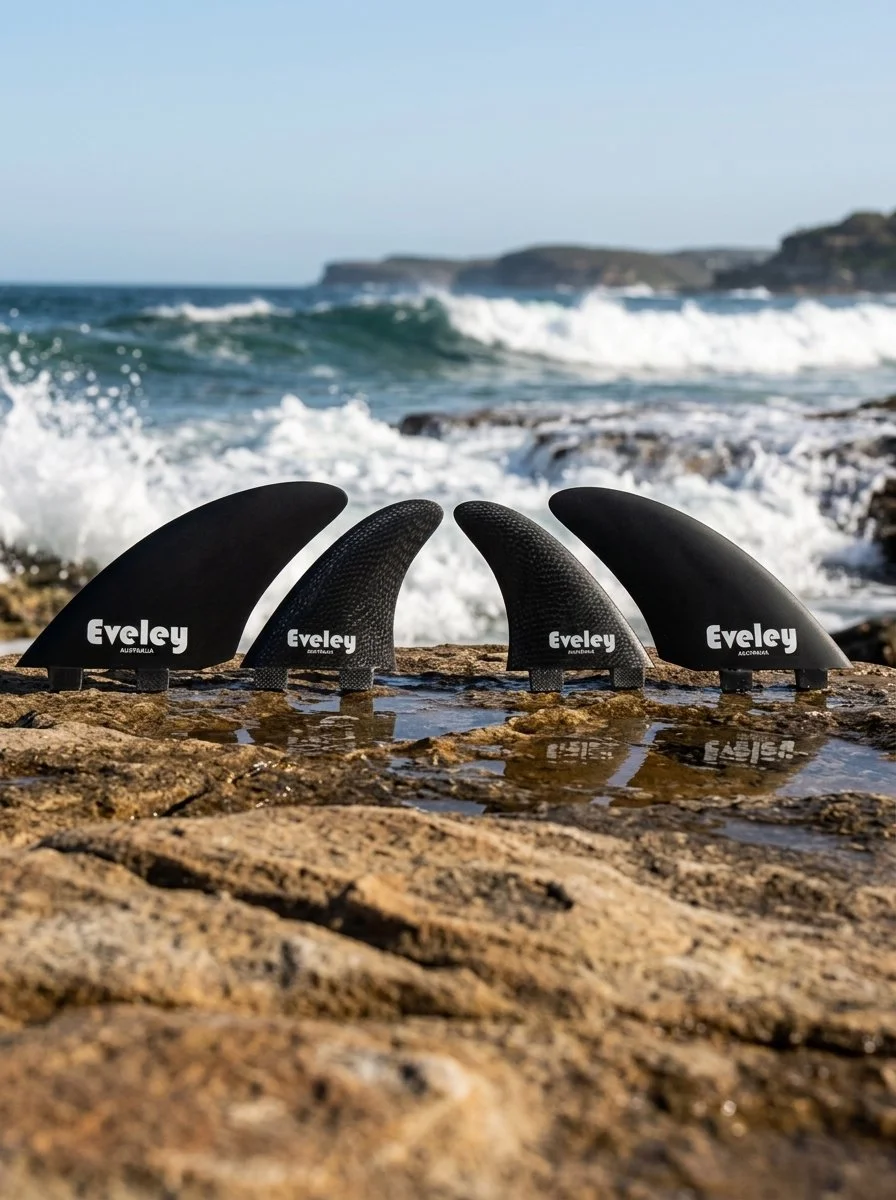
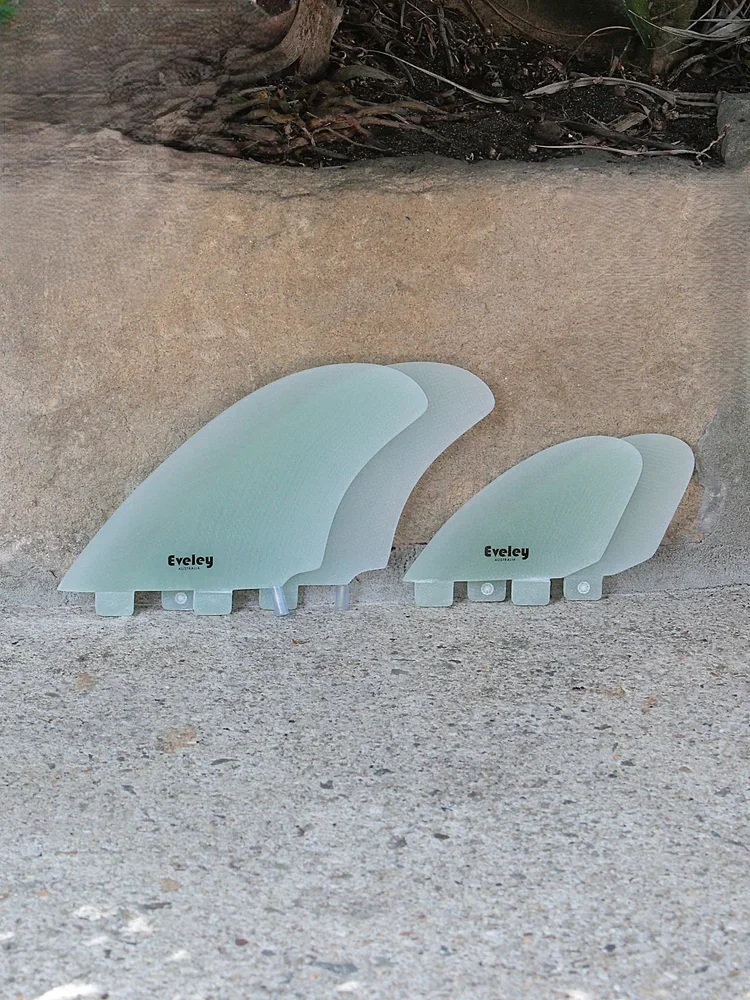
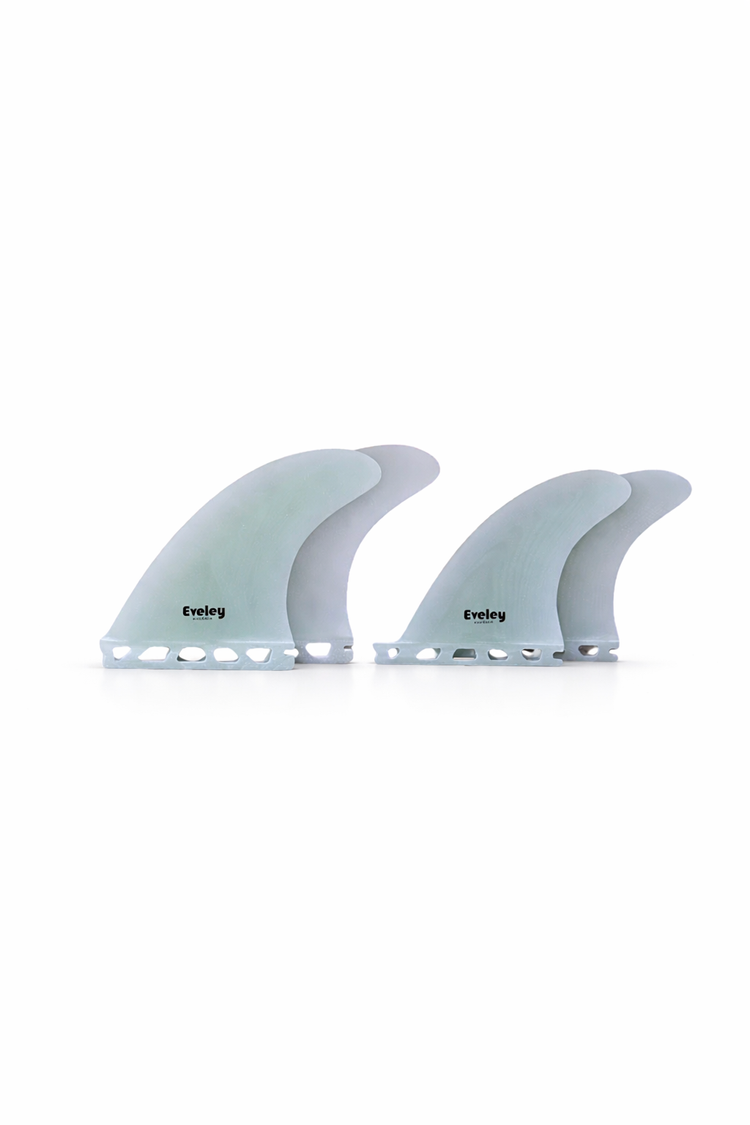
A quad setup uses four fins — two front fins and two rear fins — with no center fin.
This creates a clean water flow down the center of the board, reducing drag and increasing speed.
Typical layout:
Front fins → provide drive and turning power
Rear fins → provide hold and control
Because there is no center fin slowing water flow, quad setups tend to feel faster and more responsive down the line.
Learn more about different surfboard fin setups here:
Beginner’s Guide to Surfboard Fins
How Quad Surfboard Fins Actually Work
Quad fins are one of the most misunderstood setups in surfing.
Many surfers know quads feel:
Fast
Smooth
Drivey
…but don’t fully understand why.
The truth is simple:
Quad performance is controlled by the relationship between front and rear fins — not just the template itself.
This guide explains everything that matters:
Front vs rear fin sizing
Cant and toe influence
Placement and hold
When quads outperform thrusters
How to choose the right quad set for your board
How Quad Fins Are Designed
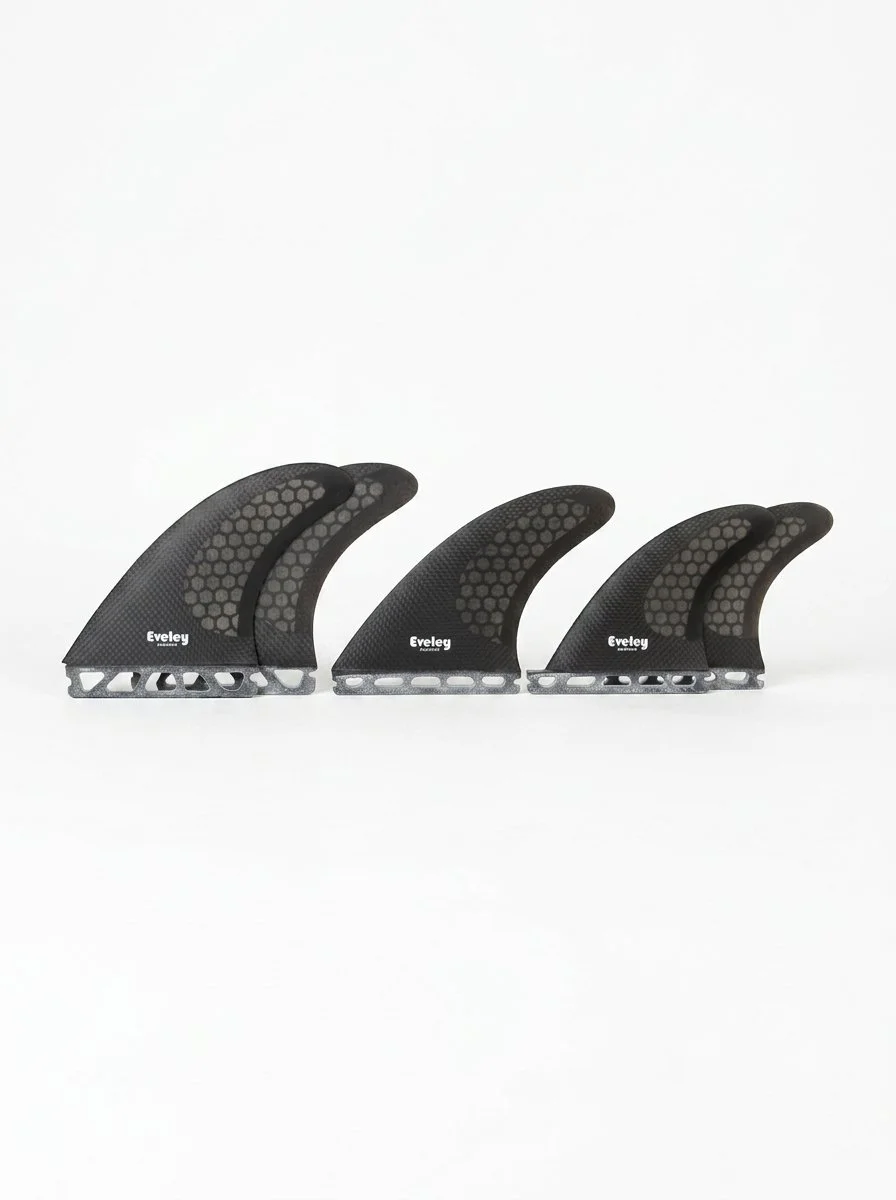
Quad fin sets usually include four fins in two sizes.
Front fins are typically larger, while rear fins are smaller stabilisers.
This balance creates:
• drive from the front fins
• control from the rear fins
• smooth rail-to-rail transitions
Performance quad sets often use different foil designs to maximise speed.
Learn more here:
Surfboard Fin Foil Types Explained
Quad Fin Types & Templates
Not all quad fins are designed the same. Different templates change how the board feels in the water.
Understanding these differences helps surfers choose a quad setup that matches their board design and wave conditions.
Quad fins must match your board’s fin system. See: Futures Compatible Fins Explainedand FCS vs FCS II Fins Explained.
Performance Quad Sets
Performance quads are designed for modern shortboards and high-performance surfing.
They typically feature:
• larger front fins for drive
• smaller rear fins for control
• balanced rake for carving turns
This setup provides:
strong acceleration
clean projection through turns
excellent hold in powerful waves
Example:
RM Quad Fins – Pro Glass
Speed-Oriented Quad Sets
Some quad templates prioritise maximum down-the-line speed.
These designs usually use:
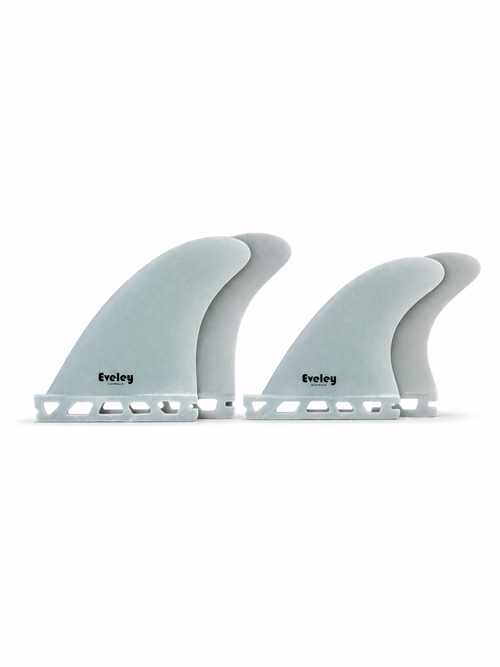
• upright rear fins
• flatter foils
• slightly smaller stabilisers
This reduces drag and makes the board feel extremely fast and lively.
These setups work especially well on:
fish surfboards
hybrids
weak or fast-running waves
Quad + Trailer Hybrid Setups
Some surfers combine quad fins with a small trailer fin to add extra control.
This hybrid approach creates a feel somewhere between:
quad speed
thruster pivot
Learn more about these combinations here:
Surfboard Fin Compatibility Explained
How Small Stabiliser Fins Change Surfboard Performance | Twin vs Twin + Trailer Surfboard Fins Guide
Popular Trailer / Stabilizers: 1.5" Mini Center Stabilizer Fin – Black Pro Glass | Futures Compatible
Why quad fins feel faster than thrusters
The biggest difference: No center fin drag
Thrusters rely on a center fin for stability, which:
Adds control
But creates drag
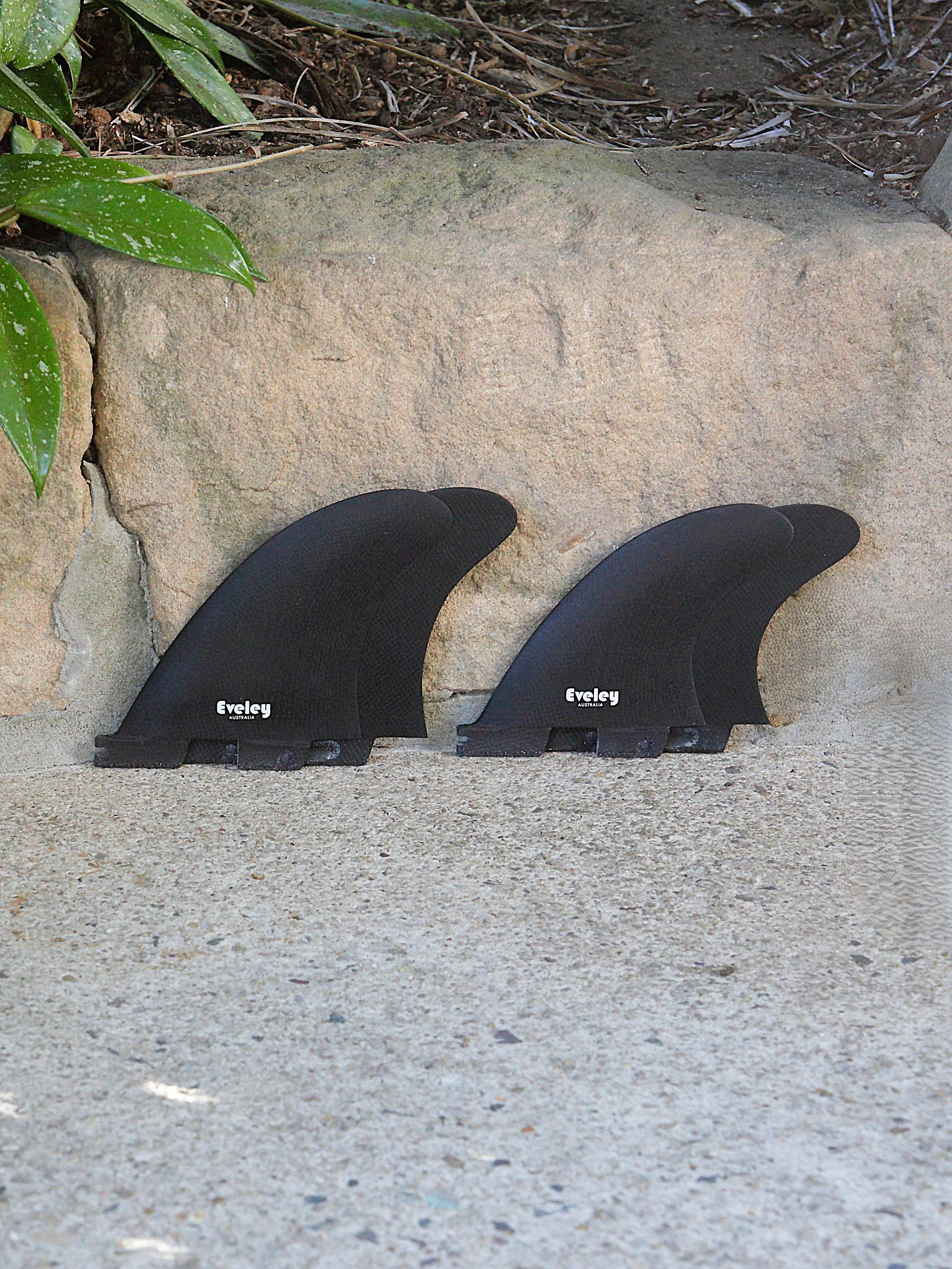
Quads remove that centre fin and instead use:
Two drive fins (front)
Two stabilising fins (rear)
This creates:
Cleaner water flow
Higher down-the-line speed
Smoother rail-to-rail transitions
That’s why quads feel:
Fast without effort.
Front vs rear quad fin sizing
This is the single most important factor in quad performance.
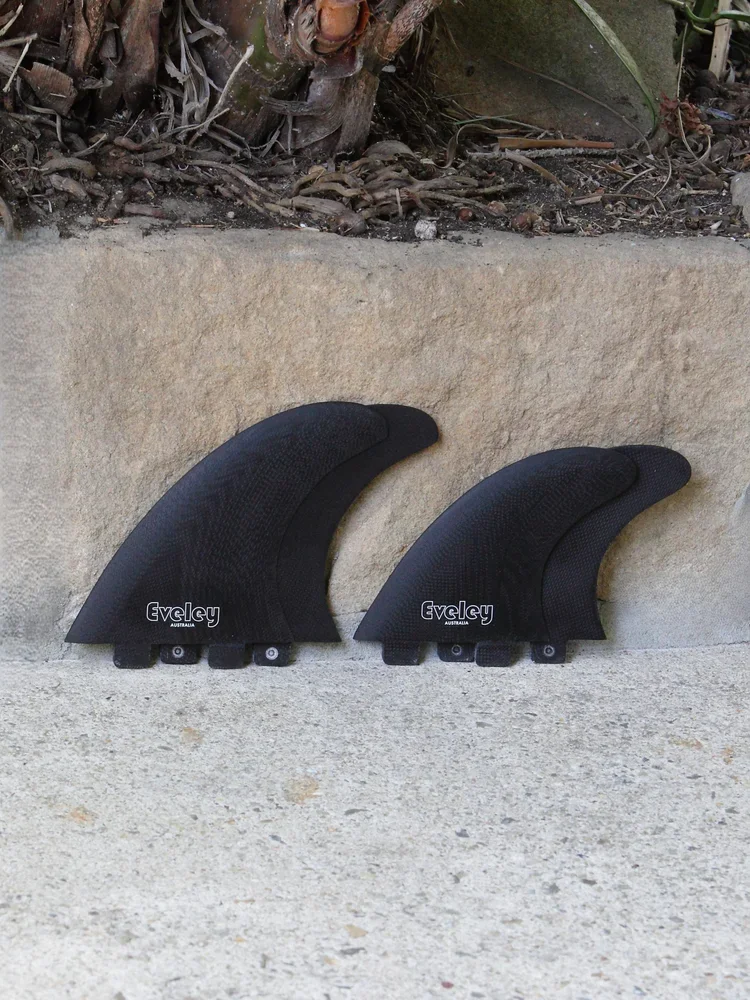
Large front fins = drive and projection
Front fins control:
Acceleration
Hold through turns
Directional stability
Bigger fronts create:
Stronger down-the-line speed
More drawn-out carving turns
Increased hold in steeper waves
This is the classic performance quad feel.
Smaller rear fins = release and flow
Rear fins manage:
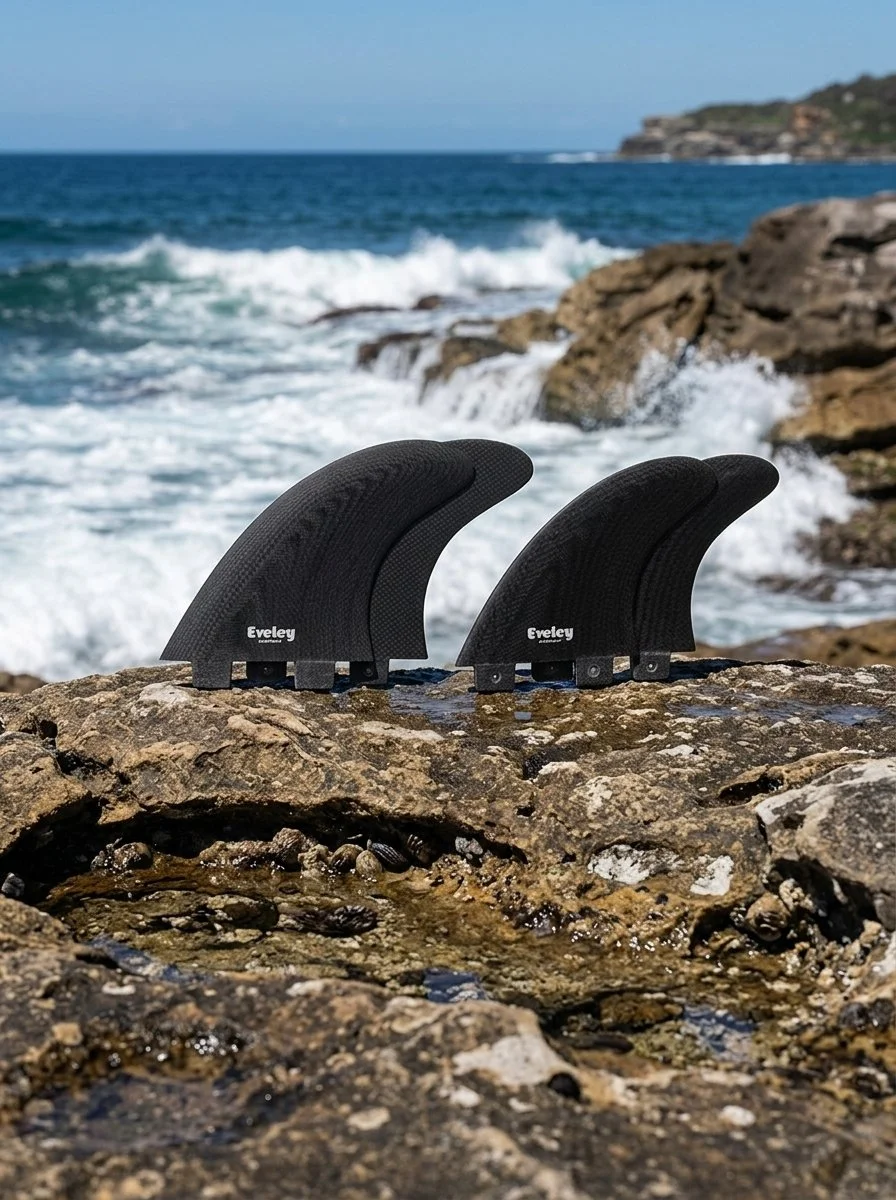
Stability
Turn completion
Release off the top
Smaller rears give:
Faster rail-to-rail transitions
Less drag
Smoother flow
Too large → board feels stiff
Too small → board feels skatey
Balance is everything.
The ideal front-to-rear ratio
Most high-performance quads follow:
Front fins noticeably larger than rears
Common real-world pattern:
Fronts: 4.5" – 5.1"
Rears: 2.8" – 3.5"
This delivers:
Drive from the front
Release from the rear
Maximum usable speed
This sizing logic is used across:
Performance shortboards
Hybrids
Step-downs
…and forms the basis of modern quad design.
Cant and toe — the hidden performance factors
Many surfers never consider fin angle, yet it strongly affects feel.
Cant (outward lean)
More cant:
Increases turning sensitivity
Feels looser
Best for small waves
Less cant:
Adds drive and hold
Feels faster and more stable
Better for powerful surf
Toe-in (angle toward the nose)
More toe:
Quicker turn initiation
Slightly slower top speed
Less toe:
Faster down-the-line speed
Longer drawn-out lines
Shapers tune cant and toe to match:
Board rocker
Outline
Intended wave range
That’s why the same quad set can feel different in different boards.
Quad placement and hold in turns
Rear quad placement determines:
Pivot vs projection
Rears closer to the rail
More pivot
Tighter turn radius
Looser feel
Rears closer to stringer
More drive
Stronger hold
Longer carving lines
Performance boards usually favour: Drive-biased placement for speed and control.
Quad vs Thruster – What’s the Difference?
Both setups are extremely versatile, but they behave differently in the water.
How Different Fin Setups Feel
Thruster (3 fins) – Offers moderate speed with strong pivot control, making it the most versatile setup for everyday surfing.
Quad (4 fins) – Feels very fast with strong rail hold, which works especially well in fast or powerful waves.
Twin (2 fins) – Provides maximum speed with a loose, flowing feel, often preferred for retro-style surfing and smooth carving lines.
If you want to understand thrusters in more detail, read:
Thruster Fins Explained
When quads outperform thrusters
Quads are not “better” — just different tools.
Quads excel in:
Small or weak waves
Fast point breaks
Down-the-line surfing
Surfers who prioritise speed and flow
Because:
Less drag
Continuous rail drive
Smooth transitions
Thrusters still win in:
Vertical surfing
Tight pocket turns
Critical top turns
Heavy competition conditions
The centre fin provides:
Pivot
Stability
Predictable release
That’s why pros still ride thrusters in:
Steep, powerful contest waves.
Choosing the right quad setup for your board
Performance shortboard
Choose:
Drivey front fins
Medium-small rears
Fiberglass construction for control
Goal:
Speed without losing hold.
Hybrid or groveller
Choose:
Slightly larger rears
Moderate cant
Balanced flex
Goal:
Maintain speed in weak surf while staying controllable.
Step-up or powerful waves
Choose:
Stiff fiberglass fronts
Smaller rears for release
Lower cant for maximum drive
Goal: Hold at speed without sliding.
Some longboards also use quad setups for speed-oriented surfing, although traditional longboarding usually uses a centre fin.
Learn more here: Best Fin Setup for Mid-Length Surfboards
Quad Fin Size Guide
Choosing the correct fin size depends mostly on surfer weight.
Recommended Quad Fin Size by Surfer Weight
Surfers under 60 kg usually ride Small quad fins. Example: 4.3" / 3.8" Freedom Quad Fins – Natural Pro Glass | Futures Compatible
Surfers 60–75 kg generally suit Medium quad fins.
Surfers 75–90 kg typically perform best with Large quad fins. Example: 4.6" / 4.2" Classic Quad Surfboard Fins – Black Pro Glass Futures Compatible
Surfers over 90 kg should usually choose Extra Large quad fins.
This is a starting guide — some surfers choose slightly smaller fins for a looser feel or slightly larger fins for more drive and hold.
Full sizing guide: Surfboard Fin Size Guide
Why fiberglass quads remain the benchmark
Across all quad setups, one pattern is consistent:
Experienced surfers favour fiberglass
Because it provides:
Predictable flex
Strong hold
Smooth release
Long-term durability
Lightweight composites may feel fast in tiny waves, but fiberglass delivers:
Real performance when waves matter.
That’s why Eveley quad fins focus on:
Solid Pro Glass construction
Balanced front/rear sizing
Reliable drive and control
Full explanation here:
Fiberglass vs Honeycomb Fins
Quad Fin Advantages
Quad setups are popular because they provide:
✔ excellent speed
✔ strong rail hold
✔ powerful projection
✔ smooth carving turns
For surfers who prioritise speed and flow, quads can feel incredibly lively.
Possible Trade-Offs
While quad fins are fast, they can feel different from thrusters.
Some surfers notice:
• slightly less pivot in tight turns
• more drawn-out carving arcs
Many surfers solve this by switching between thruster and quad setups depending on the conditions.
How to Know If a Quad Setup Is Right for You
Quad fins are ideal if you want:
• maximum down-the-line speed
• strong hold in steep waves
• flowing carving turns
They are especially popular with surfers riding fish boards, performance shortboards and hybrids.
Common quad fin mistakes
Running equal-size fronts and rears
Creates:
Too much drag
Stiff turning
Reduced speed
Quads need size contrast to work properly.
Choosing fins too small
Results in:
Slide in turns
Loss of hold
Unstable feel at speed
Always size for:
Control first, looseness second.
Ignoring board design
Fin choice must match:
Tail width
Rocker
Wave type
No fin works perfectly in every board.
Related Surfboard Fin Guides
Improve your fin knowledge with these Eveley guides:
Quad vs Thruster: Which Surfboard Fin Setup Is Best?
Quad vs Thruster Surfboard Fins Explained – Speed, Control & Feel
Surfboard Fin Compatibility Explained
Complete Surfboard Fin Buyer’s Guide
Best Fins for Small Waves | Generate Speed in Weak Surf
Twin Keel Surfboard Fins – The Complete Guide to Speed, Drive & Classic Flow
Controller Split Keel Quad Fins Guide
Best Fin Setup by Wave Type
Different surf conditions favour different fin setups. Choosing the right setup can make a huge difference to how your board feels in the water.
Small or Weak Waves
Best setup: Quad or Twin
Weak waves require boards that generate speed easily. Quad setups are popular here because they allow water to flow cleanly down the board without the drag of a centre fin.
This helps surfers maintain speed even when the wave lacks power.
Compare twin and quad surfboard fins, including speed, hold, turning feel, and best wave conditions here: Twin vs Quad Fins Explained
Fast Point Waves
Best setup: Quad
Point breaks often produce long, fast walls where speed and hold are critical.
Quad fins excel in these conditions because they provide:
• powerful down-the-line speed
• strong rail hold
• smooth carving turns
Hollow or Steep Waves
Best setup: Quad or Thruster
When waves are hollow or powerful, control becomes important.
Quad setups provide excellent hold through long carving lines, while thrusters allow tighter turning in critical sections.
More about thruster setups here:
Thruster Fins Explained
Everyday Beach Break Surf
Best setup: Thruster
Thrusters remain the most versatile setup for changing conditions because they offer:
• reliable control
• predictable turning
• strong pivot through tight sections
FAQs
Are quad fins faster than thrusters?
Yes. Quad setups usually feel faster because there is no center fin creating drag, allowing water to flow cleanly down the board.
Are quad fins good for small waves?
Yes. Their speed generation can help maintain momentum in weak surf.
Can beginners ride quad fins?
Yes, although many beginners find thrusters slightly easier to control at first.
Are quad fins good for barrels?
Yes. The extra rail hold makes them excellent in steep or hollow waves.
Final takeaway
Quad performance comes down to balance:
Large fronts → drive
Smaller rears → release
Correct cant and placement → control
When tuned properly, quads deliver:
Speed, flow, and effortless projection
that thrusters simply cannot match in the right waves.
That’s why quads remain a core performance option
for surfers chasing pure down-the-line speed.
These Eveley fin templates match the performance characteristics discussed in this guide.
Each option is built from solid Pro Glass for consistent flex, durability, and real-world surf reliability.
4.3" / 3.8" Freedom Quad Fins – Natural Pro Glass | Futures Compatible Quad Set (4 Fins)
Balanced speed, control, and smooth rail-to-rail response for modern quad surfboards. Durable natural Pro Glass construction with Futures-compatible bases in a matched four-fin set.4.3" / 3.8" Freedom Quad Fins – Natural Pro Glass | FCS CompatibleA fast, flowing quad fin set with classic Pro Glass feel—perfect for surfers wanting speed, freedom, and smooth control.
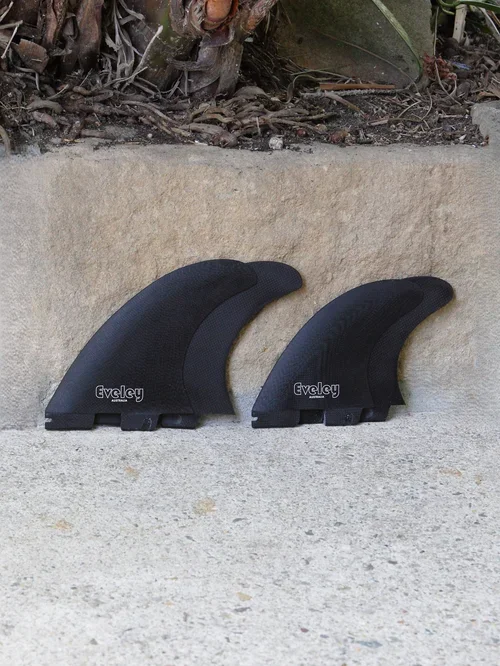
4.5" / 4" Contemporary Quad Fins – Natural Pro Glass Futures Compatible
4.5" / 4" Contemporary Quad Fins – Black Pro Glass | FCS Compatible Quad Set (4 Fins)
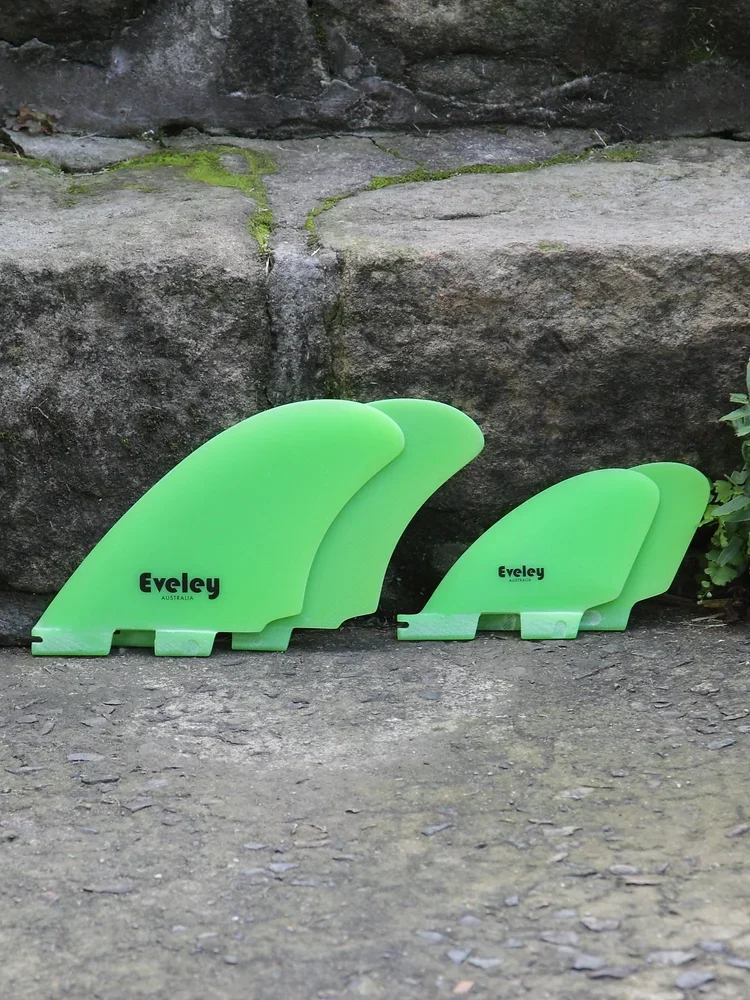
Drive, speed, and controlled release for modern quad surfboards. Durable black Pro Glass construction in a balanced four-fin configuration designed for reliable everyday performance.4.9" / 3.1" RM Quad Surfboard Fins – Bright Green Pro Glass Speed & Drive | FCS II Compatible
Balanced drive, clean release, and controlled quad speed — a performance DTR quad set built in Pro Glass for fast, stable surfing across modern boards.
5.25" / 4.4" Big Boy Quads, black Pro Glass. FCSII compatible set of four fins.
Built for power and confidence — Big Boy Quads deliver maximum drive, hold, and control for bigger boards and stronger surfers.Popular Rear Quad Fins
1.4" Runner Side Fins / Mini Quad Rears – Pro Glass White | FCS Compatible Premium surfboard fins designed as 1.4" runner side fins or mini quad rears for added drive, speed and stability in performance quad setups.
1.9" Mini Side Fins (Mini Quad Rears) – Black Pro Glass. FCS Compatible, Set of 2Compact control in durable solid Pro Glass construction.
Popular Stabilizer Fins
Futures™ is a registered trademark of Futures Fins. Eveley Surf is not affiliated with or endorsed by Futures Fins. All compatibility references to Futures Fins are for descriptive purposes only.
FCS™ and FCSII™ are registered trademarks of Surf Hardware International Pty Ltd. Eveley Surf is not affiliated with or endorsed by Surf Hardware International Pty Ltd. All compatibility references to FCS and FCSII are for descriptive purposes only.
Eveley Quad Fins
Futures™ is a trademark of Futures Fins. Eveley Surf is not affiliated with or endorsed by Futures Fins. All compatibility references to Futures Fins are for descriptive purposes only.
FCS™ and FCSII™ are registered trademarks of Surf Hardware International Pty Ltd. Eveley Surf is not affiliated with or endorsed by Surf Hardware International Pty Ltd. All compatibility references to FCS and FCSII are for descriptive purposes only.