
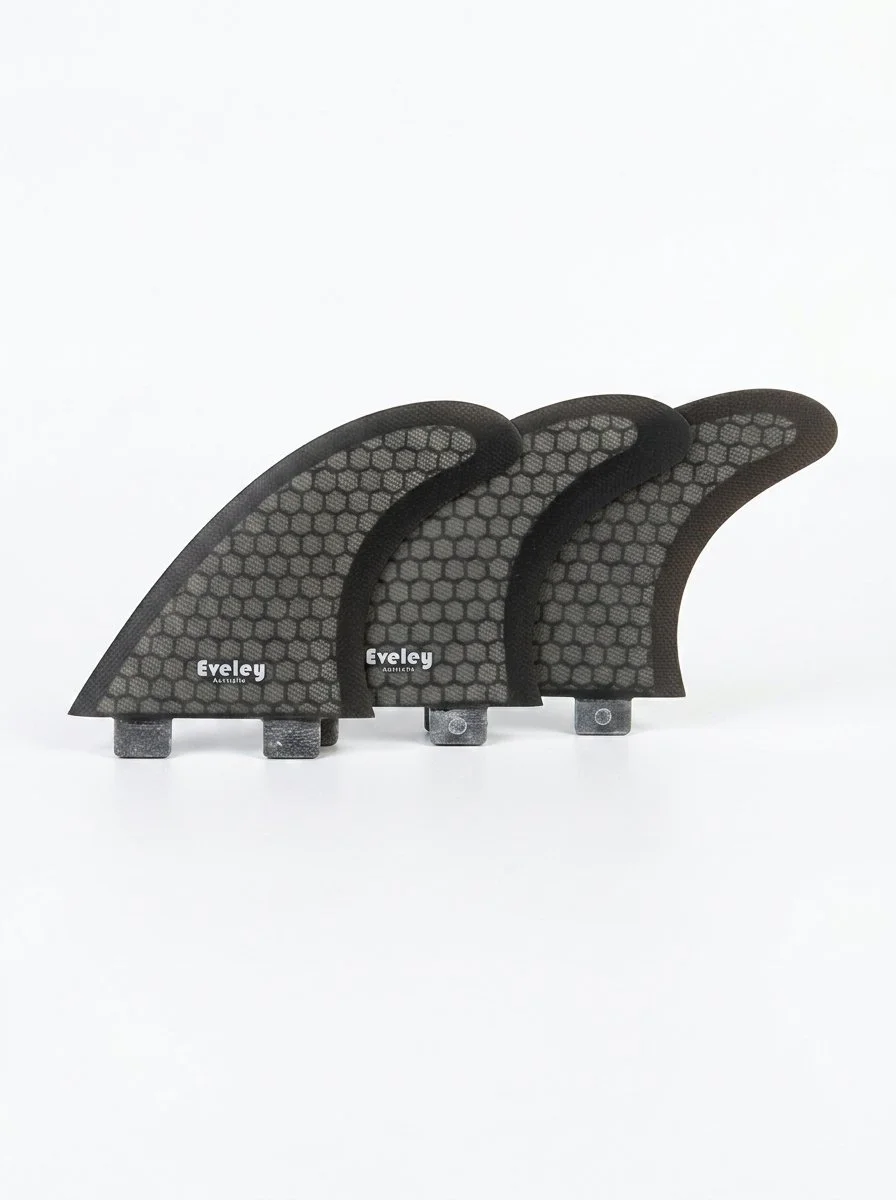
Twin Fins Compared with Thruster Fins: Speed, Flow or Control?
Twin fins feel fast, free and flowing, while thruster fins provide greater hold, stability and turning control. Compare both surfboard-fin setups and choose the right option for your board, waves and surfing style.
Compare twin fins with thruster surfboard fins to find the best setup for speed, flow, control and everyday surfing.
Choosing between twin fins and thruster surfboard fins changes far more than the number of fins under your board. Twin fins generally feel faster, freer and more flowing, while thruster fins provide greater stability, tighter turning control and more predictable performance in powerful waves.
The right choice depends on your board, the waves you surf and whether you prefer effortless speed or precise control.
Quick Answer: Twin Fin or Thruster?
Choose twin fins if you want:
Fast, effortless acceleration
Less drag through weaker sections
Smooth, flowing turns
A loose and lively feeling
More freedom through the tail
Classic fish or modern twin-fin performance
Choose thruster fins if you want:
Greater control in powerful surf
Predictable hold through hard turns
Tighter direction changes
More stability under your back foot
Reliable performance across varied conditions
A familiar all-round surfing experience
The simplest comparison: twin fins favour speed and flow; thrusters favour control and predictability.
Explore the complete range of Eveley surfboard fins, including twin, thruster, quad and centre-fin options made in Australia.
What Is a Twin-Fin Setup?
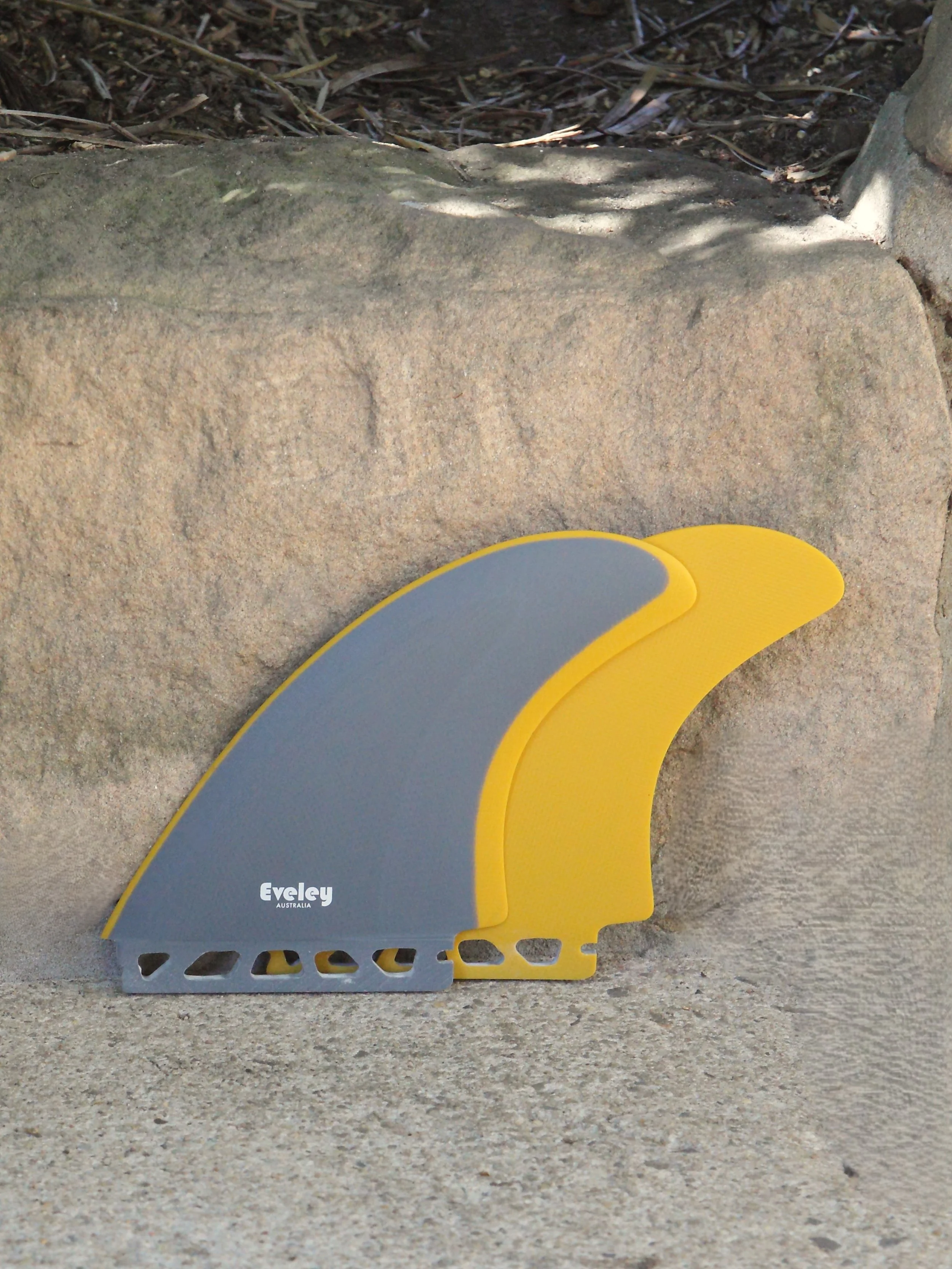
A twin-fin surfboard uses two relatively large side fins with no centre fin. Removing the centre fin reduces resistance through the water and allows the board to accelerate quickly.
Twin fins are commonly associated with fish surfboards, but modern upright templates have made them suitable for much more progressive surfing. Depending on the template, twin fins can provide anything from long, drawn-out fish-board lines to fast, vertical direction changes.
The two most common styles are:
Twin Keel Fins
Keel fins have a wide base, substantial surface area and a swept-back outline. They are designed to generate strong drive and maintain speed through long, flowing turns.
They are generally best suited to traditional fish boards and wider-tailed designs.
See the Twin Keel Surfboard Fins Guide for a closer look at keel-fin speed, hold and board compatibility.
Upright Twin Fins
Upright twin fins have less rake and a more vertical outline. They pivot more easily than traditional keels, making them suitable for tighter turns and modern twin-fin surfing.
They retain the speed and freedom of a twin while providing a more responsive feeling through direction changes.
Learn more in the Upright Twin Fins Performance and Setup Guide.
What Is a Thruster-Fin Setup?
A thruster uses three fins: two larger side fins and a centre fin.
The centre fin adds stability and gives the surfer a more dependable pivot point. This creates greater control when pushing hard through bottom turns, carving on rail or surfing steeper and more powerful waves.
Thrusters became the standard performance setup because they balance:
Speed
Drive
Hold
Turning control
Stability
Predictable release
Compared with twin fins, thrusters usually require slightly more effort to generate speed. The benefit is a more controlled and familiar response when the surfer applies pressure through the back foot.
For a deeper explanation, read the Thruster Surfboard Fins Guide.
Twin Fins vs Thruster Fins: Performance Comparison
Speed: Twin fins accelerate quickly and create speed naturally. Thruster fins usually require more pumping and turning to generate speed.
Drag: Twin fins have less drag because there is no centre fin. Thrusters create slightly more resistance because they use three fins.
Turning: Twin fins feel free, smooth and flowing through turns. Thrusters feel more direct and controlled, making tighter turns easier.
Hold: Twin fins rely more heavily on the surfer engaging the rail and using the fin area correctly. Thrusters provide strong, predictable hold from their three-fin arrangement.
Tail release: Twin fins release easily and feel lively underfoot. Thrusters provide a more controlled and deliberate release.
Stability: Twin fins feel looser beneath the back foot. Thrusters feel more stable and balanced.
Weak waves: Twin fins carry speed well through small, soft or flat sections. Thrusters may require more effort from the surfer to maintain speed.
Powerful waves: Twin fins remain fast but can feel loose at higher speeds. Thrusters provide more dependable hold and control.
Surfing style: Twin fins suit smooth, flowing lines and speed-focused surfing. Thrusters are better suited to precise, high-performance manoeuvres.
Ease of use: Twin fins require confident rail engagement and accurate foot pressure. Thrusters feel familiar and predictable for most surfers.
Why Do Twin Fins Feel Faster?
Twin fins often feel faster because they create less drag.
A thruster’s centre fin adds hold and stability, but it also adds another surface moving through the water. With no centre fin, water can flow more freely through and away from the tail of a twin-fin board.
This produces three noticeable differences.
Earlier Acceleration
Twin fins begin generating speed quickly, making them particularly effective in small or weak waves. They can carry momentum through sections where a thruster may need to be pumped.
Greater Down-the-Line Speed
Once moving, twin fins maintain speed with relatively little effort. Their larger side fins provide drive while the open centre of the tail reduces resistance.
More Freedom Through Turns
Without a centre fin anchoring the tail, a twin can release more easily at the end of a turn. This creates the fast, loose and lively sensation associated with twin-fin surfing.
For a broader explanation of twin-fin design, read Twin Surfboard Fins Explained.
Why Do Thruster Fins Offer More Control?
Thrusters distribute fin area across three fins. The centre fin helps stabilise the board and keeps the tail connected when the surfer applies pressure through a turn.
This gives thruster surfboard fins several advantages.
Predictable Hold
The three-fin cluster provides dependable grip during bottom turns, powerful carves and steep take-offs.
Tighter Direction Changes
A thruster responds directly to pressure from the back foot. This makes it easier to redirect the board sharply and surf more vertically.
Greater Stability
The centre fin reduces the loose tail movement commonly experienced on a twin. This can make a thruster feel more reassuring in bumpy water, powerful surf and late drops.
Wider Wave Range
A versatile thruster setup can perform in small beach breaks, clean point waves and more powerful surf. This broad operating range is why thrusters remain the standard choice for many surfers.
Which Setup Is Better in Small Waves?
Twin fins generally have the advantage in small or weak waves.
Their reduced drag and rapid acceleration help the board move through flat sections without constant pumping. A wide-tailed twin-fin board paired with an appropriate fin template can generate speed even when the wave offers little power.
Twin fins are a strong choice when you want:
Easy speed in soft waves
Better momentum across flat sections
Longer, flowing turns
A lively board without constant pumping
Thrusters can still perform well in small waves, particularly when paired with a lightweight board and appropriately sized fins. However, they usually depend more heavily on surfer input to generate and maintain speed.
The 5.5″ EN Twin Fins in grey and mustard Pro Glass are designed to combine twin-fin speed with strong drive and control.
Which Setup Is Better in Powerful Waves?
Thruster fins generally provide the more controlled option in steep, fast or powerful waves.
The centre fin adds stability when the board is moving at speed and helps prevent the tail from sliding unexpectedly. This allows the surfer to commit more confidently to hard bottom turns and critical direction changes.
A thruster is usually the better choice when you need:
Strong hold at higher speeds
Control on steep wave faces
Stability through late drops
Predictable performance in changing conditions
Confidence during powerful turns
Experienced twin-fin surfers can use larger or more drive-oriented twin fins in powerful surf, but the board must be surfed with clean rail engagement. A twin is less forgiving when too much pressure is placed directly over the tail.
For dependable all-round control, consider the 4.6″ Performer Thruster Fins in Pro Glass.
How Turning Differs Between Twin and Thruster Fins
The difference becomes most obvious when changing direction.
Turning with Twin Fins
Twin fins are driven primarily through the board’s rail and the two larger side fins. They favour smooth transitions, fast arcs and continuous forward movement.
To get the best from a twin:
Enter turns with speed
Engage the rail progressively
Avoid placing excessive pressure directly over the tail
Let the board travel through the turn
Use the open face of the wave to create flowing lines
Upright twin fins make tighter turns easier, while keel fins produce longer and more drawn-out arcs.
Turning with Thruster Fins
Thrusters allow the surfer to push more directly against the fin cluster. The centre fin provides a stable pivot point, making sharp changes of direction easier to control.
A thruster is better suited to:
Tight bottom turns
Vertical surfing
Hard back-foot pressure
Controlled top turns
Rapid rail-to-rail direction changes
The thruster feels more planted; the twin feels freer.
Twin Fin vs Thruster: Which Is More Forgiving?
For most surfers, a thruster is the more forgiving setup.
The centre fin helps correct small errors and provides extra stability when the surfer’s weight is not perfectly positioned. A thruster also behaves predictably across a broader range of wave conditions.
Twin fins can feel less forgiving because they respond strongly to changes in rail pressure and foot placement. If the surfer pushes too hard through the tail without engaging the rail, the fins may release.
However, twin fins can also make weak-wave surfing easier because they produce speed with less effort. The best choice depends on whether the surfer needs help generating speed or maintaining control.
Does Fin Material Change the Comparison?
Yes. Fin material affects flex, response, hold and the way energy is released through a turn.
Soft fins can feel forgiving, but excessive flex may reduce drive and control. Solid fibreglass fins generally provide a more positive response because they flex progressively and return energy cleanly.
Eveley twin and thruster surfboard fins are made from performance-focused materials, including solid Pro Glass fibreglass.
Pro Glass can provide:
Reliable hold under pressure
Controlled flex
Clean rebound through turns
Greater responsiveness than soft moulded fins
A solid, connected feeling beneath the board
Learn how construction affects performance in the Surfboard Fin Materials Guide.
Should You Choose Upright or Raked Fins?
Template shape matters within both fin setups.
Upright Templates
An upright fin has less sweep and pivots more easily. It suits surfers who want:
Tighter turns
Quick direction changes
A responsive feeling
More vertical surfing
The 5.7″ Upright Twin Fins in natural Pro Glass combine twin-fin speed with a more pivot-oriented outline.
Raked Templates
A raked fin sweeps further towards the tail. It produces longer turns and maintains hold through broader arcs.
Raked fins suit surfers looking for:
Strong drive
Longer carving turns
Hold at speed
Smooth directional changes
The choice between upright and raked templates can be just as important as choosing between twin and thruster setups.
Can You Add a Stabiliser to Twin Fins?
Some surfboards are designed for a twin-plus-stabiliser setup. This combines two large twin fins with a much smaller centre fin.
The stabiliser reduces some of the twin’s looseness and adds control without making the board feel exactly like a thruster. It can be useful for surfers who enjoy twin-fin speed but want extra stability in more powerful or uneven waves.
A stabiliser may provide:
More control through the tail
Improved stability at higher speeds
Greater confidence during hard turns
Less unexpected release
The compromise is slightly more drag and less tail freedom than a true twin-fin setup.
A twin-plus-stabiliser should only be used in a board designed with the correct centre-fin position. It is not a direct substitute for a matched thruster set.
Does Board Design Determine the Best Setup?
Yes. Surfboard fins must match the board’s shape, fin-box configuration and intended performance.
Twin-fin boards commonly have:
Wider tails
Fuller outlines
Increased planing area
Fin boxes positioned specifically for larger twin fins
Bottom contours designed to generate speed and rail engagement
Thruster boards commonly have:
Narrower or more refined tails
A balanced three-fin cluster
More conventional performance outlines
Designs intended for back-foot control
Greater emphasis on tight direction changes
Do not choose a fin setup based solely on the performance description. The board must have the correct boxes and be designed to work with that configuration.
If you are unsure about fin systems and fit, consult the FCS vs FCS II Surfboard Fin Compatibility Guide.
Important: FCS II fins do not fit FCS dual-tab fin systems. Always match the fins to the fin boxes installed in your board.
Who Should Choose Twin Fins?
Twin fins are ideal for surfers who:
Value speed and flow
Regularly surf small or medium-sized waves
Ride fish boards, performance twins or suitable hybrids
Prefer open-face surfing and smooth lines
Want less resistance and easier acceleration
Are comfortable using the board’s rail
Enjoy a loose and lively tail
For classic fish-board drive, the 4.5″ Twin Keel Fins in black Pro Glass offer a broad keel template designed for speed, hold and flowing turns.
Who Should Choose Thruster Fins?
Thruster fins are ideal for surfers who:
Want dependable all-round performance
Surf varied or changing conditions
Prefer tight and controlled turns
Apply strong pressure through the back foot
Need additional hold in powerful waves
Ride conventional performance shortboards
Want a familiar and predictable setup
The 4.5″ Responder Thruster Fins in Pro Glass are designed for speed, quick pivot, controlled turns and clean release.
Twin Fins vs Thruster Fins: Final Choice Guide
Choose twin fins when your priority is:
Natural speed
Low drag
Flowing turns
Easy acceleration
Tail freedom
A lively surfing experience
Choose thruster fins when your priority is:
Control
Stability
Tight turns
Hold in powerful waves
Predictable release
Versatility across conditions
If you mainly surf weak beach breaks or enjoy fast, flowing lines, a twin will often feel more exciting. If you surf a wide range of waves and want dependable control, a thruster is usually the safer all-round choice.
Frequently Asked Questions
Are twin fins faster than thruster fins?
Twin fins usually feel faster because they have no centre fin and therefore create less drag. They accelerate quickly and carry speed effectively through weak or flat sections.
Are thruster fins easier to surf?
Thrusters are generally easier for surfers accustomed to conventional shortboards. Their centre fin adds stability, hold and a predictable pivot point.
Are twin fins good for beginners?
Twin fins can generate speed easily, but their loose tail and rail-driven turning style may be less predictable for a beginner. A thruster usually provides greater stability while learning.
Can I put twin fins in a thruster board?
Installing only the two side fins in a thruster board does not normally create a properly balanced twin-fin setup. Twin-fin boxes are positioned differently, and true twin fins are generally larger than thruster side fins.
Can I use thruster side fins as twin fins?
Thruster side fins are generally too small to provide the necessary drive and hold when used without the centre fin. A matched twin-fin set is the better choice.
Are twin fins suitable for large waves?
They can be used in powerful surf by experienced surfers, particularly when the board and fins are designed for those conditions. A thruster generally provides more dependable hold and control.
What is the difference between twin fins and keel fins?
A twin fin describes the two-fin setup. A keel is a particular twin-fin template with a wide base, substantial area and considerable rake. Upright performance twins are narrower and pivot more readily.
Should I use a twin plus stabiliser?
A stabiliser is useful when you want more control than a true twin without moving to the fully planted feeling of a thruster. The board must have the correct centre-fin box and placement.
Explore the Eveley Surfboard Fin Knowledge Hub
Continue with these Eveley guides:
The Bottom Line
The choice between twin and thruster surfboard fins comes down to the feeling you want from your board.
Twin fins produce rapid acceleration, reduced drag and a fast, flowing ride. Thruster fins add centre-fin stability, tighter turning control and dependable hold across a wider range of conditions.
Neither setup is universally better. The best surfboard fins are the ones that suit your board, your waves and the way you want to surf.
Explore Eveley surfboard fins and compare twin, thruster, quad and centre-fin options for your next setup.
Bonzer Fins Explained – Speed, Drive and Control from a Unique Surfboard Fin Setup
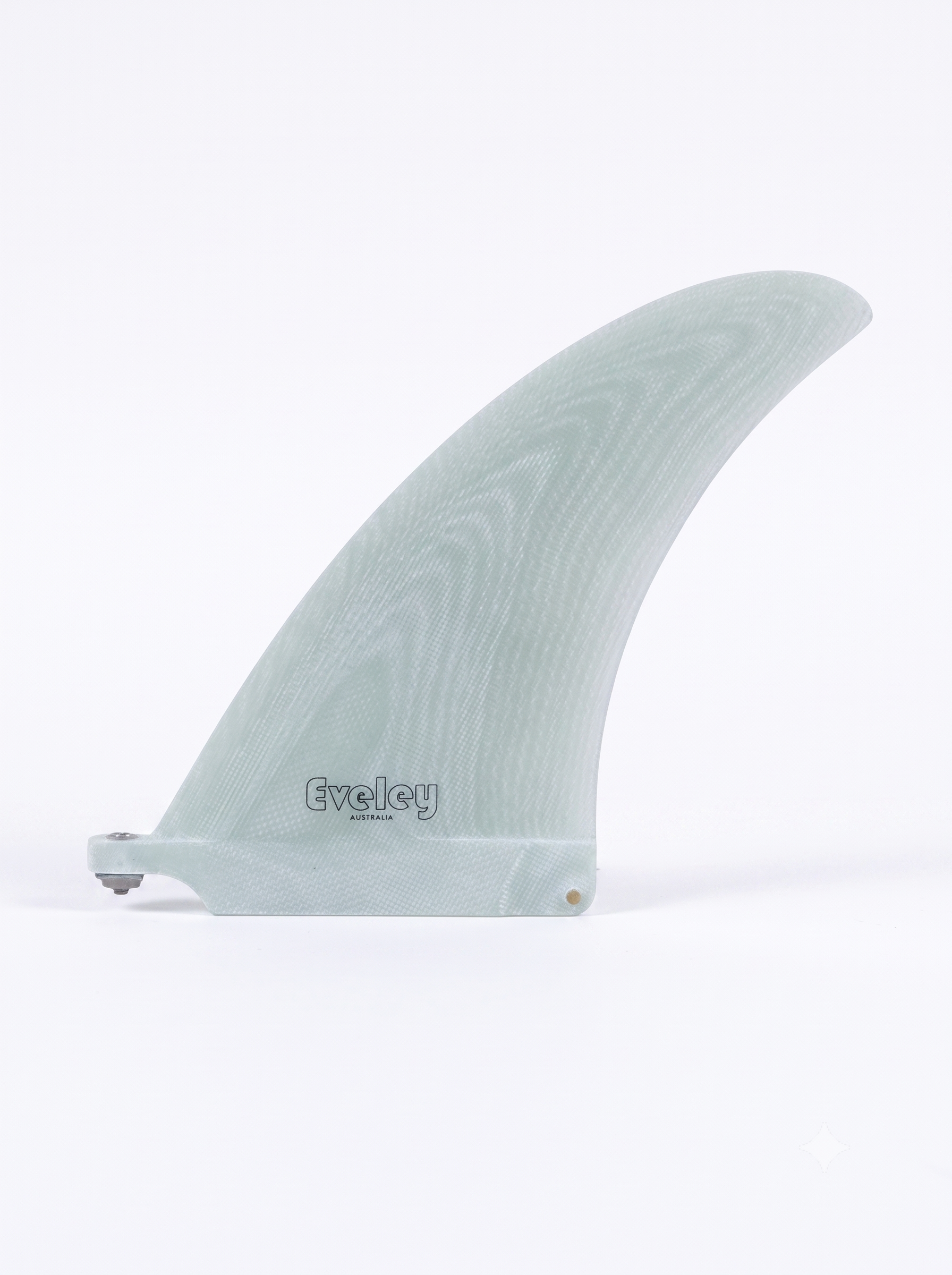
The Eveley Bonzer Center Fin is a Volan Pro Glass surfboard fin designed for Bonzer 3 and Bonzer 5 setups. It provides a balanced combination of drive, hold and manoeuvrability for Bonzer eggs, mid-lengths and other compatible surfboards with a sliding center fin box.
Discover how Bonzer fins combine a larger centre fin with angled runner fins to generate speed, drive, hold and smooth rail-to-rail control.
Bonzer fins are among the most distinctive surfboard fins ever developed. Instead of relying on three similarly sized fins like a conventional thruster, a Bonzer uses a larger centre fin together with two or four smaller runner fins positioned closer to the rails.
The fins work with the board’s bottom contours to organise water flow through the tail. The result is a fast, connected surfing experience with powerful drive, dependable hold and smooth transitions between turns.
Whether you already own a Bonzer or are researching alternative surfboard fin setups, this guide explains how the system works, how Bonzer 3 and Bonzer 5 configurations differ and how to choose the right Bonzer fins for your board.
Fast Overview – Bonzer Fins at a Glance
Fin setup: One centre fin combined with either two or four smaller runner fins.
Performance: Designed to provide speed, drive and dependable hold.
Turning feel: Smooth, powerful and connected through turns.
Best waves: Works especially well in open-faced, lined-up and powerful waves.
Centre-fin sizes: Usually available in 6", 7" or 8", depending on the surfboard.
Runner-fin purpose: Directs water through the tail and provides additional support when the rail is engaged.
Suitable boards: Bonzer shortboards, eggs, mid-lengths and longboards.
Construction: Usually made from solid fibreglass or Volan Pro Glass.
Centre-fin fit: Designed for a sliding center fin box.
Runner-fin fit: The runners must match the fin boxes installed in your surfboard.
What Is a Bonzer Surfboard?
The Bonzer was developed by brothers Malcolm and Duncan Campbell in California in 1970. The original Bonzer 3 used a larger rear centre fin with two smaller side runners. The Bonzer 5 followed in late 1982, adding another pair of runners to the system. The Campbell Brothers describe these as major stages in the design’s continuing evolution.
Unlike a conventional fin setup, a true Bonzer is an integrated surfboard design. Its Bonzer fins, runner angles, rails and deep concaves are intended to work together rather than act as separate components.
This distinction matters. Simply adding Bonzer-style fins to an unrelated board will not necessarily create the same performance. The board’s bottom contours and runner placement help determine how water is directed through the tail.
How Do Bonzer Fins Work?
The primary purpose of the Bonzer fin system is to organise water flow efficiently.
As water passes beneath the board, its concaves channel that flow towards the tail. The angled runner fins then help direct the water down and back, while the larger centre fin provides directional stability and dependable hold.
This interaction can produce four noticeable performance characteristics:
1. Strong Down-the-Line Speed
Bonzers are known for carrying speed naturally once the board is engaged with the wave. The system is designed to manage water flow cleanly rather than relying only on fin area for control.
This makes the board feel fast without necessarily feeling nervous or unstable.
2. Powerful Drive Through Turns
When the surfer loads the rail, the runner fins and centre fin work together to resist sideways movement and redirect that pressure into forward projection.
Rather than losing speed through a carving turn, a well-matched Bonzer setup can accelerate out of it.
3. Reliable Hold
The centre fin creates stability while the angled runners support the engaged rail. This helps the board maintain its line through steeper sections and more committed turns.
Larger Bonzer centre fins generally provide more hold, while smaller centre fins create a looser and more responsive feel.
4. Smooth Rail-to-Rail Transitions
Bonzer runner fins are shorter and more steeply angled than conventional thruster side fins. Their position allows the board to transition between rails without the fins feeling excessively stiff or dominant.
The result is a connected but flowing sensation rather than the sharper pivot associated with many thruster setups.
Bonzer 3 vs Bonzer 5 Fin Setups
Both systems use a larger centre fin, but the number and arrangement of the runners create different performance characteristics.
How Different Fin Setups Feel
Bonzer 3: Uses one centre fin and two smaller runner fins. It delivers a smooth, flowing ride with plenty of speed and power.
Bonzer 5: Uses one centre fin and four smaller runner fins. It feels more responsive and connected, with added control through turns.
Thruster: Uses three similarly sized fins. It provides predictable turning, balanced control and a reliable feel in most conditions.
2+1 setup: Uses one larger centre fin with two conventional side fins. It offers the stability of a centre fin with extra control and drive from the side fins.
Bonzer 3
The Bonzer 3 has one centre fin and two relatively substantial runner fins.
This arrangement generally suits surfers looking for:
Strong projection through longer turns
A flowing, open-face surfing style
Less fin drag than a larger multi-fin cluster
A powerful connection between the rail and centre fin
Classic Bonzer performance
Bonzer 5
The Bonzer 5 uses one centre fin with four smaller runners—two on each side.
This additional fin cluster can provide:
Greater control through faster turns
More rail engagement
A secure feel in powerful surf
Smooth acceleration through direction changes
A more responsive and performance-oriented ride
Neither setup is automatically better. The correct choice depends on the board’s design and the runner configuration intended by its shaper.
What Do Bonzer Runner Fins Do?
Bonzer runner fins are not simply miniature side fins. Their low-profile templates, substantial cant and position beside the board’s concaves allow them to interact directly with water moving through the tail.
Their role is to:
Support the engaged rail
Direct water down and back
Add hold without requiring oversized side fins
Maintain speed through turns
Help the board transition smoothly from rail to rail
Work with the centre fin to reduce unwanted sliding
For a more detailed explanation, read the Eveley guide:
👉 Bonzer Runner Fins Explained – Why Bonzer Fins Feel So Fast
Recommended Bonzer Runner Fins
👉 2" / 2.75" Bonzer Runner Fins – Volan Pro Glass, FCS Compatible
This four-fin runner set combines smaller forward runners with larger rear runners. The Volan Pro Glass construction delivers a solid, predictable response while maintaining the traditional appearance associated with Bonzer surfboard fins.
Compatibility note: These runners are made for compatible FCS dual-tab fin boxes. They are not FCS II fins and should only be used in boards with the correct runner-fin boxes and placement.
Choosing the Right Bonzer Centre Fin Size
The centre fin is the primary stabilising fin in the Bonzer system. Its depth, base, rake and position influence how freely the board turns and how securely it holds.
6" Bonzer Centre Fin
A 6-inch centre fin provides a faster turning response with less resistance.
It is generally suited to:
Shorter Bonzer boards
Performance-oriented mid-lengths
Lighter surfers
Smaller or softer waves
Surfers wanting a looser feeling under the back foot
👉 6" Bonzer Center Surfboard Fin – Volan Pro Glass
7" Bonzer Centre Fin
A 7-inch Bonzer fin provides a versatile balance between manoeuvrability, drive and hold.
It is often the strongest starting point for:
Bonzer eggs
Mid-length surfboards
Medium-sized surfers
Everyday Australian wave conditions
Surfers wanting balanced Bonzer performance
👉 7" Bonzer Center Fin – Volan Pro Glass
8" Bonzer Centre Fin
An 8-inch centre fin creates additional hold and stability.
It is generally better suited to:
Longer Bonzer boards
Bonzer longboards
Larger or more powerful surf
Heavier surfers
Surfers who prioritise control over looseness
👉 8" Bonzer Center Fin – Volan Pro Glass
These are starting points rather than rigid rules. The shaper’s recommendation, board length, tail width, concaves and runner placement should always guide the final decision.
For broader sizing advice, see:
👉 How to Choose the Right Fin Size for Your Board
Bonzer Centre-Fin Position
A Bonzer centre fin installed in a sliding center fin box can usually be moved forward or backward to adjust the board’s feel.
Move the Fin Forward
Moving the fin forward generally creates:
Easier turning
Faster release
A looser feeling
Less resistance during direction changes
Move the Fin Back
Moving the fin towards the tail generally creates:
More directional stability
Stronger hold
Longer, more drawn-out turns
Greater confidence in powerful waves
Start near the middle of the box and make small adjustments of approximately 5–10 mm. Changing one variable at a time makes it easier to feel what the board needs.
Why Volan Pro Glass Works Well in Bonzer Fins
Bonzer setups place considerable load through both the centre fin and the runner cluster. Solid fibreglass construction provides the dependable response needed to convert this pressure into drive.
Volan Pro Glass is particularly well matched to Bonzer surfboard fins because it offers:
Solid lateral stability
Smooth flex rather than abrupt rebound
Predictable hold at speed
Direct feedback through carving turns
Durability under repeated fin loading
A traditional translucent appearance
A fin that is excessively soft can make the board feel delayed or vague. A solid fibreglass Bonzer fin provides a cleaner connection between the surfer, board and wave.
Learn more about this construction:
👉 Volan Fiberglass Surfboard Fins Explained – Why Classic Fins Still Use It
What Waves Suit Bonzer Fins?
Bonzer fins are strongly associated with clean, powerful waves, but they are not limited to large surf.
Small and Soft Waves
A smaller centre fin can make the board easier to redirect and help reduce unnecessary resistance. The Bonzer’s natural drive can be valuable when the wave lacks push, provided the board has enough volume and area to generate speed.
Clean Shoulder-High Waves
This is where many Bonzer setups feel especially balanced. The surfer can draw longer lines, build speed through bottom turns and use the runner fins to hold the rail through open-face carves.
Steep or Powerful Waves
The combination of a larger centre fin, angled runners and controlled water flow can provide excellent security when the board is moving quickly.
A slightly larger or more rearward centre fin usually adds confidence in these conditions.
Hollow Waves
Bonzer fins can produce strong hold when the board is committed to the rail. Correct runner placement and compatible board contours are particularly important because the entire system must work together under speed and pressure.
Bonzer Fins vs most Thruster Fins
A thruster uses three similarly sized surfboard fins to deliver predictable turning, control and release. A Bonzer places more responsibility on the larger centre fin while its runners work with the board’s concaves.
Bonzer Fins Compared with Thruster Fins
Speed: Bonzer fins naturally create and maintain speed down the line. Thruster fins usually require more pumping and active turning to generate speed.
Turning: Bonzer fins produce smooth, flowing and drawn-out turns. Thruster fins feel more direct and allow tighter, sharper turns.
Hold: A Bonzer’s larger centre fin and smaller runner fins work together to provide hold. A thruster uses three similarly sized fins to create balanced control.
Rail engagement: Bonzer fins provide a deep, connected feeling when the rail is engaged. Thruster fins feel predictable and controlled through turns.
Board compatibility: Bonzer fins work best in a purpose-designed Bonzer surfboard. Thruster fins are designed for conventional performance surfboards.
Fin selection: A Bonzer requires a suitable centre fin and matching runner fins. A thruster uses a matched set of three fins.
A Bonzer is not simply a faster version of a thruster. It produces a different relationship between water flow, rail engagement and fin pressure.
For more on conventional three-fin performance, read:
👉 Thruster Surfboard Fins Explained
Common Bonzer Fin Setup Mistakes
Using Conventional Side Fins as Runners
Standard side fins usually have different depth, cant and foil characteristics. They may interfere with the water flow the Bonzer’s contours were designed to create.
Choosing the Centre Fin by Board Length Alone
Board length is only one factor. Tail width, rider weight, wave power, runner size and the board’s intended turning style also matter.
Installing an Oversized Centre Fin
More fin area can add hold, but excessive area may make the board feel stiff and difficult to release.
Moving the Centre Fin Too Far at Once
Large adjustments can completely change the board’s character. Small movements make it easier to identify the most effective position.
Assuming Bonzer Fins Transform Any Board into a Bonzer
The fins are only part of the design. Authentic Bonzer performance depends on the interaction between the fins, runner angles, rails and bottom contours.
Who Should Ride Bonzer Fins?
Bonzer fins are well suited to surfers who value:
Down-the-line speed
Smooth, committed rail turns
Strong projection out of carves
Hold without a conventional thruster feel
Alternative surfboard design
A balance of classic flow and modern performance
Purposeful tuning of centre-fin size and position
They may be less suitable for surfers who want extremely abrupt pivoting or who prefer the familiar neutral response of a conventional thruster.
Frequently Asked Questions
How many fins does a Bonzer have?
A Bonzer 3 has one centre fin and two runner fins. A Bonzer 5 has one centre fin and four runners.
Are Bonzer runner fins the same as side-bite fins?
No. Bonzer runners have specialised templates, angles and placement designed to interact with the board’s concaves. Conventional side bites are made for different fin setups.
Can Bonzer fins be used in any surfboard?
A Bonzer centre fin may physically fit another board with a sliding center fin box, but it will not turn that board into a true Bonzer. The complete design depends on the interaction between the fins and the board’s contours.
What size Bonzer centre fin should I choose?
A 6-inch fin generally produces a looser, more responsive ride. A 7-inch fin provides balanced everyday performance, while an 8-inch fin adds hold for longer boards, larger surfers or more powerful waves.
Do Bonzer fins work in small waves?
Yes. A properly designed Bonzer can work in smaller surf, particularly when paired with a suitable centre-fin size. The board’s volume, outline and bottom contours remain important.
Where should I position the centre fin?
Begin close to the middle of the sliding center fin box. Move it forward for easier turning or backward for greater stability and hold.
Do Bonzer runners fit FCS II fin boxes?
The Eveley Bonzer runner set is made for compatible FCS dual-tab boxes. FCS II and FCS dual-tab systems are different systems and should not be treated as interchangeable.
Bonzer Fin Summary
Bonzer fins consist of a larger centre fin supported by two or four angled runner fins. The system works with purpose-designed surfboard concaves to direct water through the tail, creating speed, drive, hold and smooth rail-to-rail control.
A Bonzer 3 offers a powerful, flowing feel, while a Bonzer 5 adds greater engagement and control. Six-inch centre fins favour manoeuvrability, seven-inch fins provide balanced performance and eight-inch fins increase hold and stability.
For the intended performance, Bonzer surfboard fins should be matched to the board’s runner configuration, bottom contours and sliding center fin box.
Explore the Eveley Surfboard Fin Knowledge Hub
Understanding Bonzer fins is one part of choosing the correct surfboard fin setup. Fin size, foil, template, material and compatibility all influence how a surfboard performs.
👉 Surfboard Fins Australia – Complete Buyer’s Guide
👉 Beginner’s Guide to Surfboard Fins Australia
👉 Best Fin Setup for Mid-Length Surfboards in Australia
Final Word
Bonzer fins remain one of surfing’s most original and effective fin systems. Their performance comes from more than an unusual number of fins: the centre fin, angled runners and bottom contours function as a complete water-flow system.
When correctly matched, Bonzer surfboard fins deliver the rare combination of natural speed, powerful drive, dependable hold and flowing rail-to-rail control.
For surfers who enjoy drawing clean lines and carrying speed through every stage of a turn, the Bonzer offers a riding experience that conventional surfboard fins cannot precisely reproduce.
FCS™ and FCSII™ are registered trademarks of Surf Hardware International Pty Ltd. Eveley Surf is not affiliated with or endorsed by Surf Hardware International Pty Ltd. All compatibility references to FCS and FCSII are for descriptive purposes only.

Bonzer Runner Fins Explained — Why Bonzer Fins Feel So Fast
Learn how Bonzer runner fins work, why Bonzer fins feel so fast, and how they compare to thruster and quad surfboard fins. Complete Eveley Surf guide.

Bonzer runner fins are one of the most unique surfboard fins designs ever created. Unlike a standard thruster or quad setup, Bonzer fins use angled side runners to channel water flow and create exceptional speed, hold, and drive.
For surfers chasing powerful down-the-line projection, smooth rail transitions, and a distinctive “on-rails” feeling, Bonzer fins offer a completely different experience compared to conventional surfboard fins.
At Eveley Surf, we build performance-focused surfboard fins designed for real-world surfing conditions — including Bonzer-style runner setups inspired by classic speed-generating designs.
What Are Bonzer Runner Fins?
Bonzer runner fins are the smaller side fins used in a Bonzer surfboard setup. They work together with a larger center fin to direct water flow beneath the board.
Traditional Bonzer setups usually come in either:
3-fin Bonzer:
One center fin
Two side runners
5-fin Bonzer:
One center fin
Four side runners
The runners are heavily canted and angled to funnel water toward the tail of the board. This creates lift, acceleration, and incredible drive through turns.
Unlike standard side fins on a thruster, Bonzer runner fins are designed more as hydrodynamic channels than pivot fins.
Why Bonzer Fins Feel Different
Most surfers notice three things immediately when riding Bonzer fins:
1. Exceptional Speed
Bonzer fins generate speed very efficiently because the runners help compress and direct water flow.
This creates:
Faster trim speed
Stronger acceleration off the bottom
Less drag through long turns
Many surfers describe Bonzer fins as feeling “turbocharged” once the board gets moving.
2. Massive Hold Through Turns
Because the runners keep water attached to the rail line, Bonzer fins hold extremely well during powerful carving turns.
This is especially noticeable in:
Point waves
Long walls
Overhead surf
Hollow conditions
The setup feels very stable at speed compared to looser surfboard fins configurations.
3. Longer Turning Arc
Bonzer fins generally favour flowing rail surfing over quick pivot surfing.
Compared to:
Thrusters → tighter turning radius
Quads → faster release
Bonzers → longer carving arcs with strong projection
This makes Bonzer fins popular with surfers who enjoy drawn-out carving turns and trim speed.
How Bonzer Runner Fins Work
The runners sit at aggressive angles near the rails.
As water passes through the concaves on the bottom of the board:
the runners compress water flow
increase directional control
create lift and acceleration
The result is a very efficient transfer of speed through the board.
Bonzer surfboard fins setups rely heavily on:
fin placement
cant angle
bottom contour design
center fin pairing
That is why Bonzer boards feel very different from standard shortboards.
Bonzer Fins vs Thruster Fins
Bonzer Fins
Faster down the line
Strong hold
Smooth carving feel
Excellent in powerful waves
More directional
Thruster Fins
Tighter turning
Easier release
More vertical surfing
More forgiving
Better for quick direction changes
For surfers who prefer flowing rail surfing, Bonzer fins often feel faster and more connected to the wave face.
For highly vertical surfing, traditional thruster surfboard fins usually remain more responsive.
Bonzer Fins vs Quad Fins
Bonzer Fins
More controlled
Strong center-fin feeling
Smoother transitions
Longer arcs
Quad Fins
Faster release
Looser tail feel
More skate-like sensation
Faster in weak surf
Bonzer fins tend to shine in quality waves where control and projection matter more than looseness.
Best Waves for Bonzer Runner Fins
Bonzer fins work best in waves with clean faces and open walls.
Ideal conditions include:
Point breaks
Reef breaks
Overhead surf
Long walls
Fast peeling waves
They are less suited to:
Tiny weak beach breaks
Extremely vertical pocket surfing
Loose skate-style surfing
Choosing Bonzer Runner Fins
When selecting Bonzer fins, the important factors are:
runner size
runner angle
center fin size
board width
wave type
Smaller runners:
feel faster and looser
Larger runners:
increase hold and control
The center fin heavily influences the overall feel of the setup.
More upright center fins:
increase pivot
More raked center fins:
increase drive and projection
Eveley Bonzer-Compatible Surfboard Fins
At Eveley Surfboard Fins Collection, we produce performance-focused surfboard fins suited to a wide range of alternative surfcraft setups, including Bonzer-inspired configurations.
Popular related categories include:
Twin + stabilizer setups
Performance single fins
Raked center fins
Quad rear runners
Alternative surfboard fins
Recommended reading:
Are Bonzer Fins Good for Everyday Surfing?
They can be — but they are more specialised than standard surfboard fins.
Surfers who enjoy:
speed
trim
rail surfing
powerful carving
often love Bonzer fins.
Surfers wanting:
ultra-tight turning
loose release
small-wave skate feel
may prefer thrusters or quads instead.
Final Thoughts on Bonzer Runner Fins
Bonzer runner fins remain one of the most interesting and effective speed-generating surfboard fins designs ever developed.
They combine:
drive
hold
projection
rail engagement
into a setup that feels unique compared to traditional thruster or quad fins.
For surfers chasing flowing rail surfing and fast down-the-line performance, Bonzer fins continue to deliver a distinctive surfing experience that still feels modern decades after their introduction.
FAQs
What do Bonzer runner fins do?
Bonzer runner fins channel water flow under the board to increase speed, hold, and drive.
Are Bonzer fins faster than thrusters?
In clean, open-face waves, many surfers find Bonzer fins noticeably faster down the line than standard thruster surfboard fins.
What waves are best for Bonzer fins?
Bonzer fins work best in clean waves with long walls, especially point breaks, reefs, and overhead surf.
Are Bonzer fins loose?
Not usually. Bonzer fins generally feel more controlled and connected than loose. They favour smooth carving over skate-style release.
Can I use Bonzer runner fins on a normal board?
Only if the board is designed for a Bonzer setup. Proper runner placement and bottom contours are important for performance.
2" / 2.75" Bonzer Runner Fins – Volan Pro Glass | FCS Compatible (Set of 4)
6" Bonzer Center Surfboard Fin – Volan Pro Glass.
7" Bonzer Center Fin | Volan Pro Glass.
8" Bonzer Center Fin – Volan Pro Glass.
FCS™ and FCSII™ are registered trademarks of Surf Hardware International Pty Ltd. Eveley Surf is not affiliated with or endorsed by Surf Hardware International Pty Ltd. All compatibility references to FCS and FCSII are for descriptive purposes only.
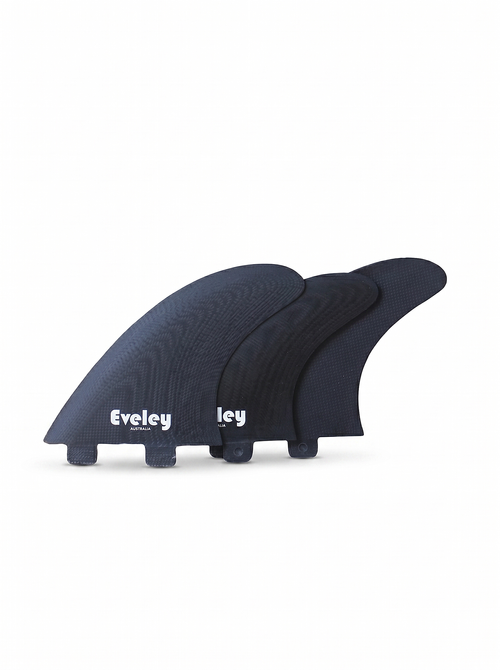
AM Thruster Fins: Why This Template Changed Performance Surfing
AM thruster fins refer to the high-performance fin template made famous by Al Merrick of Channel Islands Surfboards.
They are designed for performance shortboards, delivering a balance of:
Speed down the line
Drive through turns
Controlled release off the top
AM thruster fins are one of the most popular surfboard fins setups ever designed—built for speed, drive, and clean release in modern thruster fins configurations.
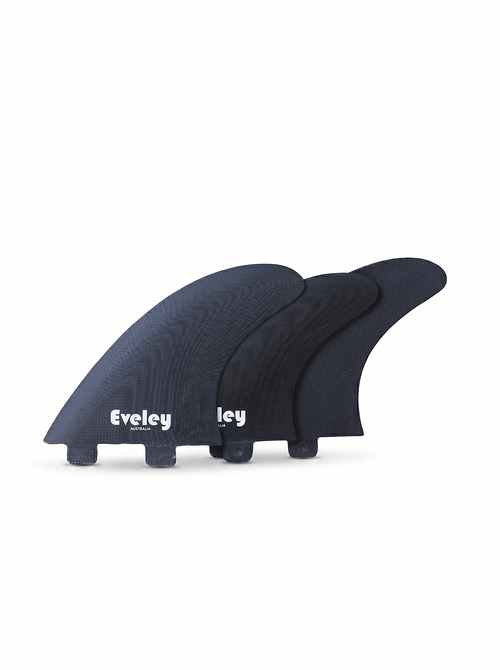
What Are AM Thruster Fins?
AM thruster fins refer to the high-performance fin template made famous by Al Merrick of Channel Islands Surfboards.
They are designed for performance shortboards, delivering a balance of:
Speed down the line
Drive through turns
Controlled release off the top
This template has become a benchmark in surfboard fins design, especially for surfers pushing progression in everyday to powerful conditions.
The Core Design Explained
Here’s what actually makes AM thruster fins different:
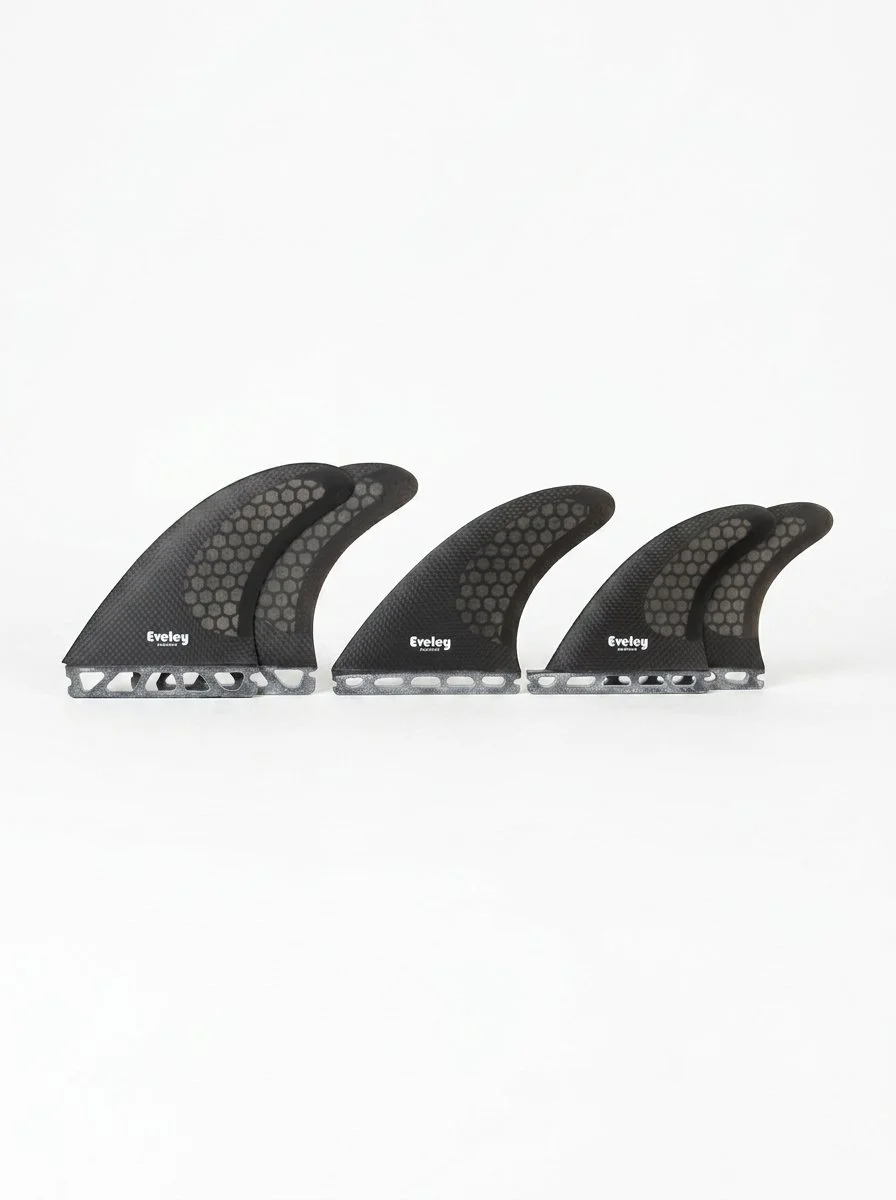
1. Raked Template (More Sweep)
The fins lean back more than upright templates
Creates longer turning arcs
Generates more drive and speed
👉 Think: drawn-out, powerful turns rather than tight pivots
2. Asymmetrical Thruster Setup (Key Feature)
Unlike many standard thrusters, AM-style setups often use:
Larger side fins
Slightly smaller centre fin
Typical proportions:
Side fins: ~4.7"–4.75"
Centre fin: ~4.5"
What this does:
Side fins = generate drive and hold
Smaller centre = reduces drag
Result = faster release and less “tracky” feel
👉 This is one of the biggest reasons surfers instantly feel the difference.
3. Foil Configuration
Side fins: Flat inside foil → maximises drive and speed
Centre fin: 50/50 foil → adds control and smooth transitions
👉 Translation: You get speed from the sides + stability from the centre
How AM Thruster Fins Feel in the Water
Performance AreaFeelSpeedFast, especially down the lineDriveStrong projection out of turnsTurningSmooth, drawn-out arcsReleaseClean and predictableControlStable but not stiff
👉 If your current setup feels slow or sticky, this template usually fixes it.
AM Thruster Fins vs Other Templates
AM vs Upright (Pivot) Thruster Fins
FeatureAM TemplateUpright / PivotTurning StyleLong, carving arcsTight, quick turnsSpeedHighModerateReleaseSmoothSnappyBest ForOpen faces, power surfingSmall waves, quick direction changes
AM vs Neutral Template
Neutral fins = balanced, “do everything OK”
AM fins = performance-biased (speed + drive)
👉 If you want progression, AM wins.
When Should You Use AM Thruster Fins?
Best Conditions:
Waist-high to overhead surf
Clean faces
Point breaks and open beach breaks
Best Boards:
Performance shortboards
Hybrids with rocker
Step-ups
Best Surfers:
Intermediate to advanced
Anyone looking for more speed and projection
When NOT to Use AM Thruster Fins
They’re not ideal when:
Waves are weak and slow → can feel “too drawn out”
You want ultra-tight turns → pivot fins are better
You’re riding grovellers → consider smaller or more upright templates
👉 Discover the best fins for small waves.
Why This Template Became the Industry Standard
The AM template is widely used because it solves a core surfing problem:
👉 How do you get speed AND control without feeling stiff?
It achieves this by:
Generating drive from the side fins
Reducing drag via the centre fin
Maintaining control through foil balance
That combination is why this design is still one of the most copied templates across surfboard fins globally.
Eveley Performance
If you're looking to replicate this performance profile using Eveley fins, focus on:
Recommended Setup:
Raked side fins (Pro Glass construction)
Slightly smaller centre fin
👉 4.75" AM2 Thruster Fins – Black Pro Glass, FCSII Compatible
👉 4.75" AM2 Thruster Fins – Black Pro Glass, FCS Compatible
👉 4.75" AM2 Thruster Fins - Natural Pro Glass, Futures compatible
Why Eveley Pro Glass works:
Solid fibreglass = consistent flex
Better hold at speed
More predictable release than lighter constructions
AM Thruster Fins Setup Tips (Immediate Gains)
1. Move Your Centre Fin Slightly Forward
Loosens the board
Increases responsiveness
2. Don’t Oversize the Centre Fin
Too big = kills the AM advantage
Stick to slightly smaller than sides
3. Match to Your Weight
Surfer Weight Suggested Size < 70kg Small 70–85kg Medium 85kg+ Large
Common Mistakes
Running equal-sized thruster fins → removes release benefit
Using AM template in weak waves → feels slow
Mixing incompatible flex patterns → inconsistent feel
Surfboard Fins Knowledge Hub
Build your full understanding here:
FAQs
What does “AM” mean in surfboard fins?
It refers to the performance template popularised by Al Merrick, designed for speed, drive, and clean release.
Are AM thruster fins good for beginners?
They can work, but beginners may prefer neutral templates first. AM fins are best once you’re generating speed and turning properly.
Why is the centre fin smaller in AM setups?
To reduce drag and allow faster release while maintaining control from the side fins.
Are AM thruster fins good in small waves?
Not ideal. They perform best when there’s enough wave energy to engage the raked template.
Final Takeaway
If you want your board to feel:
Faster
More powerful
Less “stuck” in turns
👉 AM-style thruster fins are one of the most proven upgrades in surfboard fins design.
They’re not hype—they’re a performance blueprint that still works today.
Futures™ is a registered trademark of Futures Fins. Eveley Surf is not affiliated with or endorsed by Futures Fins. All compatibility references to Futures Fins are for descriptive purposes only.
FCS™ and FCSII™ are registered trademarks of Surf Hardware International Pty Ltd. Eveley Surf is not affiliated with or endorsed by Surf Hardware International Pty Ltd. All compatibility references to FCS and FCSII are for descriptive purposes only.
RM Quad
Looking to unlock more speed, flow, and control from your quad fins setup?
The RM quad configuration has become one of the most talked-about surfboard fins setups in modern surfing—and for good reason.
What Is the RM Quad Setup?
This quad setup is designed specifically for wide-tail fish and hybrid boards. It uses:
Larger front fins (drive + hold)
Smaller rear fins (release + speed)
Balanced template with moderate rake
This creates a fast, flowing feel without the “tracky” stiffness many surfers experience with standard quad fins.
Why This Quad Fin Setup Works
1. Speed Without Effort
The quad configuration reduces drag compared to a thruster. Combined with a wide tail, this creates effortless down-the-line speed.
2. Controlled Release
Smaller rear fins allow the board to break free smoothly through turns—key to Machado’s signature style.
3. Flow Over Pivot
Unlike pivot-heavy setups, this configuration emphasises long, drawn-out carves and rail-to-rail surfing.
Quad vs Thruster
👉 Want a full breakdown? Read:
Quad vs Thruster Surfboard Fins Explained – Speed, Control & Feel
The Ideal Board for an RM Quad Setup
This setup is built for:
Fish surfboards
Hybrid shortboards
Wide tail designs
Small to medium waves
If you try this setup on a narrow performance shortboard, it won’t feel the same. The magic comes from pairing quad fins + wide tail + flatter rocker.
Eveley Quad Fins for This Setup
RM Quad Set
Front fins: Medium-large template for drive
Rear fins: Smaller trailers for release
👉 Recommended:
4.9" / 3.1" RM Quad Fins – Natural Pro Glass. FCS Compatible
4.9" / 3.1" RM Quad Fins – Black on Natural Pro Glass | FCS II Compatible
4.9" / 3.1" RM Quad Fins – Bright Green Pro Glass | FCS II Compatible
4.9" / 3.1" RM Quad Fins – Ash Pro Glass | FCS II Compatible
4.9" / 3.1" RM Quad Fins – Natural Pro Glass Futures Compatible
These follow the same principle: power up front, freedom in the rear
👉 Learn more:
Learn whether quad or thruster fins are better for your board, waves, and style
Common Mistakes to Avoid
Using equal-size quad fins (too stiff)
Oversized rear fins (kills release)
Pairing with narrow boards
Expecting thruster-style pivot
This setup is about flow, not snap
When to Use This Quad Fin Setup
Best conditions:
Small waves
Weak beach breaks
Clean point waves
Everyday surf
Less ideal for:
Heavy barrels
Steep, critical waves
How It Feels Under Your Feet
Surfers describe the Seaside quad setup as:
Fast without pumping
Loose but controlled
Smooth through turns
Effortless rail transitions
It’s closer to a twin + control than a traditional quad.
How This Links to Fin Design
This setup highlights a key principle in surfboard fins design:
Front fins generate drive. Rear fins control release.
That’s why the sizing difference matters so much.
Eveley Fin Knowledge Hub
To go deeper, explore:
These guides connect directly to the setups used in the Seaside concept.
Final Verdict – Should You Try the RM Quad Setup?
If you surf:
Fish or hybrid boards
Small to medium waves
Want more speed and flow
Then this quad fins setup is one of the best upgrades you can make.
It’s not hype—it’s a fundamentally smart use of fin sizing, placement, and hydrodynamics.
Futures™ is a registered trademark of Futures Fins. Eveley Surf is not affiliated with or endorsed by Futures Fins. All compatibility references to Futures Fins are for descriptive purposes only.
FCS™ and FCSII™ are registered trademarks of Surf Hardware International Pty Ltd. Eveley Surf is not affiliated with or endorsed by Surf Hardware International Pty Ltd. All compatibility references to FCS and FCSII are for descriptive purposes only.
How Fin Placement Affects Water Flow: The Hidden Science of Surfboard Fins
Why Fin Placement Matters More Than Most Surfers Realise
Most surfers focus on fin size or template, but the position of surfboard fins on the board plays an equally powerful role in how a board performs.
Fin placement determines:
• how water flows under the board
• how quickly a board accelerates
• how much hold you feel on rail
• how easily the board releases in turns
Even small changes in fin placement can dramatically alter the speed, drive, and control produced by surfboard fins.
This is why performance-focused surfers and board designers pay close attention to where fins are positioned.
The Basic Principle: Water Flow Under a Surfboard
When a surfboard moves through the water, a high-speed water stream travels along the bottom of the board.
As the water reaches the fins:
• fins redirect the water flow
• pressure builds along the fin surfaces
• this pressure creates drive and hold
If fins are placed correctly, they capture the most powerful water flow lines moving along the board.
If fins are poorly positioned, water reaches them already turbulent or weak, reducing performance.
High-performance Eveley fins are designed around this principle—working with natural water flow rather than fighting it.
Forward vs Rear Fin Placement
The distance between fins and the tail changes how a board feels under your feet.
Fins Placed Further Forward
When surfboard fins sit slightly forward:
• the board feels looser
• turning becomes easier
• rail-to-rail transitions become faster
However, moving fins too far forward can reduce hold and drive.
Fins Placed Further Back
When fins are positioned closer to the tail:
• the board gains more hold
• drive increases
• the board feels more stable at speed
But the board may feel slightly stiffer when turning.
This balance between speed, control, and manoeuvrability is why modern fin systems allow adjustment.
Side Fin Placement and Rail Engagement
Side fins are usually placed along the rail line of the surfboard.
Their position determines how the board engages the face of the wave.
Well-placed side surfboard fins create:
• powerful rail drive
• strong hold through turns
• controlled release when exiting manoeuvres
This is why performance thruster setups carefully balance toe-in, cant, and placement.
The Twinzer Innovation: Controlling Water Before It Reaches the Fin
One of the most interesting developments in fin placement is the Twinzer system.
Twinzer setups use small forward fins called canards, placed just ahead of the main twin fins.
These Twinzer Canard Fins perform a special role:
They condition the water flow before it reaches the main fins.
This produces several benefits:
• smoother water flow
• reduced turbulence
• increased speed
• more powerful rail drive
The result is a board that feels extremely fast yet controlled.
Example: Twinzer Canard Fins
Small forward fins like the 3.25" Twinzer Canard Fins – Volan Pro Glass are designed specifically to optimise water flow into the main twin fins.
When placed correctly, these Eveley fins help create one of the fastest and most responsive fin systems in surfing.
Learn more about the product here:
3.25" Twinzer Canard Fins – Volan Pro Glass (FCS Compatible)
3.25" Twinzer Canard Fins (Black Pro Glass) – High-Performance FCS compatible Surfboard Fins
Why Fin Spacing Matters
Spacing between fins changes how water exits the board.
Close fin spacing produces:
• tight turning arcs
• quick response
• strong pivot
Wider fin spacing creates:
• longer drawn-out turns
• smoother rail transitions
• increased down-the-line speed
Modern surfboard fins templates are designed to match these spacing patterns.
How Board Designers Use Fin Placement
Surfboard shapers treat fin placement as one of the most important design tools.
Placement works together with:
• rocker
• tail shape
• rail profile
• bottom contours
For example:
A wide swallow tail twin often uses forward fin placement to maximise speed.
A high-performance thruster uses slightly rearward placement for control in powerful waves.
The right Eveley fins setup helps unlock the intended performance built into the board design.
How Surfers Can Use Fin Placement to Tune Performance
Although the shaper determines the base placement, surfers can still fine-tune performance.
You can adjust feel by:
• sliding the center fin forward or back in the fin box
• choosing different fin sizes
• experimenting with multi-fin setups
For example:
Moving a center fin forward makes the board feel looser.
Moving it back increases drive and hold.
Understanding these adjustments allows surfers to get the most from their surfboard fins.
The Role of Quality Fin Design
Even perfect fin placement cannot compensate for poorly designed fins.
High-quality fins are shaped to:
• capture water flow efficiently
• produce balanced lift and drag
• maintain stability through turns
That’s why Eveley fins combine classic templates with precision construction materials such as Volan Pro Glass, ensuring reliable performance across a wide range of surf conditions.
Learn More in the Eveley Fin Knowledge Hub
Understanding surfboard fins unlocks the true performance of your board.
Explore these Eveley guides:
• Surfboard Fins Australia – Complete Buyer’s Guide
• Twin Fin vs Thruster: Speed vs Control
• Do Side Fins Help Longboard Performance? 2+1 vs Single Fin Explained
• Surfboard Fin Size Guide Australia: Match Your Fins to Weight, Board & Waves
These guides explain how to select the right Eveley fins and build the perfect fin setup for your surfing style.
Final Thought
Surfboards may look simple, but beneath the surface a complex interaction of water flow and fin placement determines how the board rides.
By understanding how surfboard fins interact with water, surfers can unlock:
• faster acceleration
• stronger rail drive
• smoother turning performance
And when paired with well-designed Eveley fins, the result is a surfboard that performs exactly the way it was meant to.
Popular Quad Fins
4.6" / 4.2" Classic Quad Surfboard Fins – Black Pro Glass Futures Compatible
How Nubster Fins Change Performance
Why Tiny Nubster Fins Can Transform Your Surfboard
A small stabiliser fin might look insignificant, but in the world of surfboard fins, even a 1–2 inch trailer can dramatically change how a board feels under your feet.
By adding just a touch of control behind your main fins, stabilisers reduce unwanted slide, smooth out turns, and improve drive without killing the speed and looseness surfers love from twin setups.
Many surfers discover that a tiny trailer is the difference between a board feeling too skatey and feeling perfectly balanced.
This is why stabilisers have become a key tuning tool in modern Eveley fins configurations.
What Is a Nubster Fin?
A stabiliser fin is a very small center fin, usually between 1" and 2.5", placed behind the primary fins.
Common uses include:
• Twin + trailer setups
• Quad setups using a nubster
• Mid-length tuning
• Performance hybrids
Unlike a traditional center fin, a stabiliser does not dominate the setup. Instead, it adds subtle directional control.
Think of it as a micro rudder that cleans up the board’s tracking.
The Core Problem Nubster Fins Solve
Pure twin fin boards are famous for their speed and freedom, but they can also feel:
• Loose
• Slide-prone in critical sections
• Harder to control on steeper waves
A stabiliser fin fixes this without turning the board into a full thruster.
The result is a setup that keeps the speed and flow of twins while adding predictable control.
Many surfers call this the Twin + Trailer setup.
What Happens Hydrodynamically
When a board turns, water flows along the rails and across the fins.
In a twin-only setup:
• water flow can detach more easily
• the tail can drift under pressure
Adding a stabiliser creates a small centerline anchor point.
This produces three key effects:
1. Improved Tracking
The board holds a straighter line through turns and during high-speed sections.
2. Controlled Release
You can still slide the tail when you want, but it becomes predictable instead of accidental.
3. Better Rail Engagement
The stabiliser helps keep the rail connected to the wave face during powerful turns.
This combination dramatically improves confidence in steeper sections.
The Performance Changes You Will Feel
Adding a nubster fin usually produces these immediate differences.
More Drive Through Turns
Instead of drifting out of turns, the board pushes forward with more drive.
Increased Hold in Steeper Waves
The extra bite from the stabiliser stops the tail from skipping.
Cleaner Carves
Turns feel smoother and more controlled.
Less Unwanted Slide
Twin fins remain playful, but the board becomes far more predictable.
For surfers who want the best of both worlds, stabilisers are the ultimate tuning tool.
Twin vs Twin + Trailer
Twin Fin Setup
Feel: Very loose and playful
Speed: Extremely fast
Hold: Moderate
Best for: Small waves and surfers who like a free, skatey feel
Twin + Trailer Setup
Feel: More controlled and stable
Speed: Very fast
Hold: High
Best for: Everyday surf and waves where extra control helps
This is why many modern performance twin boards are designed to run a stabiliser.
When You Should Use a Nubster Fin
A small stabiliser works best when:
• waves become steeper
• the board feels too loose
• you want more confidence at speed
• you ride twin fins but want more control
Many surfers install the trailer once waves move beyond waist to head high.
Board Types That Benefit Most
Stabilisers work especially well on:
Twin Fin Fish
Classic fish boards often feel much more controlled with a tiny trailer.
Hybrid Performance Boards
Modern hybrid boards frequently include a twin + trailer option.
Mid-Lengths
Mid-length boards sometimes use a small stabiliser instead of a large center fin to keep the board lively.
Nubster Size Guide
Small stabiliser fins generally range between 1 inch and 2.5 inches.
1–1.5 inch
• subtle control
• minimal drag
• great for fast twins
1.5–2 inch
• balanced control
• strong drive
• most versatile size
2–2.5 inch
• maximum stabilisation
• closer to thruster feel
A Precision Tuning Tool Used by Experienced Surfers
Advanced surfers often carry stabiliser fins to fine-tune their boards depending on the conditions.
It is one of the easiest ways to adapt a board to different waves without changing the entire fin setup.
This level of control is exactly why many surfers choose Eveley fins, where precision templates are designed specifically for real-world performance tuning.
Recommended Stabiliser Setup
The most popular micro-stabiliser options include:
1.5" Nubster Fin – Black Pro Glass | Futures Compatible
1.5" Nubster Fin – Futures compatible smoke Pro Glass.
These fins are designed specifically for twin + trailer performance tuning, delivering subtle control while keeping speed high.
Perfect for surfers running performance twin setups who want extra confidence without losing the fast, flowing feel that makes twin fins so addictive.
Eveley Surfboard Fin Knowledge Hub
Continue improving your fin knowledge with these Eveley guides:
• Surfboard Fins Australia – Complete Buyer’s Guide
• Twin Keel Fins Explained
• How Fin Templates Affect Performance
• Quad Fin Setup Explained – Speed, Setup & When to Ride Quad Surfboard Fins
Each guide explains how different surfboard fins setups influence speed, drive, hold and turning.
Understanding these principles helps surfers build smarter Eveley fins setups that match their boards, style and waves.
Key Takeaway
A small stabiliser fin might be the most powerful tuning upgrade you can make to a twin fin board.
It preserves speed and looseness while adding control, drive and confidence.
For surfers who love fast twin setups but want more predictability in real surf conditions, stabilisers are often the missing piece in a high-performance surfboard fins setup.
And when precision matters, surfers turn to Eveley fins designed specifically for performance tuning.
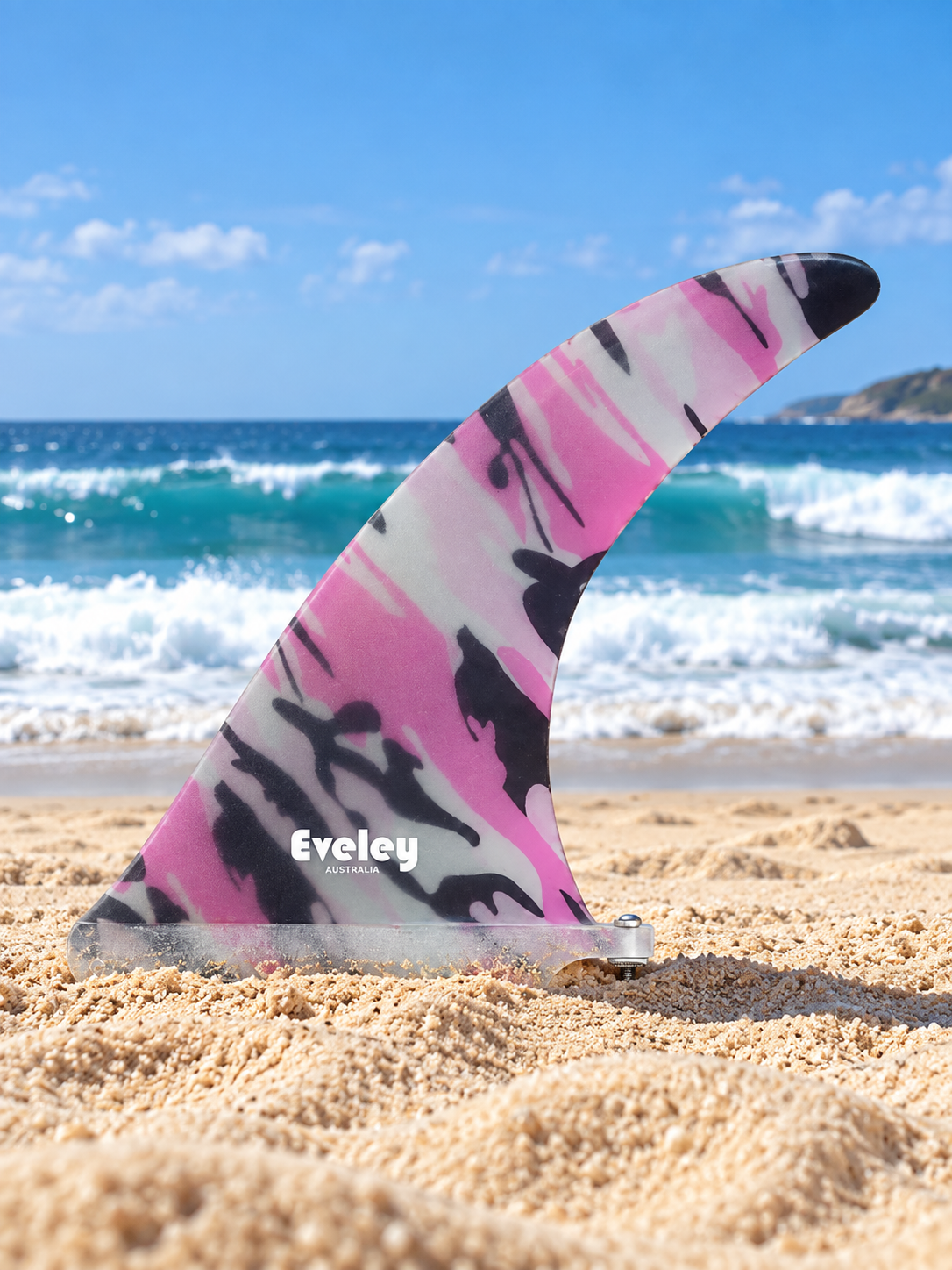
4A Center Fin: The Benchmark of Longboard Performance in Surfboard Fins
The 4A Center Fin remains the most trusted surfboard fins template. Discover how it delivers unmatched balance, speed, and control in all conditions.
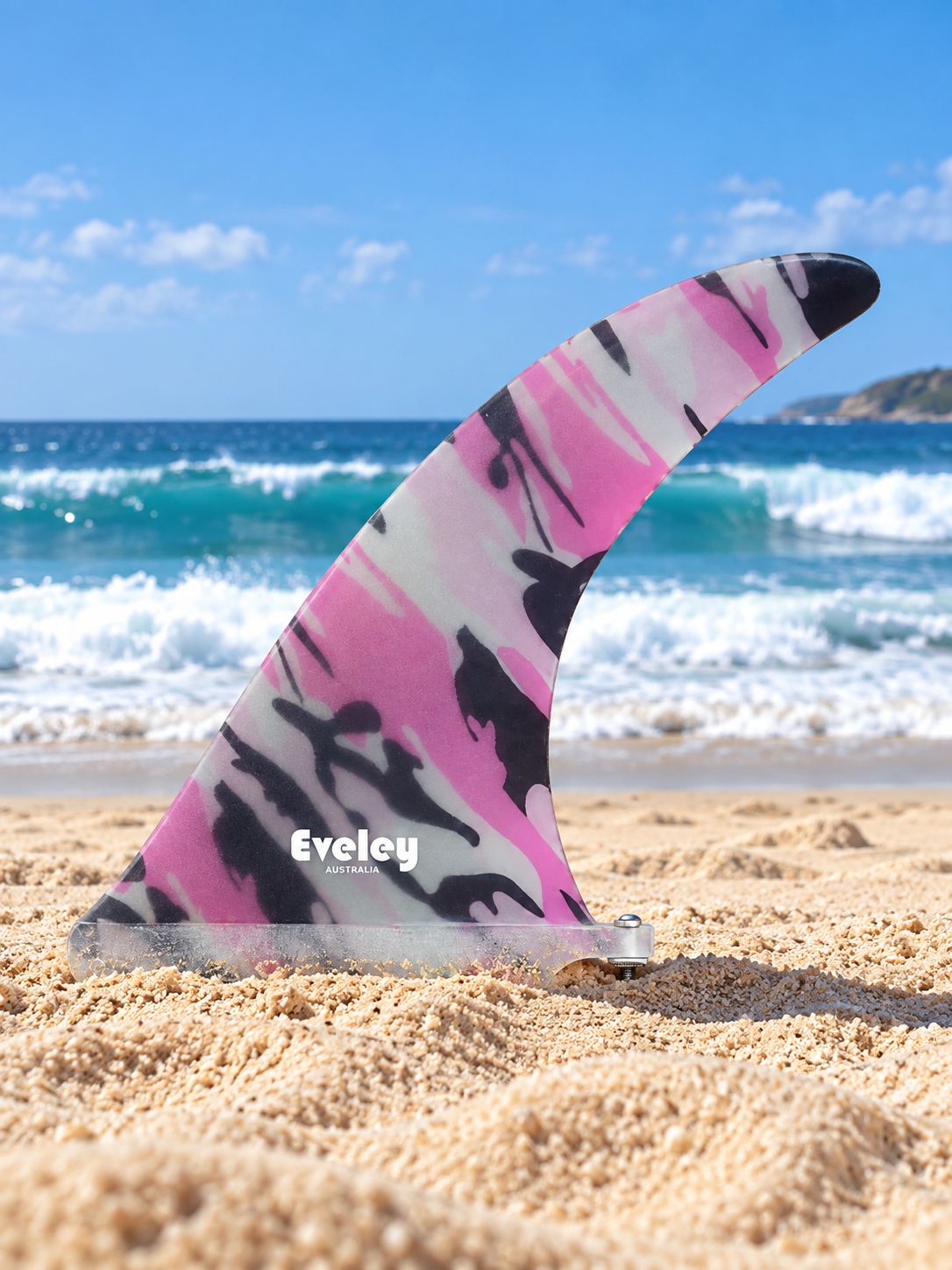
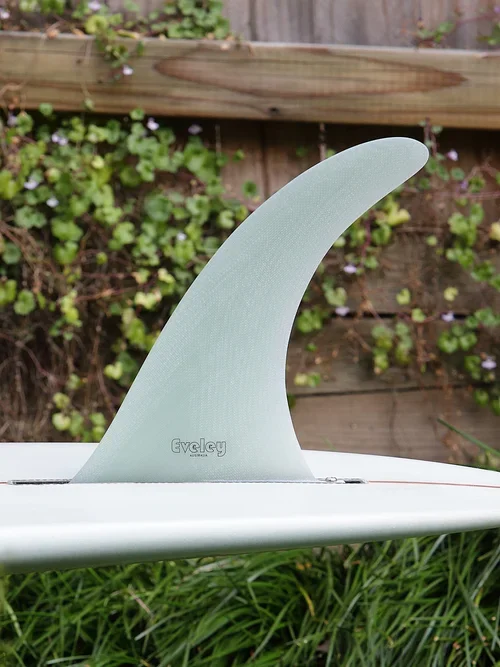
The 4A Center Fin is one of the most trusted surfboard fins ever designed, delivering smooth control, powerful drive, and timeless longboard performance.
What is a 4A Center Fin?
The 4A center fin is a classic longboard template known for its balanced outline, moderate rake, and dependable hold. Originally popularised during the golden era of longboarding, it remains a go-to choice for surfers who want predictable, flowing performance.
If you’re looking for surfboard fins that combine tradition with versatility, the 4A is the benchmark.
Why the 4A Template Still Dominates
The 4A isn’t just a “retro” fin—it’s a refined all-rounder that works across a huge range of conditions and boards.
Core Performance Traits:
Smooth rail-to-rail transitions
Consistent hold through turns
Reliable noseriding stability
Controlled, predictable release
Unlike extreme templates (pivot or highly raked fins), the 4A sits right in the performance sweet spot.
4A vs Other Longboard Fin Templates
Easy Comparison
4A Center Fin
Balanced performance across all areas
Smooth, drawn-out turns
Strong hold without feeling stiff
Pivot Fin
Tight turning radius
Maximum noseride hold
Less drive down the line
Raked Fin
Longer, carving turns
More speed generation
Less pivot control
👉 In simple terms:
The 4A is the “do everything well” option in surfboard fins.
Where the 4A Excels
Best Conditions:
Clean point waves
Beach breaks with shape
Small to overhead surf
Best Boards:
Traditional longboards
Performance longboards
2+1 setups (with side bites)
How the 4A Performs in the Water
1. Drive
The moderate rake creates forward projection without feeling sticky.
2. Hold
The base and foil combination give reliable grip through turns and during noserides.
3. Flow
This is where the 4A shines—everything feels smooth, connected, and natural.
Fin Setup Options
Single Fin Setup
Maximum flow
Classic longboard feel
Ideal for clean conditions
2+1 Setup (with side fins)
Added control and bite
Better performance in steeper waves
Increased turning responsiveness
Choosing the Right 4A Size
General guideline for surfboard fins:
9"–9.5" → Smaller riders / performance boards
10"–10.5" → All-round longboarding
11"+ → Maximum hold and noseriding
👉 Larger = more hold and stability
👉 Smaller = more looseness and manoeuvrability
Featured Eveley 4A Center Fin Options
For surfers looking to dial in performance, explore:
These fins are engineered for surfboard fins performance with premium materials and precise foil control.
When Should You Choose a 4A?
Choose a 4A if you want:
A single fin that works in almost all conditions
Smooth, predictable turning
A balance between drive, hold, and release
A reliable fin for everyday surfing
Common Mistakes When Using a 4A
1. Going Too Small
You lose hold and stability—especially in noseriding.
2. Incorrect Placement
Too far forward → loose, less control
Too far back → stiff, harder to turn
👉 Start centered, then adjust in small increments.
Eveley Surfboard Fin Knowledge Hub
To go deeper into surfboard fins, explore:
These resources help you choose the right fin setup for your board and conditions.
Final Verdict
The 4A Center Fin remains one of the most reliable and versatile surfboard fins ever created.
It’s not trendy.
It’s not extreme.
It just works—exceptionally well.
If you want a fin that delivers consistent performance across conditions, boards, and surfing styles, the 4A is the standard everything else is measured against.
Controller Split Keel Quad Fins
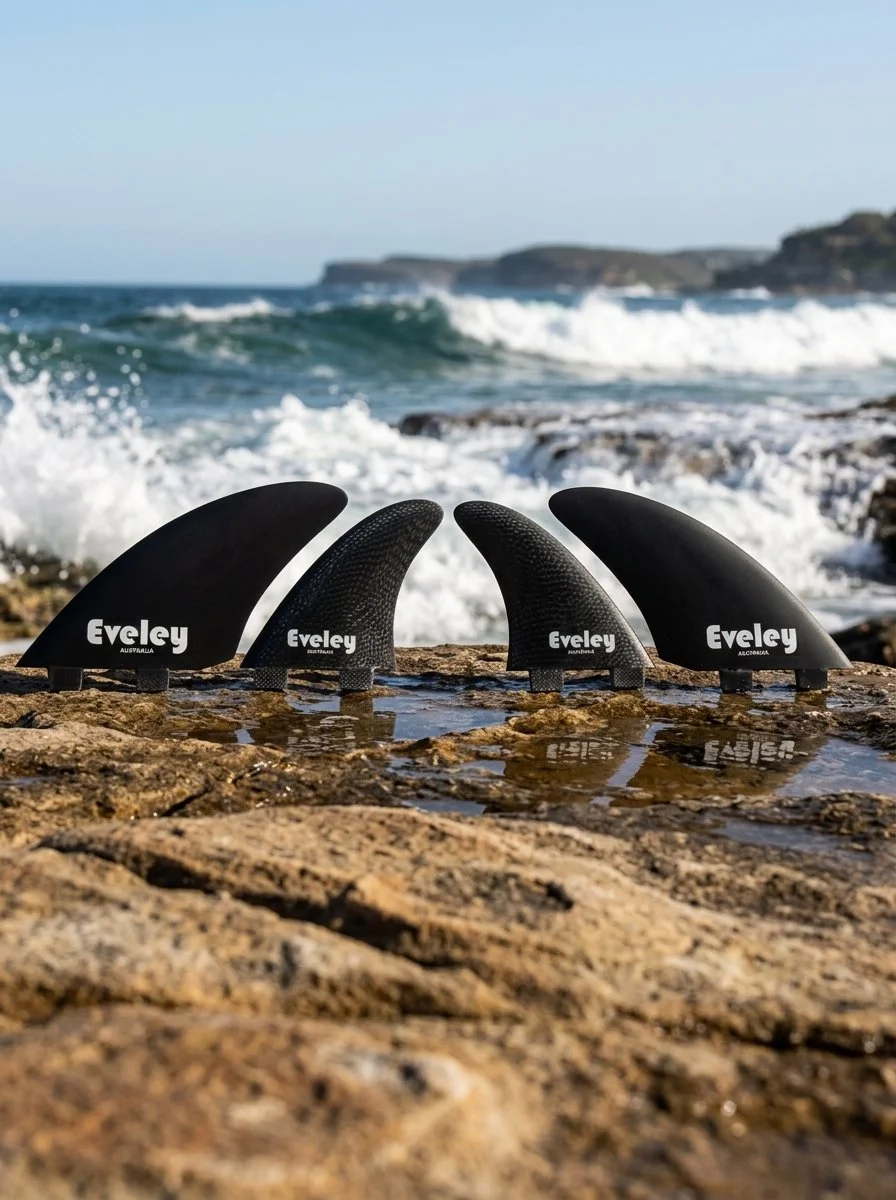
Learn how Controller Split Keel surfboard fins work and why this quad fin setup delivers unmatched speed, hold, and rail drive.
The Quad Fin Setup That Delivers Speed, Hold, and Rail Drive
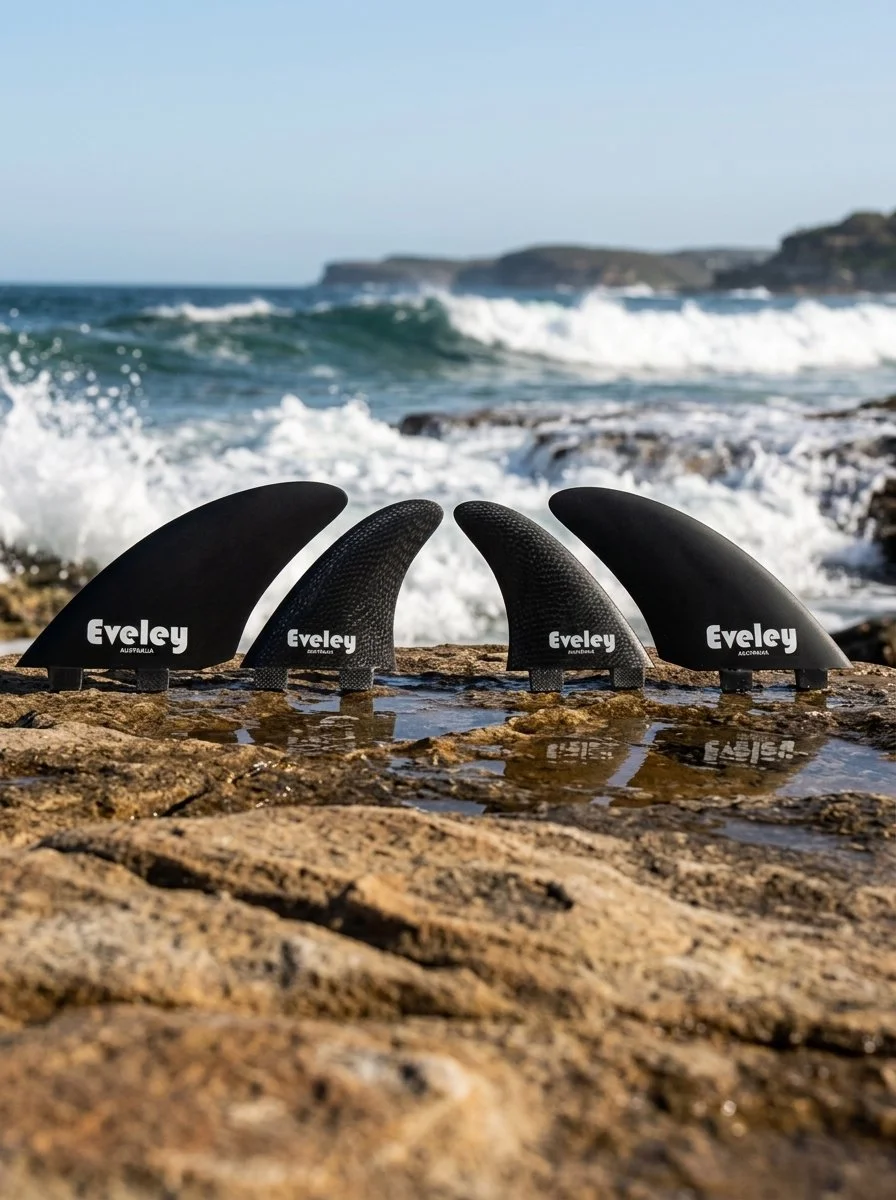
Controller Split Keel Quad surfboard fins are designed to maximise speed and hold in a powerful quad fin setup, delivering exceptional drive, stability, and rail control across a wide range of surf conditions.
Controller Split Keel Quad Fins – The High-Drive Quad Fin Setup Explained
When surfers want maximum speed and hold without sacrificing flow, the Controller Split Keel Quad fin setup stands out as one of the most powerful configurations available.
Unlike traditional quad fins that rely on evenly sized fins, the Controller Split Keel system uses large front fins paired with smaller rear stabilisers to create a powerful, drive-focused rail engagement.
This design allows the board to generate speed extremely efficiently while maintaining the hold needed for committed turns and fast sections.
For surfers looking to unlock the full potential of modern surfboard fins, the Controller Split Keel layout offers a unique blend of keel-like projection and quad responsiveness.
What Are Controller Split Keel Quad Fins?
Controller Split Keel surfboard fins are a specialised quad fin setup built around two key design ideas:
1. Large Keel-Inspired Front Fins
The front fins are oversized with a longer base and higher surface area. This produces powerful forward drive and strong rail engagement.
2. Smaller Rear Stabiliser Fins
The rear fins are significantly smaller and positioned to stabilise the board while allowing the tail to release smoothly during turns.
This “split keel” concept separates the drive and control functions across the fin cluster.
The result is a quad system that feels fast, planted, and incredibly stable at speed.
Why Controller Quad Fins Are So Fast
Speed in a quad fin setup comes from reducing drag while maximising forward projection.
Controller Split Keel surfboard fins achieve this through:
• Increased base length on the front fins
• Strong rail-line engagement
• Reduced drag from the smaller rear fins
• Clean water flow through the centre of the board
Because the centre of the board remains relatively open, water flows smoothly between the fins instead of being disrupted by a centre fin.
This makes Controller quad fins one of the fastest fin setups available.
Controller Split Keel vs Traditional Quad Fins
A traditional quad fin setup uses medium-sized fins front and back. It’s fast, smooth, and works well in everyday surf conditions.
A Controller Split Keel quad setup is different. It uses larger, keel-style front fins and smaller rear stabiliser fins. This creates more speed, stronger hold, and more powerful rail-driven turns, especially in faster, more powerful waves.
In simple terms:
Traditional quad: balanced, smooth, versatile
Controller quad: faster, more powerful, built for drive and control in better waves
While traditional quads are versatile, Controller Split Keel surfboard fins are purpose built for drive and speed.
What Boards Work Best With Controller Quad Fins?
Controller Split Keel quad fin setups work best on boards that benefit from strong rail projection.
Ideal board types include:
• Performance fish
• Hybrid shortboards
• Step-up surfboards
• Wide tail performance boards
• Mid-lengths designed for speed
These boards naturally complement the drive and hold created by this fin system.
Wave Conditions Where Controller Quad Fins Excel
This quad fin setup thrives in waves where speed and control matter most.
Best conditions include:
• Fast point breaks
• Long running reef waves
• Clean beach breaks with long walls
• Overhead surf requiring hold and drive
Because of their stability, Controller Split Keel surfboard fins also perform extremely well in hollow or powerful surf.
The Feel of a Controller Quad Setup
Surfers often describe the Controller quad feel as:
“Turbocharged rail surfing.”
Key characteristics include:
• Instant acceleration
• Strong rail engagement
• Exceptional hold in fast sections
• Powerful drawn-out turns
• Stability at high speed
Unlike thruster setups, the board never feels like it is pushing water through the centre.
Instead, the rail fins generate continuous projection.
Controller Quad vs Thruster Surfboard Fins
A thruster setup (three fins) gives you a balanced feel with good control and plenty of release. It’s ideal for vertical surfing, tight turns, and quick direction changes.
A Controller quad setup (four fins with large fronts and smaller rears) is built for speed and drive. It feels faster, more stable, and holds strongly through longer, rail-driven turns.
In simple terms:
Thruster: more release, great for sharp, vertical turns
Controller quad: faster, more stable, built for powerful rail surfing
Many surfers move to quad fin setups when they want more speed than a thruster can generate.
Controller Split Keel fins push this concept even further.
Choosing the Right Controller Quad Surfboard Fins
When selecting Controller surfboard fins, consider:
Board width and tail shape
Wider tails benefit most from the additional drive.
Wave power
These fins perform best when the wave face allows the board to run.
Rider style
Rail-focused surfers will gain the most advantage from the design.
For surfers who prefer speed, projection, and long carving turns, Controller Split Keel quad fins are often the ideal choice.
Eveley Surfboard Fin Knowledge Hub
To deepen your understanding of surfboard fins and performance tuning, explore these Eveley guides:
• Surfboard Fins Australia – Complete Buyer’s Guide
• Quad Fin Setup Explained
• How Fin Templates Affect Performance
• Twin Keel Surfboard Fins Guide
These resources explain how different fin designs influence speed, control, and turning style.
FAQs – Controller Split Keel Quad Surfboard Fins
What is a Controller quad fin setup?
A Controller quad fin setup uses large front fins and smaller rear fins to maximise drive while maintaining stability and control.
Are Controller quad fins faster than a thruster?
Yes. Because a quad setup has no center fin blocking water flow, Controller surfboard fins generate more speed and projection.
Can beginners use Controller quad fins?
Yes, but they are most beneficial for intermediate and advanced surfers who want maximum speed and rail hold.
Do Controller quad fins work in small waves?
They can work in small surf, but they truly shine in clean waves with room to generate speed.
Final Thoughts
Controller Split Keelsurfboard fins represent one of the most powerful quad fin setups available.
By combining keel-style drive with quad speed and stability, they deliver:
• incredible acceleration
• strong rail hold
• exceptional projection through turns
For surfers looking to unlock maximum speed from their boards, the Controller Split Keel system is a proven high-performance fin design.
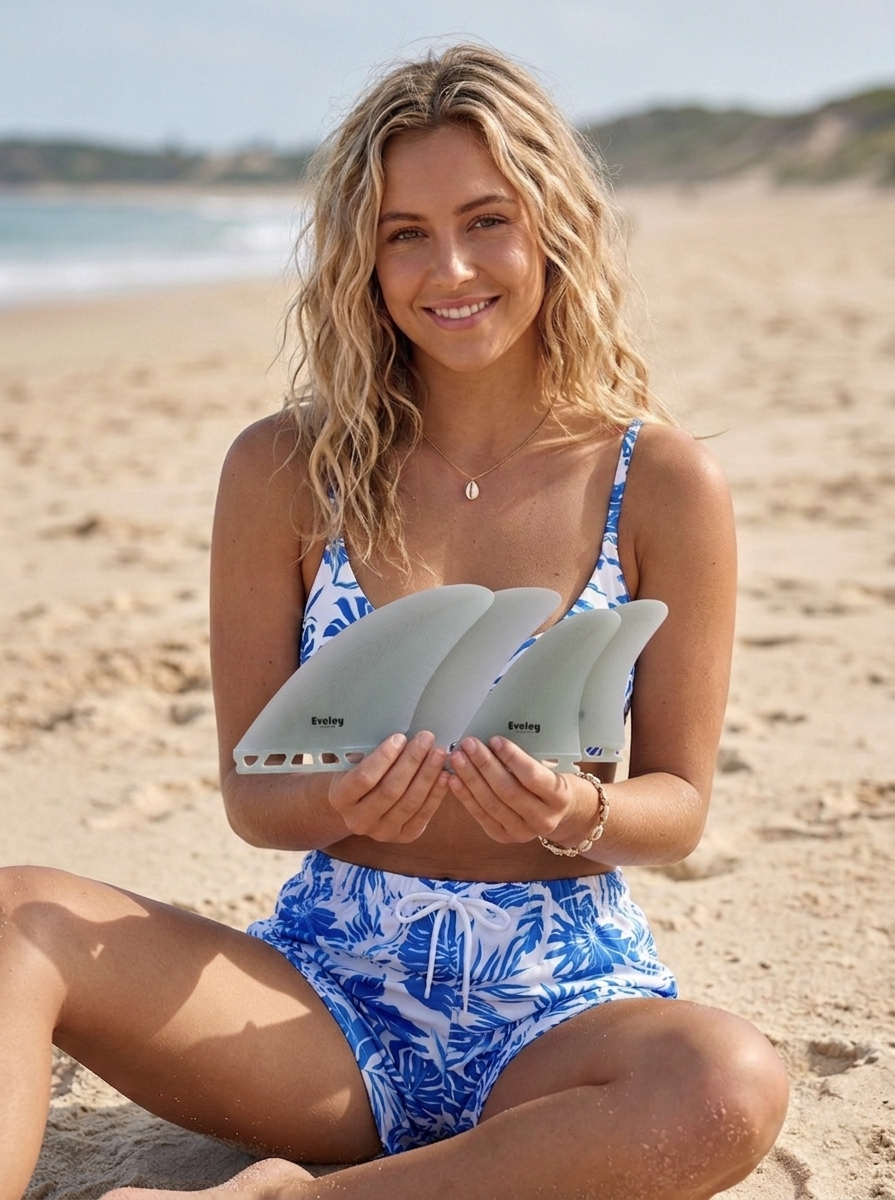
10" Classic Longboard Fin – Why It’s Still the Safest All-Round Choice
New to surfboard fins? Start with the complete Surfboard Fin Guides overview.
If you're searching for the best 10" classic longboard fin, you're likely after one thing:
A dependable, do-it-all single fin that just works.
Not a specialised logger.
Not a tight pivot-only template.
Not an ultra-performance design.
The 10" classic longboard fin sits right in the middle — delivering:
Reliable tail hold
Smooth carving turns
Clean trim speed
Moderate noseriding stability
This guide explains why the 10 inch classic longboard fin remains the most versatile and safest choice for traditional longboard surfers.
What Is a 10" Classic Longboard Fin?
A classic longboard fin is defined by:
Moderate rake
Balanced base length
Rounded tip
Clean, predictable release
It is not overly upright like a pivot fin.
It is not oversized like a logger.
It is not heavily swept like performance templates.
It is built for flow and control.
At 10 inches, it provides enough surface area to stabilise most 9'0"–9'6" longboards without feeling stiff or restrictive.
Why 10 Inches Became the Standard
There’s a reason 10" became the benchmark size.
For most traditional longboards:
9" can feel slightly loose
10.5"+ can feel overly planted
10" lands in the sweet spot
It provides:
Strong tail hold in the pocket
Balanced trim stability
Smooth drawn-out cutbacks
Confidence without overcommitment
For everyday surfing, that balance matters more than extremes.
Performance Breakdown
Tail Hold
A 10" classic longboard fin provides:
Reliable pocket stability
Enough resistance to prevent drift
Confidence stepping forward
It holds well without locking the board into a rigid track.
Turning Response
Because of its moderate rake, the classic template:
Initiates smooth carving turns
Maintains speed through arcs
Feels fluid rail-to-rail
It avoids the tight pivot feel of upright fins while remaining controlled.
Trim & Glide
This is where the classic longboard fin shines.
It:
Tracks cleanly down the line
Maintains speed without excess drag
Encourages smooth, traditional surfing
For surfers who prioritise trim, it’s often the most satisfying option.
Noseriding Stability
In clean shoulder-high waves, a 10" classic fin offers:
Moderate-to-strong tail hold
Enough anchor for controlled nose rides
Better versatility than larger logger templates
It won’t match the absolute hold of a 10.5"+ logger — but it works in more conditions.
Classic vs Pivot vs Logger
10" Classic Fin
Best for: Everyday longboarding in a wide range of conditions.
Trade-off: It doesn’t have quite as much tail hold as a larger logger fin.
10" Pivot Fin
Best for: Stronger tail control and tighter turning from the back of the board.
Trade-off: Turns feel more controlled and less flowing than a classic template.
10.5"+ Logger Fin
Best for: Maximum stability and extended noseriding.
Trade-off: The board will feel more planted and less manoeuvrable when turning.
In simple terms:
Classic 10" = most versatile
Pivot 10" = tighter control
Logger 10.5"+ = maximum hold
If you want one fin that works in the widest range of conditions, the classic 10 inch longboard fin wins.
Who Should Choose a 10" Classic Longboard Fin?
This fin is ideal for:
Traditional single-fin longboards
Surfers blending trim and carving
9'0"–9'6" boards
Clean point waves and beach breaks
Riders wanting reliability without stiffness
It is the most forgiving option for intermediate surfers and the most adaptable for experienced longboarders.
When You Might Need Something Else
Choose a logger if:
Noseriding is your primary focus
You surf steep, peeling points
Choose a smaller performance fin if:
You want faster, sharper direction changes
Your board has heavy rocker
Otherwise, the 10" classic remains the safest bet.
FAQ – 10" Classic Longboard Fin
Is 10" the best size for a classic longboard fin?
For most 9'0"–9'6" boards, yes. It offers the best balance of hold and manoeuvrability.
Does a classic longboard fin turn better than a pivot fin?
It turns more smoothly and with longer arcs, while pivot fins feel tighter off the tail.
Is 10 inches too big for smaller surfers?
Generally no. Fin size relates more to board length and wave type than surfer weight alone.
Why the 10" Classic Still Outsells Trend Templates
In an industry filled with highly specialised shapes, the classic 10" template continues to perform because:
It handles variable conditions
It avoids extreme behaviour
It matches traditional longboard design
It is the most adaptable longboard single fin format available.
For surfers who want confidence without complication, it remains the most practical choice.
Supporting Knowledge Hub Article
Longboard Surfboard Fins Australia
Conclusion
The 10" classic longboard fin endures because it strikes the right balance.
It provides:
Strong but manageable hold
Smooth carving turns
Clean trim glide
Everyday reliability
If you're unsure which fin to choose for your longboard, starting with a 10" classic template is rarely a mistake.
Click here to shop the Eveley 10" Classic Longboard Fin – Hot Pink Pro Glass
Click here to shop the Eveley 10" Classic Longboard Fin – Smoke Pro Glass
Click here to shop the Eveley 10" Classic Longboard Fin – Blue Pro Glass
Click here to see all the Eveley Center Fins
How Fin Templates Affect Performance
How surfboard fins templates affect speed, control, and turning — explained clearly so you can choose the right fin for your board and waves.
When it comes to surfboard fins, most surfers focus on size and setup — but the template (shape) of the fin is just as critical.
Fin templates directly control:
How your board accelerates
How it holds in a turn
How tight or drawn-out your turns feel
How stable or loose your board becomes
Understanding templates removes guesswork and allows you to tune your board’s performance with precision.
What Is a Fin Template?
A fin template is the outline shape of the fin when viewed from the side.
It determines how water flows across the fin and how the board responds under your feet.
Key template variables include:
Base length
Height (depth)
Rake (sweep)
Tip shape
Foil interaction
Each of these influences how your surfboard fins perform in real waves.
The 5 Key Elements of Fin Templates
1. Base Length → Drive & Speed
The base is the bottom edge of the fin.
Longer base = more drive
Generates speed down the line
Strong projection out of turns
Ideal for powerful waves
Shorter base = less drive
Faster pivot
Looser feel
👉 Example:
Twin keels and drive-oriented quads use longer bases for maximum speed.
2. Height (Depth) → Hold & Stability
The height controls how deep the fin sits in the water.
Taller fins = more hold
Better grip in steep waves
Increased control at speed
👉 Example: 11" International 4A Center Fin – Pink on White Pro Glass
Shorter fins = looser feel
Easier to release
Better for playful surfing
👉 Example: 2.9" Classic Center Fin, Blue Pro Glass
3. Rake (Sweep) → Turn Style
Rake refers to how far the fin sweeps back.
More rake (swept back)
Longer, drawn-out turns
Smooth carving feel
Better control at speed
Less rake (upright template)
Tighter, sharper turns
Faster pivot response
More vertical surfing
👉 Example:
Performance thruster fins often use upright templates for quick direction changes.
See: Thruster Surfboard Fins Explained
4. Tip Shape → Release & Control
The tip affects how water exits the fin.
Fuller tip
More hold
Smoother, controlled turns
Narrow tip
Faster release
More responsive feel
This is subtle — but noticeable in higher-performance surfboard fins.
Example: 10.75" Funky Monkey Center Fin – Natural Pro Glass
5. Overall Template Balance
No element works alone.
A well-designed fin balances:
Base (drive)
Height (hold)
Rake (turn style)
👉 This is why templates like the DTR Quads are so effective — they combine speed with control across different wave types.
How Templates Affect Real Surf Performance
Speed
Templates with:
Longer base
Moderate rake
→ Generate the most speed
This is why quad surfboard fins feel faster than thrusters.
Turning
Upright templates → quick, tight turns
Raked templates → smooth carving arcs
Your template determines whether your board feels:
Snappy and reactive
or
Flowing and drawn-out
Hold vs Release
Taller + fuller templates = more hold
Smaller + refined templates = easier release
This becomes critical in:
Steep waves
Hollow surf
High-speed sections
Stability
Templates also influence how stable your board feels under pressure.
Larger, fuller templates = stable
Smaller, refined templates = loose
Matching Fin Templates to Board Types
Shortboards (Thruster)
Upright template
Medium base
Balanced height
👉 Example product: 4.5" Progressive Thruster Surfboard Fins – Gold Pro Glass | Fast Responsive Eveley Fins (FCS II Compatible)
Quad Setups
Larger front fins (drive)
Smaller rear fins (control)
👉 Creates speed + hold combination
Example product:
➡ Eveley DTR Quad Surfboard Fins
Twin Fins
Wide base
Low rake
Fuller outline
👉 Maximum speed, loose feel
See: Twin Fin Surfing Guide: Speed, Flow, Keels vs Upright Twins Explained
Longboard (2+1 Setup)
Large centre fin (drive + hold)
Small side bites (control)
👉 Template controls noseriding vs turning balance
Choosing the Right Fin Template
Ask yourself:
1. What waves do I surf most?
Small waves → looser template
Powerful waves → more hold
2. How do I like to surf?
Fast & flowing → raked template
Tight & vertical → upright template
3. What does my board need?
Too stiff → reduce base or height
Too loose → increase base or rake
Common Mistakes
Choosing fins based on size alone
→ Template matters just as much
Using the wrong template for your setup
→ e.g. upright fins in a quad can feel unstable
Ignoring rear fin influence in quads
→ Small changes in trailer template = big performance shifts
Key Takeaways
Fin templates define how surfboard fins actually perform
Base = drive
Height = hold
Rake = turning style
Tip = release
The right template transforms your board from:
👉 Average → Dialled
Popular Center Fins
11" International 4A Center Fin – Blue on White Pro Glass
11" International 4A Center Fin – Black on Red Pro Glass
Popular Quad Fins
Popular Twinzer Fins
Surfboard Fin Knowledge Hub
Want to go deeper into surfboard fins?
Start here:
➡ Surfboard Fins Australia – Complete Buyer's Guide
Then explore:
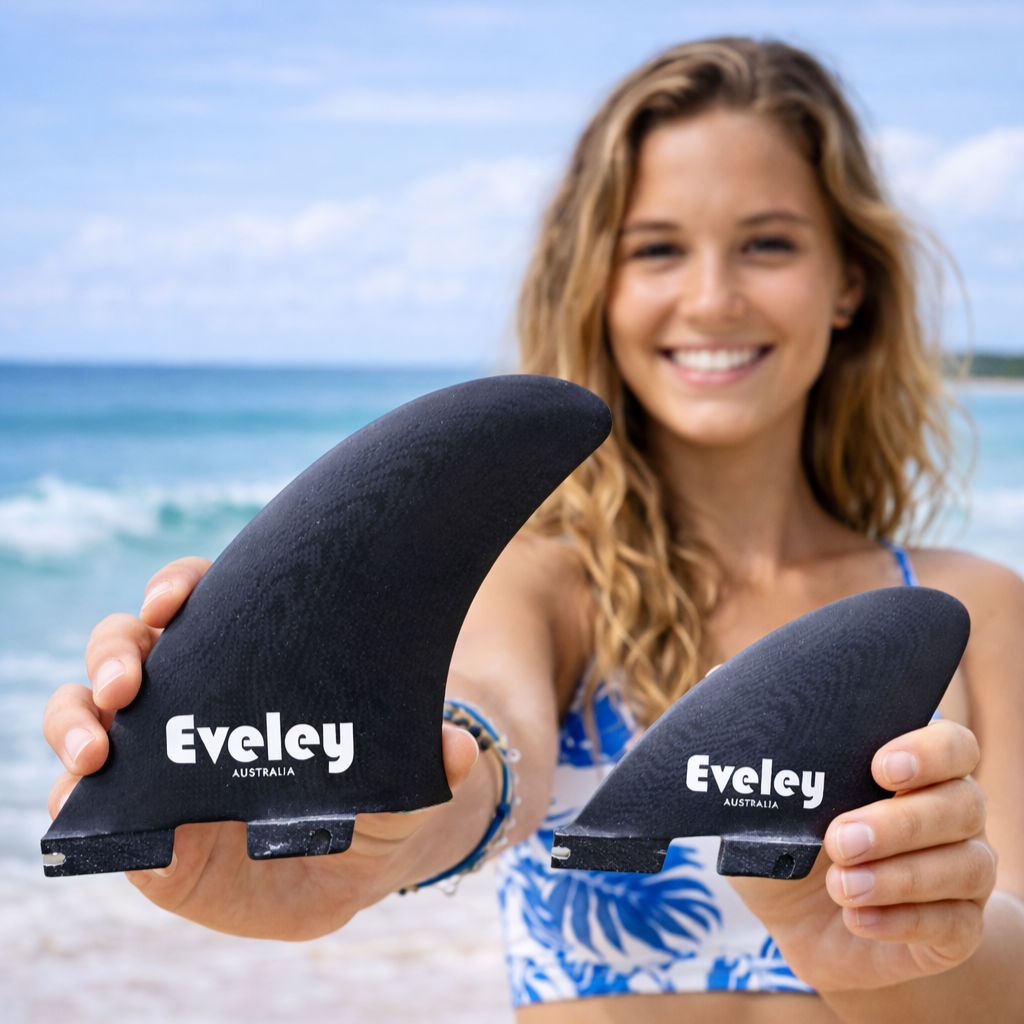
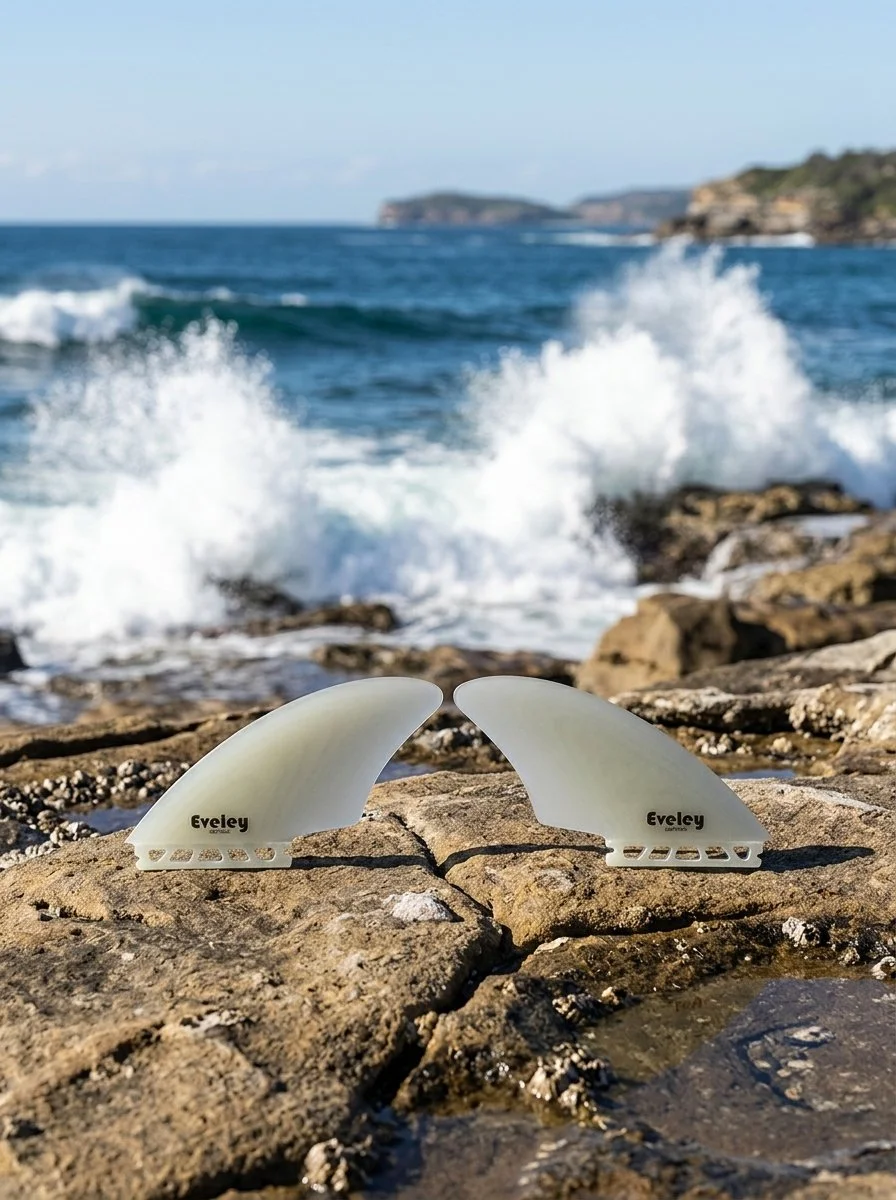
Twin Keel Surfboard Fins – The Complete Guide to Speed, Drive & Classic Flow
Learn how twin keel surfboard fins work, why they generate incredible speed, and how to choose the right keel fins for fish boards and twin fin setups.
Twin keel surfboard fins deliver exceptional speed, smooth rail flow, and powerful down-the-line drive—making them one of the most iconic surfboard fin designs ever created.
Twin Keel Surfboard Fins – Speed, Flow and Classic Fish Performance
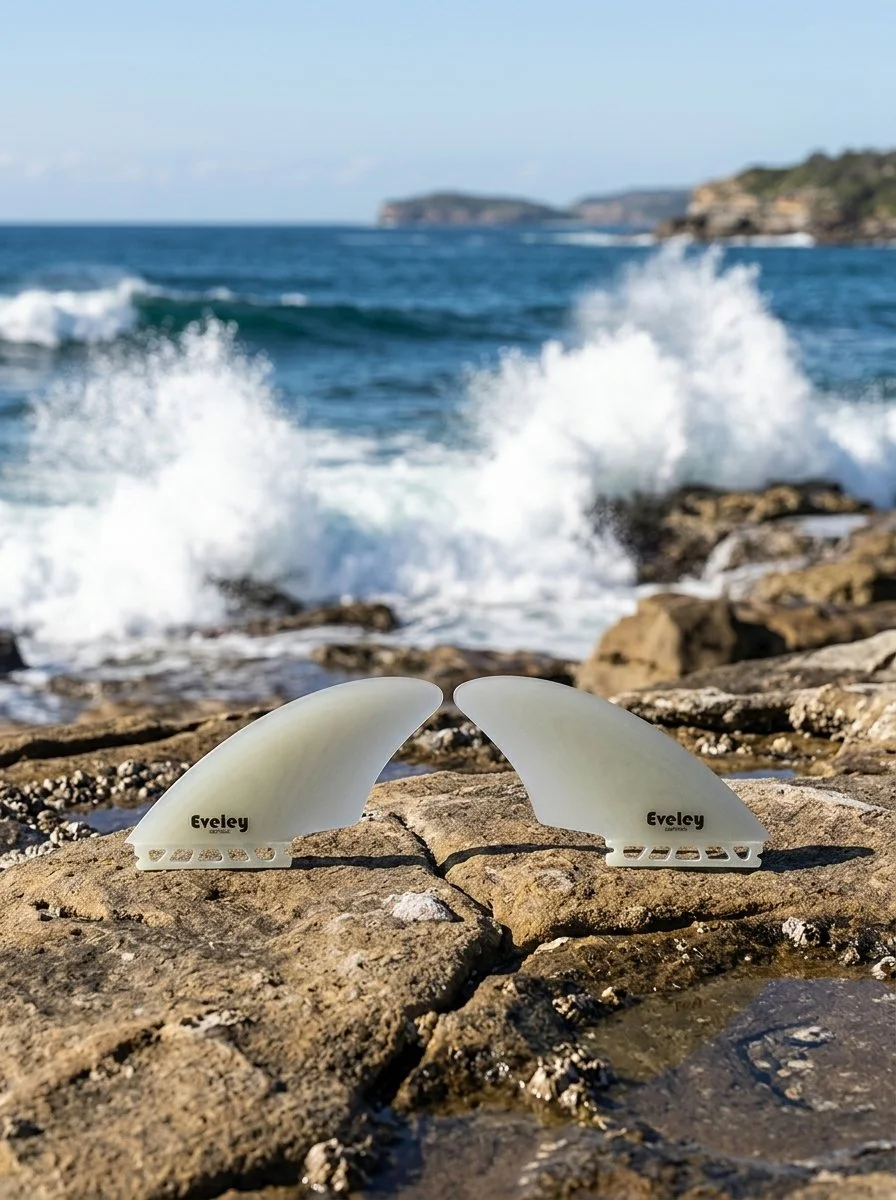
Twin keel fins represent one of the most influential designs in the evolution of surfboard fins. Recognisable by their long base, low height, and sweeping outline, keel fins create incredible speed and drive by maximising surface area along the rail line.
Originally developed for fish surfboards in the late 1960s and early 1970s, twin keels remain a favourite for surfers seeking fast, flowing lines rather than tight, pivot-driven turns.
Today, modern materials and refined templates mean twin keels can be ridden across a wide range of boards—from classic retro fish shapes to modern mid-lengths and hybrids.
What Are Twin Keel Surfboard Fins?
Twin keel fins are large twin surfboard fins with:
• Long base length
• Low overall height
• High surface area
• Moderate sweep (rake)
Instead of relying on height for hold, keel fins create control by distributing area along the rail. This generates enormous forward projection and smooth carving turns.
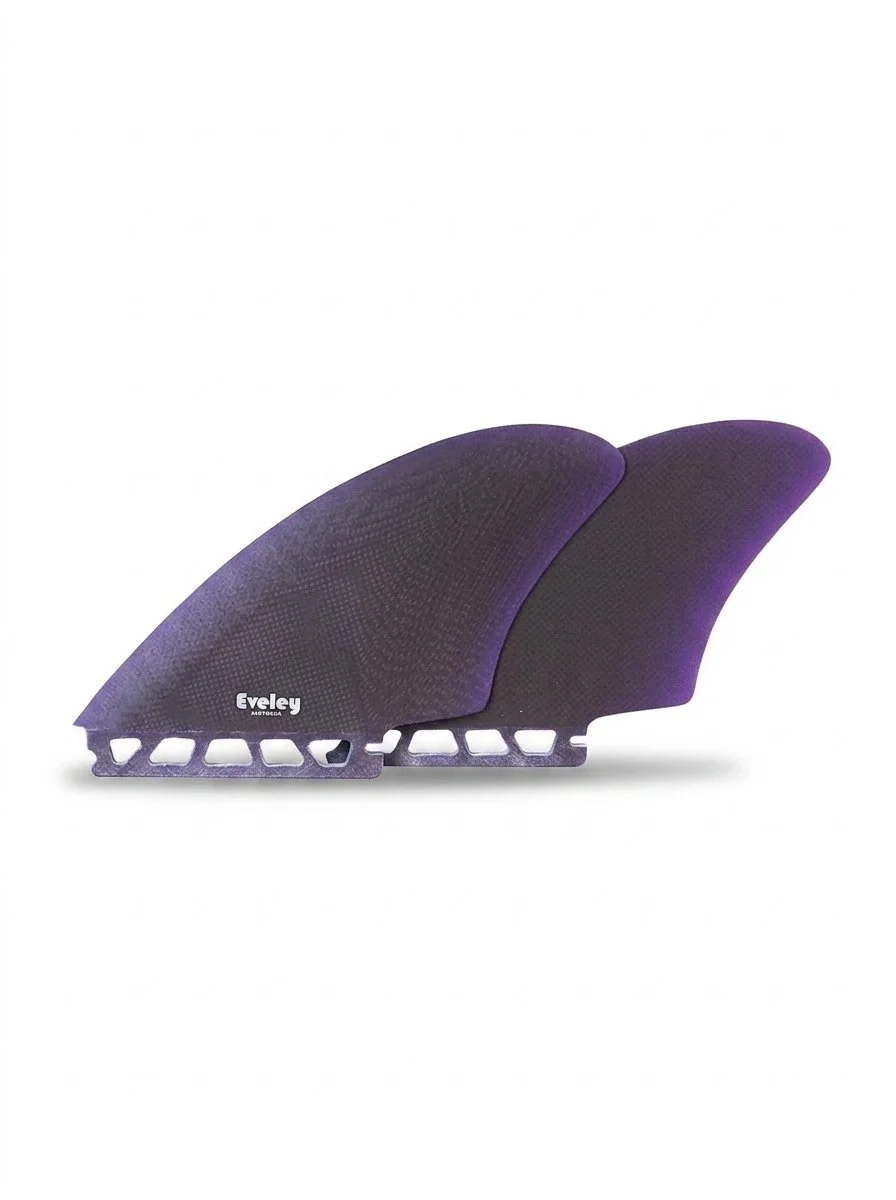
The result is a surfing style built around speed, trim and flowing arcs rather than rapid pivot turns.
If you're new to fin setups, start with the Eveley pillar guide:
👉 Surfboard Fins Australia – Complete Buyer’s Guide
The Origins of Twin Keel Fins
Twin keel fins rose to prominence during the fish surfboard revolution of the early 1970s.
The design was strongly influenced by the work of legendary surfboard designer Steve Lis, whose kneeboard-inspired fish boards used twin keels to generate speed in small waves.
This design allowed surfers to maintain momentum through flatter sections where traditional single fins struggled.
Twin keels soon became synonymous with:
• Retro fish boards
• Down-the-line surfing
• Maximum wave speed
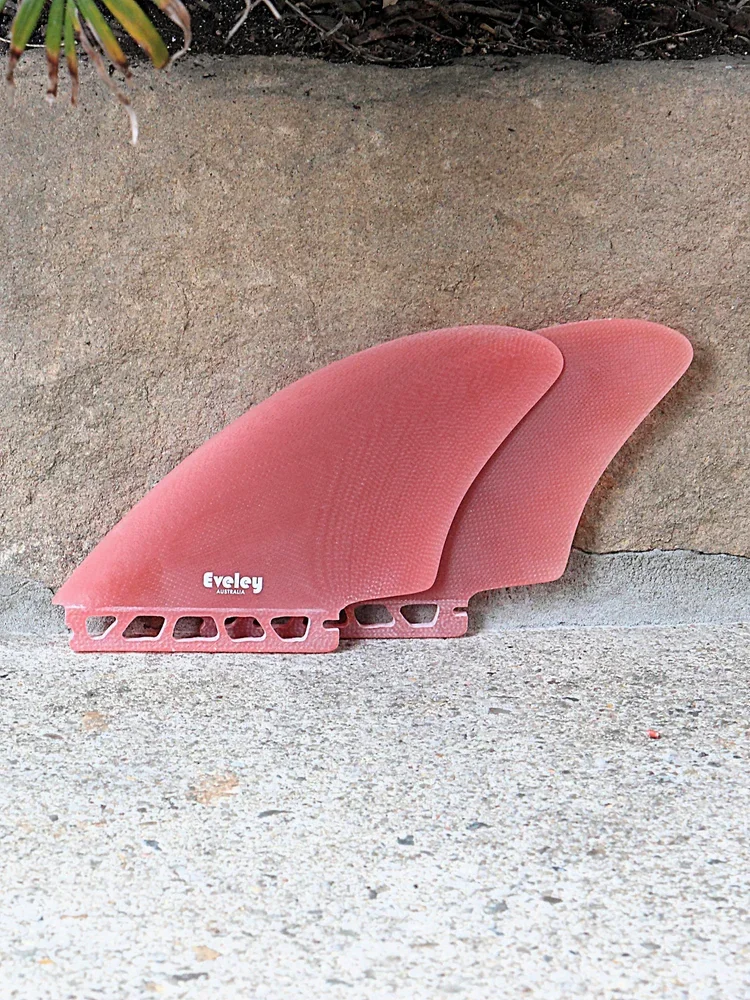
Today they remain one of the most recognisable surfboard fins ever created.
Key Design Features of Twin Keel Surfboard Fins
Long Base = Maximum Drive
Twin keels typically have base lengths between 130 mm and 170 mm.
This extended base creates continuous rail engagement through turns.
The benefit:
• More projection out of turns
• Faster down-the-line acceleration
• Smooth power through carves
Large Surface Area = Hold Without Height
Although twin keels are not tall fins, they generate strong hold because their surface area is spread across the rail.
This creates:
• Stable rail engagement
• Controlled speed in powerful sections
• Smooth carving turns
Swept Outline = Flowing Turns
The moderate rake (sweep) of a keel fin encourages drawn-out turns rather than tight pivots.
This gives twin keel setups their distinctive feeling:
• Flowing rail lines
• Long arcs
• High speed trimming
What Boards Use Twin Keel Fins?
Twin keel surfboard fins are typically used on boards designed for speed and flow.
Classic Fish Surfboards
Traditional retro fish boards rely on twin keels to generate speed in small waves.
The wide tail and flat rocker combine perfectly with the drive of large keels.
Mid-Length Twin Boards
Modern mid-length twins (6'8" – 8'0") use twin keels to create smooth carving lines with exceptional glide.
These boards emphasise:
• Rail surfing
• Long drawn-out turns
• Trim speed
Hybrid Performance Twins
Some modern hybrid boards use slightly refined keel templates to combine:
• Speed of classic keels
• Improved turning control
How Twin Keel Surfboard Fins Perform
Twin keels produce a very distinctive ride compared to other surfboard fins.
Speed
Twin keels are among the fastest surfboard fins available.
The long base generates strong forward projection even in weak waves.
Turning Style
Turning with twin keels is:
• Smooth
• Drawn-out
• Rail-driven
Rather than pivoting sharply like a thruster setup, twin keels encourage surfers to commit to rail lines.
Wave Range
Twin keel surfboard fins perform best in:
• Small waves
• Weak or soft waves
• Clean point breaks
• Long walls
Twin Keels vs Other Surfboard Fins
Understanding how twin keels compare to other setups helps surfers choose the right surfboard fins.
Twin Keel Fins
Best for:
• Maximum speed
• Retro fish boards
• Flow surfing
Trade-off:
• Less pivot control
Thruster Fins
Best for:
• Tight turns
• Vertical surfing
• Everyday performance boards
Learn more in the guide:
👉 Thruster Surfboard Fins Explained
Quad Fin Setups
Best for:
• Speed with added control
• Powerful waves
• High-performance surfing
Learn more here:
👉 Quad Surfboard Fins Guide
Materials Used in Twin Keel Surfboard Fins
Material choice dramatically affects how surfboard fins feel in the water.
Fiberglass (Pro Glass)
Fiberglass keel fins provide:
• Solid drive
• Smooth flex
• Maximum durability
These are the preferred material for classic twin keel designs.
Volan Fiberglass
Volan glass offers:
• Slightly heavier construction
• Smooth dampened flex
• Traditional appearance
This material is often chosen for retro fish surfboards.
Learn more here:
👉 Volan Fiberglass Surfboard Fins Explained
Choosing the Right Twin Keel Surfboard Fins
Selecting the right twin keel surfboard fins depends on three main factors.
Board Width
Wider fish boards benefit from larger keel fins because they provide the rail hold needed to control the wide tail.
Wave Type
Twin keels excel in:
• Small beach breaks
• Soft point breaks
• Long walls
Surfing Style
Twin keels suit surfers who prefer:
• Smooth carving turns
• Speed generation
• Flow surfing
Rather than aggressive vertical manoeuvres.
Eveley Twin Keel Surfboard Fins
Eveley produces premium fiberglass twin keel surfboard fins designed for speed, durability and classic fish performance.
Popular models include:
4.6" Twin Keels, midnight purple Pro Glass. Futures compatible set of two fins.
These designs combine traditional templates with modern materials for reliable performance across a wide range of twin-fin boards.
Explore the full collection here:
👉 Eveley Surfboard Fins Keels Collection
Frequently Asked Questions
Are twin keel fins good for beginners?
Yes. Twin keel surfboard fins create excellent speed in small waves, making them easier to ride in weaker surf.
Are twin keels only for fish boards?
While most commonly used on fish boards, twin keels also work well on mid-length twin designs and hybrid twin boards.
Are twin keels faster than thrusters?
Yes. Twin keel surfboard fins typically generate more speed because they have less drag and a longer drive base.
Can twin keels be used in large waves?
They can, but twin keels are generally best suited to small and medium waves where speed generation is most important.
Final Thoughts
Twin keel surfboard fins remain one of the most iconic and effective fin designs ever created.
Their unique combination of:
• exceptional speed
• smooth carving turns
• classic fish performance
continues to make them a favourite among surfers who prioritise flow and glide over aggressive pivot surfing.
Whether you're riding a retro fish or a modern twin mid-length, the right twin keel fins can completely transform how your board feels in the water.
Futures™ is a registered trademark of Futures Fins. Eveley Surf is not affiliated with or endorsed by Futures Fins. All compatibility references to Futures Fins are for descriptive purposes only.
FCS™ and FCSII™ are registered trademarks of Surf Hardware International Pty Ltd. Eveley Surf is not affiliated with or endorsed by Surf Hardware International Pty Ltd. All compatibility references to FCS and FCSII are for descriptive purposes only.
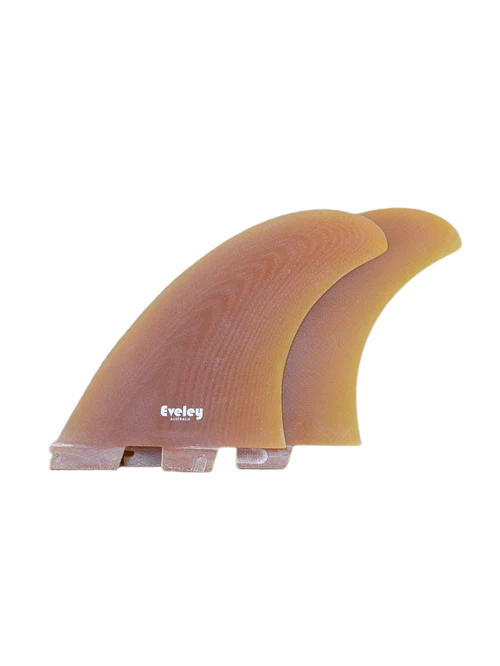
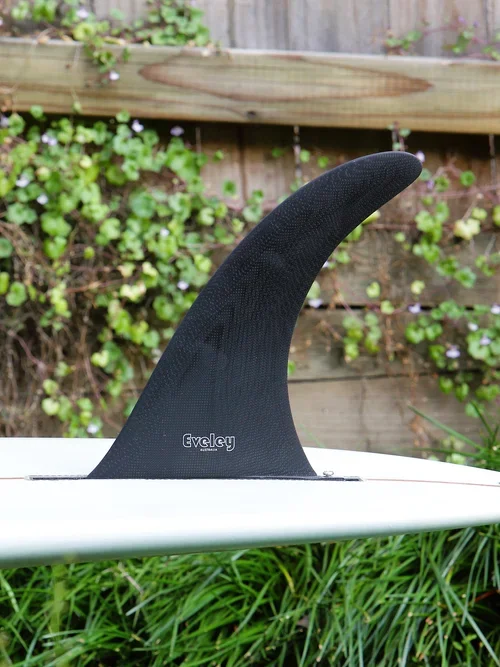
Sliding Center Fin Box (US / Bahne Box) Guide
The Sliding Center Fin Box, sometimes called the US Box or Bahne Box, is the most widely used system for installing center surfboard fins on longboards and mid-length surfboards.
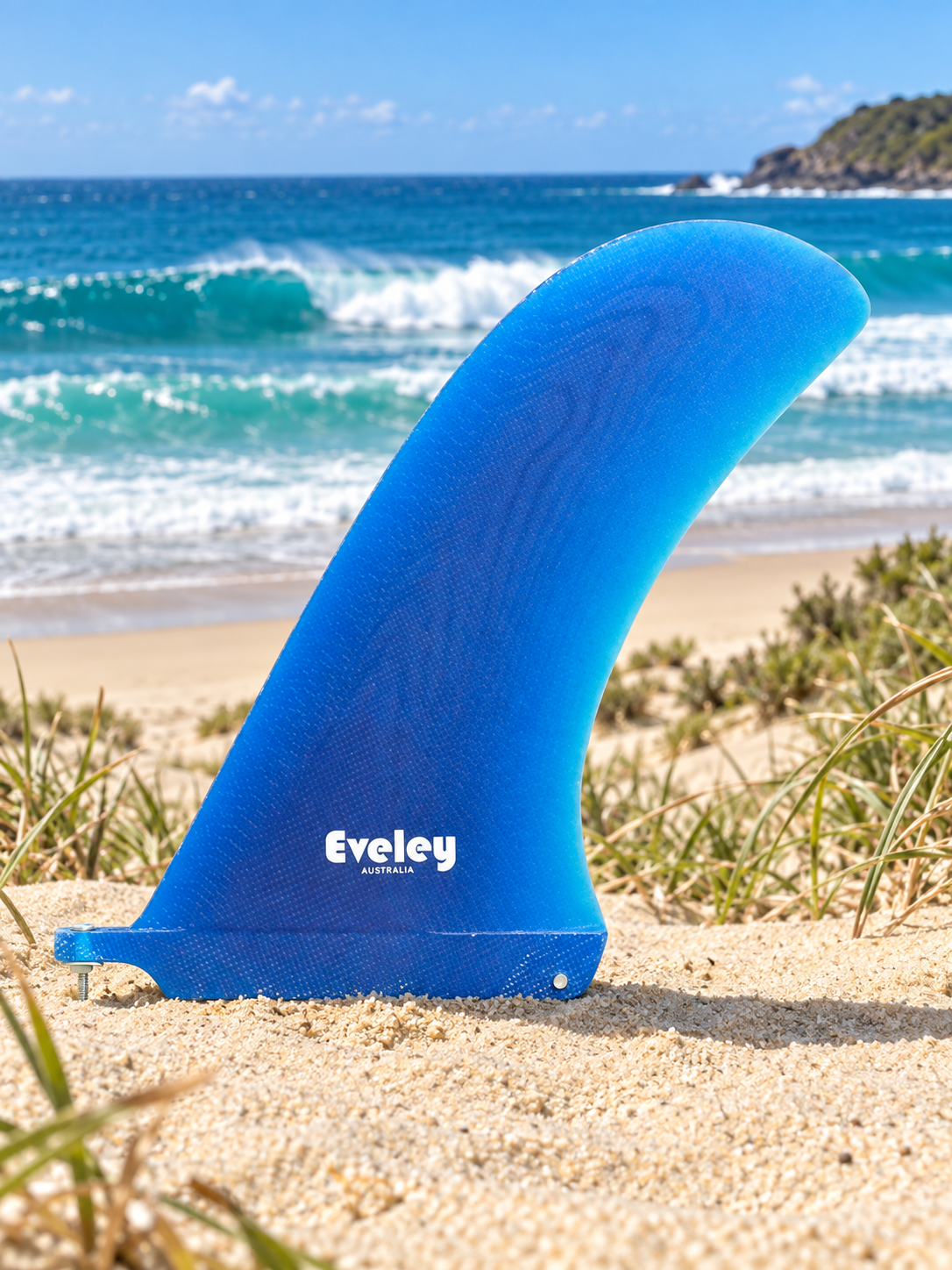
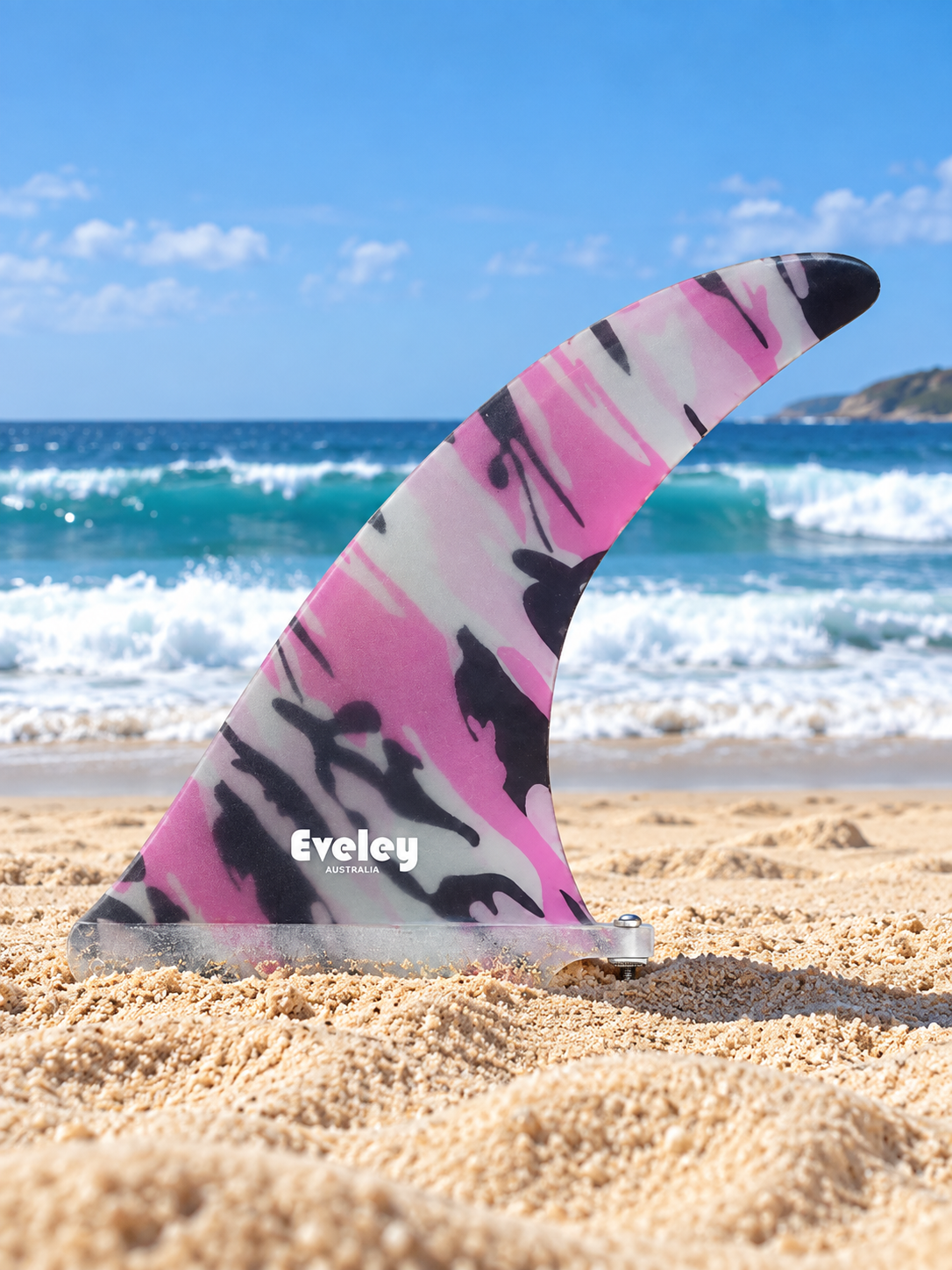
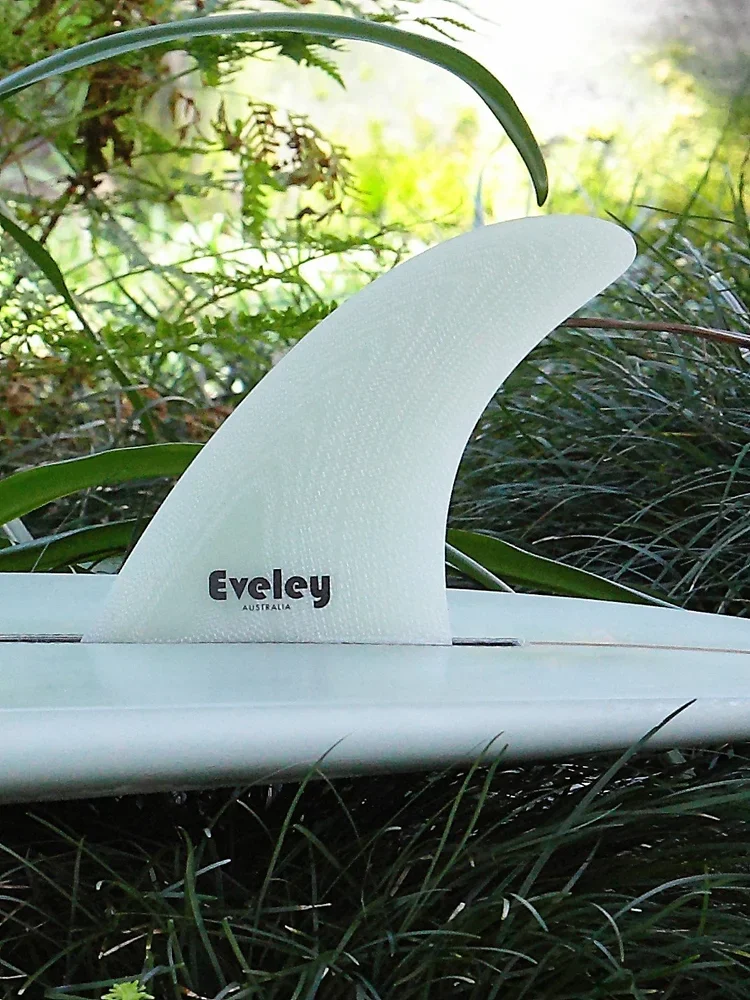
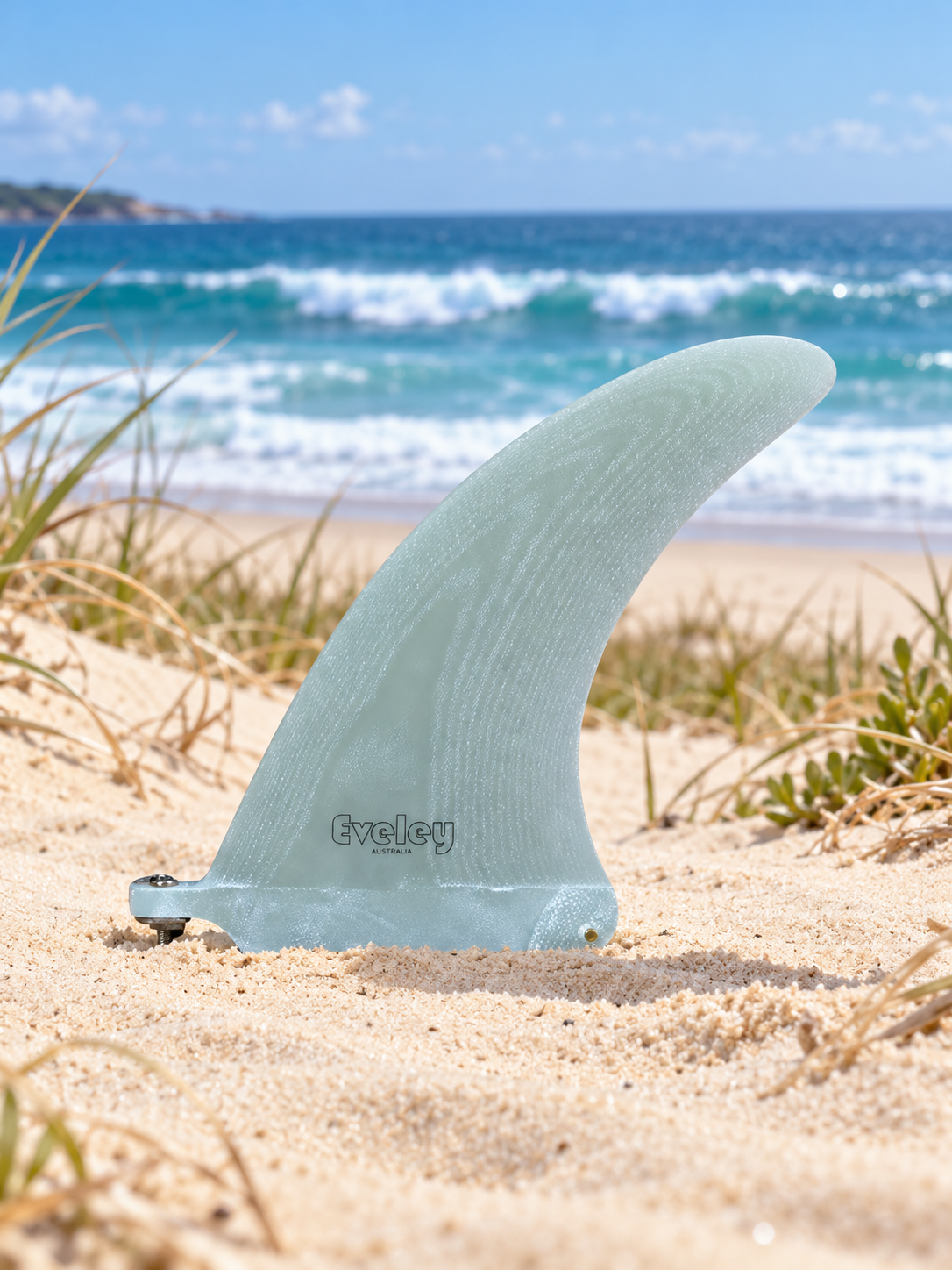
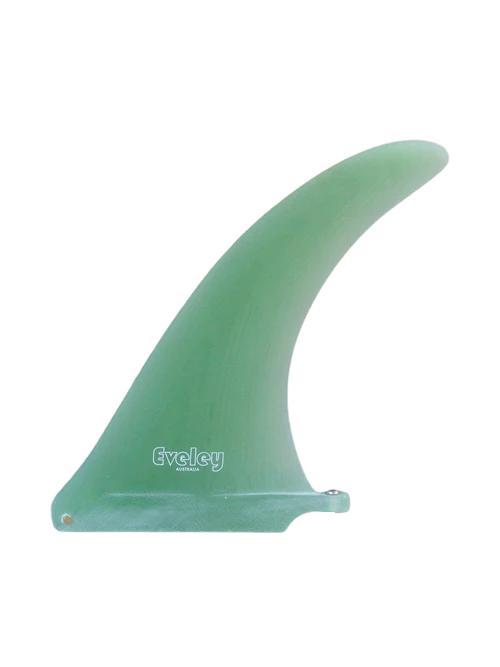
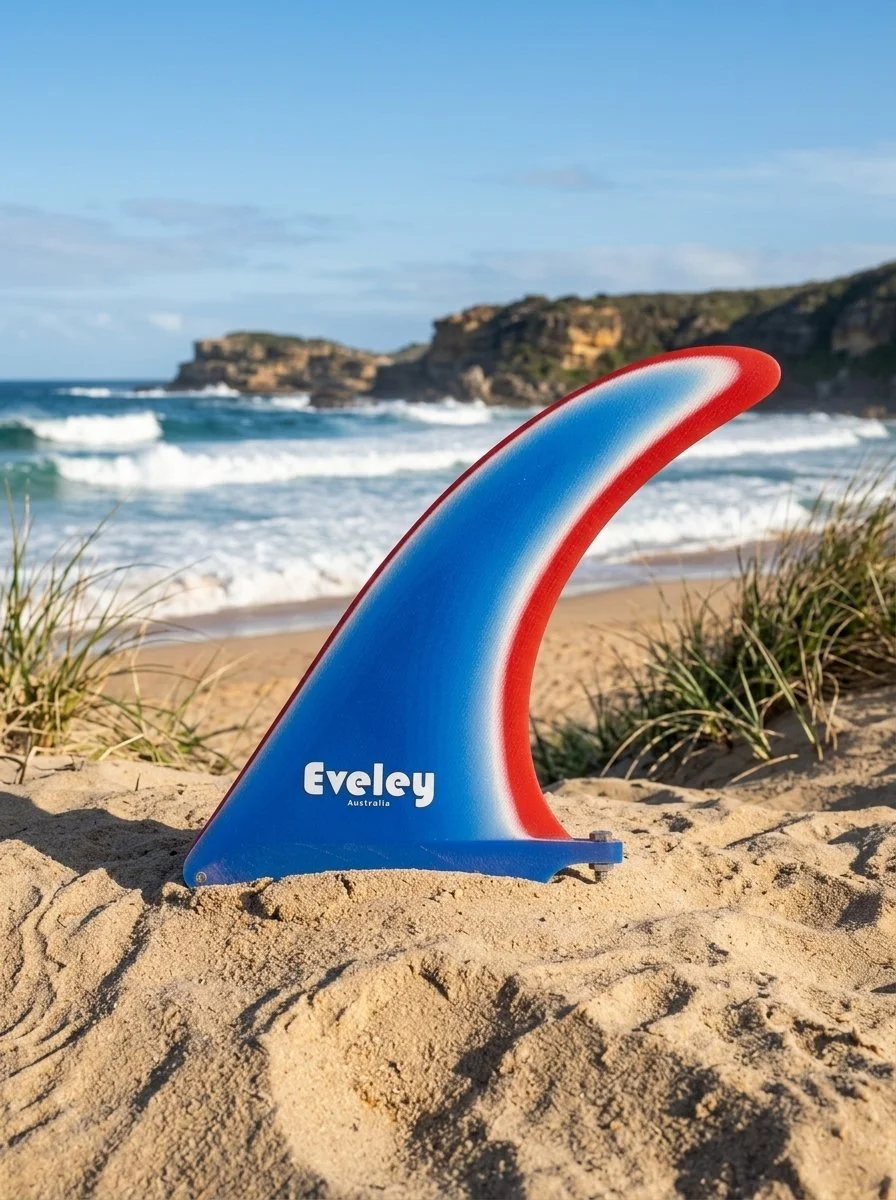
How the Sliding Center Fin Box System Works for Surfboard Fins
The Sliding Center Fin Box, sometimes called the US Box or Bahne Box, is the most widely used system for installing center surfboard fins on longboards and mid-length surfboards.
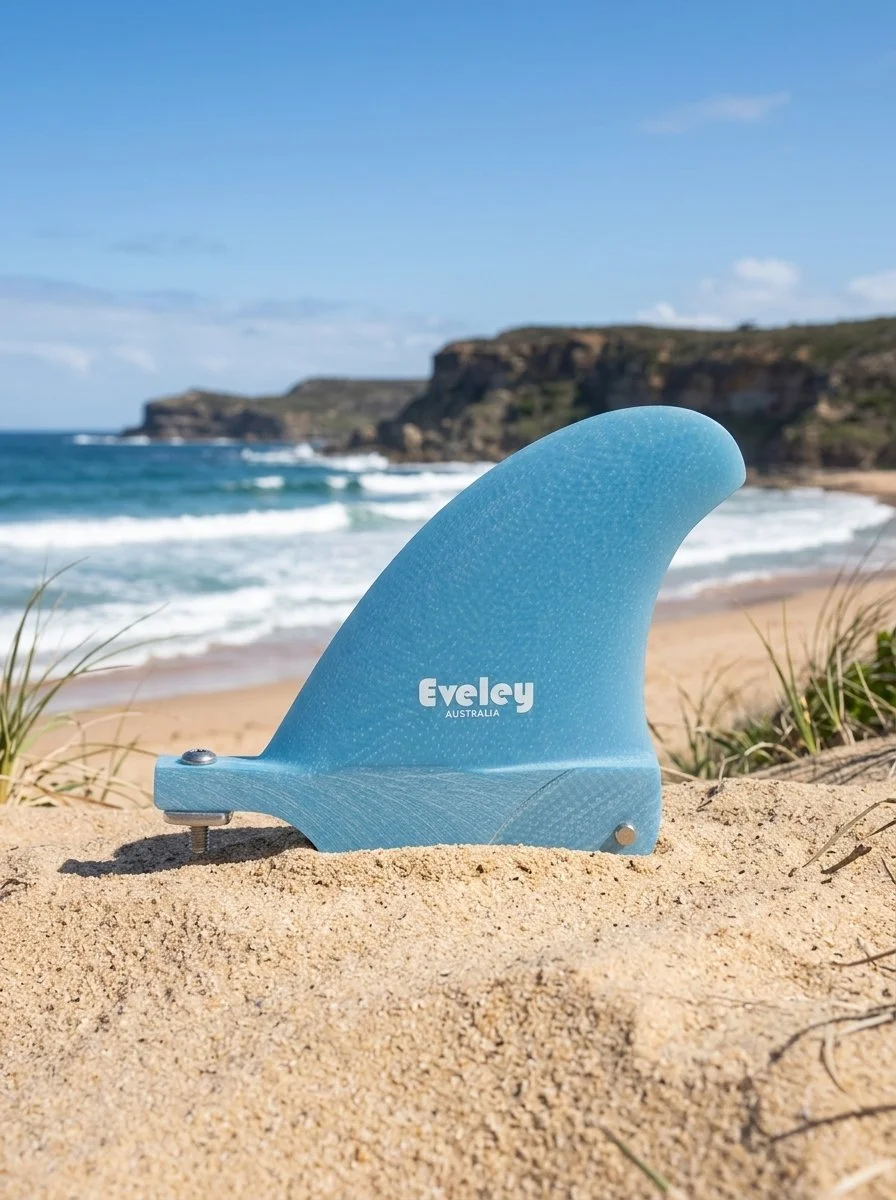
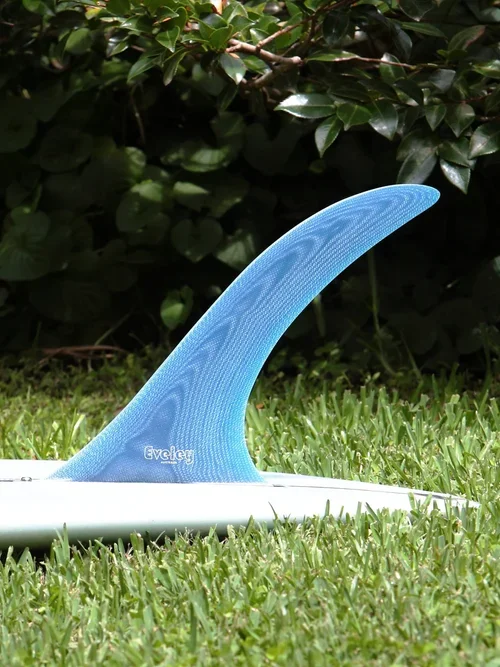
Unlike fixed fin systems, the sliding box allows surfers to adjust fin position forward or backward, which changes how the board performs in the water.
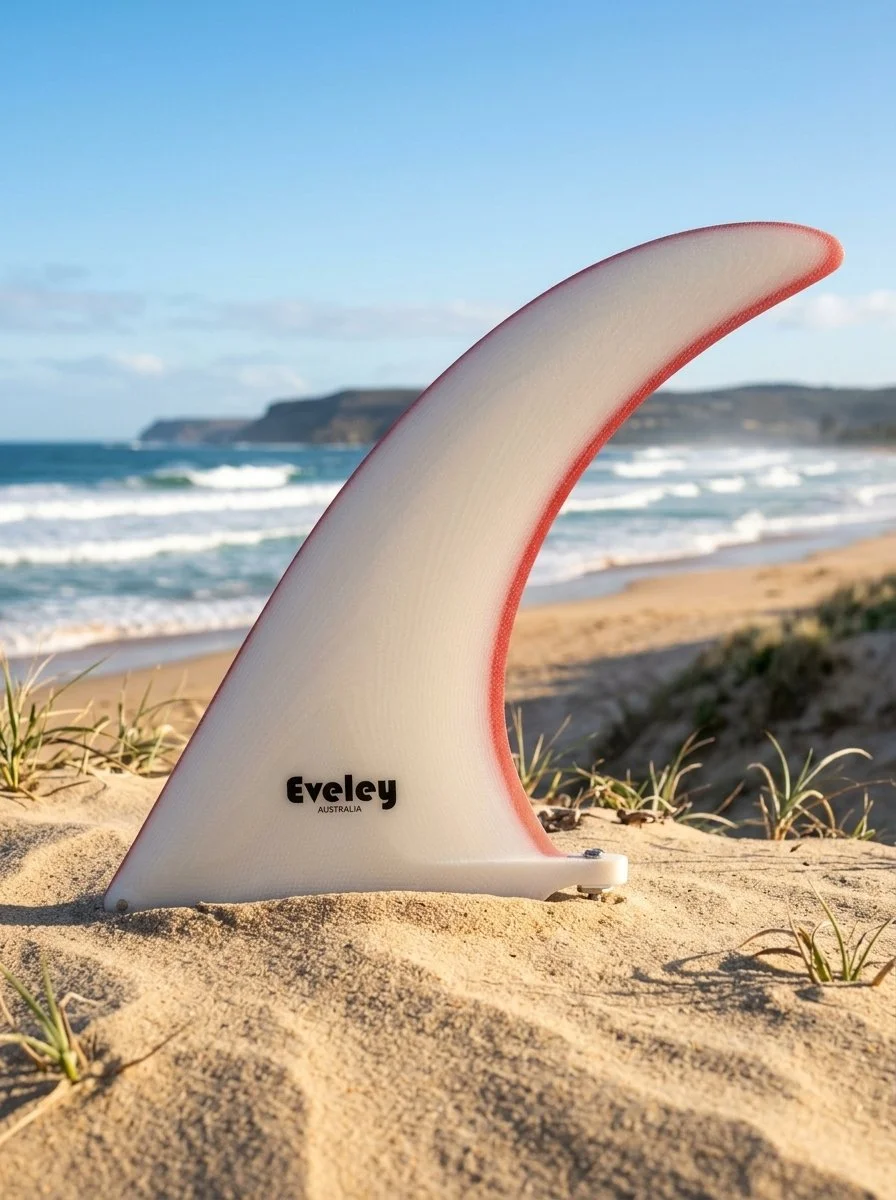
Understanding this system is essential if you ride:
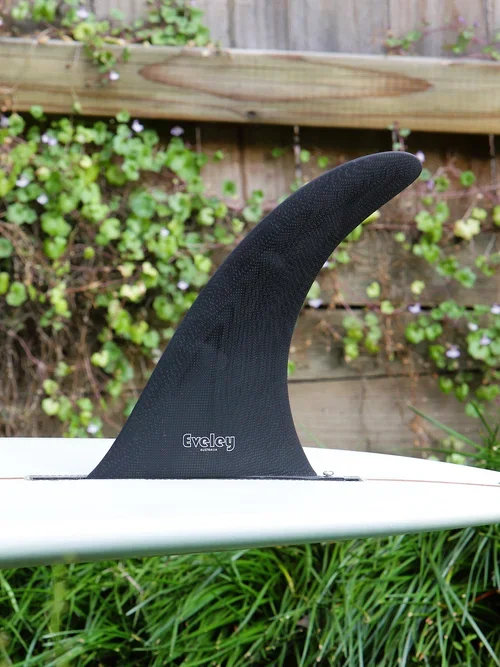
• longboards
• mid-length surfboards
• single fin boards
• 2+1 surfboard setups
This guide explains how the Sliding Center Fin Box system works, why it remains the industry standard for center surfboard fins, and how to use it to tune your board’s performance.
What Is a Sliding Center Fin Box?
A Sliding Center Fin Box is a long rectangular fin box installed in the tail of a surfboard.
It allows a centre fin to be moved forward or backward inside the box before tightening the screw.
The system uses two simple components:
• a fin plate (metal slider)
• a single fin screw
Together they secure the fin while allowing precise positioning.
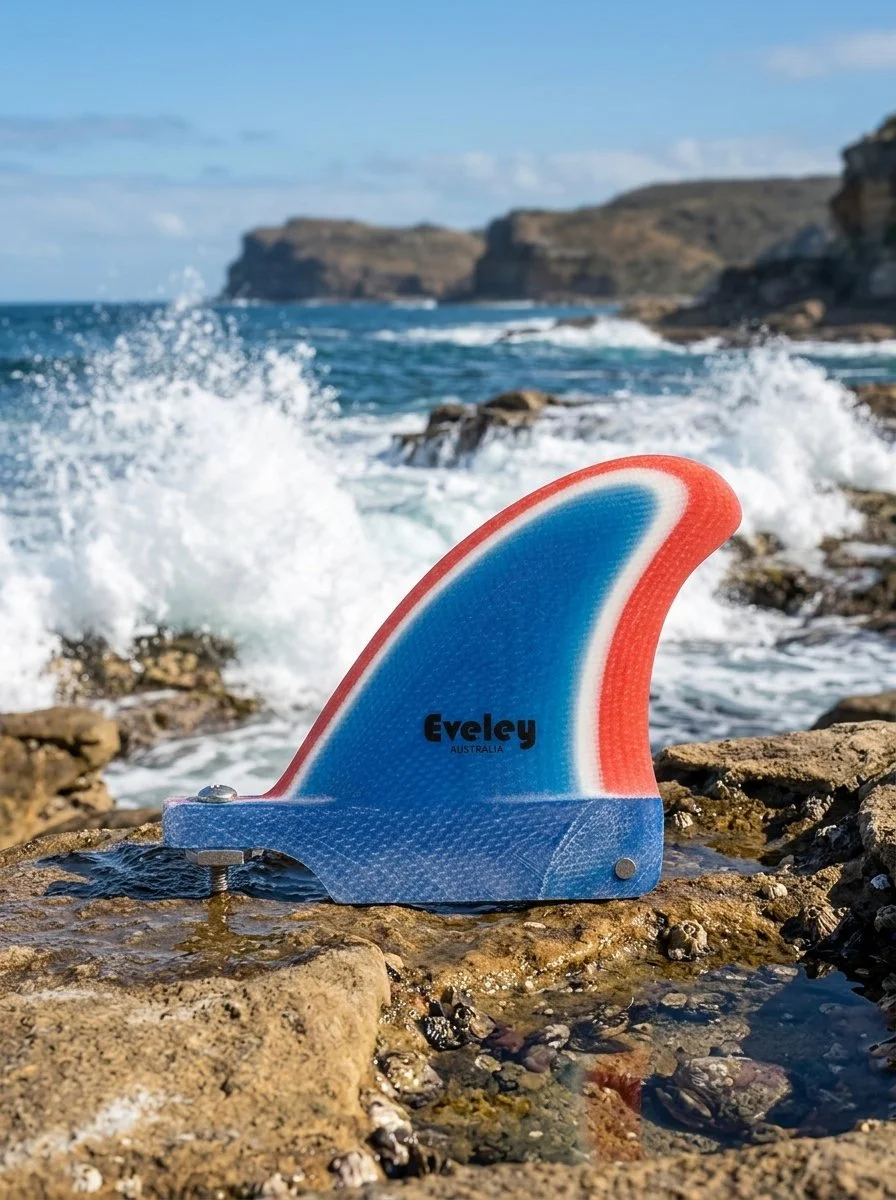
Most centre surfboard fins designed for longboards and mid-length boards use this system.
Why it Became the Standard
The Sliding Center Fin Box (US / Bahne fin box) was introduced in the late 1960s and quickly became the standard for longboard surfboard fins because it offered something revolutionary at the time:
Adjustability.
Before sliding fin boxes, fins were usually glassed permanently onto boards.
The Sliding Center Fin Box allowed surfers to:
• remove fins easily
• experiment with different fin templates
• adjust fin placement for different waves
Today it remains the most versatile system for centre surfboard fins.
The sliding centre fin box is commonly found on several types of boards
Longboards
Most longboards use a sliding center fin box to install a large center fin.
Typical centre fin sizes:
• 9" – 11"
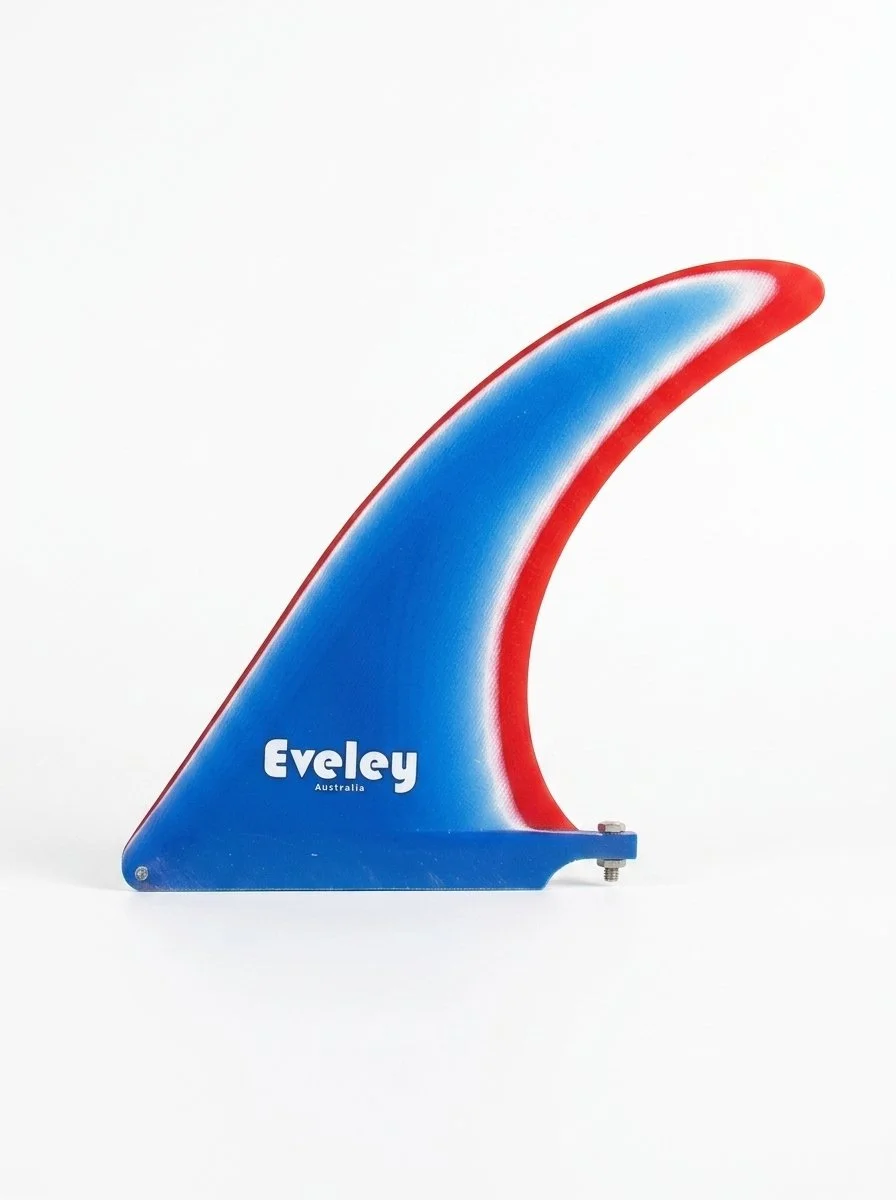
Examples:
10.75" Funky Monkey Center Fin – Natural Pro Glass
11" International 4A Center Fin – Pro Glass
These fins provide trim stability and noseriding control.
Mid-Length Surfboards
Many modern mid-length boards use the same sliding box system.
Typical fin sizes:
• 7" – 9"
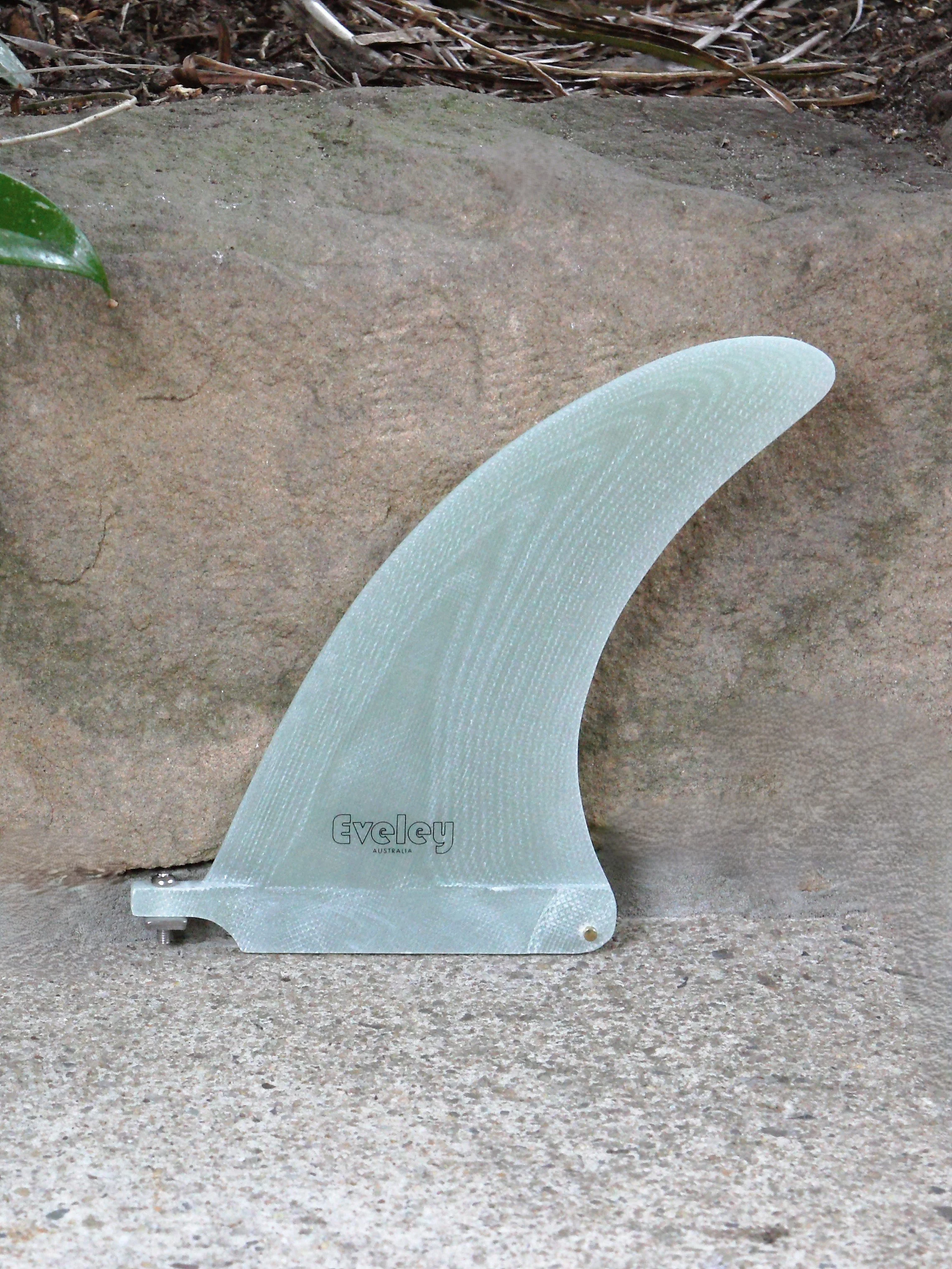
Example:
Eveley 8.5" Tracker Center Fin – Volan Pro Glass
This style of surfboard fins offers a balance of drive and manoeuvrability.
2+1 Fin Setups
A 2+1 setup combines:
• a centre US box fin
• two smaller side fins
This allows surfers to adjust the centre surfboard fin size depending on conditions.
Example centre option:
Eveley 6" Bonzer Center Fin – Volan Pro Glass
How the Sliding Centre Fin box System Works
Installing surfboard fins in a US box is simple.
Step 1 – Insert the Plate
A small metal plate slides inside the track of the fin box.
Step 2 – Position the Fin
The fin’s base slides into the box and aligns with the plate.
Step 3 – Insert the Screw
A single screw passes through the fin tab and tightens into the plate.
Step 4 – Lock the Fin
Once tightened, the fin is secure.
This design makes changing surfboard fins quick and easy.
Why Fin Position Matters
One of the biggest advantages of the US box system is the ability to tune performance by adjusting fin position.
Even small adjustments can dramatically change how a board rides.
Fin Forward Position
Moving the fin forward makes the board feel:
• looser
• faster turning
• more responsive
Best for:
• smaller waves
• playful surfing
Fin Back Position
Moving the fin back creates:
• stronger hold
• better trim stability
• improved noseriding
Best for:
• larger waves
• classic longboard surfing
This adjustability is why many surfers prefer sliding center box surfboard fins.
Advantages of the Sliding Center Fin Box System
The sliding centre box offers several advantages over fixed fin systems.
Adjustable Performance
Fin placement can be tuned depending on waves and surfing style.
Wide Fin Compatibility
Hundreds of surfboard fins use this system.
Easy Fin Replacement
Changing fins takes only seconds.
Durable Construction
The system is strong and reliable even in powerful surf.
Choosing the Right Fin
Because the sliding center box system works with many surfboard fins, choosing the right fin becomes important.
Several factors affect performance.
Fin Size
Smaller fins
→ looser turning
Larger fins
→ stronger hold and trim
Fin Template
Different templates change turning style.
Examples include:
• 4A template – classic trim and smooth flow
• Tracker template – balanced drive and control
• Pivot template – tight turning and noseriding hold
Fin Materials
Two common materials used in high-quality surfboard fins include:
Pro Glass Fiberglass
• lighter
• responsive
• modern performance feel
Volan Fiberglass
• slightly heavier
• smoother flex
• classic longboard feel
Learn more here:
Volan vs Pro Glass Surfboard Fins – Materials Guide
How to Install a Fin
Installing centre surfboard fins takes less than a minute.
Slide the metal plate into the fin box track
Insert the fin base into the box
Align the screw hole with the plate
Insert the screw through the hole in the fin.
Ensure the screw engages with the metal plate in the fin box.
Tighten the screw with a fin key or screwdriver
Once tightened, the fin is securely locked in place.
Why this Box Still Dominates Longboard Design
Even after decades of surfboard innovation, the Sliding Center Fin Box remains the most versatile system for centre surfboard fins.
Its simple design allows surfers to:
• change fins easily
• experiment with different templates
• adjust performance for different waves
For surfers who ride longboards and mid-length boards, it remains the gold standard.
Surfboard Fin Knowledge Hub
If you're learning about surfboard fins, these Eveley guides explain how fin design changes performance.
Start here:
Surfboard Fins Australia – Complete Buyer’s Guide Surfboard fins explained for Australian surfers. Learn fin types, sizing, materials and setups, then shop high-performance fiberglass fins from Eveley Australia.
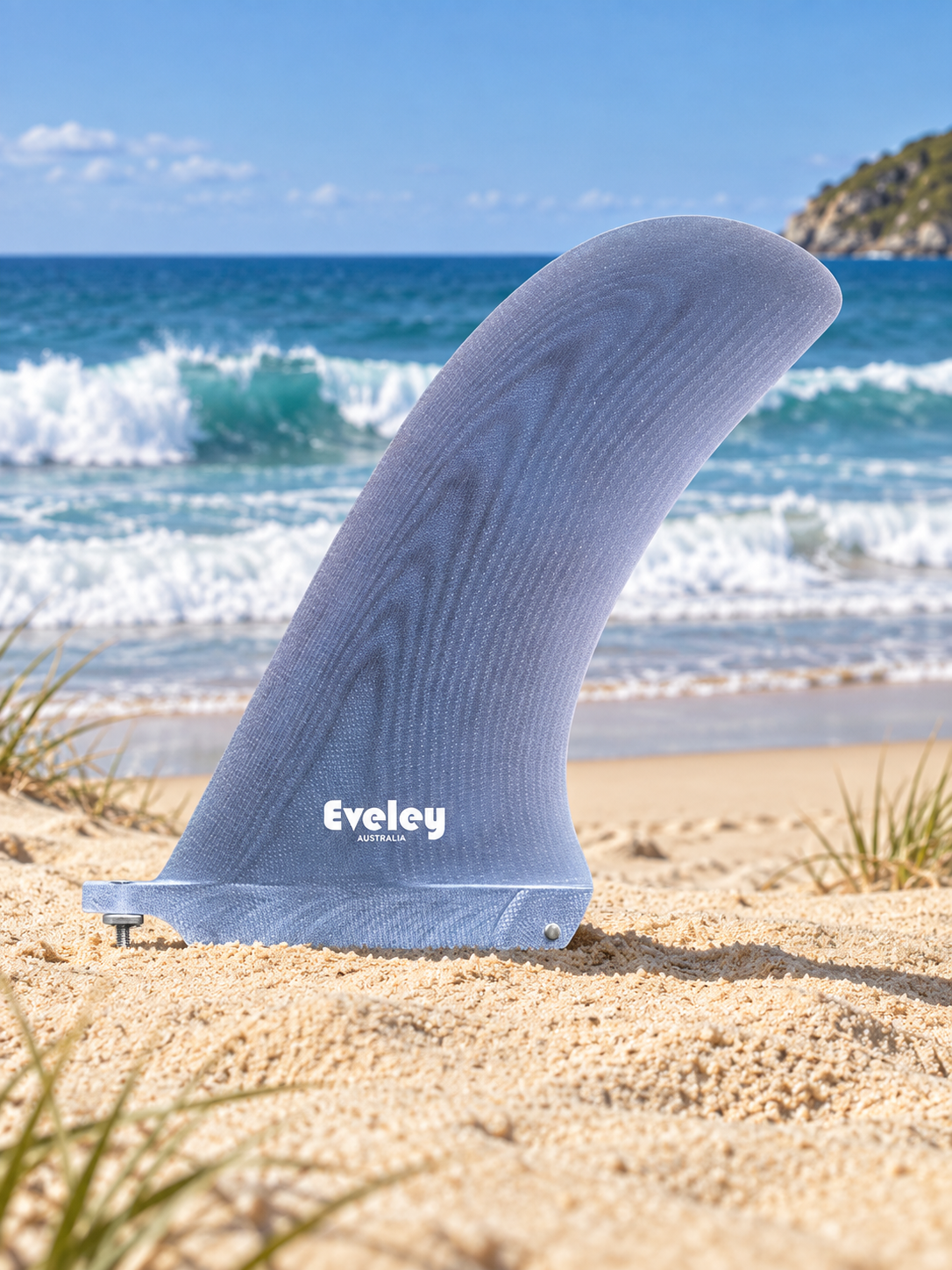
Then explore:
• Beginner’s Guide to Surfboard Fins – Types, Sizes & Setups Explained This beginner-friendly guide explains fin setups, sizes and materials so you can choose the right fins for stability and control.
• Single Fin Surfing Guide – Speed, Flow & Classic Style This guide explains single fin surfing, fin sizing, templates and how to choose the right surfboard fins for longboards and mid-length boards.
• Longboard Fins Explained – Templates, Flex & Performance Complete guide to single fins, 2+1 configurations, fin placement, and performance tuning.
• Volan vs Pro Glass Surfboard Fins – Materials Explained Discover what Volan fiberglass is, why classic surfboard fins use it, and how it differs from modern Pro Glass fin construction.
Delve deeper: How Fin Templates Affect Performance
Together these guides explain how surfboard fins influence speed, control and turning performance.
FAQs
What is a US / Bahne Fin Box?
A US / Bahne fin box is a sliding centre fin box used on longboards and mid-length boards that allows adjustable fin positioning.
Are Bahne boxes and US boxes the same?
Yes. The terms Bahne box and US box are commonly used interchangeably.
Do all longboards use sliding center fin boxes?
Most longboards use a sliding centerbox for the centre fin, though side fins in 2+1 setups may use other systems.
Can I adjust fin position in the surf?
Usually adjustments must be made before surfing using a fin screw.
Fins incorporating a click-in system or some other aftermaket fin retainers like the Finjak may be adjusted in the surf.
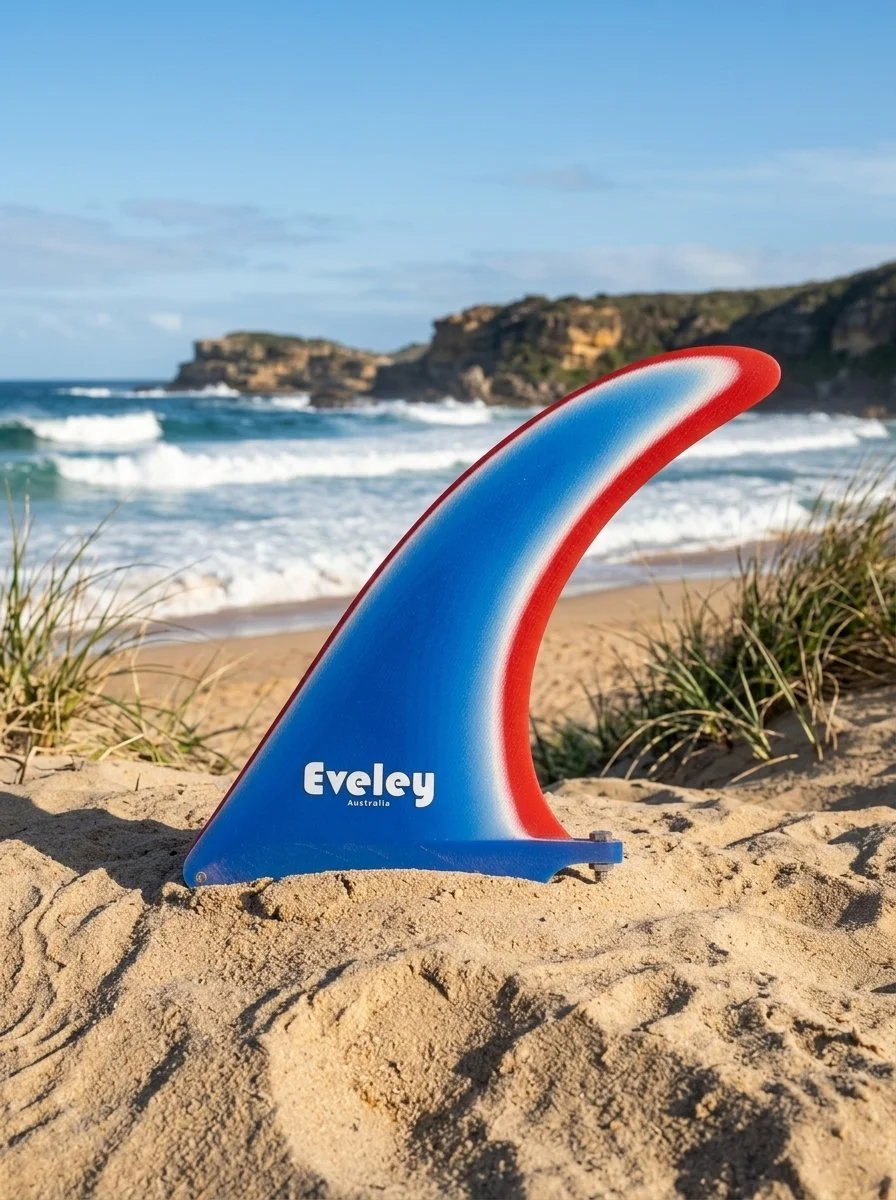
Single Fin Surfing Guide
Learn how surfboard fins affect speed, control and turning. This guide explains single fin surfing, fin sizing, templates and how to choose the right surfboard fins for longboards and mid-length boards.
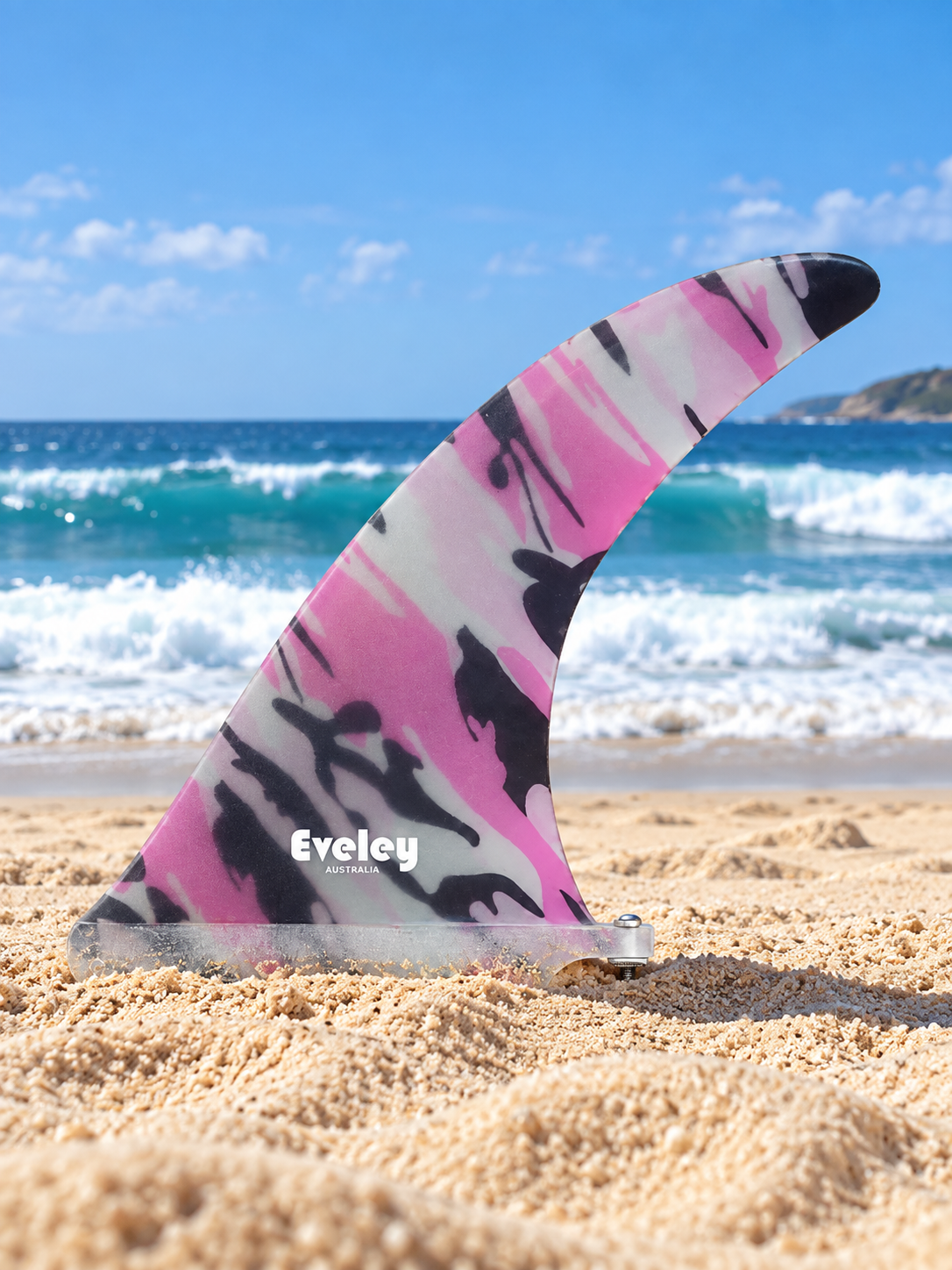
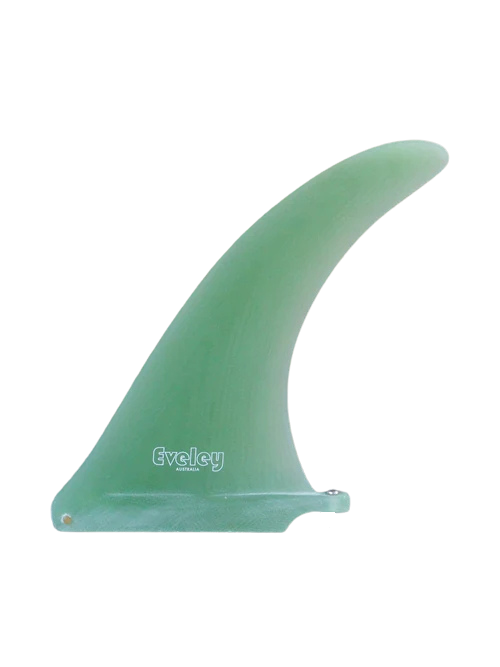
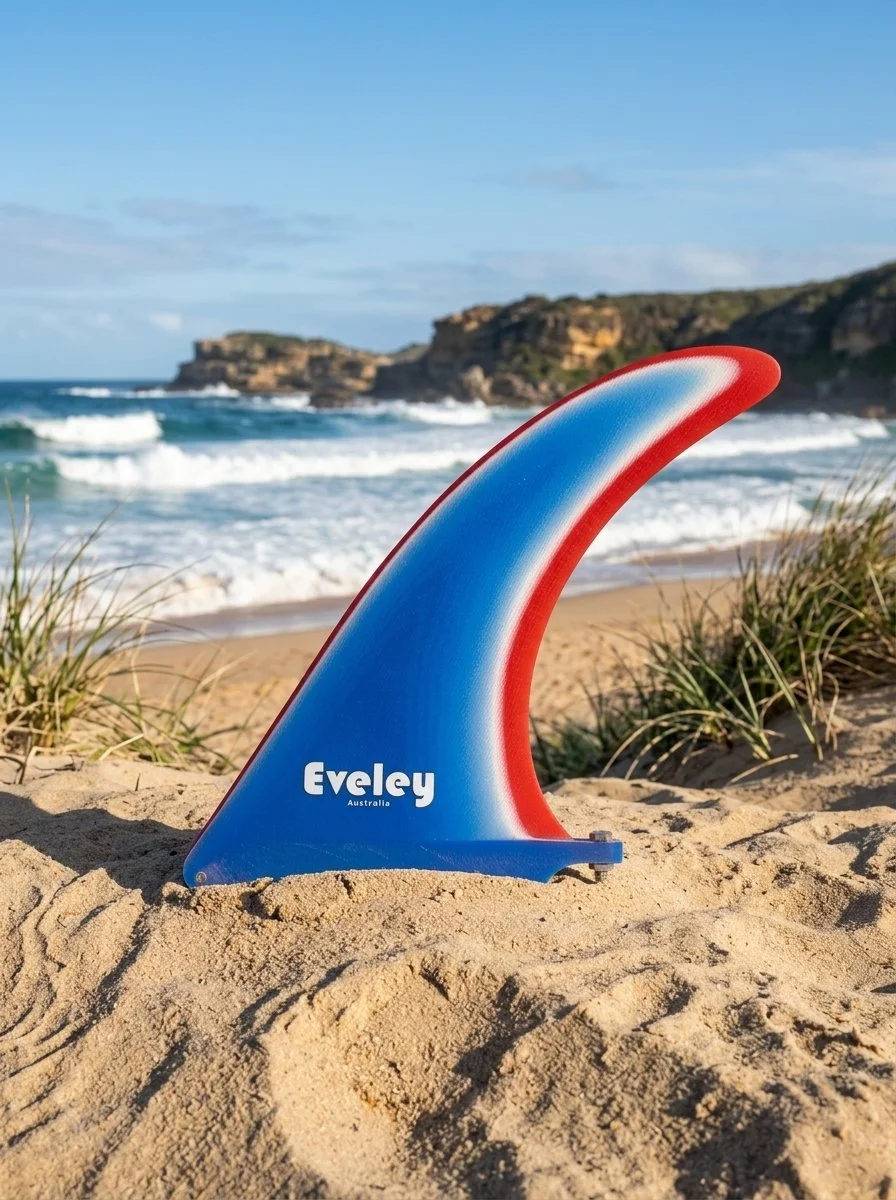
How Single Surfboard Fins Transform Speed, Flow & Classic Surf Style
Single surfboard fins are the original foundation of modern surf design. Long before thrusters and quads existed, surfers relied on a single centre fin to control trim, generate speed and carve long flowing lines.
Today, single fin surfboard fins remain essential for longboards, mid-lengths and retro-inspired boards because they deliver a style of surfing that multi-fin setups simply cannot replicate.
This guide explains:
• how single surfboard fins work
• how fin size changes performance
• the best boards for single fins
• how to tune your fin position
• which templates suit different surf styles
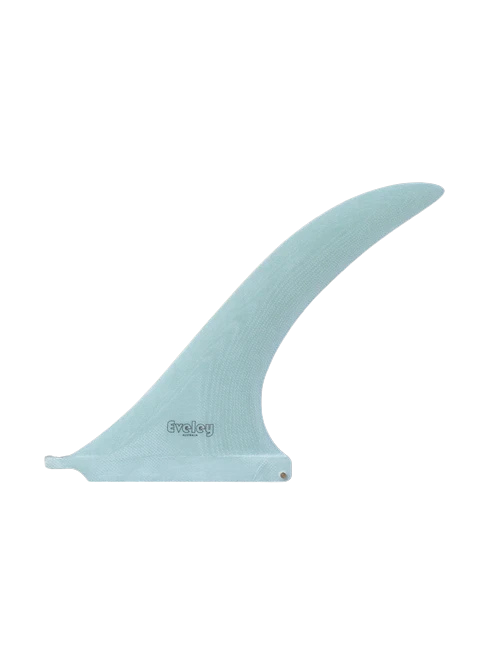
If you’re learning about surfboard fins, understanding the single fin is the best place to start.
What Is a Single Fin Setup?
A single fin setup uses one centre fin positioned in the middle of the board's tail.
Unlike thrusters or quads, there are no side fins. All control, drive and stability come from the single centre fin.
Because of this, single fin boards emphasise:
• trim speed
• smooth rail-to-rail flow
• drawn-out turns
• classic surfing style
This makes them ideal for longboards, mid-lengths and retro boards.
For a full overview of different surfboard fins and fin setups, see:
Beginner’s Guide to Surfboard Fins – Types, Sizes & Setups Explained
Why Single Surfboard Fins Feel Different
Most modern surfers first notice how smooth and flowing a single fin feels.
This happens because the board pivots around a single control point rather than three.
Key performance characteristics:
Smooth Trim Speed
Single fins allow the board to glide cleanly down the line with minimal drag.
Long Drawn-Out Turns
Turns feel smooth and flowing rather than sharp and pivot-driven.
Stable Noseriding
Large single fins stabilise the tail when walking toward the nose of a longboard.
Classic Surf Style
Single fins reward good positioning and rail surfing rather than rapid direction changes.
Which Boards Use Single Surfboard Fins?
Single fins are commonly used on several types of boards.
Longboards
Traditional longboards rely heavily on large center surfboard fins to provide stability, trim speed and noseriding hold.
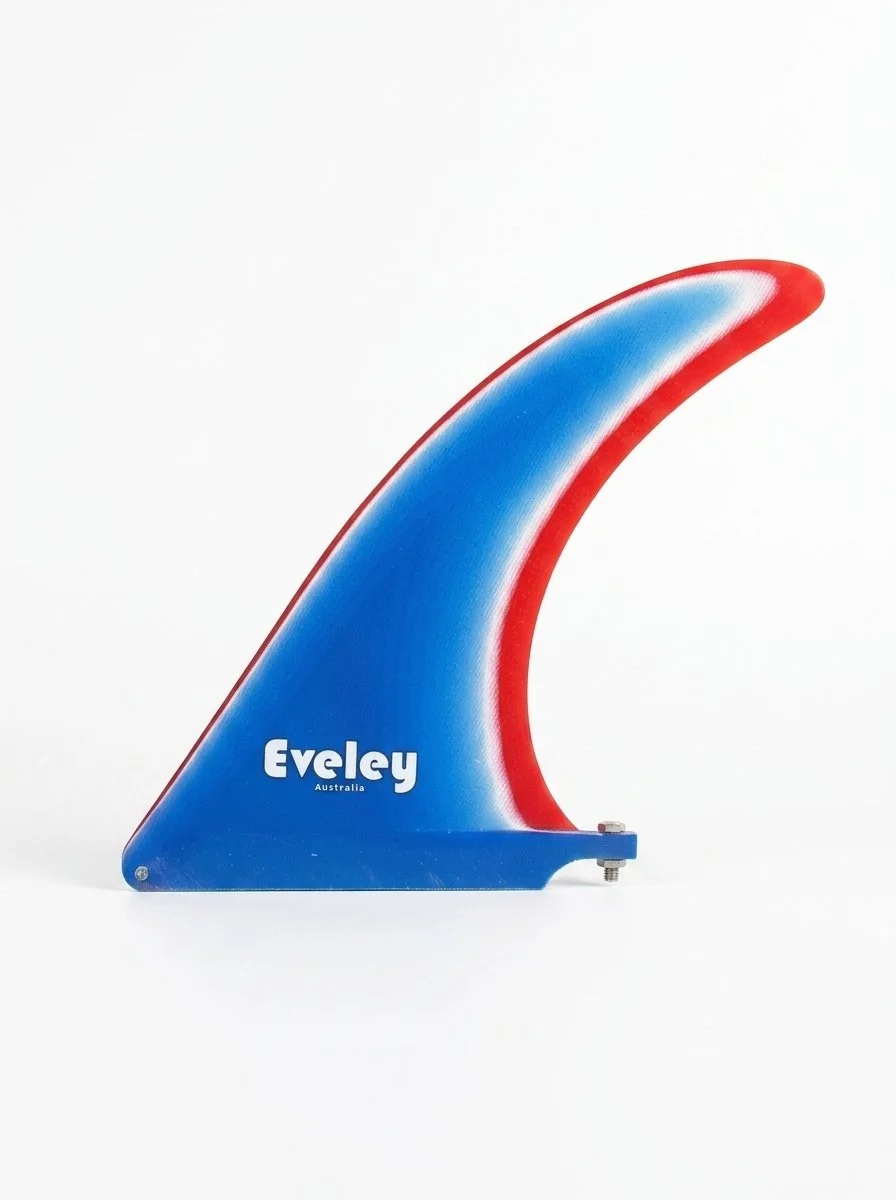
Typical fin sizes:
• 9" – 11" center fins
Mid-Length Surfboards
Many mid-length boards perform beautifully with a single fin.
Typical fin sizes:
• 7" – 9" centre fins
These provide a balance of:
• glide
• turning control
• projection down the line
Retro Single Fin Shortboards
Some retro designs such as eggs or early 70s shapes still use a single fin.
Typical fin sizes:
• 6" – 7"
These boards emphasise flow rather than aggressive manoeuvres.
How Fin Size Changes Performance
Fin size is one of the biggest variables in surfboard fins performance.
Smaller Single Fins
Smaller fins create a looser feel.
Benefits:
• easier turning
• faster direction changes
Trade-off:
• less hold
• reduced stability
Larger Single Fins
Larger fins create more hold and trim control.
Benefits:
• better stability
• stronger drive
• improved noseriding
Trade-off:
• slower turning
Typical Longboard Fin Sizing
Under 8' board
→ 7" – 8" fin
8' – 9' board
→ 8" – 10" fin
9' + longboard
→ 9" – 11" fin
Understanding Single Fin Templates
Different fin templates dramatically change how surfboard fins perform.
Raked Fins (e.g. 4A template)
Best for:
• trim speed
• flowing turns
• classic longboarding
Pivot Fins
Best for:
• tight turning
• noserider boards
Trade-off:
• less trim speed
Performance Single Fins
Best for:
• mid-length boards
• modern longboard surfing
These offer a balance between drive and manoeuvrability.
Fin Placement: A Simple Tuning Trick
One of the advantages of single surfboard fins is the ability to adjust the fin position inside the fin box.
This dramatically changes how the board feels.
Move the Fin Forward
Results:
• looser turning
• quicker rail transitions
Best for:
• smaller waves
• playful surfing
Move the Fin Back
Results:
• stronger hold
• increased stability
• improved noseriding
Best for:
• larger waves
• classic trim surfing
Even a 1–2 cm adjustment can noticeably change performance.
Materials: Why Fiberglass Still Dominates
High-quality surfboard fins are usually made from fiberglass.
Two common constructions are:
Pro Glass Fiberglass
• strong and reliable
• consistent flex pattern
• widely used in modern fins
See: What Is Pro Glass? Why Fiberglass Surfboard Fins Perform Better
Volan Fiberglass
• slightly heavier
• smoother flex response
• popular with classic longboard surfers
For a full explanation see:
Volan vs Pro Glass Surfboard Fins – Materials Guide
When Should You Choose a Single Fin?
Single fins are perfect if you want:
• smooth flowing surfing
• classic longboard trim
• clean carving turns
• improved wave reading skills
They are less ideal if you want:
• extremely tight turns
• vertical surfing
• aggressive performance manoeuvres
Those styles usually favour thruster surfboard fins.
Learn more here: Thruster Fins Guide – The Most Popular Surfboard Fin Setup
Single Fin Surfing Tips
If you're new to single fins, these tips help quickly unlock their performance.
Use Rail Turns
Single fins reward rail-to-rail surfing, not pivot turns.
Generate Speed from Trim
Instead of pumping, focus on trimming down the line.
Plan Your Turns
Turns should be smooth and drawn out rather than abrupt.
Position Matters
Small fin position changes can dramatically affect performance.
Single Fin Surfing: Why It Still Matters
Even in a world dominated by thrusters, single surfboard fins remain one of the purest forms of surfing.
They encourage:
• better wave reading
• cleaner style
• smoother surfing lines
Many experienced surfers return to single fins because they slow surfing down and reconnect it with the wave itself.
Surfboard Fin Knowledge Hub
If you want to understand surfboard fins in more depth, these Eveley guides will help.
Start here:
Surfboard Fins Australia – Complete Buyer’s Guide
Then explore:
• Beginner’s Guide to Surfboard Fins – Types, Sizes & Setups Explained
• Thruster Fins Surfing Guide
• Quad Fin Surfing Guide
• Twin Fin Surfing Guide
• Longboard Fin Buyer Guide: Sizes, Shapes & Setup Explained
Understand fin installation, adjustment, and how fin position changes surfboard performance: Sliding Center Fin Box (US / Bahne Box) Guide
Together these guides explain how surfboard fins influence speed, control and wave performance.
FAQs
Are single fin surfboards slower?
Not necessarily. In clean waves they can actually generate excellent trim speed.
Are single fins good for beginners?
Yes. They encourage smooth surfing and better wave positioning.
What size single fin should I use?
A general rule is board length in feet ≈ fin size in inches for longboards.
Can I use a single fin in a 2+1 board?
Yes. Many surfers ride the center fin alone for a classic feel.
Popular Single Fins:
11" International 4A Center Surfboard Fin – Black on White Pro Glass
11" International 4A Center Surfboard Fin – Blue on White on Red Pro Glass
11" International 4A Center Surfboard Fin – Black on Red Pro Glass

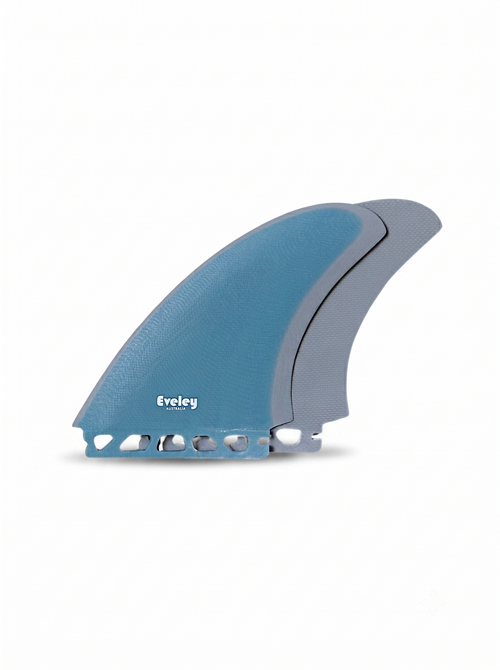
Twin Surfboard Fins – Speed, Flow & Retro Performance Explained
Twin fins are one of the most exciting and fastest surfboard fins setups available. Loved for their effortless speed and flowing turns, twin fins create a loose, skate-like feeling that many surfers find addictive.
Twin fins are one of the most exciting and fastest surfboard fins setups available. Loved for their effortless speed and flowing turns, twin fins create a loose, skate-like feeling that many surfers find addictive.
Originally popularised in the 1970s and revived by modern fish designs and mid-length boards, twin fins remain a favourite for surfers who value speed and style over tight pivot turns.
This guide explains how twin fin surfboard fins work, when to use them, and how to choose the right twin setup for your board.
What Are Twin Fins?
A twin fin setup uses two larger side fins with no centre fin.
Compared with thruster setups, twin fins reduce drag and allow water to flow faster off the tail of the board. This produces:
Faster acceleration
Smooth flowing turns
A looser, more playful feel
The trade-off is slightly less control in very steep or powerful waves.
Twin fins are most commonly used on fish surfboards, hybrid shapes, and some modern mid-length boards.
How Twin Fins Change Surfboard Performance
Twin fins dramatically alter how a surfboard behaves in the water.
Speed
With no centre fin creating drag, twin fins are one of the fastest surfboard fins configurations available. The board accelerates quickly and maintains speed through flat sections.
Turning Style
Twin fins favour long carving turns rather than tight vertical pivots.
Instead of snapping sharply like a thruster, twin fins draw smooth arcs down the line.
Looseness
Twin fins feel loose and responsive underfoot. This creates a skate-like sensation that many surfers love in smaller waves.
Twin Fins vs Other Surfboard Fin Setups
Understanding how twin fins compare with other setups helps determine when they work best.
Thruster Setup
Thrusters use three surfboard fins, including a centre fin for stability.
They provide strong control and vertical turning but slightly less speed than twin fins.
Quad Setup
Quad fins add a fourth fin for extra hold while maintaining speed.
Quads are often used in faster waves where twin fins may feel too loose.
Twin Setup
Twin fins maximise speed and flow, making them ideal for fun, fast surfing rather than vertical performance.
For a deeper breakdown of surfboard fin systems, see the
Beginner’s Guide to Surfboard Fins – Types, Sizes & Setups Explained.
Boards That Work Best With Twin Fins
Twin fins perform best on boards designed to generate speed.
Common twin fin boards include:
Fish Surfboards
Classic fish boards rely on twin fins for speed and glide across softer waves.
Hybrid Performance Twins
Modern twin designs combine fish speed with refined rails and rocker.
Twin Mid-Length Boards
Many mid-length surfboards now use twin fins to create fast, flowing turns.
Twin Fin Templates Explained
Not all twin fins perform the same. Template design changes how the board feels.
Upright Twins
More upright templates pivot more easily and feel slightly closer to a thruster.
Raked Twins
Raked twins have longer sweep and draw smooth carving turns.
Example: 5.4" BM Twin Fins - FCSII Compatible Black on Ash on White Pro Glass.
Keel Twins
Large keel fins maximise speed and hold on classic fish surfboards.
Twin + Trailer
Some surfers add a small stabiliser fin behind the twins.
This setup — often called Twin + Trailer — adds a touch of control while preserving twin-fin speed.
5.8" MR Twin Fins plus 3.4" Stabilizer, FCSII compatible black Pro Glass
A small stabiliser can provide extra hold without slowing the board.
1.5" Mini Center Stabilizer Fin – Black Pro Glass | Futures Compatible
3.5" Dynamic Center Fin
can provide extra hold without slowing the board.
Delve deeper: How Small Stabiliser Fins Change Surfboard Performance | Twin vs Twin + Trailer Surfboard Fins Guide
Choosing the Right Twin Fin Size
Fin size should generally match the surfer’s weight.
Surfer Weight Guide
Under 60 kg
Small twin fins
60–75 kg
Medium twin fins
75–90 kg
Large twin fins
90 kg +
Extra large twin fins
Larger fins create more drive and hold, while smaller fins feel looser.
Materials Used in Performance Surfboard Fins
The construction material influences how surfboard fins flex and respond.
Solid fiberglass fins provide powerful drive and durability.
They are commonly used in performance twin fins such as the
Twinzer Canard Fins – Pro Glass.
Pro Glass fins deliver:
Strong drive through turns
Predictable flex
Excellent durability
For more detail on fin materials, read the
Volan Fiberglass Surfboard Fins Guide.
When Twin Fins Work Best
Twin fins perform particularly well in certain wave conditions.
Small to Medium Waves
Twin fins excel when waves lack power because they generate speed easily.
Point Breaks
Long, flowing walls allow twin fins to carve beautiful drawn-out lines.
Down-the-Line Surfing
Twin fins thrive when the goal is speed and flow rather than vertical manoeuvres.
When Twin Fins Are Less Ideal
Twin fins are not perfect for every wave.
Very steep waves
Extra hold from thrusters or quads can be helpful.
Heavy hollow surf
Twin fins may feel too loose when waves become powerful.
High-performance vertical surfing
Thrusters remain the standard for aggressive top-to-bottom manoeuvres.
How Twin Fins Fit Into the Surfboard Fin Knowledge Hub
Understanding twin fins is part of mastering surfboard fins overall.
For deeper knowledge, explore these Eveley guides:
• Beginner’s Guide to Surfboard Fins – Types, Sizes & Setups Explained
• Thruster Fins Guide
• Futures Compatible Fins Explained
• Classic Longboard Fin Guide
Together these resources help surfers choose the right fin setup for any board.
FAQ’s
Are twin fins faster than thrusters?
Yes. Twin fins are typically faster because they create less drag without a centre fin.
Are twin fins harder to control?
They can feel looser than thrusters, especially in steep waves. However many surfers enjoy this responsive feel.
Can beginners use twin fins?
Yes. Twin fins are often easier to generate speed with, which can help beginners in smaller waves.
Are twin fins good for fish surfboards?
Absolutely. Fish surfboards are traditionally designed to work with twin fins.
Can twin fins be used with stabilisers?
Yes. Some surfers add a small trailer fin to create a Twin + Trailer setup for additional control.
Final Thoughts
Twin fins remain one of the most exciting surfboard fins setups available.
They combine:
Maximum speed
Flowing carving turns
A playful, loose feeling
Whether you ride a classic fish or a modern performance twin, the right twin fin setup can completely transform how your board feels in the water.
To explore high-quality fiberglass surfboard fins, browse the Eveley twin fin range and discover the setup that best suits your board and surfing style.
Futures™ is a registered trademark of Futures Fins. Eveley Surf is not affiliated with or endorsed by Futures Fins. All compatibility references to Futures Fins are for descriptive purposes only.
FCS™ and FCSII™ are registered trademarks of Surf Hardware International Pty Ltd. Eveley Surf is not affiliated with or endorsed by Surf Hardware International Pty Ltd. All compatibility references to FCS and FCSII are for descriptive purposes only.
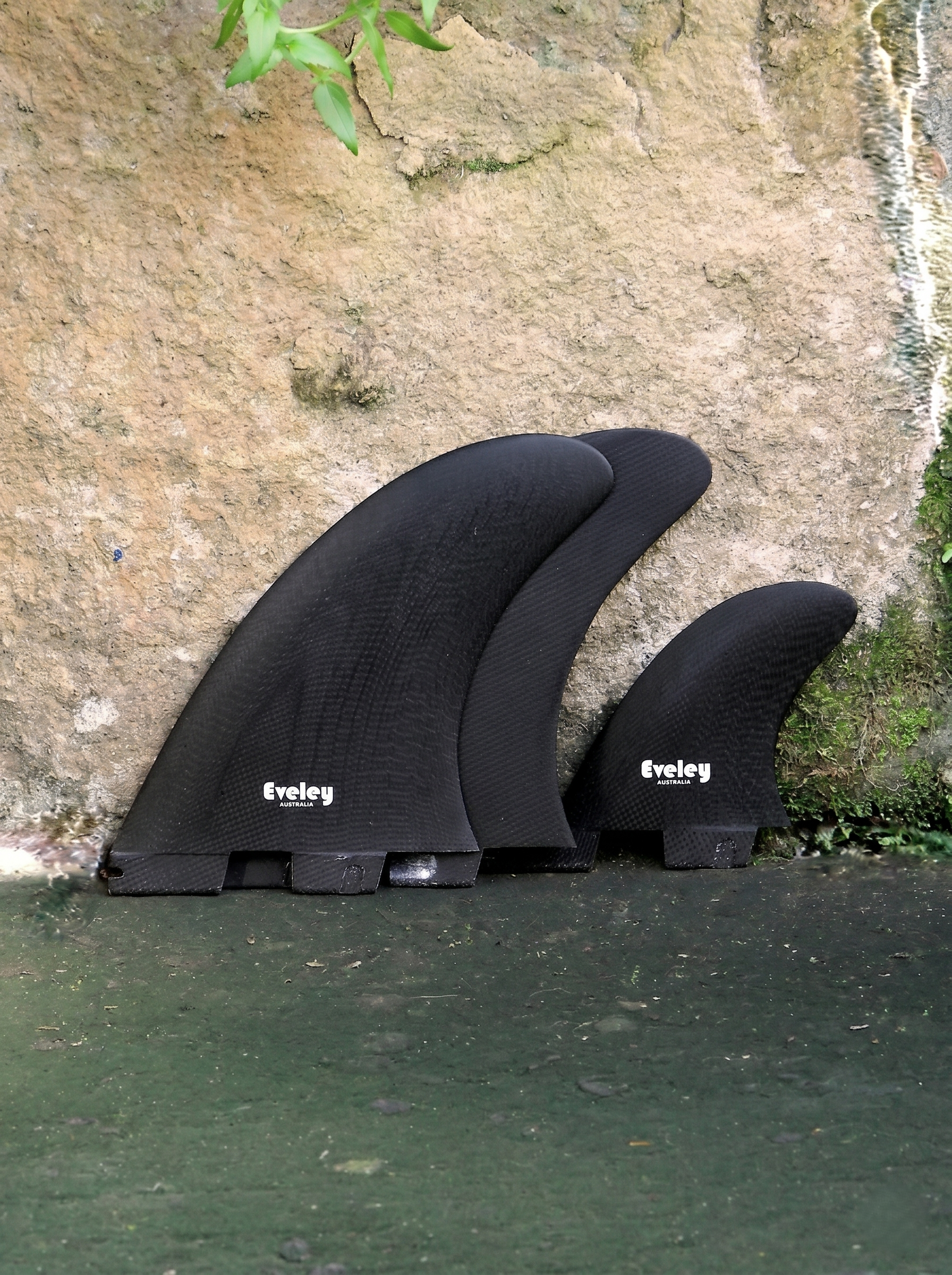
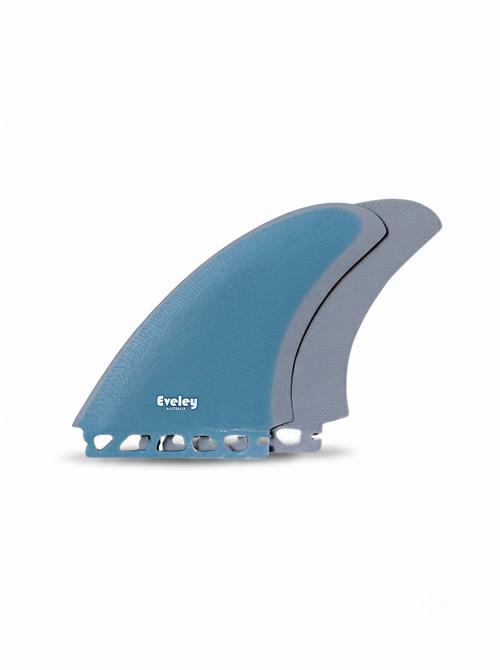
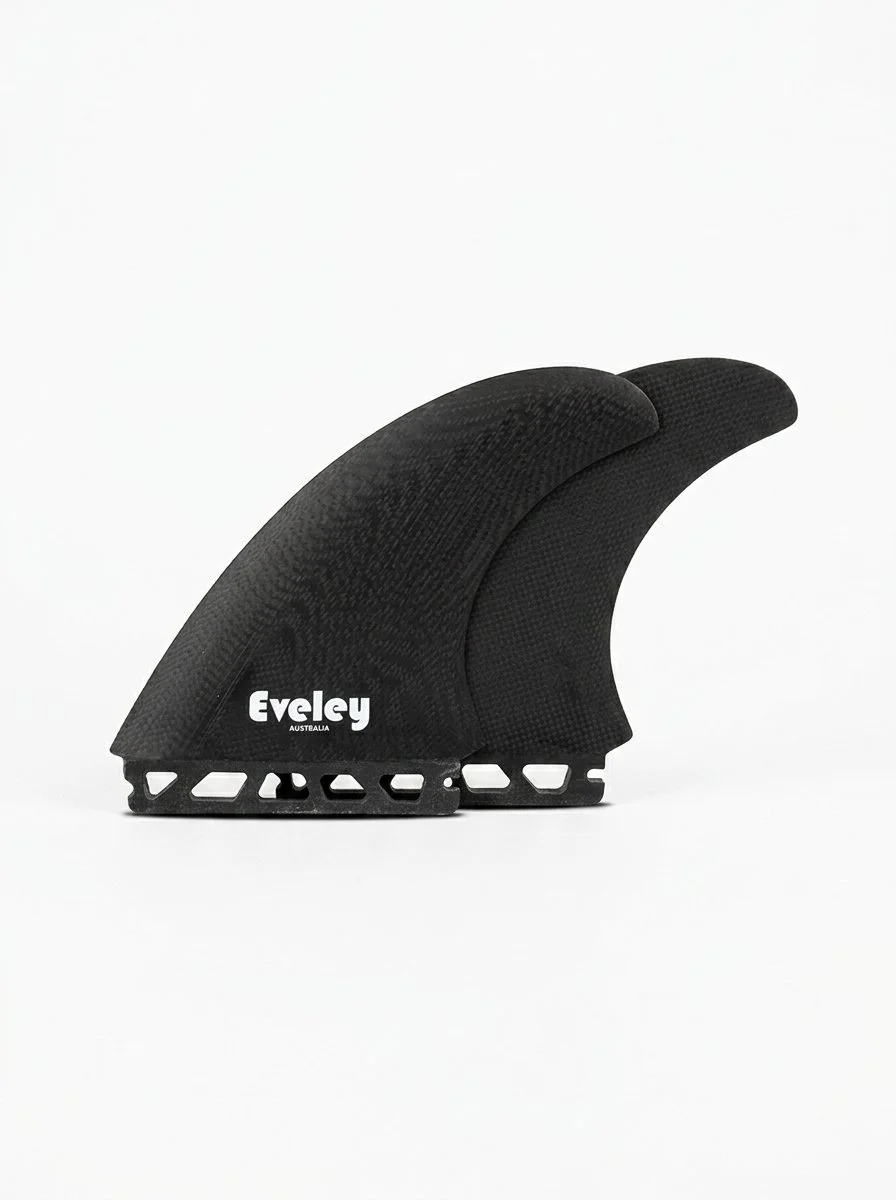
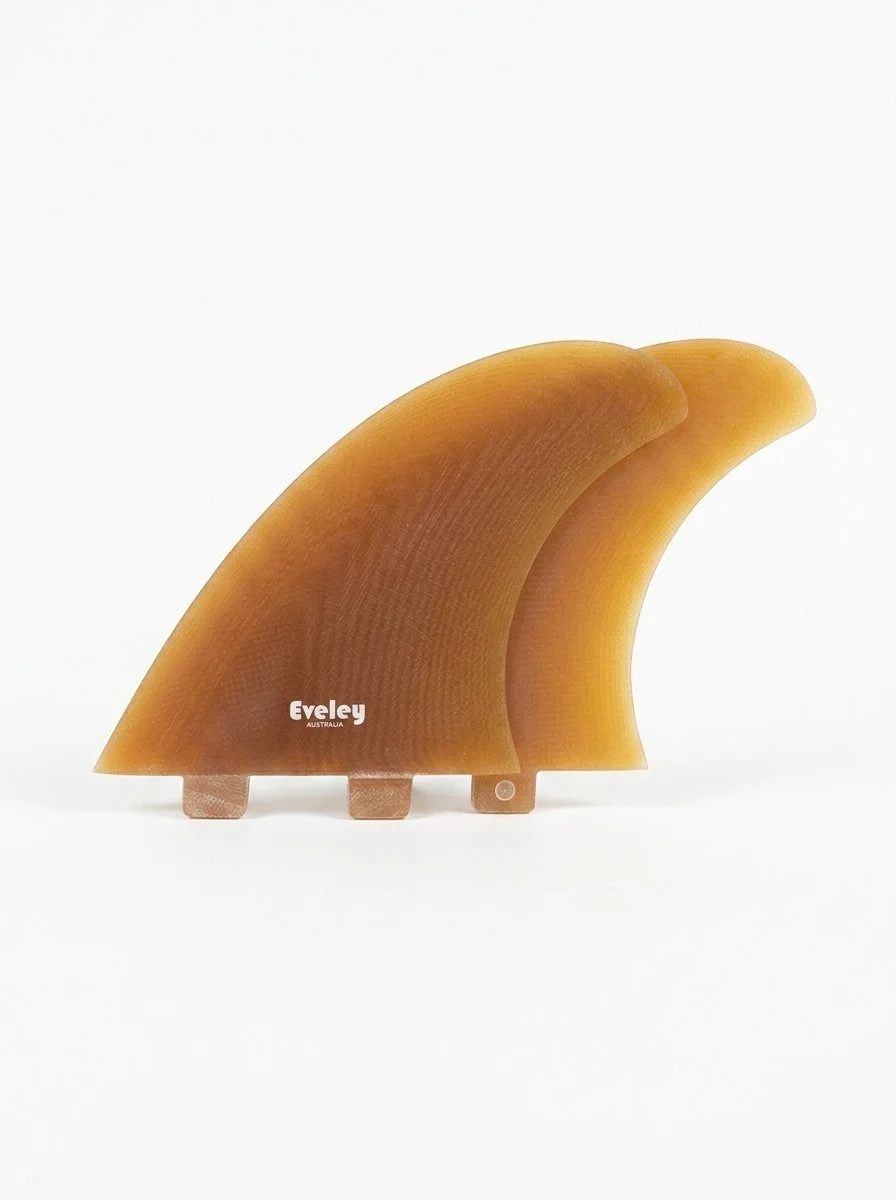
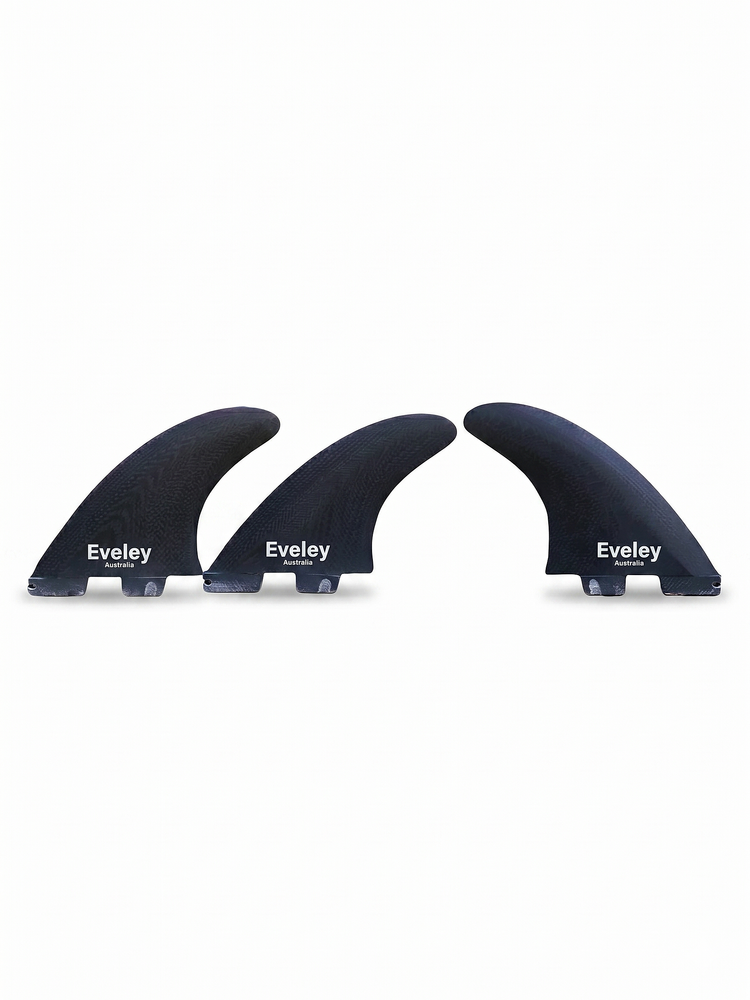
Thruster Surfboard Fins Australia
Learn how thruster surfboard fins create the perfect balance of speed, control and turning. Discover why the three-fin setup became surfing’s modern standard.
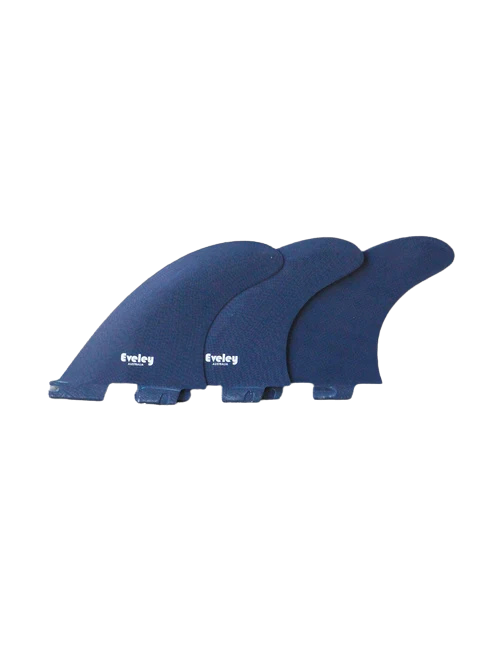
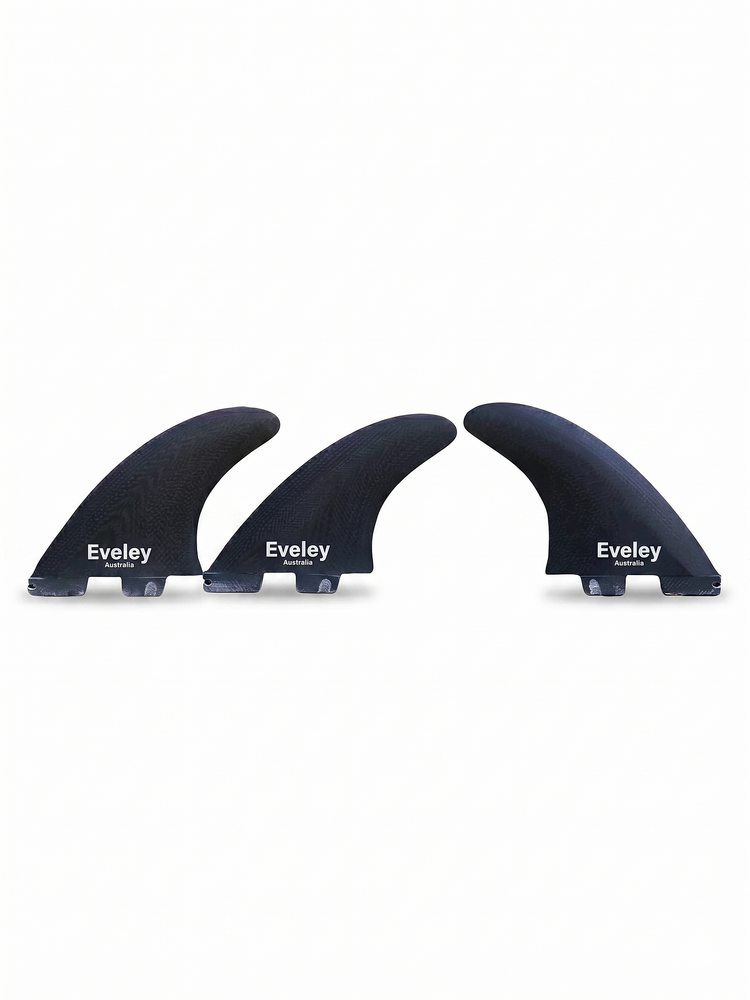
Thruster fins are the most widely used surfboard fin setup in modern surfing.
A thruster configuration uses three fins: two side fins near the rails and one centre fin at the tail.
This setup delivers the best balance of speed, control, and turning ability, which is why it has become the standard for performance surfboards worldwide.
If you're unsure which fins to choose, our Beginner’s Guide to Surfboard Fins – Types, Sizes & Setups Explained will walk you through the fundamentals of fin design and compatibility.
Why Thruster Fins Became the Industry Standard
The thruster design revolutionised surfboard performance because it provides:
• Strong drive down the line
• Reliable control in powerful waves
• Smooth rail-to-rail transitions.
• Predictable turning response
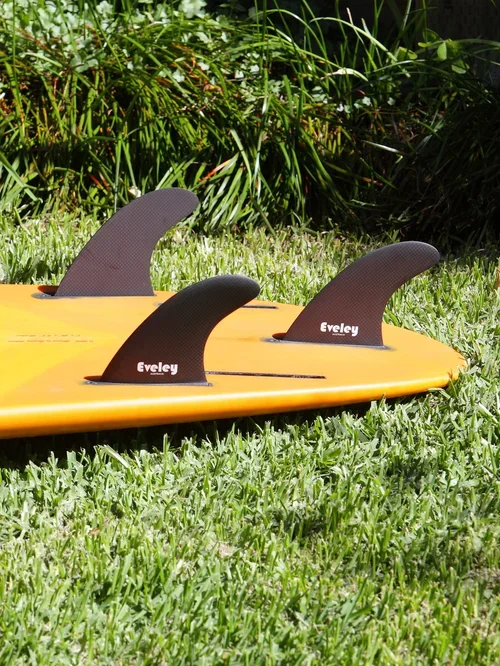
Compared with other setups:
Thruster Setup
The thruster is the most common surfboard fin setup. It provides a balanced combination of speed, control, and predictable turning, making it ideal for everyday conditions and performance surfing.
Quad Setup
A quad setup uses four fins and removes the centre fin, reducing drag and increasing speed. Quads excel in fast waves and long down-the-line sections where extra drive helps maintain momentum.
Twin Setup
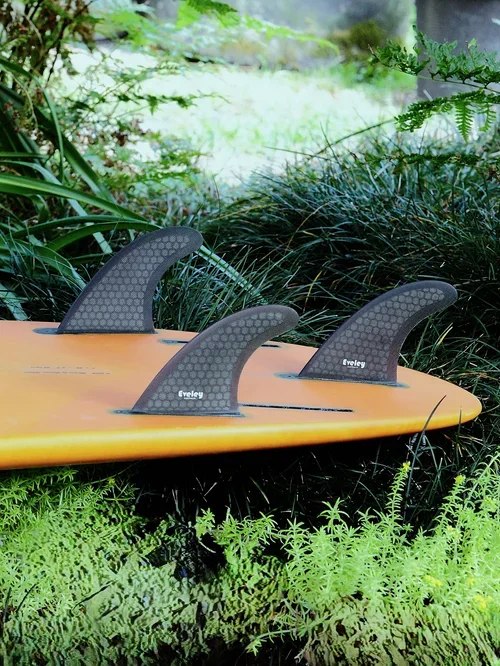
Twin fins create the fastest and loosest feeling underfoot. With minimal drag and smooth rail-to-rail transitions, twins are perfect for flowing, stylish surfing and playful wave conditions.
Learn how twin keel surfboard fins work, why they generate incredible speed, and how to choose the right keel fins for fish boards and twin fin setups: Twin Keel Surfboard Fins Guide – Speed, Design & Fish Board Performance
How Thruster Fins Work
Thruster fins create control through three points of resistance in the water.
Side Fins
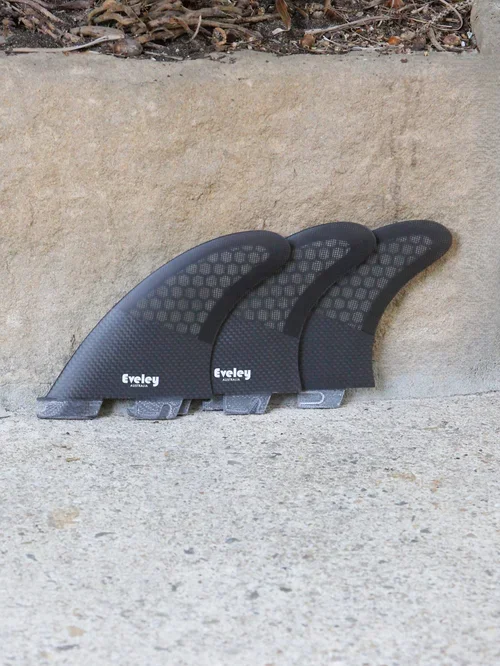
The two side fins generate drive and projection when you push through turns.
Centre Fin
The centre fin provides stability and hold, preventing the board from sliding during hard turns.
Together they allow surfers to push harder without losing control.
For a deeper explanation of how fin design affects performance, see:
• Foil Types Explained — Flat vs 50/50 Surfboard Fins
Thruster Fin Size Guide
Choosing the correct fin size is critical for performance.
Lighter surfers (under 60 kg) usually perform best with small fins, which keep the board responsive and easy to turn.
Average weight surfers (60–75 kg) typically suit medium fins, offering a balanced mix of drive and control. See the 4.5" Progressive Thruster Surfboard Fins – Gold Pro Glass | Fast Responsive Eveley Fins (FCS II Compatible)
Heavier surfers (75–90 kg) benefit from large fins for stronger hold and power through turns.
Very powerful or heavier surfers (over 90 kg) often need extra-large fins to maintain stability and control at speed. See the Big Boy Thruster Fins — Maximum Drive and Control for Larger Surfers guide.
You can learn more in these guides:
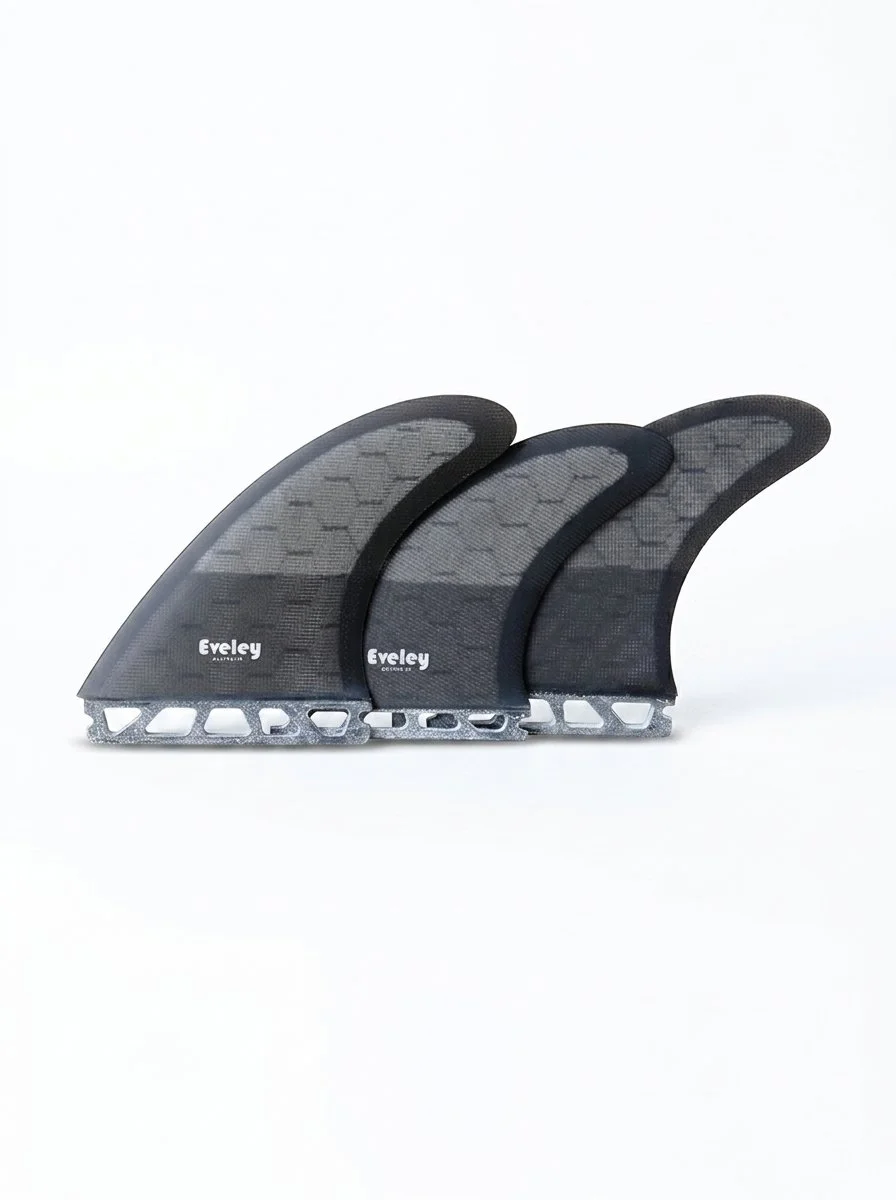
Thruster Fin Size Guide — How to Choose the Right Size for Maximum Performance
When Thruster Fins Work Best
Thruster fins are ideal for surfers who want predictable performance in a wide range of conditions.
They perform best on:
• Shortboards
• Performance mid-lengths
• Hybrid surfboards
• Everyday beachbreak surfing
They work particularly well in punchy waves where control matters.
For powerful conditions, read Best Fins for Powerful Waves.
Thruster vs Quad vs Twin
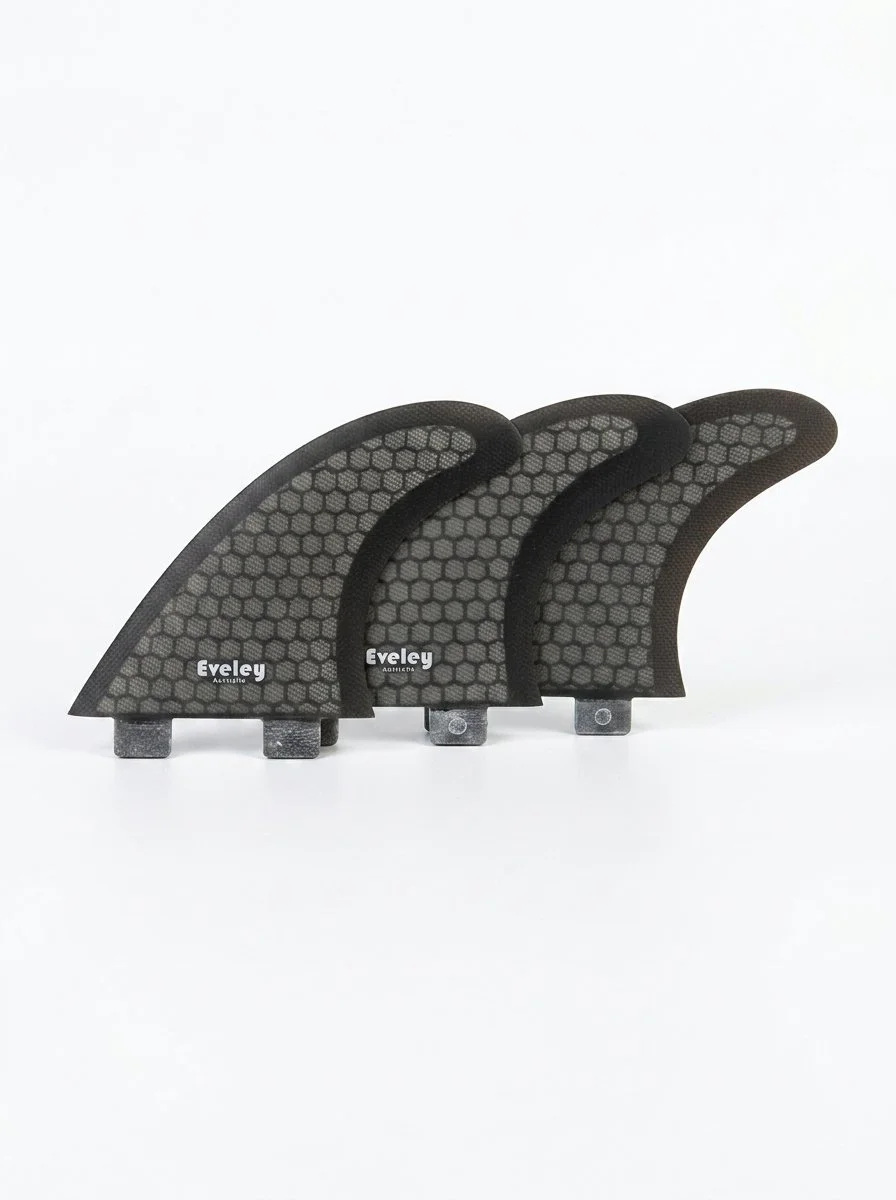
Understanding the differences helps you choose the right setup.
Thruster
• Balanced speed and control
• Reliable turning
• Most versatile setup
Quad
• Faster down the line
• More hold in barrels
• Slightly less pivot turning
Twin
• Fast and loose
• Skate-like feel
• Less hold in critical sections
If you're deciding between setups, see these guides:
Quad vs Thruster: Which Fin Setup Is Right?
Quad vs Thruster Surfboard Fins Explained.
Twin Fin vs Thruster: Which Is Faster
Fiberglass Thruster Fins vs Honeycomb
Material affects how fins feel in the water.
Fiberglass (Pro Glass) fins feel solid and predictable. They provide strong drive through turns and are extremely durable.
Honeycomb fins are lighter and more flexible. They tend to feel quicker and more lively, releasing easily during turns.
For a full comparison read Fiberglass vs Honeycomb Surfboard Fins — Real Performance Differences.
Most Eveley thruster fins use Pro Glass fiberglass for maximum durability and predictable flex.
Recommended Eveley Thruster Fins
If you're looking for high-quality fiberglass thruster fins, these Eveley models are proven performers.
Everyday Performance Thruster
4.5" Progressive Thruster Fins — Balanced Speed & Control
Ideal for surfers who want drive, responsiveness, and control in everyday surf.
Perfect for:
• Shortboards
• Grovellers
• Performance hybrids
For greater detail see the 4.5" Progressive Thruster Fins — Balanced Speed & Control for Everyday Surf guide.
Performance Thruster Template
4.75" Medium Rake Performance Thruster Fins
Best suited to:
• Larger surfers
• Powerful waves
• High-speed turns
These fins provide strong drive and excellent rail hold.
How to Know When to Replace Thruster Fins
Even strong fiberglass fins eventually wear out.
Signs it's time to replace them:
• Cracks in the fiberglass
• Loose fin tabs
• Chips on the trailing edge
• Reduced hold in turns
See How to Know When to Replace Your Surfboard Fins for a full inspection guide.
Thruster Fin Compatibility
Not all fins fit every surfboard.
There are several different fin box systems used in surfboards.
Before buying fins, read:
Surfboard Fin Compatibility Explained
This guide helps you avoid buying fins that won't fit your board.
Surfers Choose Eveley Thruster Fins
Eveley fins are designed for surfers who want durability and performance without paying premium brand prices.
Key advantages:
• Solid Pro Glass fiberglass construction
• Reliable flex and drive
• Performance-tested templates
• Compatible with the most common fin systems
Explore the full Eveley Surfboard Thrusters Fins Collection to see all available templates.
FAQ’s
Are thruster fins good for beginners?
Yes. Thruster setups provide the best balance of control and predictability, which helps beginners progress faster.
Are thruster fins slower than quad fins?
Slightly. Quad setups can generate more down-the-line speed, but thrusters offer better turning control.
Can you surf big waves with thruster fins?
Absolutely. Thrusters are widely used in powerful surf because they provide reliable hold and control.
Do thruster fins work on mid-length boards?
Yes. Many mid-length surfboards perform very well with a thruster or 2+1 setup.
See Best Fin Setup for Mid-Length Surfboards.
Final Thoughts
Thruster fins remain the most versatile and reliable fin setup in surfing.
They offer the perfect balance of:
• Speed
• Control
• Turning ability
Whether you're surfing beachbreaks, point waves, or reefs, a well-chosen thruster fin set will deliver consistent performance in almost any condition.
If you're still unsure which fins are right for your board, start with our Complete Surfboard Fin Buyer’s Guide.
Futures™ is a registered trademark of Futures Fins. Eveley Surf is not affiliated with or endorsed by Futures Fins. All compatibility references to Futures Fins are for descriptive purposes only.
FCS™ and FCSII™ are registered trademarks of Surf Hardware International Pty Ltd. Eveley Surf is not affiliated with or endorsed by Surf Hardware International Pty Ltd. All compatibility references to FCS and FCSII are for descriptive purposes only.
FCS and FCS II Compatible Fins Explained
How FCS Fin Systems Work and Which Fins Fit Your Surfboard
See all the Eveley FCS and FCS II compatible fins here.
Surfboard fins dramatically affect how your board performs. But before choosing a fin template or size, you need to make sure the fins actually fit your board’s fin system.
Two of the most common fin systems in surfing are FCS and FCS II.
Understanding the difference between them is essential because they are not totally interchangeable.
This guide explains:
What FCS fins are
How FCS II fins work
Which fins fit which boards
How to choose the right compatible fins
What Are FCS Fins?
FCS (Fin Control System) was introduced in the 1990s and became one of the most widely used surfboard fin systems in the world.
These fins use two small tabs at the base of the fin, which slide into two plugs installed in the surfboard.
The fins are secured with grub screws that hold the tabs in place.
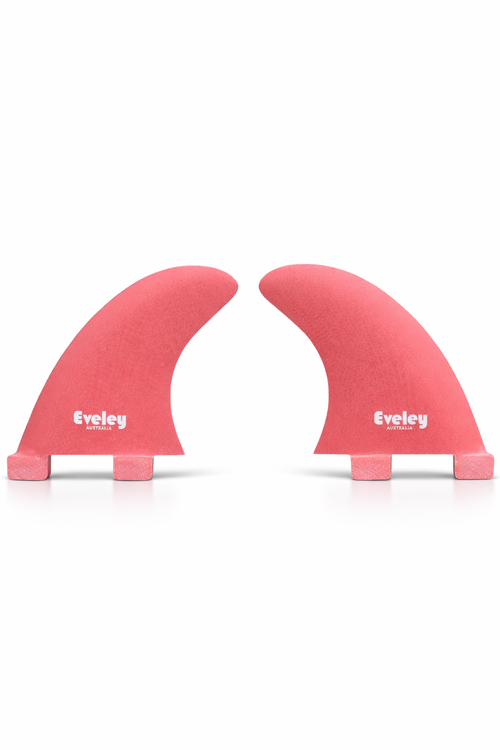
Key Features
Two-tab fin base
Fits boards with FCS plugs
Secured with grub screws and fin key
Many classic surfboards, older boards, and many custom boards still use this system.
What Are FCS II Fins?
FCS II is the modern evolution of the original FCS system.
Instead of two separate plugs, FCS II uses a single fin plug with an internal locking mechanism.
FCS II fins are designed to snap into the fin box without screws, although screws can still be used for extra security.
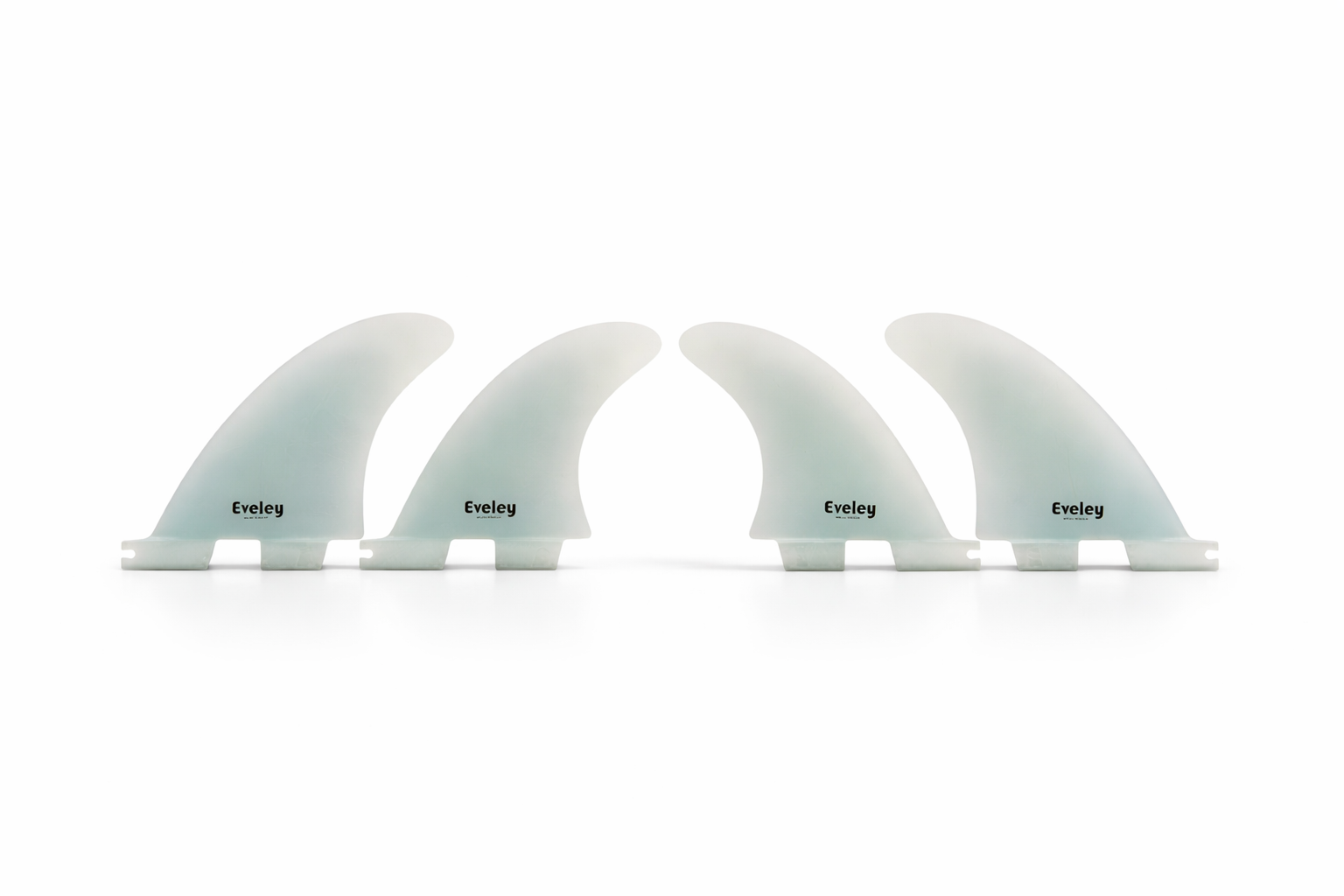
FCS II compatible two tab fins.
Key Features
Tool-less installation
Single fin box design
Quick fin changes
This system is now used on many modern production surfboards.
Are FCS and FCS II Fins Compatible?
No.
FCS II fins do NOT fit traditional FCS dual-plug systems.
The base designs are completely different.
FCS fins fit surfboards with traditional FCS plugs.
FCS II fins fit surfboards with FCS II fin plugs.
The two systems are not usually interchangeable, so you must choose fins that match your board’s fin system.
Because the base structure is different, FCS II fins cannot be used in standard FCS plug systems.
However the original FCS two tab fins can be fitted into FCS II plugs using a compatibility kit consisting of infills and screws.
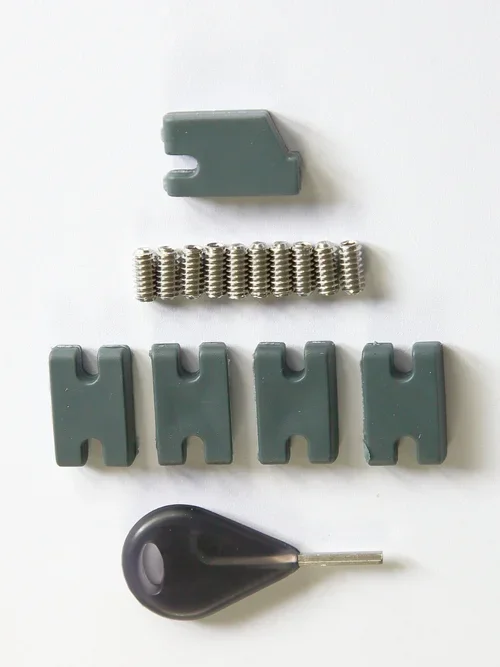
If your board has two separate round plugs, it uses the FCS system. These also fit the single elongated fusion FCS fin plugs.
If it has a single elongated fin plug with two different size slots and a coloured integrated locking mechanism, it uses FCS II.
For a broader explanation of surfboard fin compatibility systems, see:
Surfboard Fin Compatibility Explained
How to Identify Your Fin System
Most surfers can identify their fin system in seconds.
Your board uses FCS if:
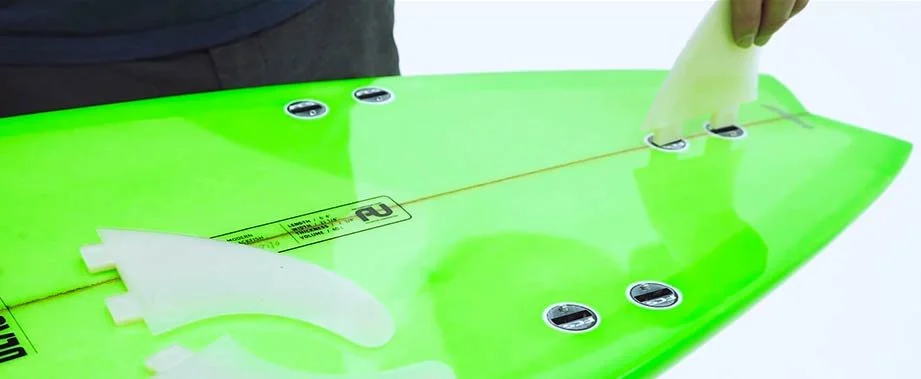
Original FCS fin plugs
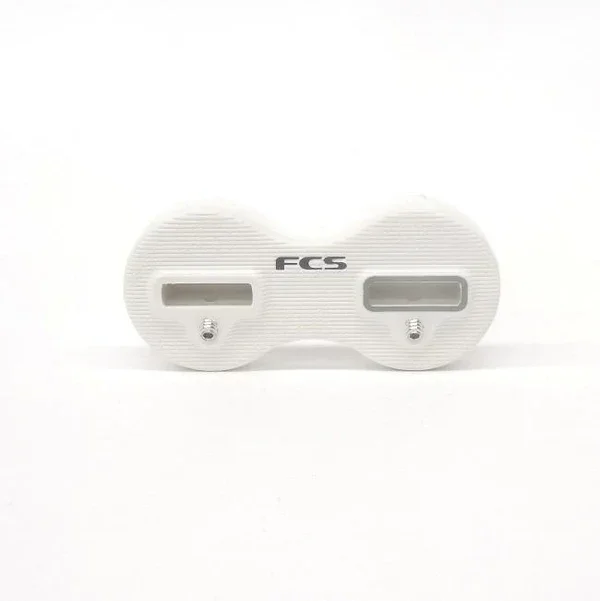
FCS Fusion fin plug
There are two round plugs per fin, or one plug with two equal size slots (FCS Fusion plug)
Small screws hold the fin tabs in place
The fins have two small tabs
Your board uses FCS II if:
FCS II fin plug
Fins can snap in without screws
The fin base is longer and integrated
Choosing Compatible Fins
Once you know your fin system, you can choose fins based on size, template and setup.
For example:
Thruster Setup
Three-fin configuration used on most performance surfboards.
Example:
4.5" Progressive Thruster Fins – FCS II Compatible
Quad Setup
Four-fin configuration known for down-the-line speed and hold.
Example:
4.9" / 3.1" DTR Quad Fins – FCS II Compatible
Twin Setup
Two-fin configuration known for speed, flow and smooth rail turns.
Example:
5.5" Power Twin Fins Plus 3.4" Stabilizer – Natural Pro Glass | FCS Compatible
5.7" Upright Twin Fins – FCS Compatible
Why Fin Compatibility Matters
Using the correct fin system ensures:
Proper fit and safety
Maximum performance
Correct flex and drive characteristics
Incorrectly fitting fins can result in loose fins, damaged boxes, or lost fins in the water.
Choosing the Right Fin Size
Compatibility is only the first step.
Fin size also affects:
Speed
Control
Turning performance
To understand how fin size works, see:
Surfboard Fins Guide – Choosing the Right Fin Size
Fiberglass vs Composite Fins
Material also plays a major role in fin performance.
Fiberglass fins generally provide:
Stronger flex response
Greater durability
More consistent performance
Learn more here:
Fiberglass vs Honeycomb Fins – Real Performance Differences
FAQs
Are FCS fins the same as FCS II fins?
No. They use different base systems and are not interchangeable.
Can FCS II fins fit FCS plug systems?
No. The fin base is completely different.
Do I need tools for FCS II fins?
Not always. Many FCS II fins can snap into the box without screws, although screws can still be used.
Which fin system is better?
Both systems perform well. The main difference is installation convenience, not performance.
Related Surfboard Fin Guides
Beginner’s Guide to Surfboard Fins
Twin Fin vs Thruster – Speed vs Control
Complete Surfboard Fin Buyer’s Guide
FCS™ and FCS II™ are registered trademarks of Surf Hardware International Pty Ltd. Eveley Surf is not affiliated with or endorsed by Surf Hardware International Pty Ltd. All compatibility references to FCS and FCS II are for descriptive purposes only.
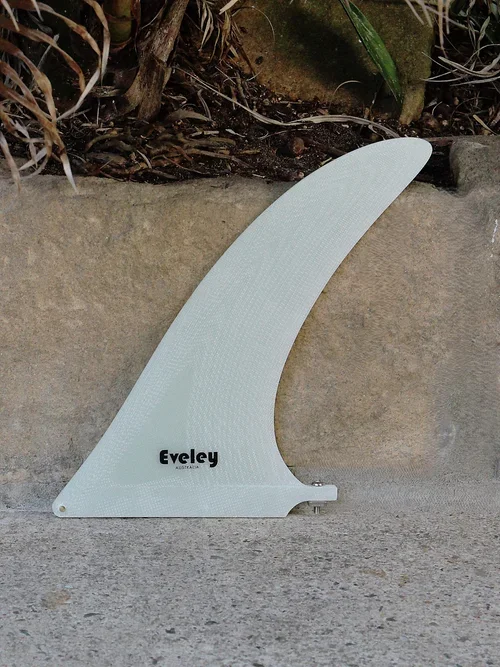
Volan Fiberglass Surfboard Fins Explained — Why Classic Fins Still Use It
If you’ve ever seen a surfboard fin with a subtle green tint, you’ve probably seen Volan fiberglass.
Volan has been used in surfboard construction since the early fiberglass boards of the 1950s and 60s. Despite modern materials like honeycomb and carbon composites, Volan remains popular for classic longboard fins and traditional surfboard builds.
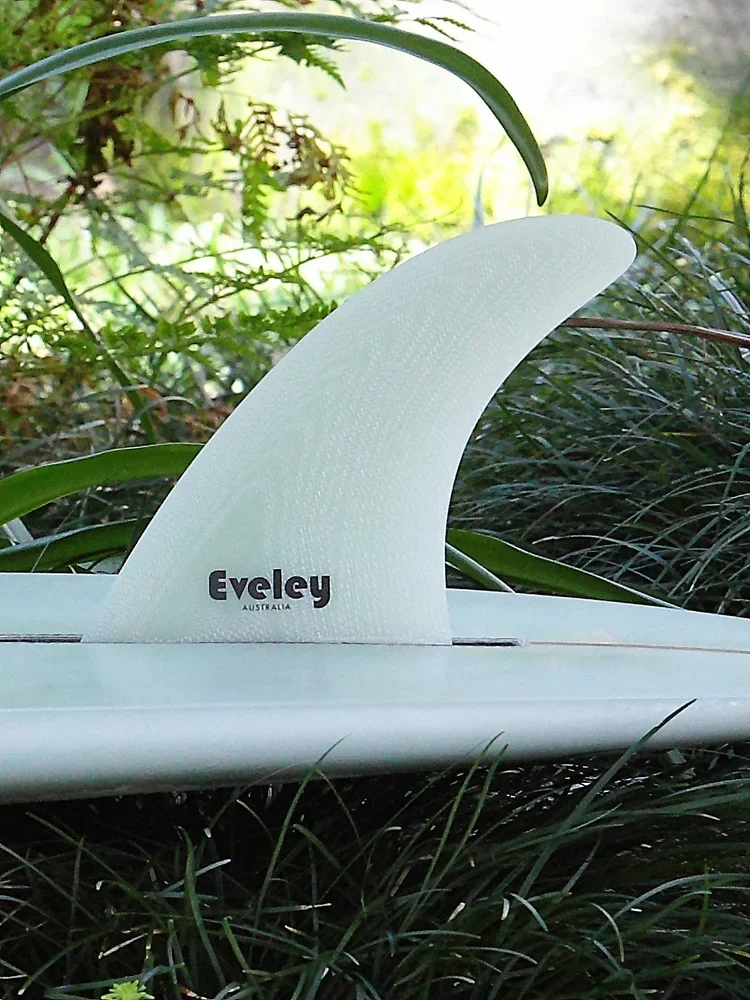
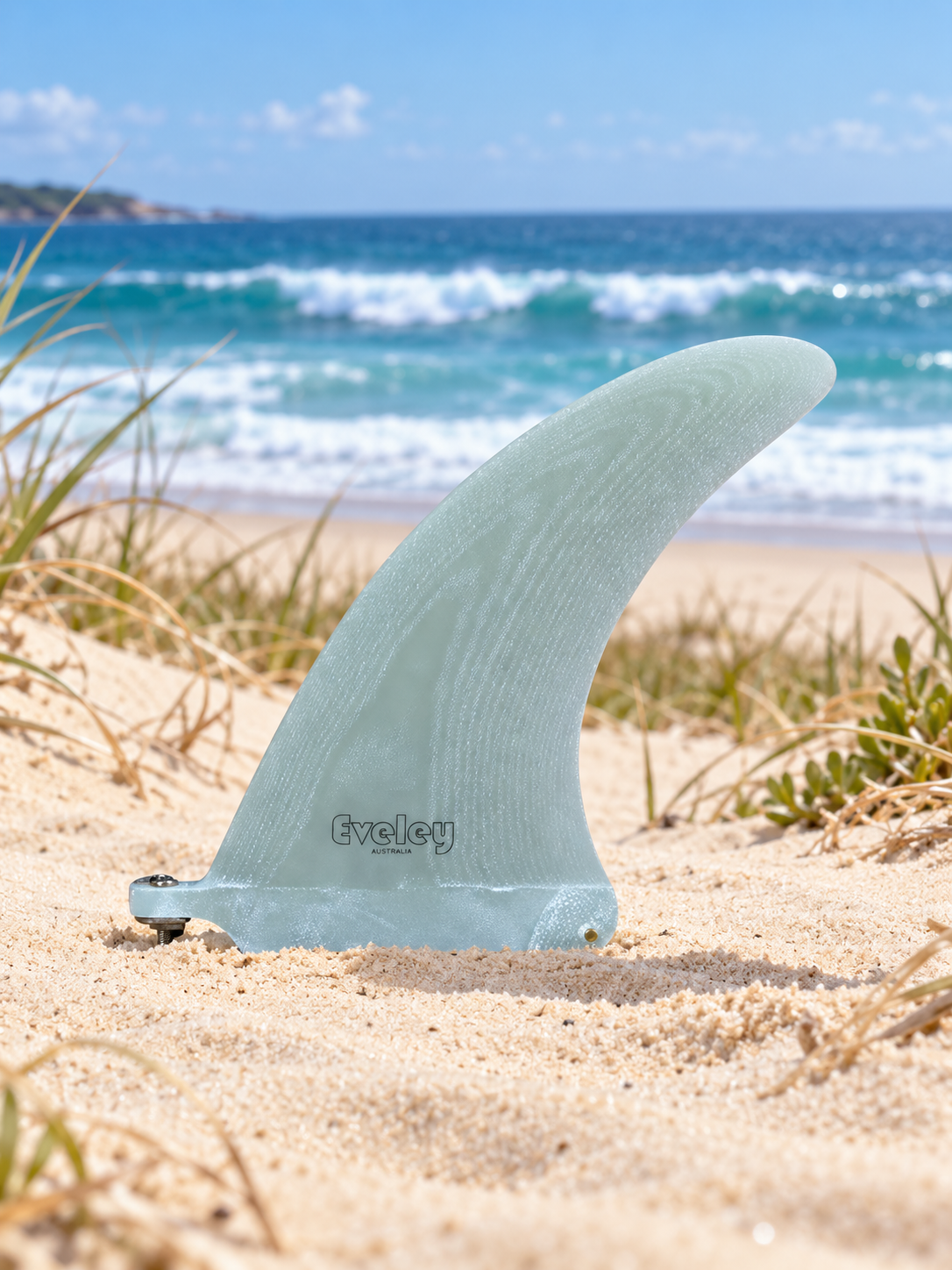
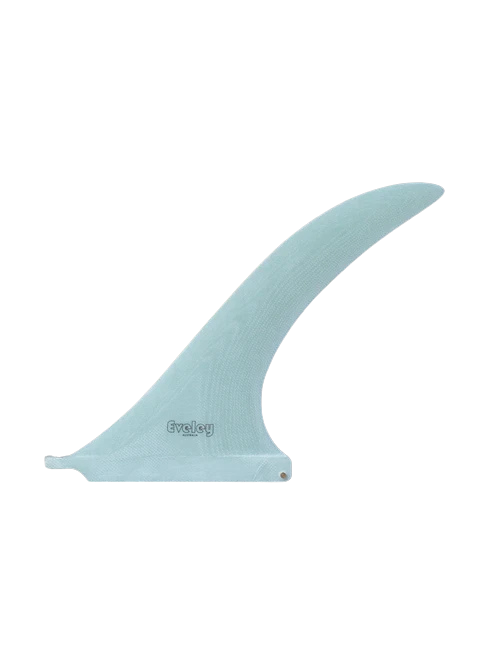
If you’ve ever seen a surfboard fin with a subtle green tint, you’ve probably seen Volan fiberglass.
Volan has been used in surfboard construction since the early fiberglass boards of the 1950s and 60s. Despite modern materials like honeycomb and carbon composites, Volan remains popular for classic longboard fins and traditional surfboard builds.
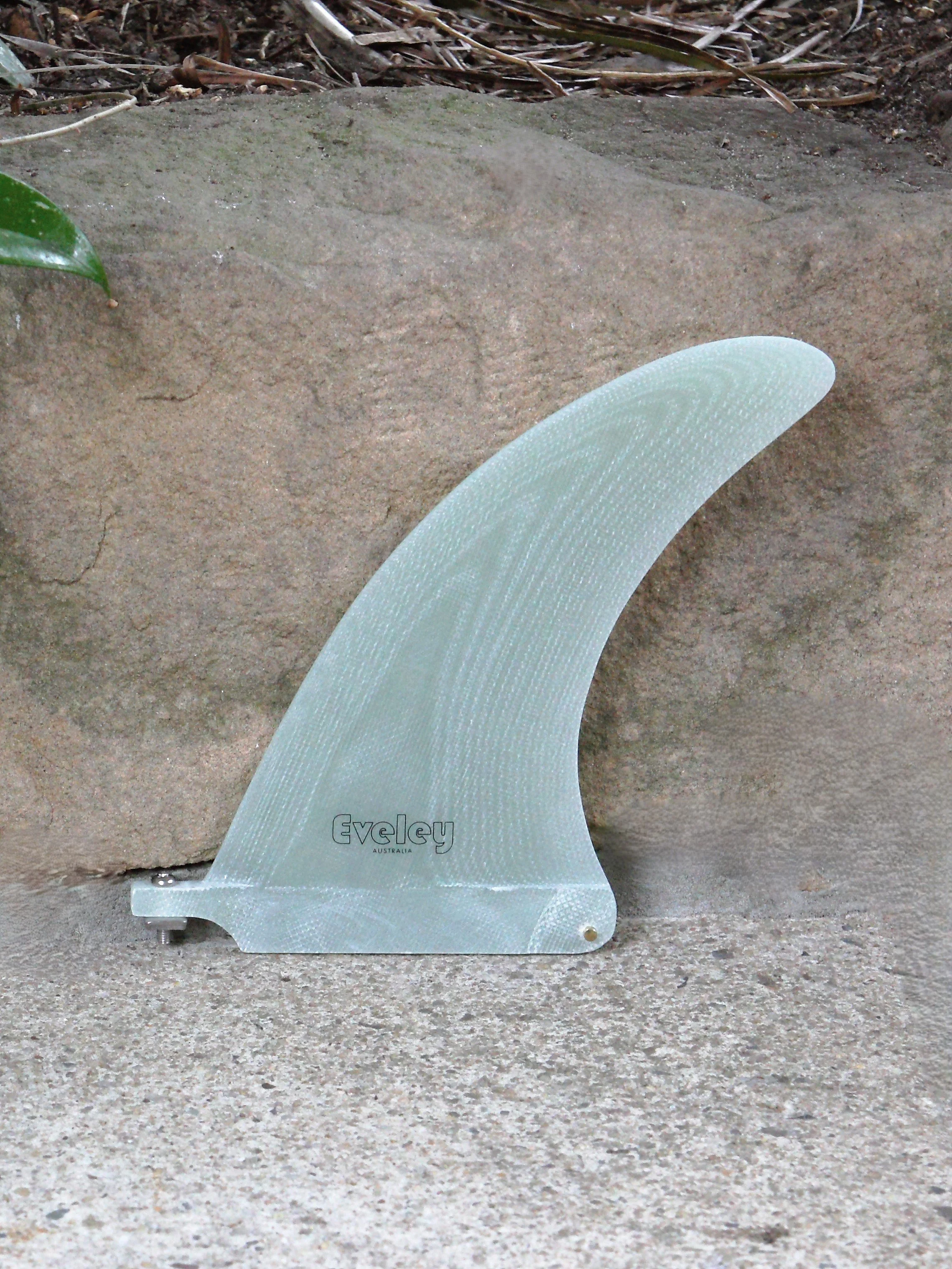
7.25" Classic Center Fin, volan Pro Glass.
Why?
Because Volan produces a strong, smooth-flexing laminate that many surfers believe delivers the most authentic feel in the water.
This guide explains:
what Volan fiberglass actually is
why it creates a green tint in fins
how it differs from modern Pro Glass construction
when Volan fins are the best choice
What Is Volan Fiberglass?
Volan is fiberglass cloth treated with a special chemical finish that improves bonding with polyester resin.
This treatment increases lamination strength and durability, making Volan ideal for applications where structural reliability matters.
Compared to standard fiberglass cloth, Volan:
absorbs more resin
produces a slightly heavier laminate
creates a smoother flex pattern
results in the classic green tint
Because of these properties, Volan was widely used during the early fiberglass surfboard era.
Today it is still used for traditional surfboard fins and classic longboard laminations.
Why Volan Fins Look Green
The distinctive green colour of Volan fins comes from the chemical finish applied to the fiberglass cloth.
When laminated with polyester resin, the cloth produces a natural green tint.
This is not added pigment.
It is simply the visual effect of the Volan treatment interacting with resin.
That’s why classic surfboards from the 1960s often have a greenish fibreglass appearance.
Volan Pro Glass vs Regular Pro Glass Surfboard Fins
Modern performance fins typically use Pro Glass fiberglass construction, which offers lighter weight and faster response.
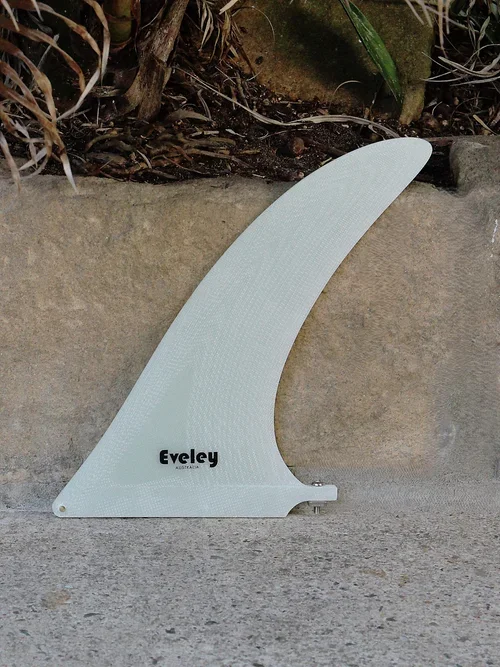
Volan behaves differently.
Volan Fiberglass vs Regular Fiberglass Fins — What’s the Difference?
Weight
Volan Fiberglass is slightly heavier.
Regular Fiberglass is lighter.Flex Feel
VolanFiberglass has a smooth, dampened flex that feels stable through turns.
Regular Fiberglass feels faster and more responsive.Strength
VolanFiberglass is extremely durable and long-lasting.
Regular Fiberglass is also very strong and designed for performance surfing.Appearance
Volan Fiberglass has a distinctive green tint.
Regular Fiberglass is often clearer or tinted.Best Surfing Style
VolanFiberglass suits classic trimming and traditional longboard surfing.
Regular Fiberglass suits modern performance surfing where speed and quick response matter.
Because Regular Fiberglass Pro Glass is lighter and more responsive, it is widely used in thruster and quad performance fins.
Modern performance fins typically use Pro Glass fiberglass construction, which offers lighter weight and faster response.
To understand the differences between fin materials, read our guide:
→ Fiberglass vs Honeycomb Fins — Real Performance Differences
Why Longboard Fins Often Use Volan
Volan fiberglass is especially suited to longboard fins.
The heavier laminate produces a smooth flex pattern that suits traditional surfing styles, where stability and trim are more important than rapid response.
Many classic longboard templates are commonly produced in Volan, including:
pivot fins
D fins
4A-style fins
These designs emphasise:
smooth rail-to-rail flow
predictable trim speed
stable noseriding
For a deeper look at longboard fin setups, read:
Does Volan Improve Fin Performance?
Volan does not necessarily make a fin faster.
Instead, it changes how the fin flexes under load.
Volan fins typically feel:
smoother through turns
more stable at speed
less twitchy than lightweight fins
This is why surfers often describe Volan fins as having a “classic feel”.
Modern Pro Glass fins respond more quickly and feel more reactive under the feet.
When Volan Fins Are the Best Choice
Volan fins are ideal for:
traditional longboards
classic single-fin surfboards
log-style noseriders
surfers who prefer smooth carving turns
If you're setting up a classic single-fin board, templates like the 4A design remain extremely popular.
For example:
→ 10" International 4A Center Fin – Volan Pro Glass
This template delivers the balanced drive and pivot some longboard surfers prefer.
When Pro Glass Fins Are Better
Most modern surfboards benefit from Pro Glass construction.
Pro Glass fins provide:
faster flex response
lighter weight
stronger projection through turns
These characteristics suit performance surfing and shortboard designs.
If you ride thrusters or quads, see:
→ Thruster Fin Size Guide
→ Best Fins for Small Waves
These guides explain how fin size and templates affect speed, control and manoeuvrability.
Why Volan Is Still Popular
Despite advances in composite materials, Volan remains widely respected for three reasons:
Durability
Volan laminates are extremely robust and resist long-term fatigue.
Smooth Flex
The heavier cloth produces a stable, predictable flex pattern.
Classic Aesthetic
Many surfers love the traditional green tint associated with classic fiberglass boards.
For traditional longboard surfing, Volan continues to be one of the most trusted materials in surfboard fins.
Frequently Asked Questions
What is Volan fiberglass?
Volan fiberglass is fiberglass cloth treated with a special finish that improves bonding with polyester resin. It has been used in surfboard construction since the early fiberglass era.
Why are Volan fins green?
The green tint comes from the Volan treatment reacting with polyester resin during lamination. It is not added pigment.
Are Volan fins stronger than normal fiberglass?
Volan laminates are very durable, though they are slightly heavier than standard fiberglass constructions.
Are Volan fins better for longboards?
Yes. Many longboard surfers prefer Volan fins because they produce smooth, stable flex characteristics that suit traditional surfing styles.
Related Eveley Fin Guides
For more surfboard fin knowledge, explore:
→ Surfboard Fin Compatibility Explained
→ Complete Surfboard Fin Buyer’s Guide
→ Twin Fin vs Thruster — Speed vs Control
Delve deeper: Sliding Center Fin Box (US / Bahne Box) Guide Understand fin installation, adjustment, and how fin position changes surfboard performance.
Learn how twin keel surfboard fins work, why they generate incredible speed, and how to choose the right keel fins for fish boards and twin fin setups: Twin Keel Surfboard Fins Guide – Speed, Design & Fish Board Performance
These guides explain how fin templates, materials and sizes affect surfboard performance.
Eveley Volan Fins are supplied with a machined finish which allows the layers of fiberglass material to remain evident in the finished surfboard fin.
Popular Volan Fins
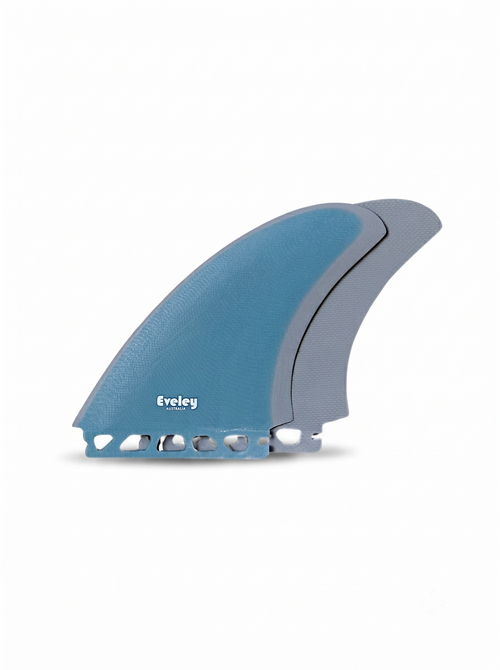
Futures Compatible Surfboard Fins Explained
Learn how Futures fin systems work, what fits where, and how to choose the right fins with confidence.
Not sure which fins fit your board? Start with the Surfboard Fin Compatibility Explained guide to understand how different fin systems work.
The Tab is the part of the fin that goes in the fin box.
Futures fins tab depth: (Important)
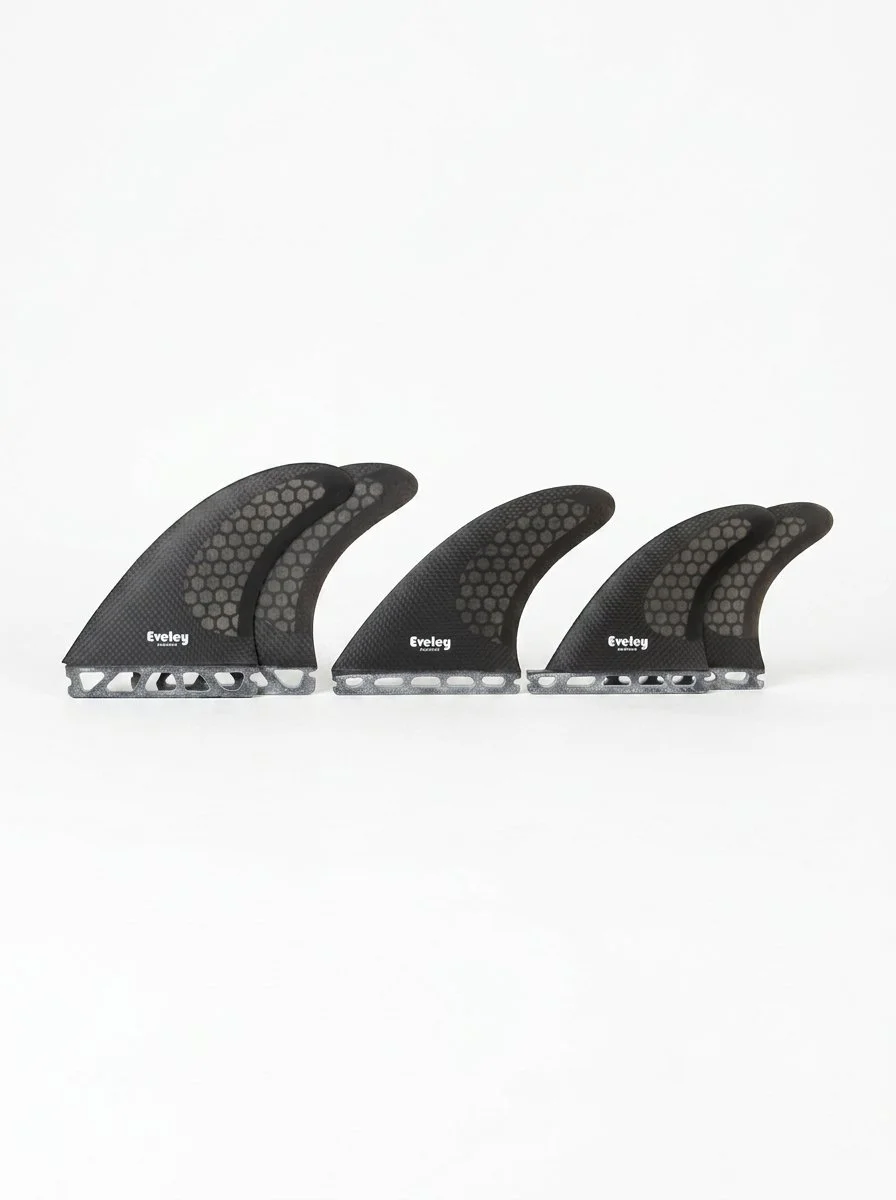
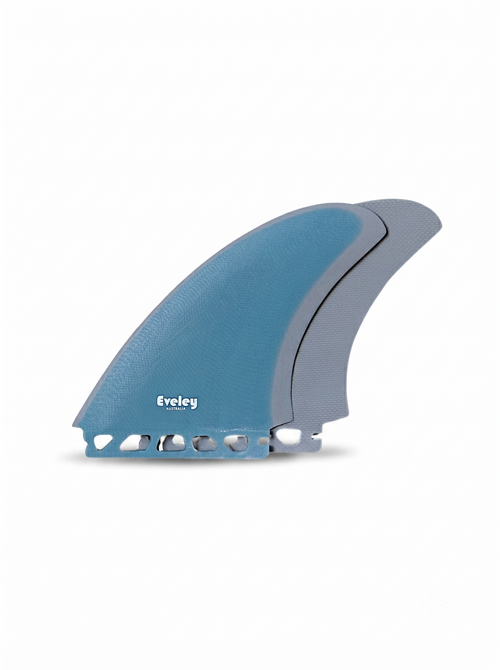
Futures compatible twin fins have 3/4” deep tabs.
Futures compatible thruster fin sets have 3/4” deep tabs on side fins and 1/2” deep tabs on the centre fin.
Futures compatible quad sets have 3/4” deep tabs on the front fins and 1/2" deep tabs on the rear fins.
Futures compatible side fins (side bites) have 3/4” deep tabs.
Futures compatible center stabilizer fins have 1/2” deep tabs.
There are two different depth boxes which cover these options. The board builder will always use fin boxes which meet this criteria when making a board.
And now Futures have introduced a third box specifically for their Twinzer Canard fins. This box has a slot specification which will not accept other Futures fins.
Important take away: You often cannot mix and match Futures Compatible Fins into different positions in your board’s set up.
New to surfboard fins? Start with the complete Surfboard Fin Guides overview
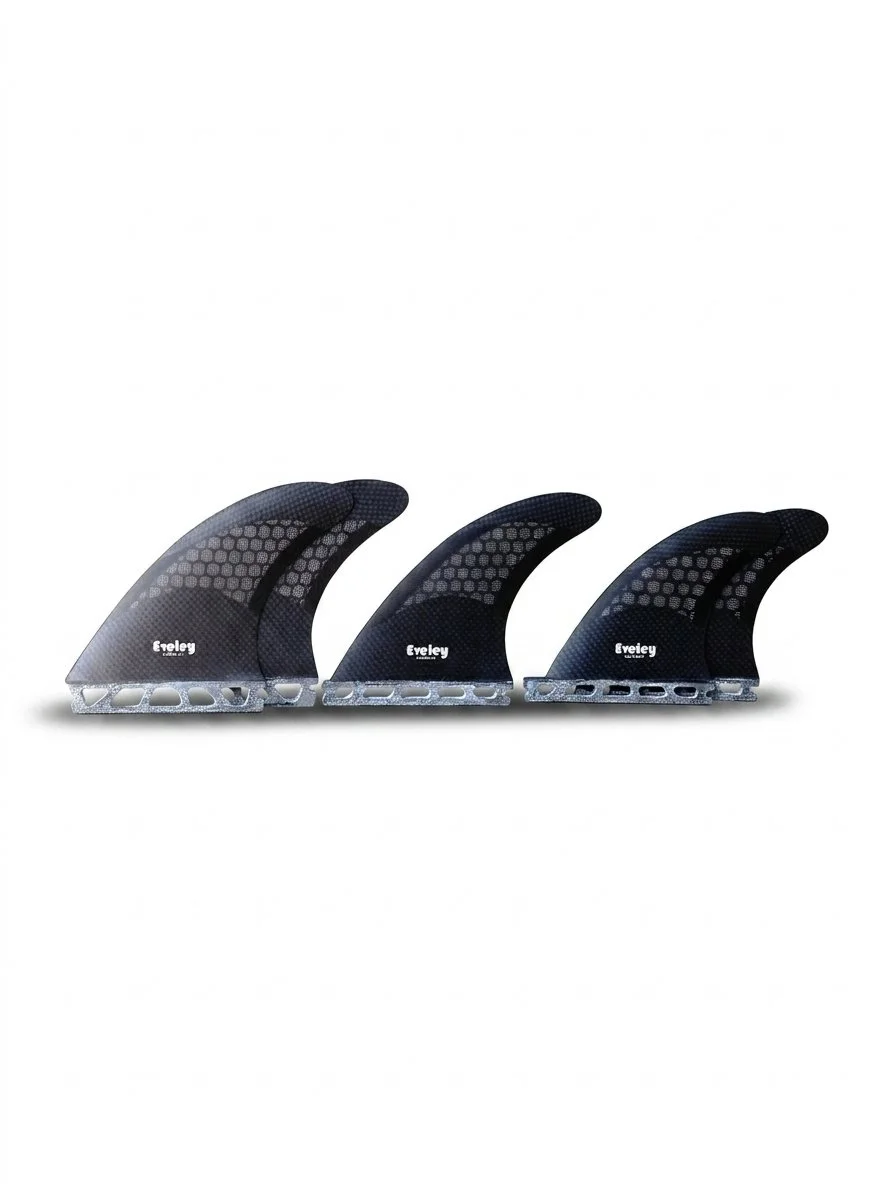
The Cant of a fin is the outward angle of the fin in relation to the bottom of the board. A fin set up with zero cant (straight up and down) is faster in a straight line, but not very responsive through turns. The more cant the fin has (to a degree) the more responsive through turns. This helps keep drive up when the board is tilted and on rail. Greater cant angle helps generate lift making the board livelier.
0–3° cant angle: a smaller cant angle provides more speed and drive, making for a more controlled ride. This is good for navigating through larger waves.
5–9° cant angle: a greater cant angle allows for more responsive turns, making it good for dynamic surfing styles. This is good for smaller, crisper waves.
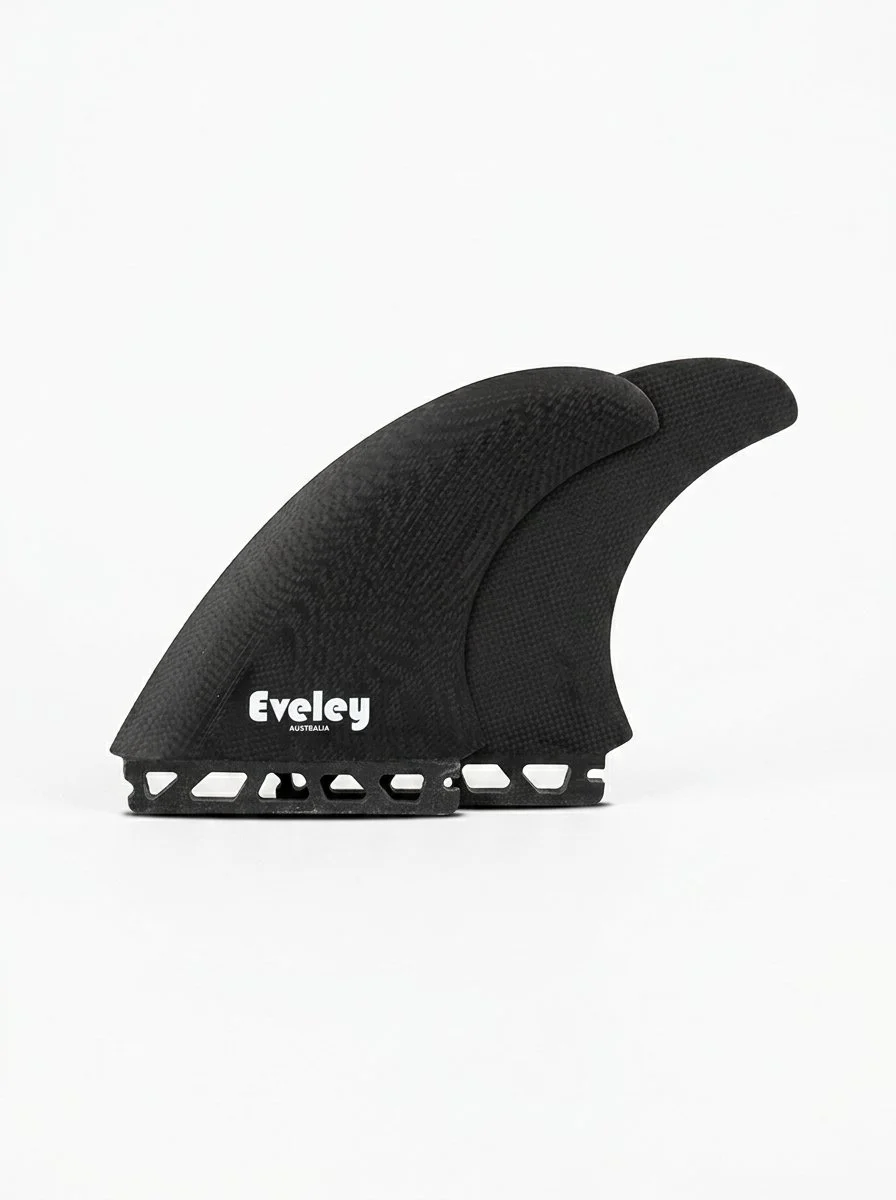
Futures compatible fin boxes have no cant angle built in, so it is built into the fins instead.
All that being said about the cant angle of the fin boxes, it is really determined by the board builder in how the boxes are set into the board. If it has concaves or channels the builder may offset the box to the bottom of the board to achieve a desired result. The only real way of knowing the cant angle on any given board is to fit the fins and measure the angle with the appropriate tool.
Fin boxes are bonded into surfboards by routing precise cavities into the surfboard foam, filling them with a specialized resin mixture, and setting the boxes in place, usually before the fiberglass lamination process. The process involves strong structural adhesives—typically polyester or epoxy resin mixed with fillers like Cabosil or microspheres to create a "thickened" peanut butter consistency—to ensure the box becomes an integrated, permanent part of the board.

The polyester or epoxy adhesive resin is mixed with a catalyst which makes the resin harden. This chemical reaction produces a lot of heat and often softens the plastic the fin boxes are made of.
Board builders are meant to fit dummy fins in the boxes at this stage to ensure the box does not distort so much that the fin’s tab cannot fit in the box properly, and also to check the correct cant angle.
However, some board builders rush through this stage and either skip it entirely, or use any fins available, rather than the correctly specified Futures product.
Unfortunately we have encountered new boards which have distorted fin boxes.
All Eveley Futures Compatible fins are tested for fit prior to dispatch, but we cannot control the methods used by other board makers.
Delve deeper with these Eveley Knowledge Hub Guides
How Small Stabiliser Fins Change Surfboard Performance | Twin vs Twin + Trailer Surfboard Fins Guide
Popular Futures Compatible Eveley Surfboard Fins
1.5" Mini Center Stabilizer Fin – Black Pro Glass | Futures Compatible
Futures™ is a registered trademark of Futures Fins. Eveley Surf is not affiliated with or endorsed by Futures Fins. All compatibility references are for descriptive purposes only.
Eveley Futures compatible surfboard fins.
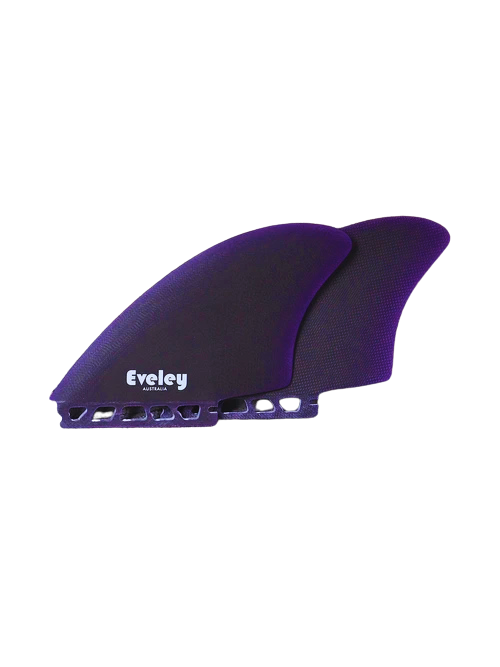
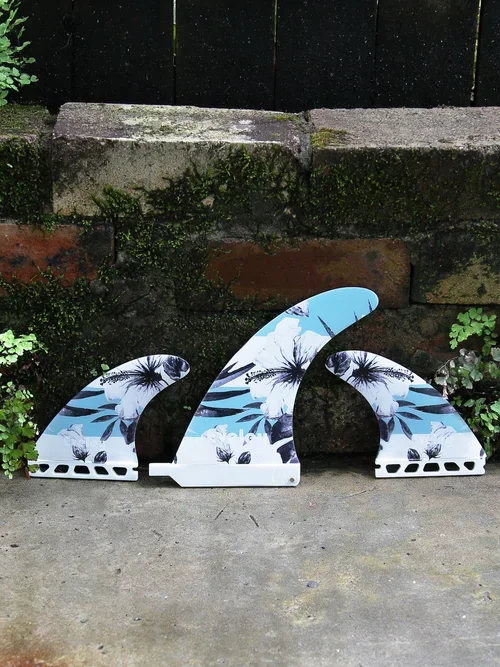
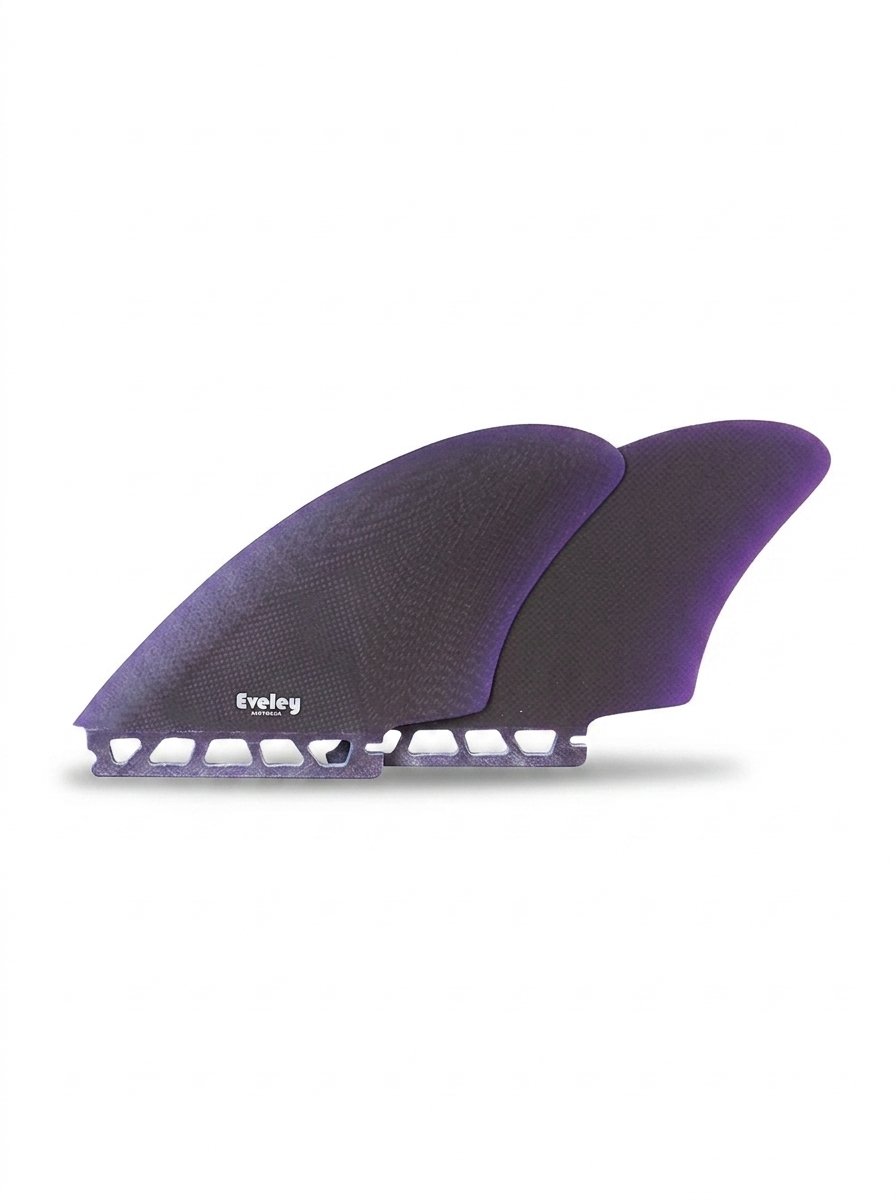
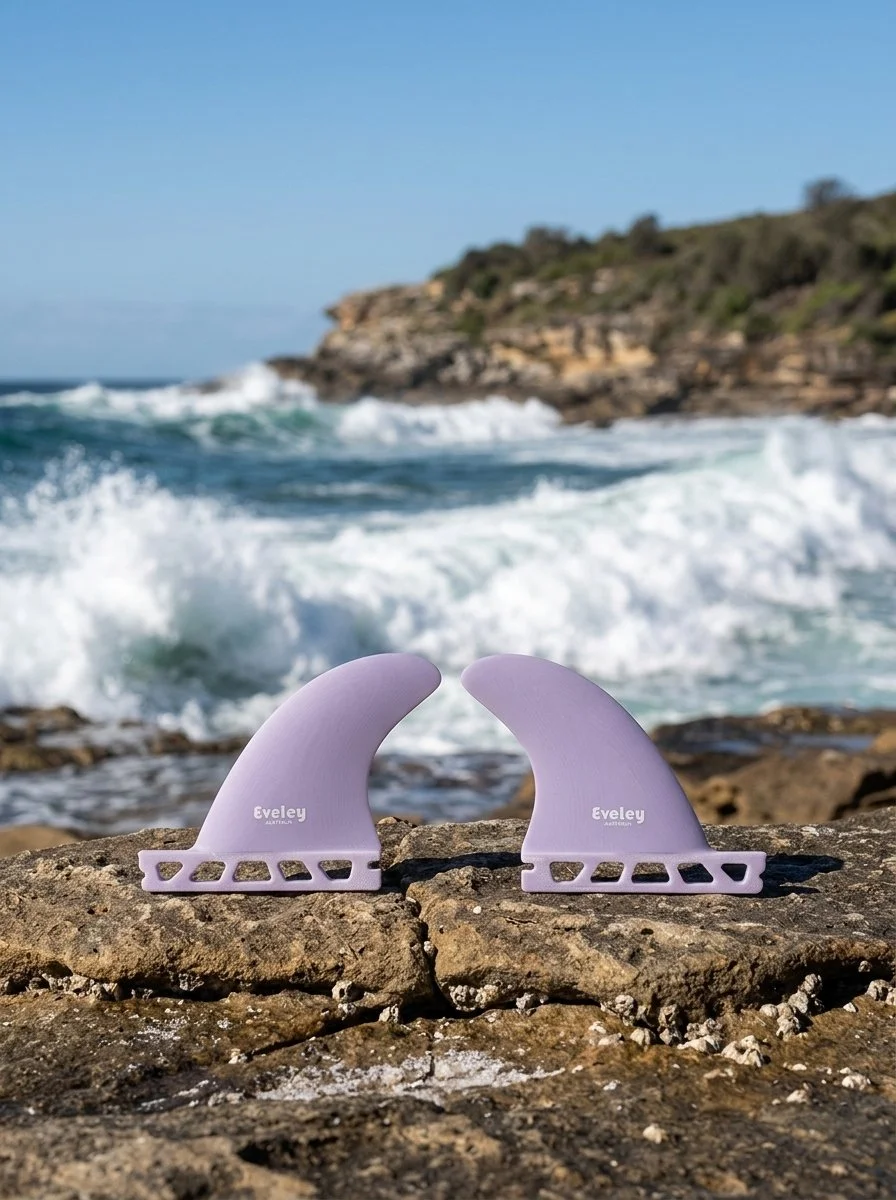
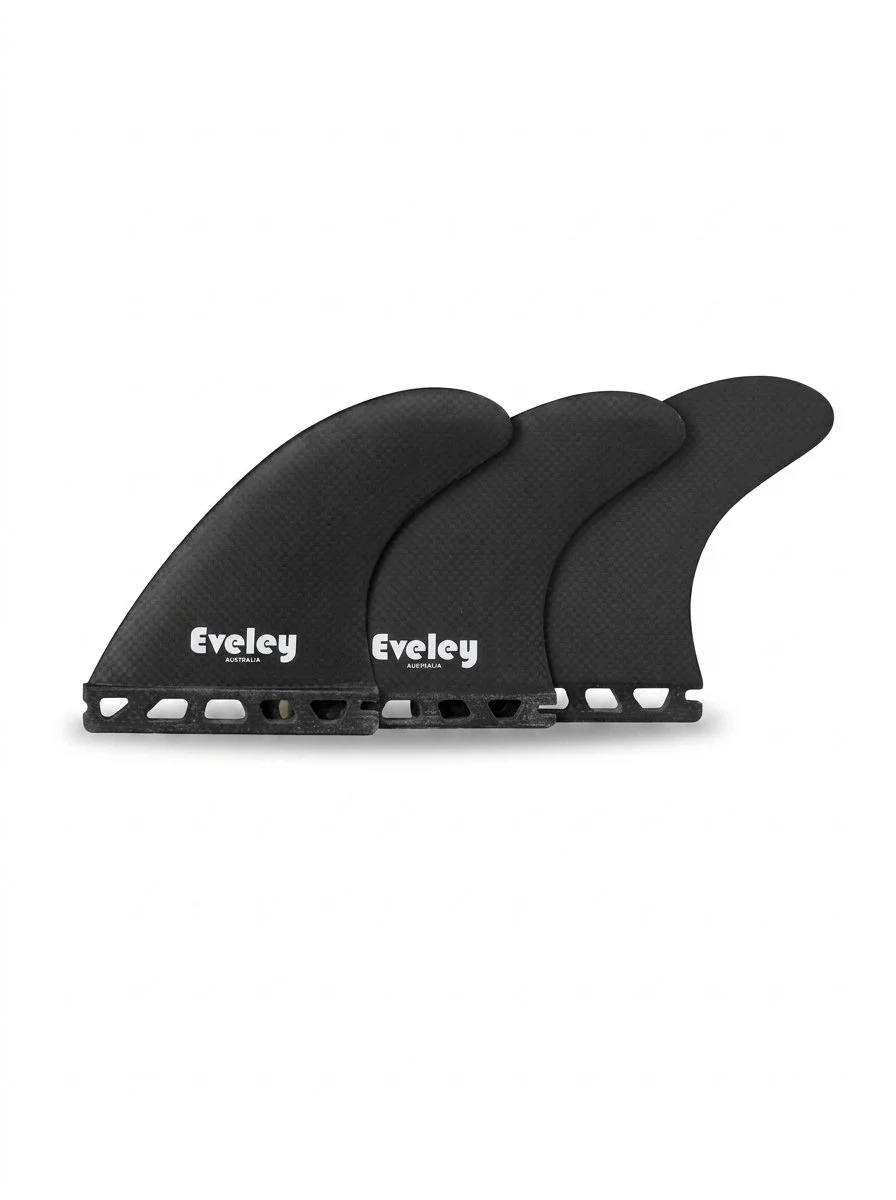
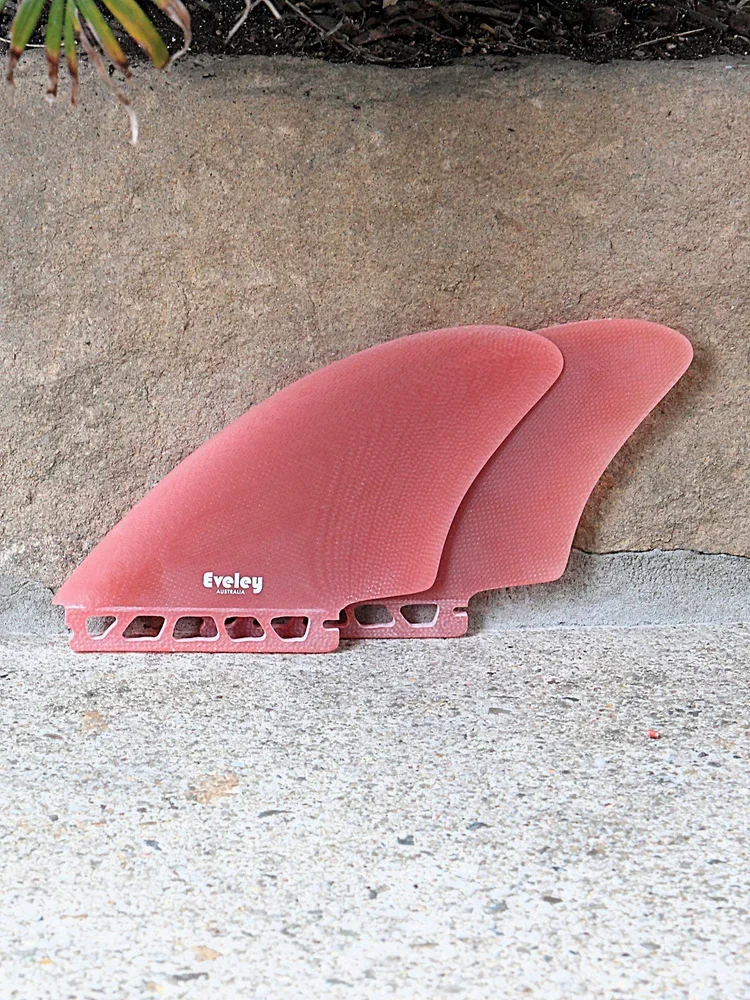
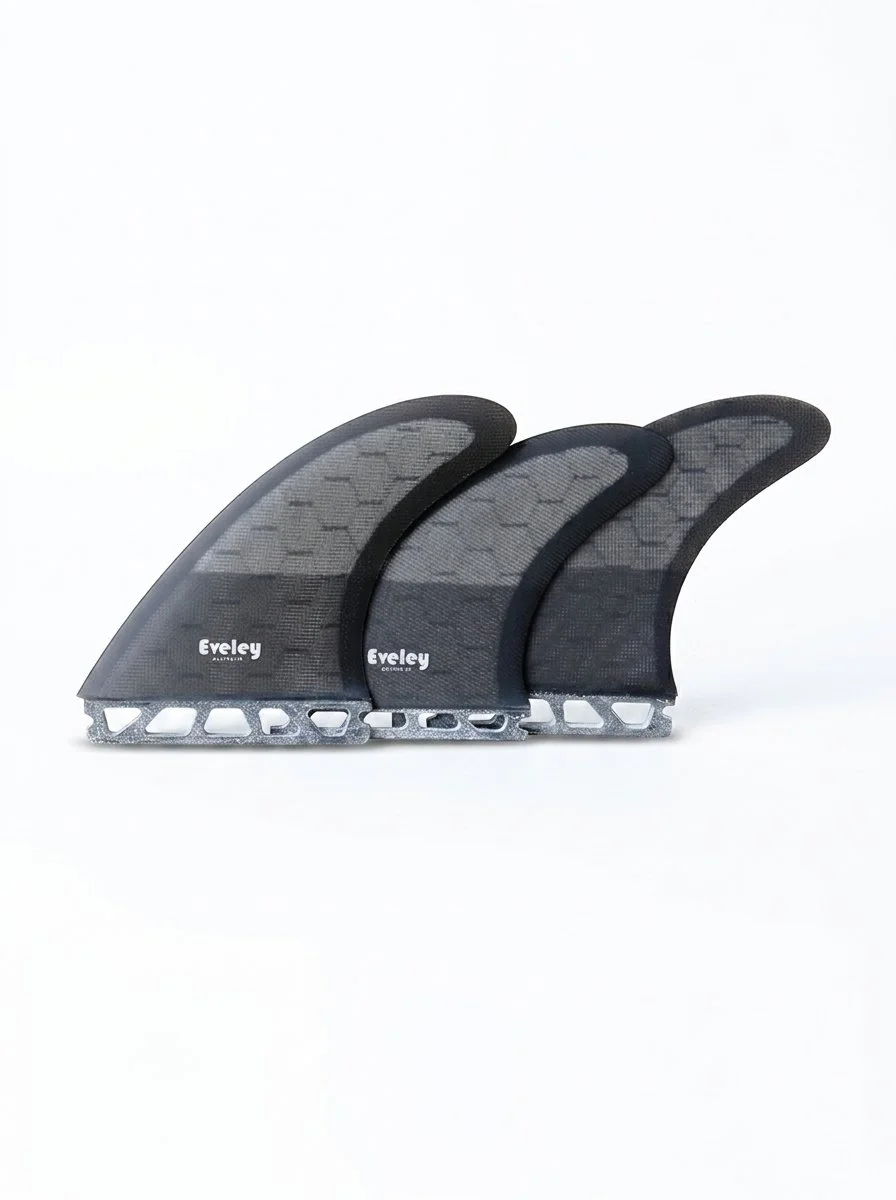
Advanced Surfboard Fin Buyer’s Guide – Performance, Templates & Materials
This guide is for surfers who already understand basic fin types and want deeper insight into performance differences, templates and construction materials.
New to surfboard fins? Start with the Beginner’s Guide to Surfboard Fins – Types, Sizes & Setups Explained for a simple introduction to fin types and sizing.
For a broad outline see Surfboard Fin Guides overview.
Choosing the right surfboard fins can completely change how your board performs.
The right fins improve:
Speed
Control
Turning
Stability
The wrong fins can make a board feel slow, stiff, or unpredictable.
This Complete Surfboard Fin Buyer’s Guide explains everything you need to know to choose the right fins for your board and surfing style.
Step 1 — Make Sure the Fins Fit Your Board
Before choosing fins, confirm your fin system.
Most boards use:
FCS / FCSII
Futures
Center sliding fin box
Fins must match your board’s fin system.
For a detailed explanation see Surfboard Fin Compatibility Explained.
Step 2 — Choose the Right Fin Setup
The fin setup has the biggest impact on performance.
Thruster Setup (Three Fins)
Thrusters provide:
Reliable control
Balanced performance
Predictable turning
This is the most common setup.
Dependable examples: 4.5" Progressive Thruster Fins – Black Pro Glass | FCSII Compatible Set and the
4.75" Performance Thruster Fins – Pro Glass, designed for balanced speed and control.
Thrusters suit:
Most surfers
Most boards
Most waves
Quad Setup (Four Fins)
Quads provide:
More speed
Less drag
Smooth projection
They suit:
Fast waves
Down-the-line surfing
Twin Fin Setup
Twin fins provide:
Fast speed
Loose feel
Smooth flow
They suit:
Small waves
Fish boards
Mid-length boards
A dependable example is the 5.7" Upright Twin Fins – Pro Glass, designed for speed and responsiveness.
Try this keel template 4.5" Extra Long Twin Keel Surfboard Fins – Timber Core Pro Glass | FCS Compatible
Single Fin Setup
Single fins provide:
Smooth trim
Stable control
Flowing turns
They suit:
Longboards
Mid-length boards
A classic example is the 10" International 4A Center Fin – Volan Pro Glass, designed for smooth trim and dependable hold.
Step 3 — Choose the Right Fin Size
Fin size strongly affects performance.
Larger Fins Provide
More hold
Greater stability
Better control
Best for:
Larger surfers
Powerful waves
Smaller Fins Provide
Faster release
Quicker turning
Looser feel
Best for:
Lighter surfers
Small waves
For detailed sizing guidance see:
Larger surfers often prefer Big Boy thruster fins for extra drive and hold.
Step 4 — Choose the Right Fin Shape
Fin shape influences speed and turning style.
Raked Fins
Provide:
Strong drive
Smooth projection
Longer turns
Best for:
Open faces
Powerful waves
Upright Fins
Provide:
Quicker turning
Fast release
Loose feel
Best for:
Small waves
Beach breaks
Step 5 — Choose the Right Fin Material
Material affects performance feel.
Pro Glass (Fiberglass)
Pro Glass fins provide:
Reliable drive
Predictable control
Long-term durability
Many experienced surfers prefer fiberglass fins.
A dependable fiberglass thruster example is the 4.75" Performance Thruster Fins – Pro Glass, designed for real surf conditions.
Lightweight Composite Fins
Provide:
Lighter weight
More flex
Softer feel
They often feel less direct than fiberglass fins.
Step 6 — Consider Wave Conditions
Wave type influences fin choice.
Small Waves
Often benefit from:
Upright fins
Smaller fins
Faster release
Powerful Waves
Often benefit from:
Raked fins
Larger fins
Strong drive
Step 7 — Consider Your Surfing Style
Fin choice depends on how you surf.
Flowing Style
Usually suits:
Raked fins
Larger fins
Vertical Style
Usually suits:
Upright fins
Smaller fins
Recommended Everyday Fin Choices
These fins suit most surfers and conditions.
Balanced Thruster Setup
• 4.75" Performance Thruster Fins – Pro Glass
Balanced speed and control for everyday surfing.
Fast Twin Setup
• 5.7" Upright Twin Fins – Pro Glass
Speed and responsiveness.
Classic Longboard Setup
• 10" International 4A Center Fin – Volan Pro Glass
Smooth trim and dependable hold.
Common Fin Buying Mistakes
Choosing Fins That Don't Fit
Always confirm fin compatibility first.
Choosing the Wrong Size
Incorrect size can reduce performance.
Ignoring Fin Setup
Fin setup affects performance more than small design differences.
Buying Extremely Flexible Fins
Very flexible fins often feel less predictable.
Common Questions About Surfboard Fins
Do fins really make a difference?
Yes.
Fins strongly influence speed, turning and control.
What is the best fin setup?
Thrusters work best for most surfers.
Are fiberglass fins better?
Many surfers prefer fiberglass because they provide reliable drive and predictable control.
Should beginners use thrusters?
Yes.
Thrusters provide the best balance of stability and turning.
The Bottom Line
Choosing the right fins makes a major difference to how your surfboard performs.
Start by:
Matching the fin system
Choosing the right setup
Selecting the correct size
Picking the right shape
The right fins make surfing easier, faster and more predictable.
Surf performance comes from the right combination of fins, board, and equipment. Comfortable lightweight surf gear helps you move freely and stay relaxed in the water. See Tropical Print Board Shorts – Lightweight Surf & Swim Wear for lightweight surf-ready board shorts.
Futures™ is a registered trademark of Futures Fins. Eveley Surf is not affiliated with or endorsed by Futures Fins. All compatibility references are for descriptive purposes only.