
Choose the Right Surfboard Fin Setup
The complete guide to selecting surfboard fins for speed, control, and real-world performance
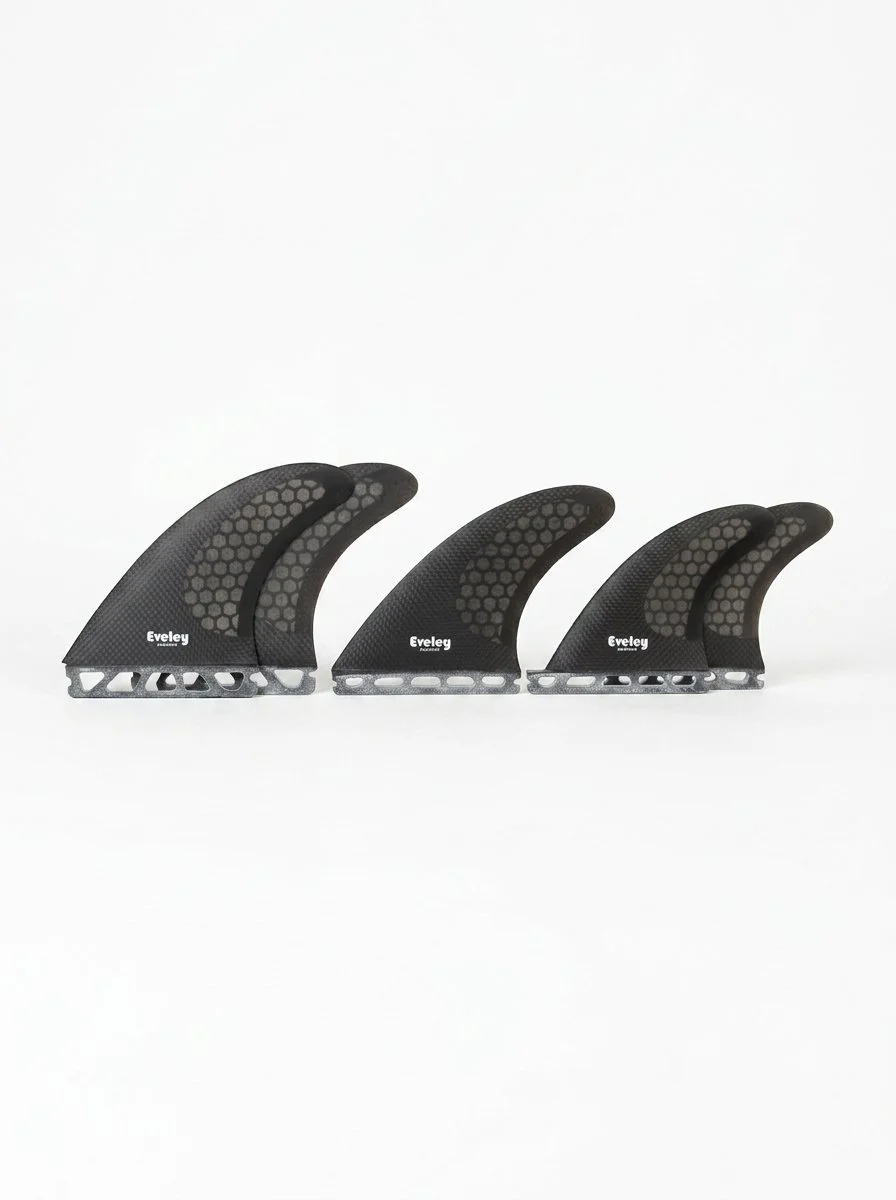
Choosing the right surfboard fins is one of the most important — and most misunderstood — decisions in surfing.
Board shape matters. Waves matter. Skill level matters.
But fins are the final control system that determines how your board actually feels under your feet.
This guide is the master entry point to the Eveley Authority Series.
If you read only one article about fins, this is the one.
By the end, you’ll know:
How fin setups change performance
Which configuration suits your board and waves
How size, template, and material affect feel
The simplest way to choose the correct fins every time
New to surfboard fins? Start with the complete Surfboard Fin Guides overview.
Comfortable gear makes a big difference to how you surf. Lightweight board shorts help you move freely and dry quickly between sessions.
See Tropical Print Board Shorts – Lightweight Surf & Swim Wear for a comfortable surf-ready option designed for warm-water sessions.
Why Surfboard Fins Matter More Than Most Surfers Think
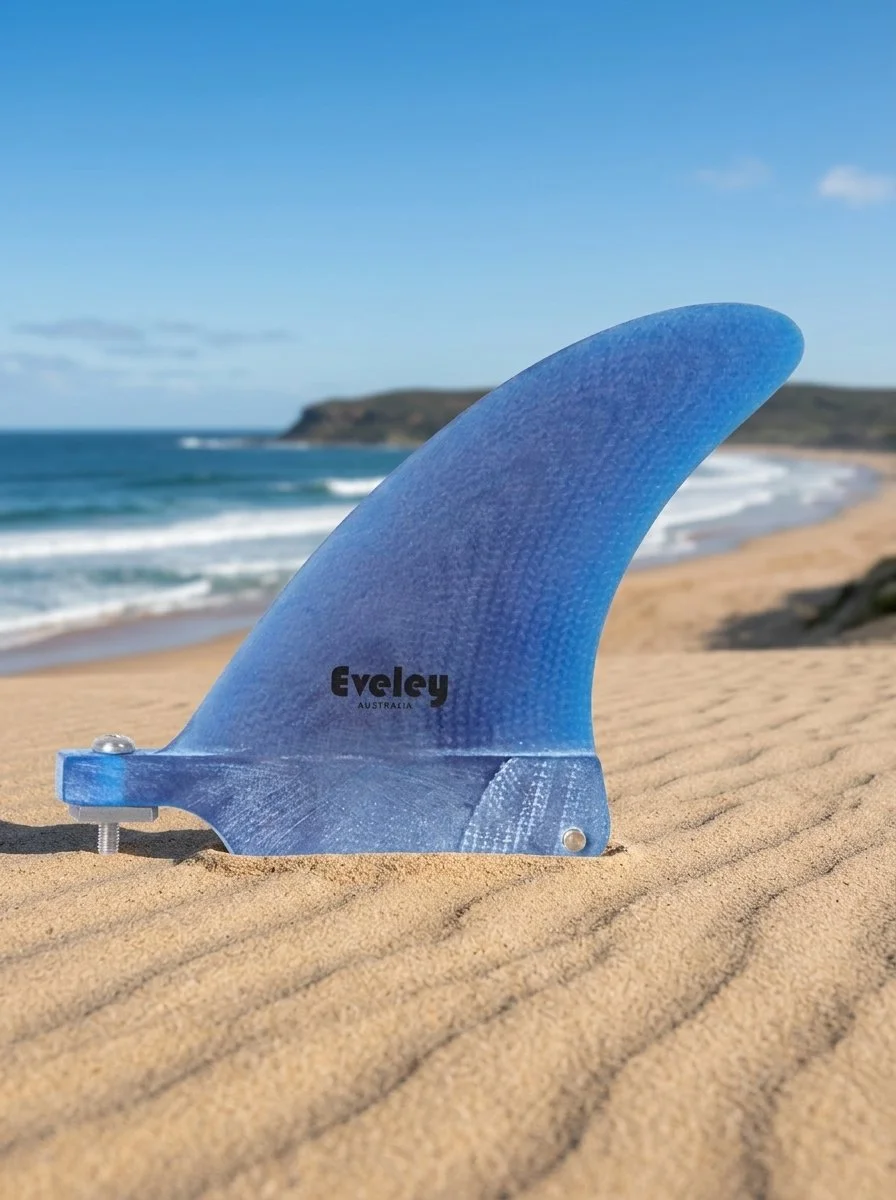
Modern surfboards are designed assuming the correct fins are installed.
Without the right fins, even a perfectly shaped board will feel:
Slow to accelerate
Hard to turn
Unstable at speed
Dead through flat sections
Fins control three core performance elements:
1. Drive
How efficiently the board converts pressure into forward speed.
2. Hold
How securely the rail stays engaged during turns and at speed.
3. Release
How easily the tail breaks free for direction change or manoeuvres.
Every fin setup is simply a different balance of these three forces.
The Five Core Surfboard Fin Setups
Understanding fin setups starts with recognising the five dominant configurations used in modern surfing.
Single Fin
One centre fin only
Smooth, flowing turns
Maximum trim speed
Minimal pivot and release
Best for: longboards, mid-length cruisers, clean waves.
Twin Fin
Two side fins, no center stabiliser
Fast, loose, skate-like feel
Easy acceleration
Reduced hold in steep surf
Best for: fish shapes, playful waves, stylish surfing.
Thruster (Three Fin)
Two side fins + centre fin
Balanced drive, control, and release
Most predictable turning behaviour
Best for: performance shortboards and everyday conditions.
This is the world’s most widely used setup.
Quad
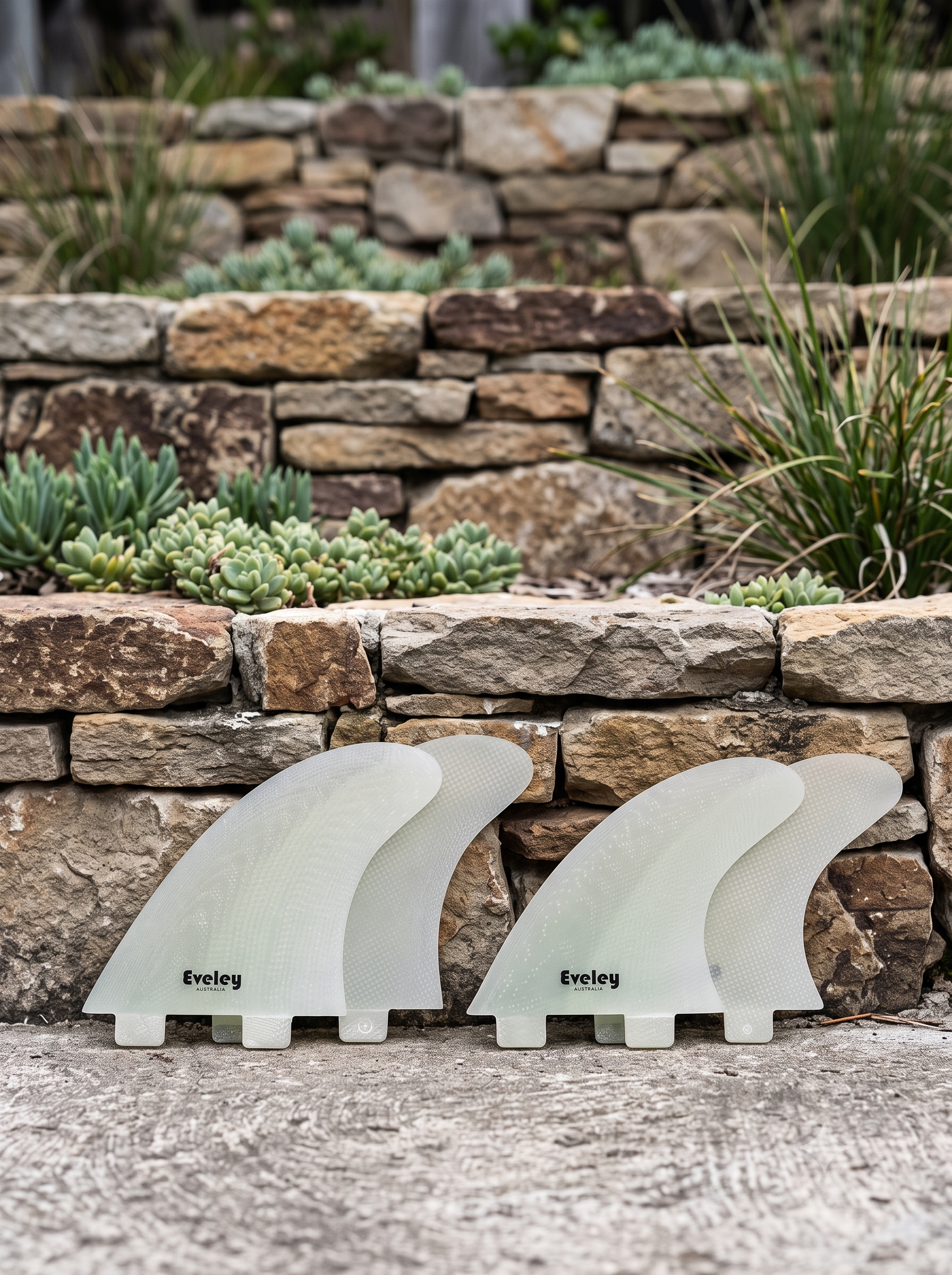
Four fins, no center fin
Fast down the line
Strong hold in powerful surf
Reduced pivot compared to thruster
Best for: hollow waves, speed generation, modern hybrids.
2 + 1

Longboard centre fin + small side fins
Blend of trim stability and turning control
Best for: performance longboarding and variable conditions.
The Simplest Way to Choose the Right Fin Setup
Most surfers overcomplicate fin choice.
In reality, the decision can be reduced to three quick questions.
1. What board are you riding?
Longboard → Single or 2 + 1
Fish → Twin or quad
Shortboard → Thruster or quad
Mid-length → Single, twin, or 2 + 1 depending on style
2. What waves are you surfing?
Small and weak → Twin or quad for speed
Average beach break → Thruster for balance
Powerful or hollow → Quad for hold and drive
Clean point waves → Single fin for flow
3. What style do you want?
Smooth and classic → Single
Fast and loose → Twin
Controlled performance → Thruster
Speed and projection → Quad
Answer those three questions and you’re 90% of the way there.
Fin Size: The Most Overlooked Performance Factor
Even with the correct setup, wrong fin size ruins performance.
General sizing rule
Light surfers → Smaller fins
Medium surfers → Medium fins
Heavy surfers → Larger fins
But weight is only part of the equation.
Also consider:
Board width and volume
Wave power
Desired turning radius
Too small: slides, lack of drive
Too large: stiff, hard to turn
Correct size = controlled speed with responsive turning.
Fin Template: How Shape Changes Feel
Template refers to the outline and rake of the fin.
Upright template
Tighter turning radius
Faster direction change
Ideal for small waves
Raked template
Longer drawn-out turns
More hold at speed
Better for powerful surf
Wide base template
Strong acceleration
Extra drive in weak waves
Template is where fine-tuning performance really happens.
Fin Material: Flex, Response, and Durability
Material determines how the fin loads and releases energy.
Fibreglass / Pro Glass
Predictable flex
Strong drive
Durable
Preferred by experienced surfers
Composite / plastic blends
Lighter
More forgiving
Lower cost
Good for beginners
For real performance surfing, solid fibreglass remains the benchmark.
Common Fin Selection Mistakes
1. Using the fins that came with the board
Stock fins are generic, not optimised.
2. Choosing based on looks
Template and size matter far more than colour.
3. Ignoring wave type
The same board often needs different fins for different days.
4. Oversizing for “more hold”
This usually creates stiffness, not control.
After choosing your fin setup, the next step is confirming compatibility. See the Futures Compatible Fins Explained guide to make sure your fins will fit correctly.
Quick Reference: Best All-Round Choices
If you just want the safest performance option:
Shortboard: medium thruster
Fish: medium twin or quad
Longboard: 2 + 1 with 7–9" centre fin
Step-up waves: performance quad
These combinations work in the widest range of real-world conditions.
How to Progress Your Fin Knowledge
This master guide connects to the full Eveley Authority Series:
Next articles explore:
Each guide builds on the principles explained here.
Final Thoughts
Choosing surfboard fins isn’t about hype or branding.
It’s about matching equipment to waves, board, and style.
Remember the core rule:
Right setup → right size → right template → right material
Get those four elements correct and your board will feel
faster, smoother, and more responsive immediately.
That’s the real power of choosing the right surfboard fins.
Click here to shop The Eveley Fin Range
Futures™ is a registered trademark of Futures Fins. Eveley Surf is not affiliated with or endorsed by Futures Fins. All compatibility references to Futures Fins are for descriptive purposes only.
FCS™ and FCSII™ are registered trademarks of Surf Hardware International Pty Ltd. Eveley Surf is not affiliated with or endorsed by Surf Hardware International Pty Ltd. All compatibility references to FCS and FCSII are for descriptive purposes only.