
Longboard Fin Placement Explained — How Moving Your Fin Changes Everything
New to surfboard fins? Start with the complete Surfboard Fin Guides overview.
Longboard surfers often focus on fin size and template, yet fin placement inside the sliding center fin box can produce changes just as significant as switching fins entirely.
A movement of only a few millimetres can alter:
turning radius
trim speed
noseride stability
overall board control
Understanding how placement affects performance allows surfers to fine-tune feel in real wave conditions without buying new equipment.
This guide explains exactly what happens when you move your longboard fin forward or back—and how to find the ideal position for your board, waves, and surfing style.
Why Fin Placement Matters So Much on Longboards
Unlike shortboards, longboards rely heavily on directional stability and rail engagement to generate speed and maintain control.
Because the center fin acts as the board’s primary tracking and pivot point, shifting its position changes:
how easily the board turns
how firmly it holds trim
how stable it feels during noseriding
Think of fin placement as the balance control between glide and manoeuvrability.
Moving the Fin Back — Stability, Hold, and Noseride Control
Positioning the fin toward the tail increases the distance between the pivot point and the surfer’s stance.
This produces a noticeably different feel in the water.
Performance effects of a rearward position
Greater directional stability in trim
Stronger hold during noserides
Smoother, more drawn-out turns
Increased sense of control in steeper sections
Because the board resists quick rotation, it feels:
secure, predictable, and traditionally “locked in.”
When to move the fin back
Rearward placement works best for:
traditional logs and noseriders
clean point waves
surfers prioritising trim and flow
cross-stepping and tip time
This is the classic longboard feel many surfers seek.
Moving the Fin Forward — Looseness, Speed, and Turning Freedom
Sliding the fin toward the nose shortens the turning radius and reduces drag behind the tail.
Even small adjustments create a noticeably looser response.
Performance effects of a forward position
Faster rail-to-rail transitions
Tighter turning arcs
Increased acceleration out of turns
Reduced noseride hold and trim stability
The board begins to feel:
livelier, quicker, and more performance-oriented.
When to move the fin forward
Forward placement suits:
performance longboards
steeper beach breaks
surfers using top turns and cutbacks
smaller center fins or 2+1 setups
This adjustment helps longboards behave more like larger shortboards.
How Much Movement Makes a Difference?
One of the most surprising realities of longboard tuning is:
very small changes matter.
Practical guideline
Adjust in 5–10 mm increments only
Test each position for multiple waves
Avoid large jumps that hide the ideal balance point
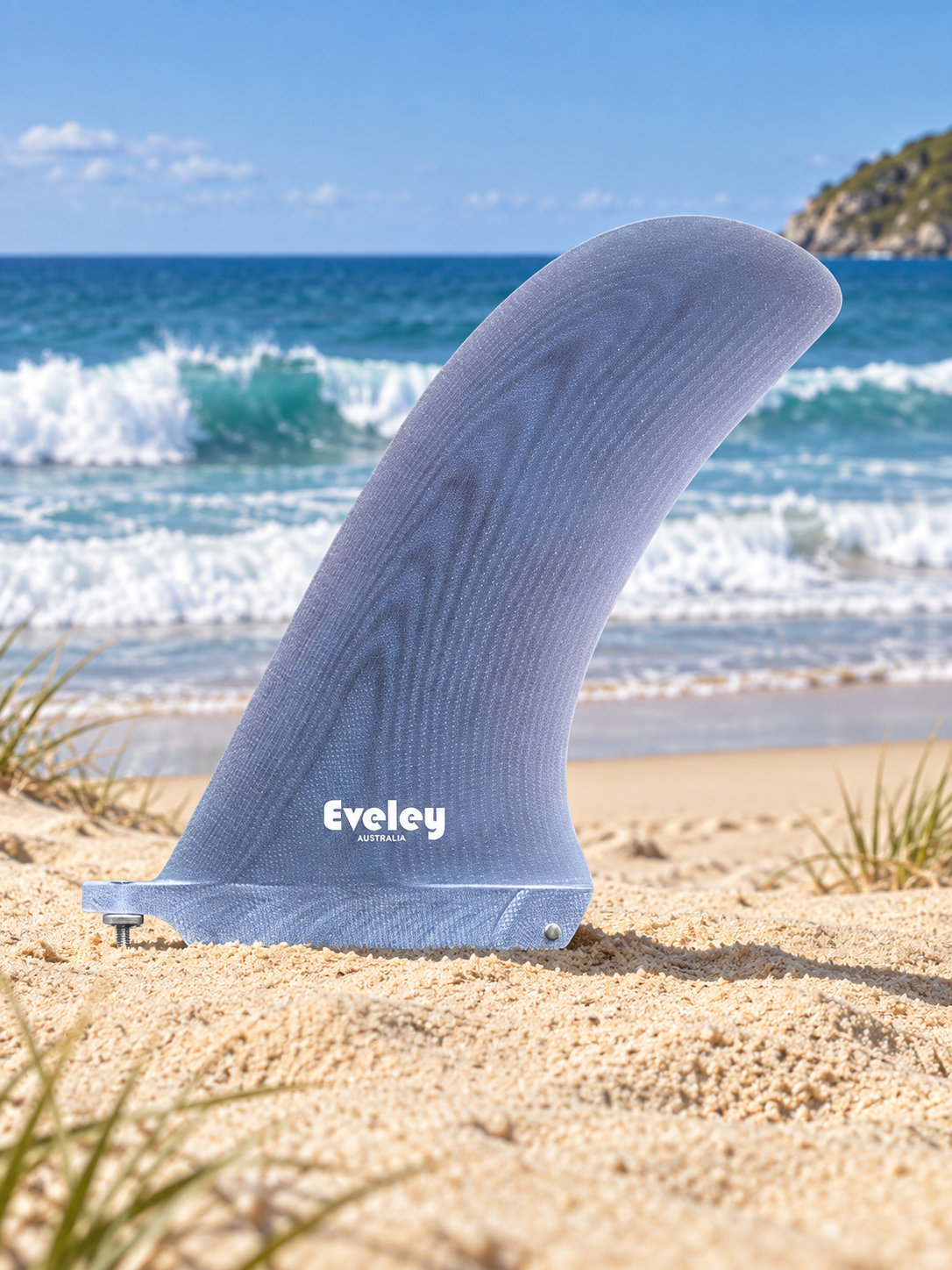
Because water flow changes subtly, patience reveals the best setting.
Matching Placement to Fin Size
Fin placement and fin size always work together, not separately.
Large center fins
Usually perform best slightly back
Maintain hold and trim control
Prevent excessive stiffness
Smaller performance fins
Often benefit from slightly forward placement
Restore manoeuvrability
Improve responsiveness in turns
Balancing size + position creates the correct overall feel.
Placement Differences in Single Fin vs 2+1 Setups
Single fin longboards
Placement is the primary tuning method, affecting:
noseride control
turning freedom
trim speed
Small changes are very noticeable.
2+1 longboards
Side fins already add:
grip
drive
turning response
So the center fin placement becomes a fine-tuning control rather than the only adjustment.
Wave Conditions and Ideal Fin Position
Small, soft waves
Better with the fin slightly back to:
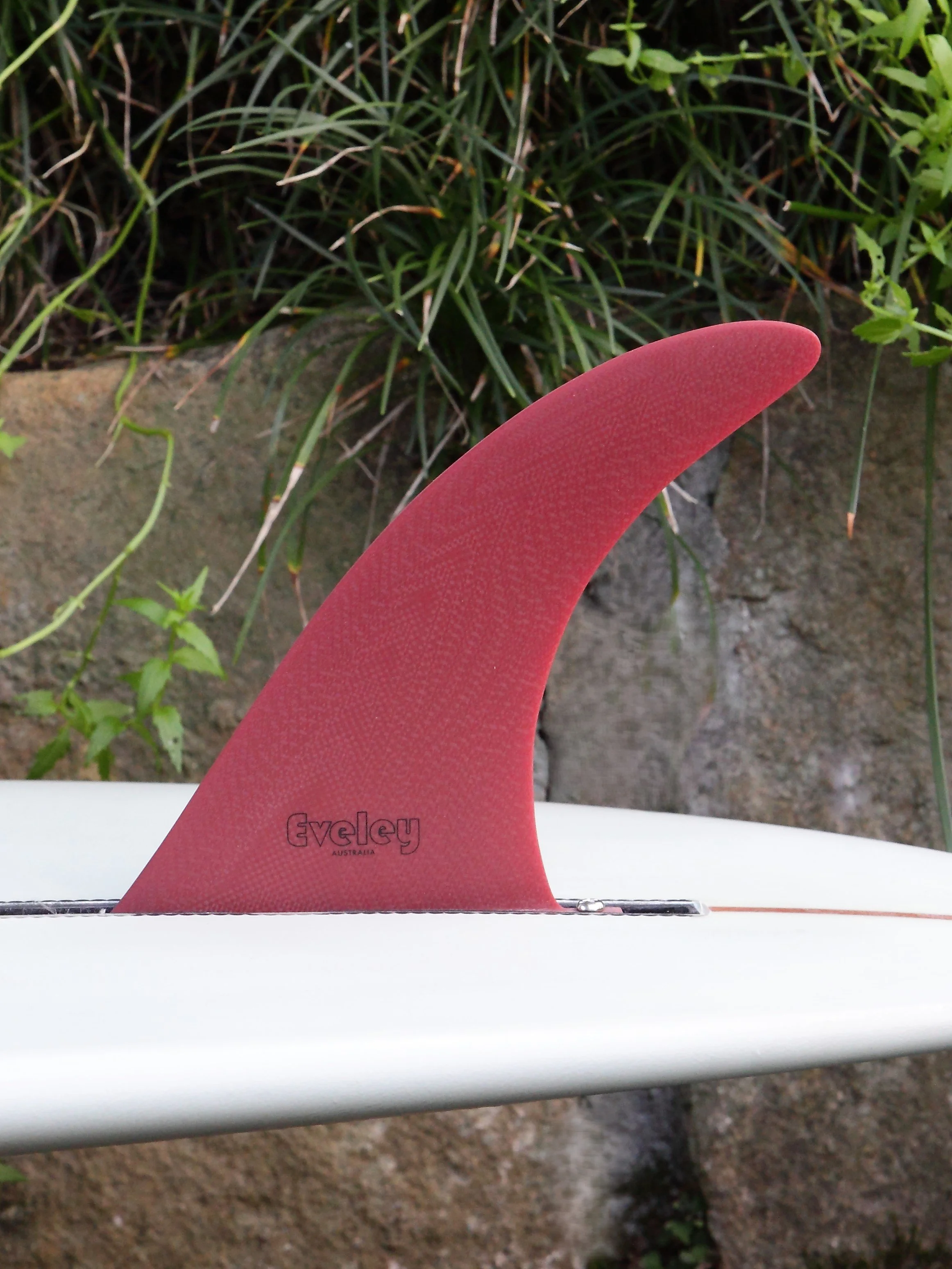
maintain trim speed
improve glide
stabilise weak-energy surfing
Clean point waves
Best near the middle to slightly back, offering:
balanced turning
reliable noseride hold
smooth rail flow
Steep or powerful surf
Often improved by moving the fin slightly forward to:
tighten turning radius
reduce drag on take-off
increase control in critical sections
Wave energy should always guide final placement.
Common Fin Placement Mistakes
Leaving the fin in the factory middle position forever
Many surfers never experiment, missing:
major performance gains
better noseriding
improved turning feel
Moving the fin too far at once
Large adjustments make it impossible to feel:
subtle balance points
true board response
Ignoring placement when changing fin size
Every new fin should be re-tuned in the box for best performance.
Why Fiberglass Flex Still Matters
Regardless of placement, solid fiberglass (Pro Glass) construction ensures:
predictable flex through turns
consistent response at different speeds
long-term durability in real surf
This stability makes placement adjustments clear and meaningful, rather than vague or inconsistent.
Recommended Eveley Fins for This Setup
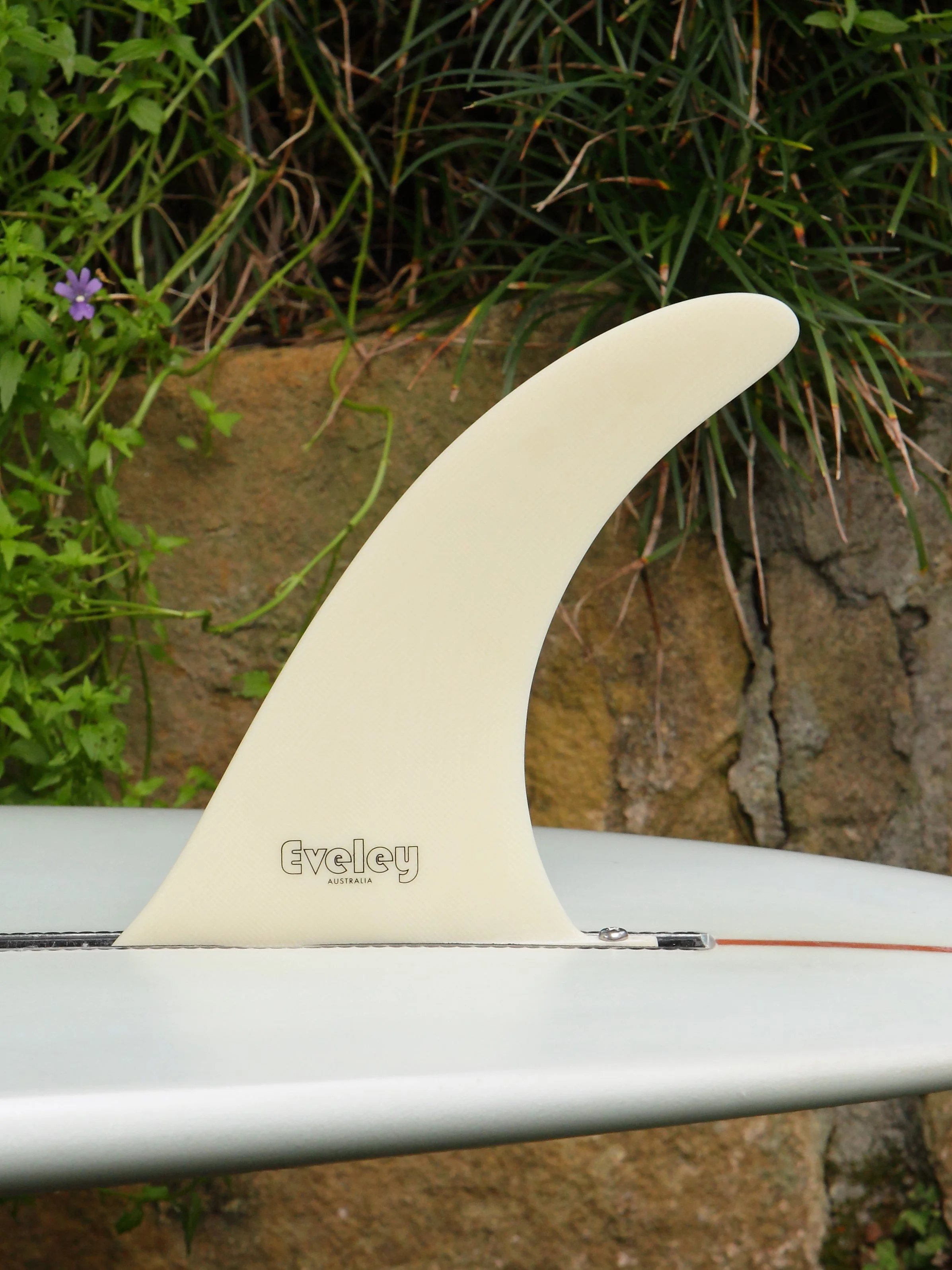
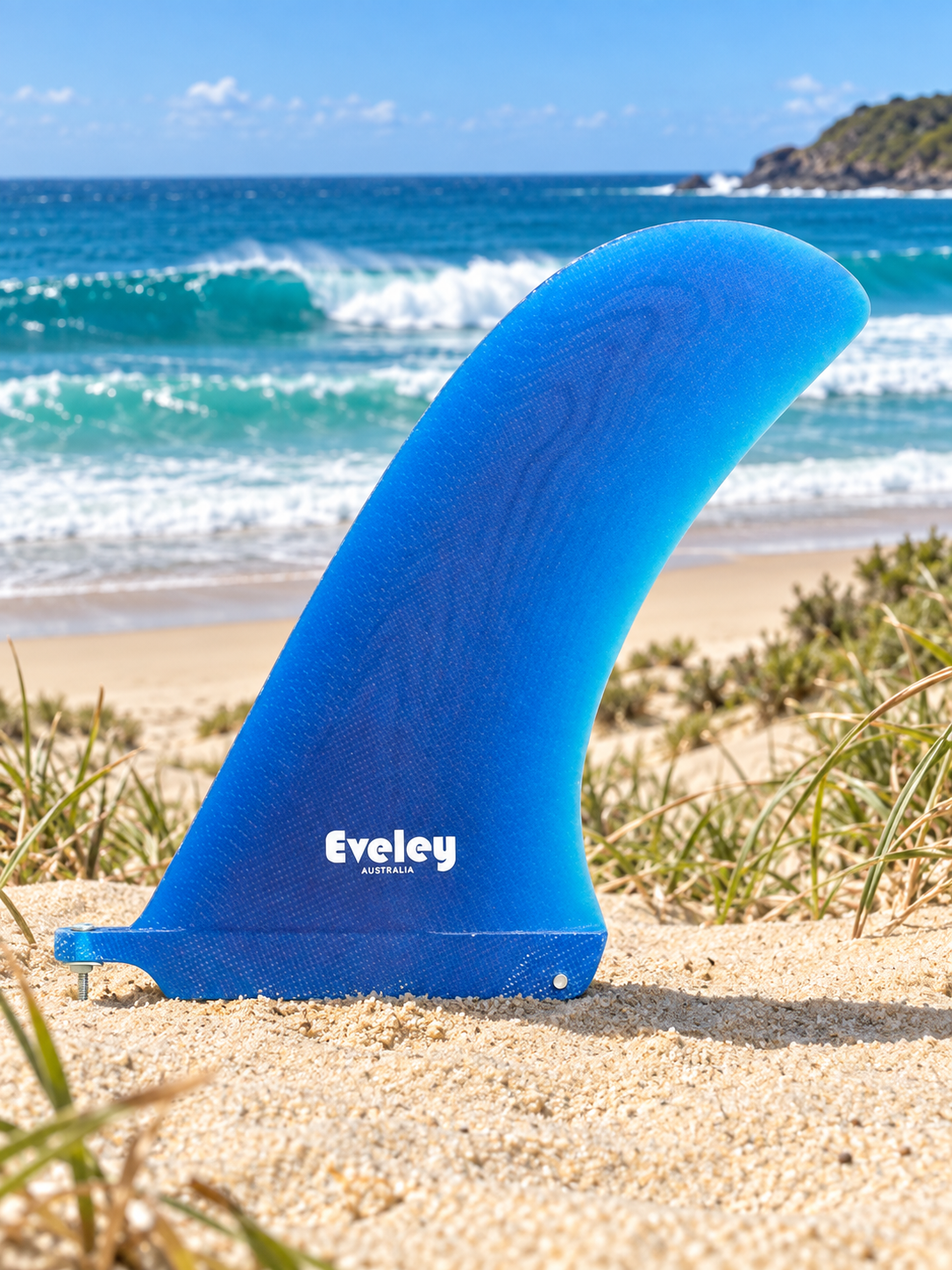
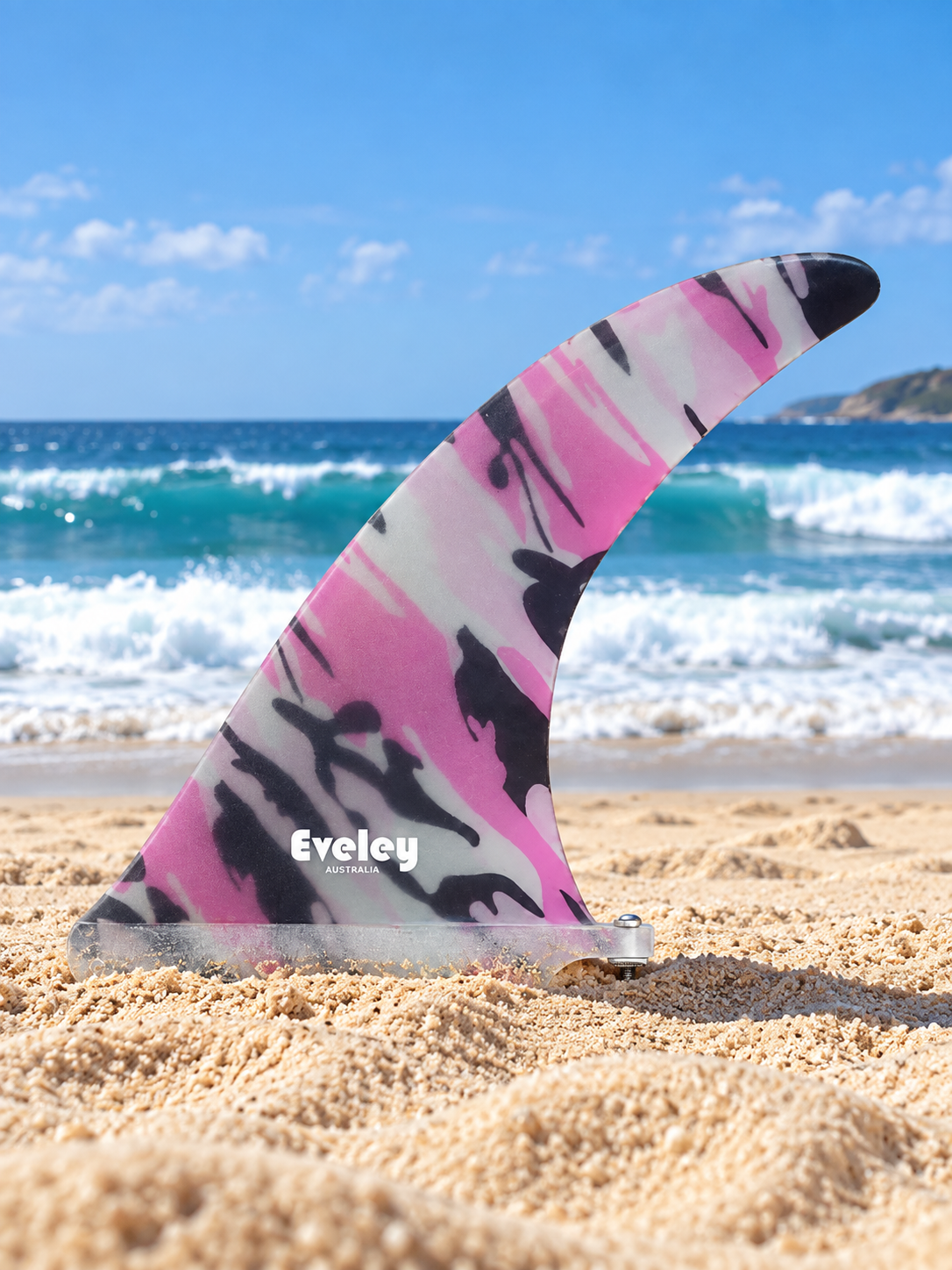
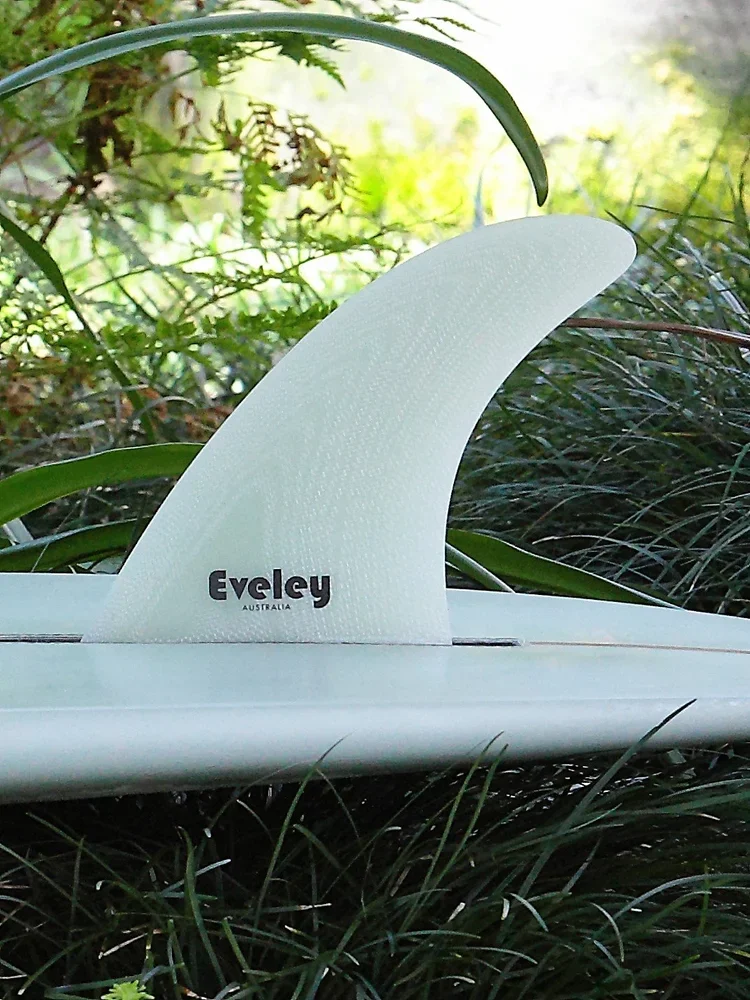
The following Eveley fin templates match the performance characteristics discussed in this guide. Each option is built from solid Pro Glass for consistent flex, durability, and real-world surf reliability.
10" California Dreaming Center Fin
Classic swept template designed for trim speed, glide, and stable noseriding.
→ Shop 10" California Dreaming Center Fin
9" International 4A Center Fin
Balanced all-round template blending smooth turning with dependable hold.
→ Shop 9" International 4A Center Fin
7.2" Flow Flex Center Fin
Responsive performance template enabling tighter turns and quicker release.
→ Shop 7.2" Flow Flex Center Fin
Explore the full Eveley fin range to fine-tune your board’s feel, speed, and control across different wave conditions.
Frequently Asked Questions
How far should a longboard fin be from the tail?
Most surfers begin near the middle of the box, then adjust forward or back in small increments to match feel and wave type.
Does fin placement affect noseriding?
Yes.
Moving the fin backward increases hold and stability, making noseriding noticeably easier.
Can fin placement replace changing fin size?
Sometimes.
Small placement adjustments can mimic larger or smaller fin behaviour, making it the first tuning step before buying a new fin.
Conclusion
Longboard fin placement is one of the most powerful yet overlooked tuning tools in surfing.
Moving the fin back increases stability, glide, and noseride control
Moving it forward unlocks speed, looseness, and tighter turning
Small adjustments reveal the true balance point of the board
By learning to fine-tune placement—combined with the right fin size and fiberglass construction—surfers can transform longboard performance without changing boards.
Mastering this simple adjustment leads to:
greater control, smoother flow, and more responsive surfing in every wave condition.