
Thruster Fin Size Guide — How to Choose the Right Size for Maximum Performance
New to surfboard fins? Start with the complete Surfboard Fin Guides overview.
Fin size is the single biggest factor in how your thruster setup feels.
Too small? The board slides and lacks drive.
Too big? It feels stiff and slow to release.
If your board has ever felt “almost right” but not perfect, fin size is usually the reason.
This guide explains exactly how to choose the correct thruster fin size based on weight, board type, and wave conditions.
Why Thruster Fin Size Matters More Than Template
Template changes how a board turns.
Size changes how it performs.
Fin height and surface area control:
Hold
Drive
Speed through turns
Release
Stability at speed
The wrong size creates constant micro-adjustments in your surfing.
The right size disappears beneath you.
Thruster Fin Size by Surfer Weight
Your body weight is the starting point.
Here’s the proven sizing range for front thruster fins:
Under 55 kg: 4.25" – 4.5"
55–70 kg: 4.5" – 4.7"
70–85 kg: 4.7" – 5.0"
85–100 kg: 5.0" – 5.3"
100 kg+: 5.3" – 5.6"+
Heavier surfers require more surface area to control rail pressure and generate drive.
Lighter surfers need less fin to keep the board responsive.
Larger surfers often benefit from Big Boy thruster fins
What Happens If Your Thruster Fins Are Too Small?
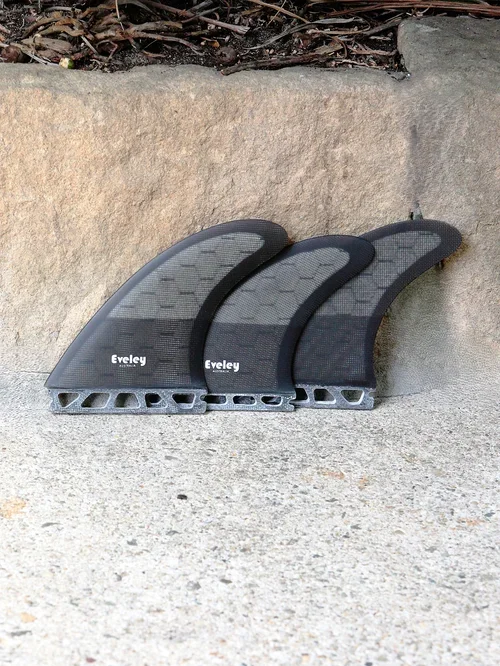
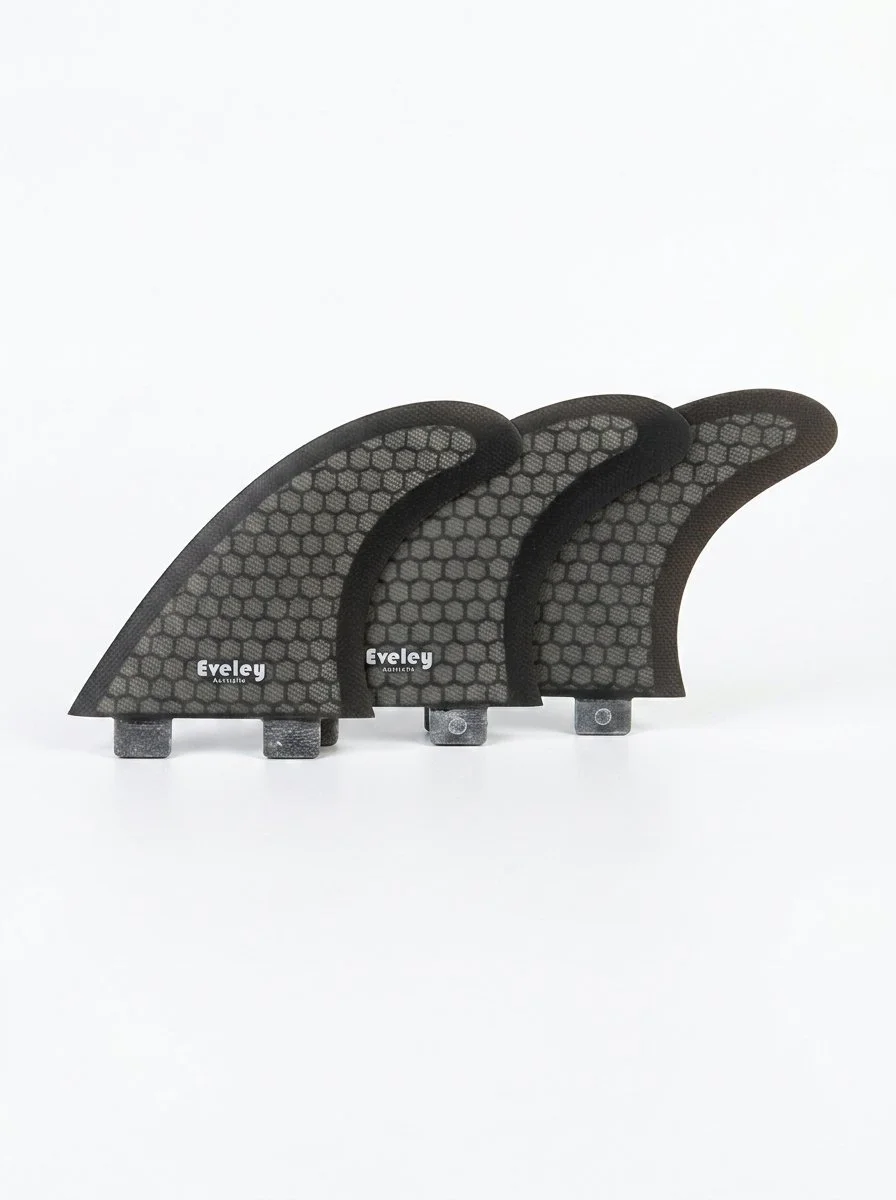
4.75" AM2 Thruster Fins – Futures compatible carbon fiber TekFlex (3 fins)
Tail slides unpredictably
Loss of drive out of bottom turns
Board feels skatey at speed
Hard to control in overhead surf
Small fins can feel fun in weak waves — but unstable in power.
What Happens If Your Thruster Fins Are Too Large?
Slower rail-to-rail transitions
Harder to release off the top
Reduced responsiveness
Board feels stiff in small surf
Oversized fins kill flow.
The board will feel secure — but not alive.
Thruster Fin Size vs Wave Conditions
Size isn’t only about weight.
Wave power matters.
Small, Weak Waves
You can size down slightly.
Less drag
Faster release
Looser feel
Overhead or Powerful Waves
Stay true to weight range or slightly size up.
Increased hold
Better control at speed
Stronger bottom turn drive
Thruster Center Fin — Should It Match the Sides?
In a standard thruster:
Side fins are the primary drivers
The center fin adds control and pivot
Most thruster sets use equal sizing.
But some performance setups use:
Slightly smaller center fin for extra release
Slightly larger center fin for added hold
Advanced surfers experiment here.
Beginners should stick to balanced sets.
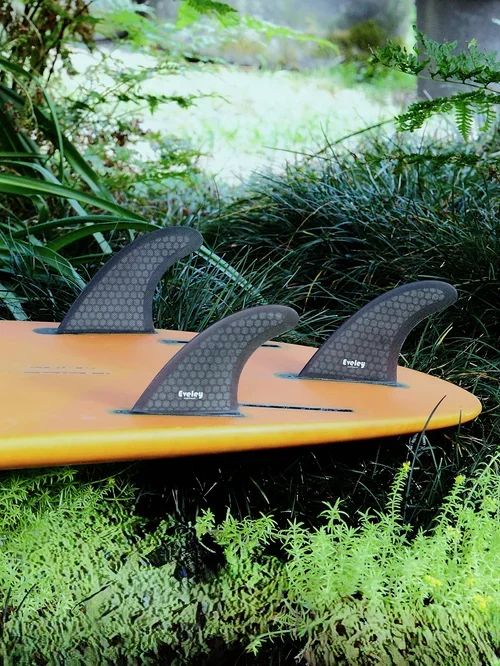
4.5" Progressive Thruster Fins – Black Pro Glass | FCSII Compatible Set
Performance vs Everyday Thruster Sizes
You can think of thruster sizing in three categories:
Performance (Smaller Range)
Faster release
Looser feel
Better for progressive surfing
Balanced (Middle of Range)
Everyday surf
Most versatile option
Recommended for most surfers
Control (Upper End of Range)
Powerful waves
Heavier surfers
Maximum hold and drive
Thruster Fin Height vs Base — What Matters More?
Height influences:
Hold
Rail engagement
Stability
Base length influences:
Drive
Acceleration
Projection
Two fins can share the same height but feel completely different due to base width.
That’s why total surface area is the true measurement — but height is the easiest sizing reference.
The Most Common Thruster Sizing Mistake
Most surfers buy fins based on:
Brand
Template name
What pros use
They ignore size.
The result?
A mismatch between body weight and fin surface area.
Correct size first.
Template second.
Make sure your fins match your board's system. See the Futures-compatible fins guide for compatibility details.
Quick Thruster Fin Size Checklist
Ask yourself:
Does my board feel stiff? → Consider sizing down.
Does my tail slide unexpectedly? → Consider sizing up.
Do I struggle in overhead waves? → You may need more surface area.
Do turns feel forced instead of flowing? → Check fin size before blaming the board.
Thruster Fin Size for Different Board Types
High-Performance Shortboards
Stay accurate to weight range.
Hybrid / Grovellers
You can often size slightly down for speed.
Step-Ups
Size true or slightly up for control in power.
When to Break the Rules
Advanced surfers sometimes intentionally:
Run undersized fins for looseness
Oversize for powerful reef waves
Mix templates while keeping size consistent
But if you’re unsure — stay in your weight bracket.
Final Verdict: Start With Size, Not Hype
Thruster fin size determines:
How much power you can generate
How confidently you can commit
How easily your board releases
If you want a measurable performance improvement, check your fin height first.
It’s the simplest upgrade most surfers overlook.
Frequently Asked Questions
Does fin size affect speed?
Yes. Too large increases drag. Too small reduces drive. Correct sizing maximises usable speed.
Should beginners use larger fins?
Generally yes — slightly more surface area improves stability.
Can I mix different sized side fins?
Not recommended unless experimenting at an advanced level.
Does fin size matter more than material?
Yes. Size determines performance category. Material fine-tunes feel.
For larger surfers see Big Boy Thruster Fins Guide
Summary
Thruster fin size should match surfer weight, wave power, and board type. Most surfers fall within 4.5"–5.3" front fin height. Correct sizing improves drive, hold, and responsiveness while preventing stiffness or instability.
New to surfboard fins? Start with the Beginner’s Guide to Surfboard Fins – Types, Sizes & Setups Explained for a simple introduction to fin types and sizing.
Futures™ is a registered trademark of Futures Fins. Eveley Surf is not affiliated with or endorsed by Futures Fins. All compatibility references to Futures Fins are for descriptive purposes only.
FCS™ and FCSII™ are registered trademarks of Surf Hardware International Pty Ltd. Eveley Surf is not affiliated with or endorsed by Surf Hardware International Pty Ltd. All compatibility references to FCS and FCSII are for descriptive purposes only.