
The Right Fin for Your Board in Australia
See the Beginner’s Guide to Surfboard Fins as a starting point.
If you're unsure what size fins your surfboard needs, our Surfboard Fin Guides explains how fin size affects speed, control and turning performance.
Choosing the correct surfboard fin size is the single biggest factor affecting how your board performs in real surf.
More than template shape, rake, or construction — fin size determines hold, drive, looseness, and overall control.
How to Choose the Right Fin Size
Why Fin Size Matters More Than You Think
Surfboard fins create lift, resistance, and directional stability.
Too small, and the board feels skittish, slide-prone, and under-powered.
Too large, and it feels stiff, slow to turn, and difficult to release.
Correct sizing produces the balance every surfer wants:
Predictable hold in turns
Efficient drive through the bottom turn
Clean release off the top
Stable speed control in steeper waves
Because of this, fin size is the foundation decision before considering templates or materials.
The Three Measurements That Define Fin Size
1. Base Length
The base is the bottom edge of the fin where it meets the board.
Longer base → more drive and acceleration
Shorter base → quicker pivot and looseness
Drive-oriented surfing (carves, drawn-out turns) benefits from longer bases.
2. Height (Depth)
Height controls hold and control in the wave face.
Taller fins → stronger hold, better in powerful waves
Shorter fins → looser feel, easier release
Heavier surfers and steeper waves usually require greater height.
3. Surface Area
Surface area combines base and height into a single measure of overall resistance.
Larger area → stability and projection
Smaller area → speed and freedom
Most fin size charts are effectively surface-area charts matched to rider weight.
The Core Rule: Match Fin Size to Rider Weight
Across nearly all fin systems, sizing follows the same principle:
Surfers under 55 kg usually ride extra small fins. Riders between 55–70 kg generally suit small fins, while 70–85 kg riders typically use medium fins. Surfers weighing 85–100 kg usually prefer large fins, and riders over 100 kg generally suit extra large fins.
Why weight matters:
Heavier surfers apply more force through turns and need greater fin area for control and hold.
If you are between sizes:
Choose smaller for looseness and small waves
Choose larger for power, control, and bigger surf
Board Type Changes the Equation
Fin size is not chosen in isolation.
Board volume, length, and intended surfing style all influence the correct size.
Shortboards
Performance shortboards rely heavily on fins for control.
Most surfers ride Medium or Large thrusters
Undersizing makes the board slide out under pressure
Oversizing makes it track and feel stiff
Rule: Stay close to your weight-based size.
Fish & Twin Fins
Fish and twins generate speed from planing surface, not just fins.
Twins typically run larger individual fins
Total surface area is still balanced to rider weight
Common mistake:
Choosing twins that are too small, causing uncontrolled slide.
Quad Setups
Quads distribute hold across four smaller fins.
Rear fins fine-tune release vs control
Heavier surfers often need larger fronts, not just larger rears
Example: 5.2" / 4.35" Big Boy Quad Fins – Black Pro Glass | Futures Compatible (Set of 4)
Longboards
Longboard fin sizing is based more on board length than rider weight.
General rule:
Fin height (inches) ≈ board length (feet) + 1
Examples:
9'0" board → ~10" center fin
8'0" board → ~9" fin
Heavier surfers or noseriders may go larger for hold.
Wave Type Also Affects Fin Size
Small, weak waves
Smaller fins help create:
Faster release
Easier speed generation
Looser turning radius
Many surfers drop one size down in weak surf.
Medium everyday surf
Use your standard weight-matched size.
This provides the best all-round balance.
Powerful or hollow waves
Larger fins improve:
Hold at speed
Control in steep faces
Confidence under pressure
Serious surf almost always rewards slightly larger fins.
Thruster vs Quad vs Twin — Size Differences
Thruster
Most predictable sizing.
Follow weight chart closely.
If you need more drive consider Big Boy Thruster Fins Guide
Quad
Front fins usually match thruster size.
Rear fins are smaller stabilisers.
Changing rear size is a key tuning tool:
Smaller rears → looser, faster
Larger rears → more hold and drive
Twin
Twins require substantially larger individual fins because there is no center fin.
This is why twin fins often feel:
Fast
Skatey
Sensitive to size changes
For more control add a stabilizer fin like the 3.5" Classic Stabilizer Finor 1.5" Mini Center Stabilizer Fin – Black Pro Glass | Futures Compatible

Common Fin Size Mistakes
Riding fins that are too small
Symptoms:
Sliding in bottom turns
No projection out of turns
Loss of confidence in steeper waves
Most common beginner error.
Oversizing for small waves
Symptoms:
Board feels sticky
Hard to generate speed
Slow rail-to-rail response
Ignoring rear-fin size in quads
Rear fins dramatically affect feel.
Small adjustments make large performance differences.
How to Dial In the Perfect Size
Follow this simple three-step method:
Step 1 — Start with rider-weight size
Use the standard chart as your baseline.
Step 2 — Adjust for board style
High-performance shortboard → stay true to size
Fish or twin → ensure adequate surface area
Longboard → match board length rule
Step 3 — Tune for conditions
Small waves → size down
Big or hollow waves → size up
After a few sessions, your ideal range becomes obvious.
Expert Tip: Is Using One Fin Size Normal?
Most experienced surfers don’t use just one fin size.
They rotate between two neighbouring sizes depending on conditions.
Example:
Medium for everyday surf
Large for powerful waves
This small change can transform board performance.
Surfboard Fin Setup Guides
How Small Stabiliser Fins Change Surfboard Performance | Twin vs Twin + Trailer Surfboard Fins Guide
Frequently Asked Questions
Does fin size affect speed?
Yes.
Too large slows release; toosmall loses drive.
Correct size provides maximum usable speed.
Should beginners use bigger fins?
Usually yes.
Slightly larger fins increase stability and control, accelerating progression.
Can fin size fix a bad board?
Not completely — but correct sizing can dramatically improve feel and usability.

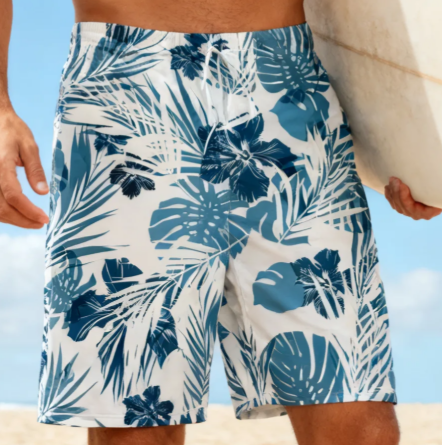
Having the right fins improves performance, but comfort matters too. Lightweight surf clothing helps you stay relaxed and move naturally in the water.
See Tropical Print Board Shorts – Lightweight Surf & Swim Wear for lightweight quick-drying surf shorts.
Summary
Choosing the correct surfboard fin size is primarily determined by rider weight, then refined by board type and wave conditions.
Proper sizing delivers the essential balance of drive, hold, release, and control that defines real-world surf performance.
Most surfers benefit from owning two adjacent fin sizes to adapt across conditions.
Looking for high-performance fiberglass fins?
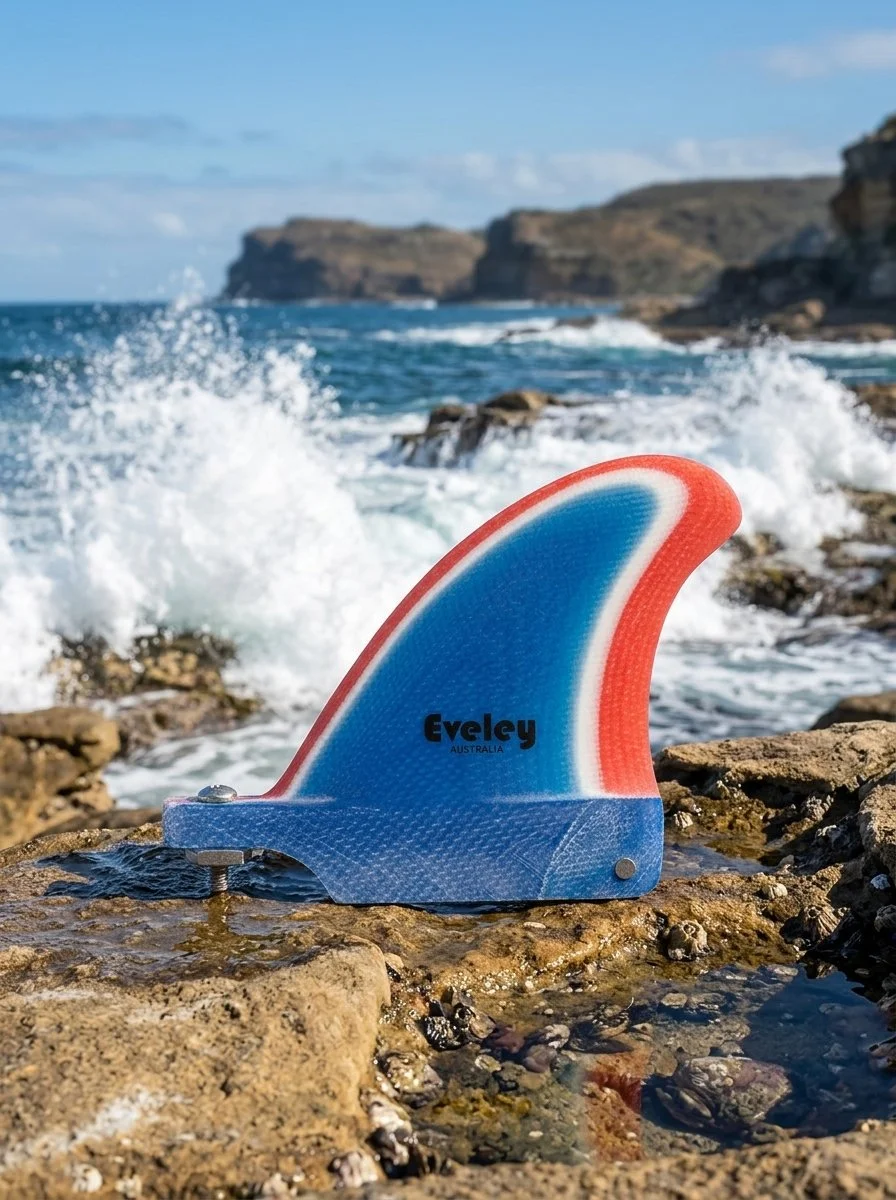
Browse the Eveley Surfboard Fin Collection, including thruster, twin and longboard fin setups designed for Australian surf conditions.
Futures™ is a registered trademark of Futures Fins. Eveley Surf is not affiliated with or endorsed by Futures Fins. All compatibility references to Futures Fins are for descriptive purposes only.
FCS™ and FCSII™ are registered trademarks of Surf Hardware International Pty Ltd. Eveley Surf is not affiliated with or endorsed by Surf Hardware International Pty Ltd. All compatibility references to FCS and FCSII are for descriptive purposes only.