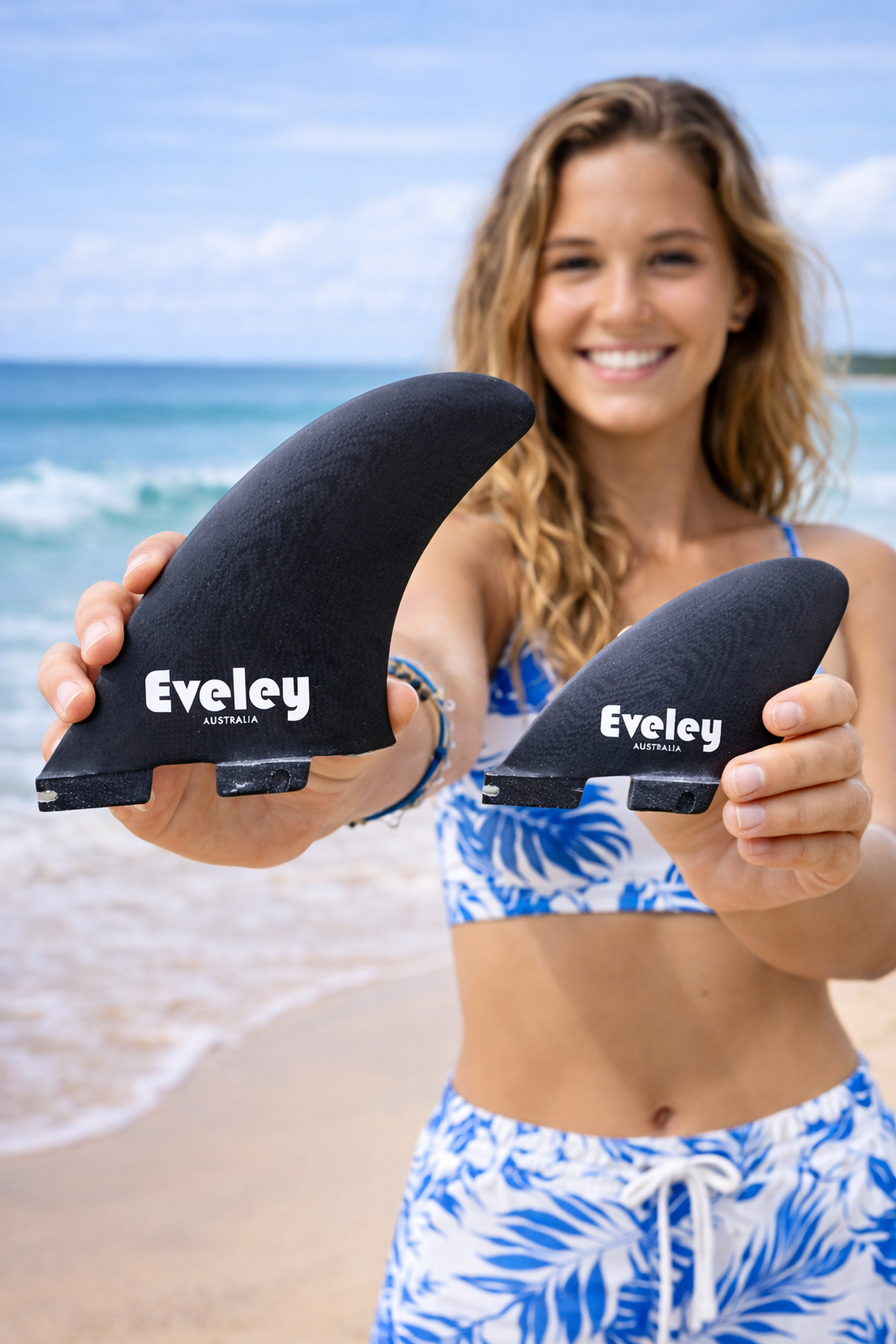
Quad vs Thruster — Which Fin Setup Is Faster?
New to surfboard fins? Start with the complete Surfboard Fin Guides overview.
The real-world speed, control, and feel differences between quad and thruster surfboard fins
The debate between quad vs thruster fins has shaped modern surfboard design for decades.
Both setups are proven, both are fast in the right conditions, and both can transform how a board feels under your feet.
But the key question most surfers ask is simple:
Which fin setup is actually faster — quad or thruster?
The honest answer is nuanced.
Speed in surfing depends on drag, drive, hold, and release, and each fin configuration balances these forces differently.
This guide explains the true performance differences so you can choose the fastest setup for your board, waves, and surfing style.
The Core Design Difference
Thruster (Three Fins)
The thruster uses:
Two side fins for drive and hold
One centre fin for stability and pivot
This creates a balanced, controlled feel that allows powerful vertical surfing and predictable turning.
Key traits:
High control
Strong pivot off the bottom
Reliable hold in steep waves
Slightly increased drag from the centre fin
Quad (Four Fins)
A quad removes the centre fin and replaces it with two rear stabiliser fins near the rails.
This changes water flow dramatically:
Less central drag
More rail-driven speed
Faster down-the-line projection
Key traits:
Higher natural speed
Long, drawn-out drive
Smooth rail-to-rail flow
Reduced pivot tightness
Raw Speed: Which Is Faster?
Straight-line speed → Quad wins
With no centre fin creating drag, quads:
Accelerate faster
Maintain speed through flat sections
Feel naturally quicker in weak waves
This is why quads dominate in:
Small surf
Mushy point breaks
Long running walls
Speed in powerful turns → Thruster can match or exceed
Thrusters generate speed differently:
Compression through the bottom turn
Release and projection through the top turn
In steep, powerful waves, this controlled energy can feel faster than a quad, even if straight-line glide is lower.
Why Quads Feel Faster in Small Waves
Small waves lack push.
Speed must come from reduced drag and efficient planing.
Quads help by:
Eliminating centre-fin resistance
Keeping water flowing cleanly along the rail line
Holding speed across soft sections
Result:
Quads create speed where thrusters may stall.
Why Thrusters Excel in Steep Waves
Steep waves provide natural energy.
Control becomes more important than glide.
Thrusters deliver:
Predictable pivot in the pocket
Strong vertical attack
Controlled release under pressure
This allows surfers to:
Surf tighter arcs
Hit the lip more vertically
Maintain confidence in hollow sections
In these conditions, control equals usable speed.
Turning Style Changes Perceived Speed
Speed is not only physical — it’s how fast surfing feels.
Quad turning feel
Longer rail lines
Smoother, drawn-out carves
Continuous projection
This creates a sensation of effortless glide.
Thruster turning feel
Tighter arcs
Faster direction change
Explosive top turns
This feels more dynamic and aggressive, even if glide speed is lower.
Wave-Type Speed Comparison
Small, weak waves → Quad faster
Best for:
Knee-to-waist-high surf
Soft beach breaks
Long, slow points
Reason:
Low drag maintains momentum.
Everyday chest-to-head-high surf → Close call
Performance depends on:
Board design
Fin size
Surfing approach
Many surfers switch between both setups here.
Powerful or hollow waves → Thruster faster in control
Thrusters allow:
Later drops
Tighter pocket surfing
Faster recovery after turns
This produces functional speed, not just glide.
Fin Placement and Hydrodynamics
Centre fin drag (thruster)
The centre fin:
Adds resistance
Stabilises direction
Enables tight pivot
This slows trim speed slightly but improves manoeuvrability.
Rail-line drive (quad)
Rear quad fins:
Sit closer to rails
Channel water efficiently
Increase projection
This produces continuous acceleration down the line.
Competitive Surfing vs Free Surfing
Competition surfing → Thrusters dominate
Judging rewards:
Vertical turns
Critical pocket surfing
Rapid direction change
Thrusters enable this style best.
Free surfing → Quads increasingly popular
Many surfers prefer:
Speed in weak waves
Flowing carves
Reduced effort generation
Quads suit modern everyday conditions.
Common Myths
“Quads are always faster”
False.
They are faster in trim and weak surf, not always in powerful turns.
“Thrusters are outdated”
False.
They remain the most versatile high-performance setup ever created.
“You must choose one forever”
Also false.
Most experienced surfers use both, depending on conditions.
How to Choose Between Quad and Thruster
Choose a quad if you want:
Maximum down-the-line speed
Better performance in weak surf
Long carving turns
Reduced drag feeling
Choose a thruster if you want:
Tight vertical turns
Control in steep or hollow waves
Predictable all-round performance
Competition-style surfing
Expert Reality: Speed Depends on the Surfer
The fastest setup is the one that lets you maintain momentum.
For example:
Rail-carving surfers often feel faster on quads
Vertical pocket surfers feel faster on thrusters
Technique matters as much as hardware.
The Hybrid Solution: Convertible Boards
Many modern boards allow:
Five-fin setups
Switching between quad and thruster
This flexibility lets surfers:
Tune speed vs control
Adapt to daily conditions
Learn both performance styles
Frequently Asked Questions
Are quads better for beginners?
Often yes in small waves, because added speed helps maintain momentum.
Do thrusters turn sharper?
Yes.
The centre fin enables tighter, more vertical arcs.
Should I own both setups?
For most surfers, yes.
Different waves reward different fin configurations.
Large thruster setups like Big Boy thruster fins.
Popular quads like 4.9" / 3.1" DTR Quad Fins – Black on Natural Pro Glass | FCS II Compatible
Summary
In the quad vs thruster fins comparison, quads generally provide greater straight-line speed and glide, especially in weak surf, due to reduced center-fin drag and enhanced rail drive.
Thrusters, however, deliver superior control, tighter turning, and functional speed in steep or powerful waves, making them the most versatile high-performance setup.
The fastest real-world choice depends on wave energy, board design, and surfing style, which is why many surfers rotate between both configurations.
New to surfboard fins? Start with the Beginner’s Guide to Surfboard Fins – Types, Sizes & Setups Explained for a simple introduction to fin types and sizing, and the Thruster Fins Explained guide.