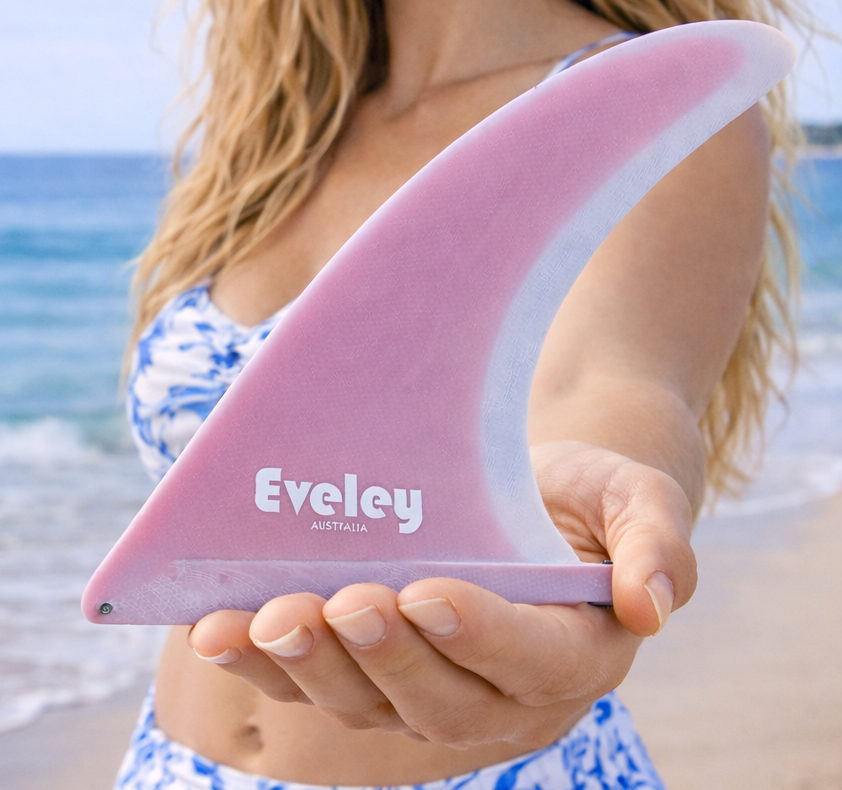
Classic Longboard Fin Guide
How to Choose the Right Classic Longboard Fin for Trim, Flow & Noseriding
If you ride a traditional longboard — whether it’s a 9’0” cruiser or a 10’+ log — your center fin determines how your board truly feels underfoot.
The right classic longboard fin gives you:
Smooth, drawn-out trim
Predictable rail-to-rail flow
Reliable noseride hold
Clean, stylish arcs
The wrong one makes your board feel stiff, tracky, or unstable on the nose.
This guide breaks down everything you need to know — template types, sizes, rake, flex, materials, and positioning — so you can dial in your board properly.
New to surfboard fins? Start with the complete Surfboard Fin Guides overview.
What Is a Classic Longboard Fin?
A classic longboard fin is typically:
8"–10.5"+ in depth
Designed for single fin boxes
Balanced between pivot and rake
Optimised for trim, flow and control
Unlike modern performance longboard fins, classic templates prioritise:
Glide
Rail engagement
Smooth transitions
Noseride stability
If you're riding a traditional log, stepdeck, or mid-length, this is your foundation.
The 4 Main Classic Longboard Fin Templates
1️⃣ Balanced / 4A Template (The Gold Standard)
Best for: All-round classic longboarding
Feel: Smooth, neutral, predictable
The 4A-style template is the most versatile classic design ever made. It blends moderate rake with balanced base and tip area.
What it gives you:
Stable trim
Clean cutbacks
Reliable nose control
Works in small to shoulder-high surf
Eveley Picks:
If you’re unsure what to choose — start here.
2️⃣ Pivot Template (Tighter Turning Control)
Best for: Tail control, pocket surfing
Feel: Tight, responsive, direct
Pivot fins are more upright with a wider base and less rake.
What it gives you:
Quick tail response
Tighter turns
More vertical surfing
Strong hold in steeper pockets
Trade-off: Slightly less flowing arcs than a raked template.
If your board feels too “tracky” or slow to redirect, a pivot fin will wake it up.
3️⃣ Raked / Flow Template (Drawn-Out Glide)
Best for: Smooth carves & stylish trim
Feel: Drawn-out, flowing, classic
More rake = longer turning arcs.
What it gives you:
Maximum glide
Flowing cutbacks
Classic aesthetic
Smooth rail transitions
Trade-off: Slightly less pivot in tight pockets.
For cruisy point waves and clean walls, this is pure style.
4️⃣ Logger / Noserider Template (Maximum Hold)
Best for: Dedicated noseriding
Feel: Locked-in, stable, committed
These are deeper (often 10.5"+) with significant area near the tip.
What it gives you:
Strong nose hold
Reduced tail slide
Stability in slower waves
Traditional log feel
Trade-off: Reduced manoeuvrability.
If you’re cross-stepping with intent — this is your weapon.
What Size Classic Longboard Fin Should You Choose?
General Size Guide
If your board is 8’6” to 9’0”, you’ll usually want an 8” to 9” fin.
If your board is 9’0” to 9’6”, a 9” to 10” fin is the sweet spot.
If your board is 9’6” to 10’ or longer, go with a 10” to 10.5” (or bigger) fin.
As a simple rule:
Longer board = bigger fin.
But size also depends on:
Tail width
Rider weight
Wave size
Desired looseness
Quick Rule:
Smaller fin = more manoeuvrable
Larger fin = more stable and nose-friendly
For deeper analysis, see Longboard Fin Setup Guide — Single, 2+1 & Performance Options
Fin Material: Why Pro Glass & Volan Matter
Most classic longboard fins are fiberglass.
At Eveley, we use:
Pro Glass → responsive, balanced flex
Volan Pro Glass → more traditional feel
Volan feel: Smooth, dampened, classic glide
Standard Pro Glass: Slightly more responsive
Material changes how the fin loads and releases through turns — especially noticeable in clean point waves.
Fin Placement: The Most Overlooked Adjustment
Moving your fin changes everything.
Slide Forward:
Looser feel
Quicker turns
Less nose hold
Slide Back:
More stability
Stronger nose hold
Longer arcs
Even 5–10mm makes a difference.
If your board feels wrong, adjust placement before buying another fin.
Single Fin vs 2+1 — Does It Change the Choice?
Yes.
If riding a 2+1 setup:
Smaller center fin (7"–8")
Side bites add hold and drive
More performance-oriented feel
If riding true single:
Larger center fin (9"–10.5")
Rail engagement + tail control
Maximum classic glide
For a full breakdown, read:
How to Match Fin Template to Your Surf Style
You Like:
Trim & flow → 4A or Raked
Tight pocket turns → Pivot
Cross-stepping & hang fives → Logger
All-round versatility → 4A
If you're riding classic Australian point waves, a balanced 4A-style fin is often the most versatile choice.
Common Classic Longboard Fin Mistakes
Going too small for traditional logs
Using heavy rake in beach breaks
Setting fin too far forward for noseriding
Ignoring rider weight
Correct template + correct size + correct placement = magic.
Recommended Eveley Classic Longboard Fins
For traditional glide and trim:
Each is tuned for smooth rail engagement, balanced flex and reliable nose control.
Classic Longboard Fin FAQs
What is the most versatile longboard fin?
A 9"–10" 4A-style template is the most balanced and adaptable option.
Does more rake mean more speed?
Not exactly. It means longer, smoother arcs — which can feel faster in trim.
Is a 10" fin too big for a 9’0” board?
Usually no — but it depends on tail width and rider weight.
Should beginners go bigger?
Yes. More surface area = more stability.
Does Volan make a difference?
Yes — it provides a more traditional glide feel.
Final Word
Your longboard is only as good as the fin underneath it.
If you want:
Clean trim
Controlled carves
Reliable noseriding
Classic flow
Start with the right template — then fine-tune size and placement.
When in doubt?
Go balanced. Adjust position. Refine from there.
And remember — the best longboarders don’t just ride waves.
They trim them.