
Best Fins for Small Waves — Generate Speed in Weak Surf
If your board feels slow in small waves, your fins are the problem.
Small surf doesn’t reward control.
It rewards speed, release, and projection.
Most surfers run their “good wave” fins in weak conditions — and wonder why their board feels dead.
This guide explains exactly:
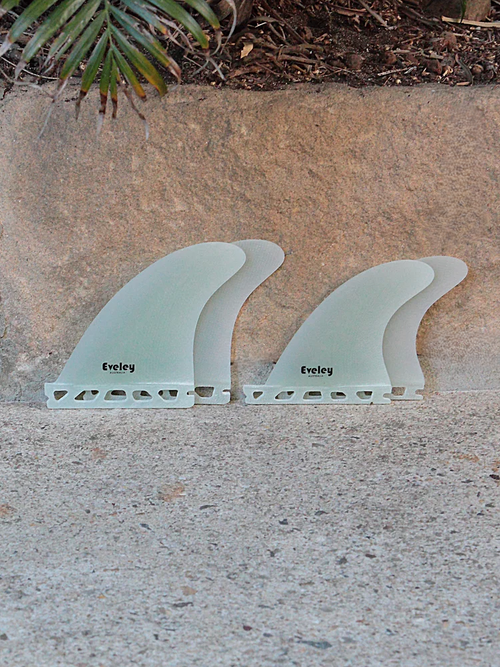
What fin templates work in small waves
When to switch from thruster to quad
Why twins feel faster
How fin size affects speed
Which Eveley fins are built for weak Australian beach breaks
New to surfboard fins? Start with the complete Surfboard Fin Guides overview.
If you want more speed when there is none — read on.
Why Small Waves Feel Sluggish
Weak waves lack:
Steep face angles
Natural pocket energy
Strong water flow over the fins
If your fins create too much hold or drag, the board simply won’t accelerate.
In small surf, the goal is:
✔ Reduce drag
✔ Increase projection
✔ Maintain flow
✔ Improve release
Control comes second.
The 5 Rules of Small Wave Fin Setup
This is where most brand guides stop. We won’t.
1️⃣ Slightly Smaller Fins = Immediate Speed
Large fins create stability — but also resistance.
In weak surf:
Drop half a size
Or use a slightly reduced base template
Smaller fins free the tail and increase acceleration.
2️⃣ Rake Generates Speed Through Flat Sections
More rake = longer turning arc = more projection.
Upright templates pivot well but can feel sticky in soft waves.
For clean down-the-line speed:
→ 4.45" Raked Thruster Fins
Designed for flow and drive in softer surf.
This is one of the most overlooked small-wave adjustments.
3️⃣ Quad Setups Are Often Faster Than Thrusters
Removing the centre fin reduces drag.
That alone increases speed.
Quads:
Accelerate faster
Hold through flat sections
Feel looser off the bottom
Strong small-wave option:
→ 4.6" / 4.2" Classic Quad Fins – Black Pro Glass
For heavier surfers or wider boards:
→ 5.2" / 4.35" Big Boy Quads – Black Pro Glass
In weak Australian beach breaks, quads often outperform thrusters.
4️⃣ Twin Fins = Maximum Glide
If pure speed is your goal — twins win.
Less drag.
Less resistance.
More freedom.
More responsive modern twin:
→ 5.7" Upright Twin Fins – Natural Pro Glass
In knee-to-waist high surf, twins are often the fastest option available.
5️⃣ Flex Matters More Than You Think
Overly stiff fins feel dead in weak waves.
Balanced Pro Glass construction gives:
Controlled flex
Energy storage through turns
Clean rebound
This helps maintain speed when the wave doesn’t provide it.
Carbon-only fins can feel too rigid in soft surf.
Thruster vs Quad vs Twin in Small Waves
Which Setup Is Fastest in Small Waves?
🔹 Thruster — Controlled Speed
Feel: Stable and predictable
Speed: Good
Best for: Everyday small surf
A thruster is your dependable option. It won’t feel lightning-fast, but it gives you confidence through turns and holds when the wave gets steeper. If you want reliability over looseness, this is your baseline setup.
🔹 Quad — Noticeably Faster
Feel: Quick and drivey
Speed: High
Best for: Down-the-line speed in weak waves
Remove the center fin and the board immediately feels freer. Quads accelerate faster and carry speed through flat sections — exactly what weak surf demands. If your board feels sticky in small waves, this is often the fix.
Popular Quad Fin Setup: 4.3" / 3.8" Freedom Quad Fins – Natural Pro Glass | Futures Compatible
🔹 Twin — Fastest & Most Playful
Feel: Loose, skatey, flowing
Speed: Maximum
Best for: Pure glide and fun sessions
Nothing feels faster in weak surf than a twin. Less drag. More freedom. More glide. It turns small waves into something worth surfing — but with less control than a thruster.
The Simple Rule
If the waves lack power:
Twin for maximum speed
Quad for balanced speed + control
Thruster for stability
Small waves reward speed — not resistance.
Small Wave Fin Size Guide (Practical Version)
Under 65kg → Small / reduced template
65–80kg → Medium but raked
80kg+ → Drive-oriented quad or standard size
If your board feels sticky — size down before sizing up.
The Biggest Small-Wave Mistake
Running high-hold, large-base fins designed for overhead surf.
Small waves require adjustment.
Your board isn’t slow.
Your fin setup probably is.
Best Fins for Small Waves — Quick Picks
For everyday weak beach breaks:
• Raked medium thruster
• Balanced quad setup
For groveller boards:
• Smaller thruster
• Upright twin
For pure glide and fun:
• Twin keel setup
FAQs
What are the best fins for small waves?
Smaller, slightly raked thrusters — or quad/twin setups — generate the most speed in weak surf.
Should I use a quad in small waves?
Often yes. Removing the center fin reduces drag and increases acceleration.
Are twin fins better in weak waves?
For speed and glide — absolutely. For control — less so.
Should I size down my fins?
If you’re between sizes, yes. Small waves reward looseness.
What material works best?
Balanced fiberglass construction (like Pro Glass) maintains speed better than overly stiff carbon in weak conditions.
Why Eveley Small Wave Fins Work in Australian Conditions
Australian beach breaks are:
Often soft
Frequently underpowered
Rarely perfect
Eveley templates are designed around:
Real-world everyday surf
Balanced flex
Practical sizing
Performance without stiffness
They are not pro-tour only templates.
They’re built for real sessions.
Small wave sessions often mean longer time in the water, so comfortable gear makes a difference. Lightweight board shorts help you stay comfortable while paddling and moving around the board.
The Tropical Print Board Shorts – Lightweight Surf & Swim Wear are designed for all-day surf comfort.
Final Takeaway
In small waves:
Speed > Control.
If the surf lacks power, your fins shouldn’t add resistance.
Change your fin setup — and your board will feel like a different shape.
Popular Twin Fins
5.5" Balanced Twin Fins plus 3.5" Stabilizer, blue Pro Glass. FCS compatible
Popular Quad Fins
4.5" / 4" Contemporary Quad Fins – Natural Pro Glass Futures Compatible
4.7" / 4.25" Controller Split Keel Quad Fins – Natural Pro Glass Futures Compatible
Eveley Knowledge Hub Guides
Futures™ is a registered trademark of Futures Fins. Eveley Surf is not affiliated with or endorsed by Futures Fins. All compatibility references to Futures Fins are for descriptive purposes only.
FCS™ and FCSII™ are registered trademarks of Surf Hardware International Pty Ltd. Eveley Surf is not affiliated with or endorsed by Surf Hardware International Pty Ltd. All compatibility references to FCS and FCSII are for descriptive purposes only.