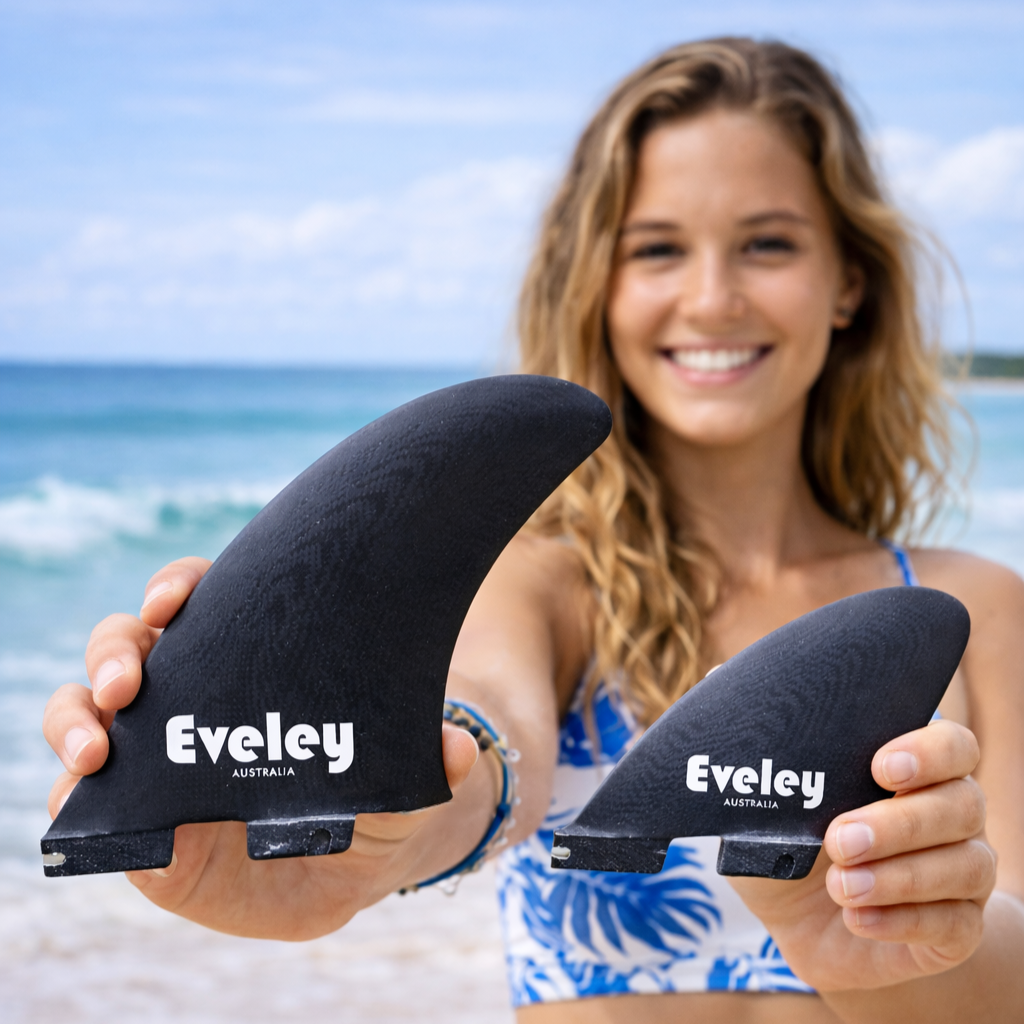
How to Choose the Right Longboard Center Fin Size
New to surfboard fins? Start with the complete Surfboard Fin Guides overview.
Selecting the correct longboard center fin size is one of the most important decisions a surfer can make when tuning board performance.
While template shape, flex, and placement all influence feel, fin size ultimately determines the balance between hold, glide, turning freedom, and control.
A properly sized center fin allows the board to:
Trim smoothly without excess drag
Hold steady during noserides
Turn with predictable response
Maintain control across varying wave energy
An incorrect size, by contrast, can make even a well-designed longboard feel stiff, unstable, or unresponsive.
This guide explains how center fin sizing works in real surfing conditions and how to choose the correct size for your board, waves, and style.
Why Center Fin Size Matters
Longboards generate speed primarily through trim and rail engagement, not aggressive pumping like shortboards.
Because of this, the center fin plays a dominant role in stabilising the board’s direction and controlling how easily it pivots.
Changing fin size directly affects:
Hold — resistance to sliding or drifting
Drag — resistance that slows trim speed
Turning radius — how tightly the board can arc
Noseride stability — ability to stay locked in the pocket
Even a 1-inch difference in fin depth can produce a clearly noticeable change in feel.
General Longboard Fin Size Guidelines
Although every board design is different, proven real-world sizing ranges provide a reliable starting point.
Traditional logs and dedicated noseriders
Typical size range:
9.5" to 11" center fins
Why larger fins work:
Maximum directional stability
Strong hold during cross-stepping and noseriding
Smooth, drawn-out turning style
These fins prioritise control and glide over looseness.
All-round longboards
Typical size range:
8" to 9.5" center fins
This middle range offers:
Balanced trim speed and manoeuvrability
Reliable hold in varied wave types
Smooth but responsive turning
For many surfers, this is the most versatile everyday size window.
Performance longboards
Typical size range:
6.5" to 8" center fins
Smaller fins provide:
Faster direction changes
Reduced drag for acceleration
Tighter turning arcs
However, they also reduce:
Noseride stability
Straight-line trim hold
Forgiveness in weaker waves
This sizing suits surfers prioritising turning performance over classic flow.
Matching Fin Size to Board Length
Board length provides another practical sizing reference.
Rule of thumb:
Use roughly 1 inch of fin depth per foot of board length,
then adjust for style and wave type.
Examples:
9'0" board → around 9" fin
9'6" board → around 9.5"–10" fin
10'0" log → around 10"–11" fin
This rule is not absolute, but it offers a dependable baseline before fine-tuning.
How Wave Type Influences Fin Size
Small, soft waves
Better with:
Slightly larger fin
Reason:
Extra hold maintains trim speed
Helps the board stay stable in weak energy
Clean point waves
Best with:
Balanced mid-range fin
Reason:
Preserves glide while allowing smooth turns
Supports controlled noseriding
Steeper or faster waves
Often improved by:
Slightly smaller fin
Reason:
Reduces drag during drops
Allows quicker directional adjustment
Prevents the board from feeling locked in
Wave energy should always influence the final sizing decision.
Adjusting Feel Without Changing Fin Size
Before buying a new fin, experiment with placement inside the sliding center fin box.
Simple tuning method
Move back → more hold, stability, noseride control
Move forward → looser turning, quicker response
Small adjustments of 5–10 mm can replicate the feel of a different fin size, making placement the easiest first step in tuning performance.
Common Center Fin Sizing Mistakes
Choosing too small a fin
Leads to:
Sliding during turns
Weak noseride hold
Unstable trim in soft waves
Choosing too large a fin
Creates:
Excess drag
Slow turning response
Stiff, locked-in feel
Ignoring board design
Fin size must match:
Tail width
Rocker curve
Intended surfing style
No single size works for every longboard.
Fiberglass Construction and Real-World Performance
Serious longboard surfers consistently favour solid fiberglass (Pro Glass) fins for center fin applications.
Advantages include:
Predictable, controlled flex
Smooth energy release through turns
Long-term structural durability
Compared with lightweight composite fins, fiberglass provides:
more consistent performance across a wider range of wave conditions.
Recommended Eveley Fins for This Setup
The following Eveley fin templates match the performance characteristics discussed in this guide. Each option is built from solid Pro Glass for consistent flex, durability, and real-world surf reliability.
10" California Dreaming Center Fin
Classic swept template designed for trim speed, glide, and stable noseriding.
→ Shop 10" California Dreaming Center Fin
9" International 4A Center Fin
Balanced depth and rake delivering smooth control across varied wave conditions.
→ Shop 9" International 4A Center Fin
7.2" Flow Flex Center Fin Center Fin
Reduced depth and responsive flex for tighter turning on performance longboards.
→ Shop 7.2"Flow Flex Center Fin Center Fin
Explore the full Eveley fin range to fine-tune your board’s feel, speed, and control across different wave conditions.
Frequently Asked Questions
What is the best center fin size for a 9-foot longboard?
Most 9'0" longboards perform best with around a 9" center fin, adjusted slightly for style and wave type.
Does a bigger fin always mean better noseriding?
Generally yes, because increased depth improves hold and stability, but too large a fin can reduce manoeuvrability.
Should beginners use a larger center fin?
Often yes.
A slightly larger fin provides extra stability and forgiveness, making early longboard control easier.
Conclusion
Choosing the correct longboard center fin size is less about strict rules and more about balancing stability, glide, and manoeuvrability for your specific board and waves.
Larger fins enhance hold and noseriding control
Mid-range sizes provide everyday versatility
Smaller fins unlock performance turning freedom
By combining the right size with careful placement and quality fiberglass construction, surfers can achieve a longboard feel that is:
smooth in trim, stable in the pocket, and responsive through turns.
all The Eveley Center Fins
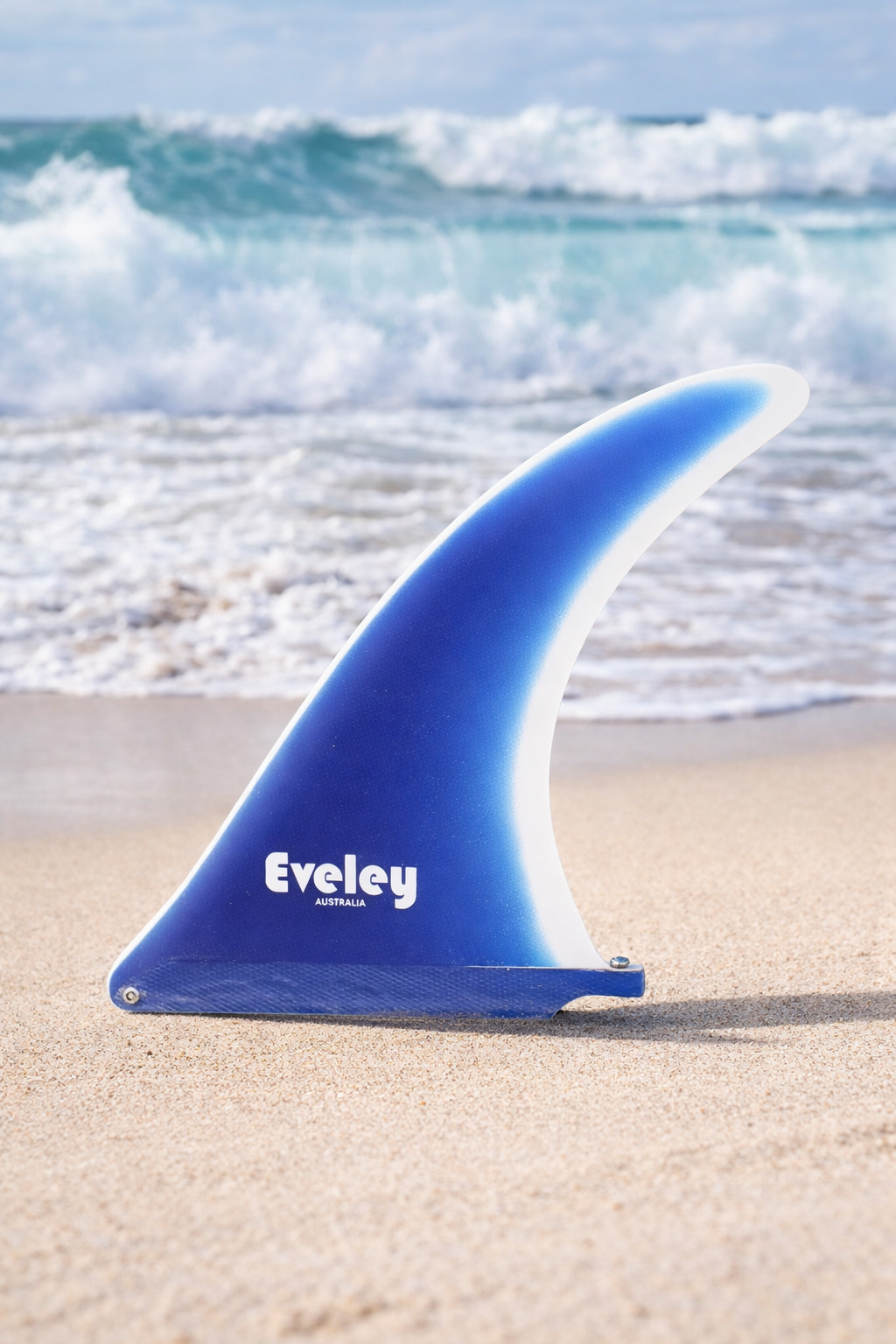
Upright Twin Fins — The Complete Performance, Design & Setup Guide
New to surfboard fins? Start with the complete Surfboard Fin Guides overview.
Twin fins are among the oldest high-performance surfboard fin configurations, yet they remain one of the most misunderstood.
Within the twin-fin world, the upright twin template stands apart as a distinctly modern evolution:
faster than a thruster, tighter than a classic keel, and far more controlled than early twins.
This authority guide explains everything surfers need to know about upright twin fins, including:
How upright twins differ from keels and raked twins
The hydrodynamics behind twin-fin speed and release
Why upright templates dominate modern twin performance
How to match upright twins to board type, waves, and surfer weight
Real-world setup tuning for maximum speed and control
What Are Upright Twin Fins?
An upright twin fin is defined by:
Reduced rake (more vertical outline)
Moderate base length for drive
Balanced tip area for release and pivot
Compared to long, sweeping keel fins, upright twins:
Turn tighter
Release faster
Feel livelier under the back foot
They preserve the down-the-line speed twins are famous for while adding modern manoeuvrability.
Twin Fin Hydrodynamics Explained
Twin fins behave differently from thrusters because they:
Reduce drag (fewer fins in the water)
Increase rail engagement
Allow controlled tail release
This creates the signature twin-fin sensation:
Effortless speed with skate-like freedom.
But early twins had a weakness:
lack of control in steeper or powerful waves.
The upright twin template was the solution.
Why Upright Twins Changed Twin-Fin Surfing
Classic 1970s twins used:
Long keels
Heavy rake
Large surface area
These produced:
Incredible trim speed
Smooth drawn-out lines
Limited vertical turning ability
Modern surfers demanded more:
Sharper direction changes
Pocket surfing capability
Control at higher speeds
By standing the fin more vertical, designers achieved:
Faster rail-to-rail transitions
Tighter turning radius
Cleaner release at the lip
This transformed twins from retro specialty boards into serious performance equipment.
Upright Twins vs Other Twin Templates
Keel Twins
Feel: smooth, fast, drawn-out
Best for: retro fish, small waves
Limitations:
Slow turning response
Hard to surf vertically
Raked Performance Twins
Feel: powerful, carving-oriented
Best for: open-face waves
Limitations:
Less pivot in tight pockets
Upright Twins
Feel: fast, loose, highly manoeuvrable
Best for: modern fish, performance twins, varied surf
Key advantage:
The best balance of speed, control, and release.
Board Types That Benefit Most
Modern Fish
Upright twins give fish boards:
Faster direction changes
Better pocket surfing
Control in steeper waves
This is why many contemporary fish designs now favour upright templates over keels.
Performance Twin-Fin Shortboards
On refined twin shapes, upright fins deliver:
Thruster-like turning ability
Twin-fin speed
Looseness without instability
This category represents the fastest-growing fin setup in modern surfing.
Mid-Length Twins
For 6'8"–8'0" twin boards, upright fins provide:
Hold through longer rail lines
Control at higher speeds
Clean projection out of carving turns
Material Influence on Upright Twin Performance
Composite / Honeycomb
Light
Quick response
Slightly stiffer feel
Good for small-wave speed.
Solid Fiberglass (Pro Glass)
Smooth, predictable flex
Strong drive through turns
Long-term durability
Preferred for:
serious, everyday twin-fin surfing.
Fiberglass maintains control at speed, which is critical for upright templates.
Choosing the Right Upright Twin Size
Around 5.3"–5.6"
Looser
Best in small waves
Suits lighter surfers
Around 5.6"–5.8" (Performance Sweet Spot)
Balanced speed and control
Works across most waves
Ideal for modern fish and performance twins
This range represents the true everyday upright twin size.
6.0"+ Upright Twins
More hold
Better in powerful surf
Suits heavier surfers or larger boards
Trade-off:
slightly reduced looseness.
Wave Matching for Upright Twins
Small, clean waves
Exceptional speed and glide.
Easy acceleration without pumping.
Shoulder-high surf
Where upright twins truly shine:
Fast pocket surfing
Smooth cutbacks
Confident lip release
Overhead waves
Still viable when:
Board design supports control
Fin size is adequate
Construction is strong (fiberglass preferred)
Setup & Tuning Tips
Fin Position
Because twins lack a center fin, placement matters more:
Forward placement → looser, skatey
Back placement → more hold and drive
Even 5–10 mm changes are noticeable.
Pairing With Trailers or Stabilizers
Some boards add:
Micro trailer fin
Small nubster stabiliser
This creates a “2+1 twin” hybrid feel:
Extra control
Slight drag increase
Reduced pure twin freedom
Most surfers prefer true twins first, then experiment.
Real-World Feel of Upright Twins
Surfers consistently describe upright twins as:
Fast without effort
Loose but predictable
Capable of vertical surfing
More alive than thrusters
This blend explains their rapid rise in modern performance surfing.
Why Upright Twins Define the Modern Twin Era
Surfboard design moves in cycles, yet upright twins persist because they solve the core twin-fin challenge:
How to keep the speed…
without losing control.
They succeed by delivering:
Twin-fin glide
Shortboard manoeuvrability
Reliable hold in real waves
No other twin template balances these forces as effectively.
Final Verdict
The upright twin fin is no longer a niche retro option.
It is now one of the most versatile high-performance fin designs in surfing.
For surfers seeking:
Maximum speed
Tight turning freedom
Smooth fiberglass drive
Real-world versatility
Upright twins represent the modern benchmark.
Quad Fin Setup Explained – Speed, Hold & When to Ride a Quad Setup
New to surfboard fins? Start with the complete Surfboard Fin Guides overview.
Quad fins have become one of the most popular surfboard setups because they deliver speed, drive, and powerful rail hold without the drag of a centre fin.
From high-performance shortboards to twin + trailer hybrids and modern mid-lengths, quad setups allow surfers to generate exceptional down-the-line speed and fast projection through turns.
In this guide you’ll learn:
• What quad fins are
• Why they feel faster than thrusters
• When to ride a quad instead of a thruster
• How to choose the right quad fin size
• Which boards work best with quad setups
What Is a Quad Fin Setup?
A quad setup uses four fins — two front fins and two rear fins — with no center fin.
This creates a clean water flow down the center of the board, reducing drag and increasing speed.
Typical layout:
Front fins → provide drive and turning power
Rear fins → provide hold and control
Because there is no center fin slowing water flow, quad setups tend to feel faster and more responsive down the line.
Learn more about different surfboard fin setups here:
Beginner’s Guide to Surfboard Fins
How Quad Surfboard Fins Actually Work
Quad fins are one of the most misunderstood setups in surfing.
Many surfers know quads feel:
Fast
Smooth
Drivey
…but don’t fully understand why.
The truth is simple:
Quad performance is controlled by the relationship between front and rear fins — not just the template itself.
This guide explains everything that matters:
Front vs rear fin sizing
Cant and toe influence
Placement and hold
When quads outperform thrusters
How to choose the right quad set for your board
How Quad Fins Are Designed
Quad fin sets usually include four fins in two sizes.
Front fins are typically larger, while rear fins are smaller stabilisers.
This balance creates:
• drive from the front fins
• control from the rear fins
• smooth rail-to-rail transitions
Performance quad sets often use different foil designs to maximise speed.
Learn more here:
Surfboard Fin Foil Types Explained
Quad Fin Types & Templates
Not all quad fins are designed the same. Different templates change how the board feels in the water.
Understanding these differences helps surfers choose a quad setup that matches their board design and wave conditions.
Quad fins must match your board’s fin system. See: Futures Compatible Fins Explainedand FCS vs FCS II Fins Explained.
Performance Quad Sets
Performance quads are designed for modern shortboards and high-performance surfing.
They typically feature:
• larger front fins for drive
• smaller rear fins for control
• balanced rake for carving turns
This setup provides:
strong acceleration
clean projection through turns
excellent hold in powerful waves
Example:
DTR Quad Fins – Pro Glass
Speed-Oriented Quad Sets
Some quad templates prioritise maximum down-the-line speed.
These designs usually use:
• upright rear fins
• flatter foils
• slightly smaller stabilisers
This reduces drag and makes the board feel extremely fast and lively.
These setups work especially well on:
fish surfboards
hybrids
weak or fast-running waves
Quad + Trailer Hybrid Setups
Some surfers combine quad fins with a small trailer fin to add extra control.
This hybrid approach creates a feel somewhere between:
quad speed
thruster pivot
Learn more about these combinations here:
Surfboard Fin Compatibility Explained
Why quad fins feel faster than thrusters
The biggest difference: No center fin drag
Thrusters rely on a center fin for stability, which:
Adds control
But creates drag
Quads remove that centre fin and instead use:
Two drive fins (front)
Two stabilising fins (rear)
This creates:
Cleaner water flow
Higher down-the-line speed
Smoother rail-to-rail transitions
That’s why quads feel:
Fast without effort.
Front vs rear quad fin sizing
This is the single most important factor in quad performance.
Large front fins = drive and projection
Front fins control:
Acceleration
Hold through turns
Directional stability
Bigger fronts create:
Stronger down-the-line speed
More drawn-out carving turns
Increased hold in steeper waves
This is the classic performance quad feel.
Smaller rear fins = release and flow
Rear fins manage:
Stability
Turn completion
Release off the top
Smaller rears give:
Faster rail-to-rail transitions
Less drag
Smoother flow
Too large → board feels stiff
Too small → board feels skatey
Balance is everything.
The ideal front-to-rear ratio
Most high-performance quads follow:
Front fins noticeably larger than rears
Common real-world pattern:
Fronts: 4.5" – 5.1"
Rears: 2.8" – 3.5"
This delivers:
Drive from the front
Release from the rear
Maximum usable speed
This sizing logic is used across:
Performance shortboards
Hybrids
Step-downs
…and forms the basis of modern quad design.
Cant and toe — the hidden performance factors
Many surfers never consider fin angle, yet it strongly affects feel.
Cant (outward lean)
More cant:
Increases turning sensitivity
Feels looser
Best for small waves
Less cant:
Adds drive and hold
Feels faster and more stable
Better for powerful surf
Toe-in (angle toward the nose)
More toe:
Quicker turn initiation
Slightly slower top speed
Less toe:
Faster down-the-line speed
Longer drawn-out lines
Shapers tune cant and toe to match:
Board rocker
Outline
Intended wave range
That’s why the same quad set can feel different in different boards.
Quad placement and hold in turns
Rear quad placement determines:
Pivot vs projection
Rears closer to the rail
More pivot
Tighter turn radius
Looser feel
Rears closer to stringer
More drive
Stronger hold
Longer carving lines
Performance boards usually favour: Drive-biased placement for speed and control.
Quad vs Thruster – What’s the Difference?
Both setups are extremely versatile, but they behave differently in the water.
How Different Fin Setups Feel
Thruster (3 fins) – Offers moderate speed with strong pivot control, making it the most versatile setup for everyday surfing.
Quad (4 fins) – Feels very fast with strong rail hold, which works especially well in fast or powerful waves.
Twin (2 fins) – Provides maximum speed with a loose, flowing feel, often preferred for retro-style surfing and smooth carving lines.
If you want to understand thrusters in more detail, read:
Thruster Fins Explained
When quads outperform thrusters
Quads are not “better” — just different tools.
Quads excel in:
Small or weak waves
Fast point breaks
Down-the-line surfing
Surfers who prioritise speed and flow
Because:
Less drag
Continuous rail drive
Smooth transitions
Thrusters still win in:
Vertical surfing
Tight pocket turns
Critical top turns
Heavy competition conditions
The centre fin provides:
Pivot
Stability
Predictable release
That’s why pros still ride thrusters in:
Steep, powerful contest waves.
Choosing the right quad setup for your board
Performance shortboard
Choose:
Drivey front fins
Medium-small rears
Fiberglass construction for control
Goal:
Speed without losing hold.
Hybrid or groveller
Choose:
Slightly larger rears
Moderate cant
Balanced flex
Goal:
Maintain speed in weak surf while staying controllable.
Step-up or powerful waves
Choose:
Stiff fiberglass fronts
Smaller rears for release
Lower cant for maximum drive
Goal: Hold at speed without sliding.
Some longboards also use quad setups for speed-oriented surfing, although traditional longboarding usually uses a centre fin.
Learn more here:
Best Fin Setup for Mid-Length Surfboards
Quad Fin Size Guide
Choosing the correct fin size depends mostly on surfer weight.
Recommended Quad Fin Size by Surfer Weight
Surfers under 60 kg usually ride Small quad fins. Example: 4.3" / 3.8" Freedom Quad Fins – Natural Pro Glass | Futures Compatible
Surfers 60–75 kg generally suit Medium quad fins.
Surfers 75–90 kg typically perform best with Large quad fins.
Surfers over 90 kg should usually choose Extra Large quad fins.
This is a starting guide — some surfers choose slightly smaller fins for a looser feel or slightly larger fins for more drive and hold.
Full sizing guide:
Surfboard Fin Size Guide
Why fiberglass quads remain the benchmark
Across all quad setups, one pattern is consistent:
Experienced surfers favour fiberglass
Because it provides:
Predictable flex
Strong hold
Smooth release
Long-term durability
Lightweight composites may feel fast in tiny waves, but fiberglass delivers:
Real performance when waves matter.
That’s why Eveley quad fins focus on:
Solid Pro Glass construction
Balanced front/rear sizing
Reliable drive and control
Full explanation here:
Fiberglass vs Honeycomb Fins
Quad Fin Advantages
Quad setups are popular because they provide:
✔ excellent speed
✔ strong rail hold
✔ powerful projection
✔ smooth carving turns
For surfers who prioritise speed and flow, quads can feel incredibly lively.
Possible Trade-Offs
While quad fins are fast, they can feel different from thrusters.
Some surfers notice:
• slightly less pivot in tight turns
• more drawn-out carving arcs
Many surfers solve this by switching between thruster and quad setups depending on the conditions.
How to Know If a Quad Setup Is Right for You
Quad fins are ideal if you want:
• maximum down-the-line speed
• strong hold in steep waves
• flowing carving turns
They are especially popular with surfers riding fish boards, performance shortboards and hybrids.
Common quad fin mistakes
Running equal-size fronts and rears
Creates:
Too much drag
Stiff turning
Reduced speed
Quads need size contrast to work properly.
Choosing fins too small
Results in:
Slide in turns
Loss of hold
Unstable feel at speed
Always size for:
Control first, looseness second.
Ignoring board design
Fin choice must match:
Tail width
Rocker
Wave type
No fin works perfectly in every board.
Related Surfboard Fin Guides
Improve your fin knowledge with these Eveley guides:
Quad vs Thruster: Which Surfboard Fin Setup Is Best?
Quad vs Thruster Surfboard Fins Explained – Speed, Control & Feel
Surfboard Fin Compatibility Explained
Complete Surfboard Fin Buyer’s Guide
Twin Keel Surfboard Fins – The Complete Guide to Speed, Drive & Classic Flow
Best Fin Setup by Wave Type
Different surf conditions favour different fin setups. Choosing the right setup can make a huge difference to how your board feels in the water.
Small or Weak Waves
Best setup: Quad or Twin
Weak waves require boards that generate speed easily. Quad setups are popular here because they allow water to flow cleanly down the board without the drag of a centre fin.
This helps surfers maintain speed even when the wave lacks power.
Compare twin and quad surfboard fins, including speed, hold, turning feel, and best wave conditions here: Twin vs Quad Fins Explained
Fast Point Waves
Best setup: Quad
Point breaks often produce long, fast walls where speed and hold are critical.
Quad fins excel in these conditions because they provide:
• powerful down-the-line speed
• strong rail hold
• smooth carving turns
Hollow or Steep Waves
Best setup: Quad or Thruster
When waves are hollow or powerful, control becomes important.
Quad setups provide excellent hold through long carving lines, while thrusters allow tighter turning in critical sections.
More about thruster setups here:
Thruster Fins Explained
Everyday Beach Break Surf
Best setup: Thruster
Thrusters remain the most versatile setup for changing conditions because they offer:
• reliable control
• predictable turning
• strong pivot through tight sections
FAQs
Are quad fins faster than thrusters?
Yes. Quad setups usually feel faster because there is no center fin creating drag, allowing water to flow cleanly down the board.
Are quad fins good for small waves?
Yes. Their speed generation can help maintain momentum in weak surf.
Can beginners ride quad fins?
Yes, although many beginners find thrusters slightly easier to control at first.
Are quad fins good for barrels?
Yes. The extra rail hold makes them excellent in steep or hollow waves.
Final takeaway
Quad performance comes down to balance:
Large fronts → drive
Smaller rears → release
Correct cant and placement → control
When tuned properly, quads deliver:
Speed, flow, and effortless projection
that thrusters simply cannot match in the right waves.
That’s why quads remain a core performance option
for surfers chasing pure down-the-line speed.
These Eveley fin templates match the performance characteristics discussed in this guide.
Each option is built from solid Pro Glass for consistent flex, durability, and real-world surf reliability.
4.3" / 3.8" Freedom Quad Fins – Natural Pro Glass | Futures Compatible Quad Set (4 Fins)
Balanced speed, control, and smooth rail-to-rail response for modern quad surfboards. Durable natural Pro Glass construction with Futures-compatible bases in a matched four-fin set.4.5" / 4" Contemporary Quad Fins – Black Pro Glass | FCS Compatible Quad Set (4 Fins)
Drive, speed, and controlled release for modern quad surfboards. Durable black Pro Glass construction in a balanced four-fin configuration designed for reliable everyday performance.4.9" / 3.1" DTR Quad Surfboard Fins – Solid Black Pro Glass | Fast Drive & Rail Control for FCS II
4.9" / 3.1" DTR Quad Surfboard Fins – Bright Green Pro Glass Speed & Drive | FCS II Compatible
4.9" / 3.1" DTR Quad Fins – Black on Natural Pro Glass | FCS II Compatible
Balanced drive, clean release, and controlled quad speed — a performance DTR quad set built in Pro Glass for fast, stable surfing across modern boards.
5.2" / 4.35" Big Boy Quads, black Pro Glass. FCSII compatible set of four fins.
Built for power and confidence — Big Boy Quads deliver maximum drive, hold, and control for bigger boards and stronger surfers.Popular Rear Quad Fins
1.4" Runner Side Fins / Mini Quad Rears – Pro Glass White | FCS Compatible Premium surfboard fins designed as 1.4" runner side fins or mini quad rears for added drive, speed and stability in performance quad setups.
4.25" Split Keel Rear Quad Surfboard Fins – Fast Release Control | Natural Pro Glass | Futures Compatible (Set of 2)Dial in speed and control with precision-tuned surfboard fins designed for fast, responsive quad setups.
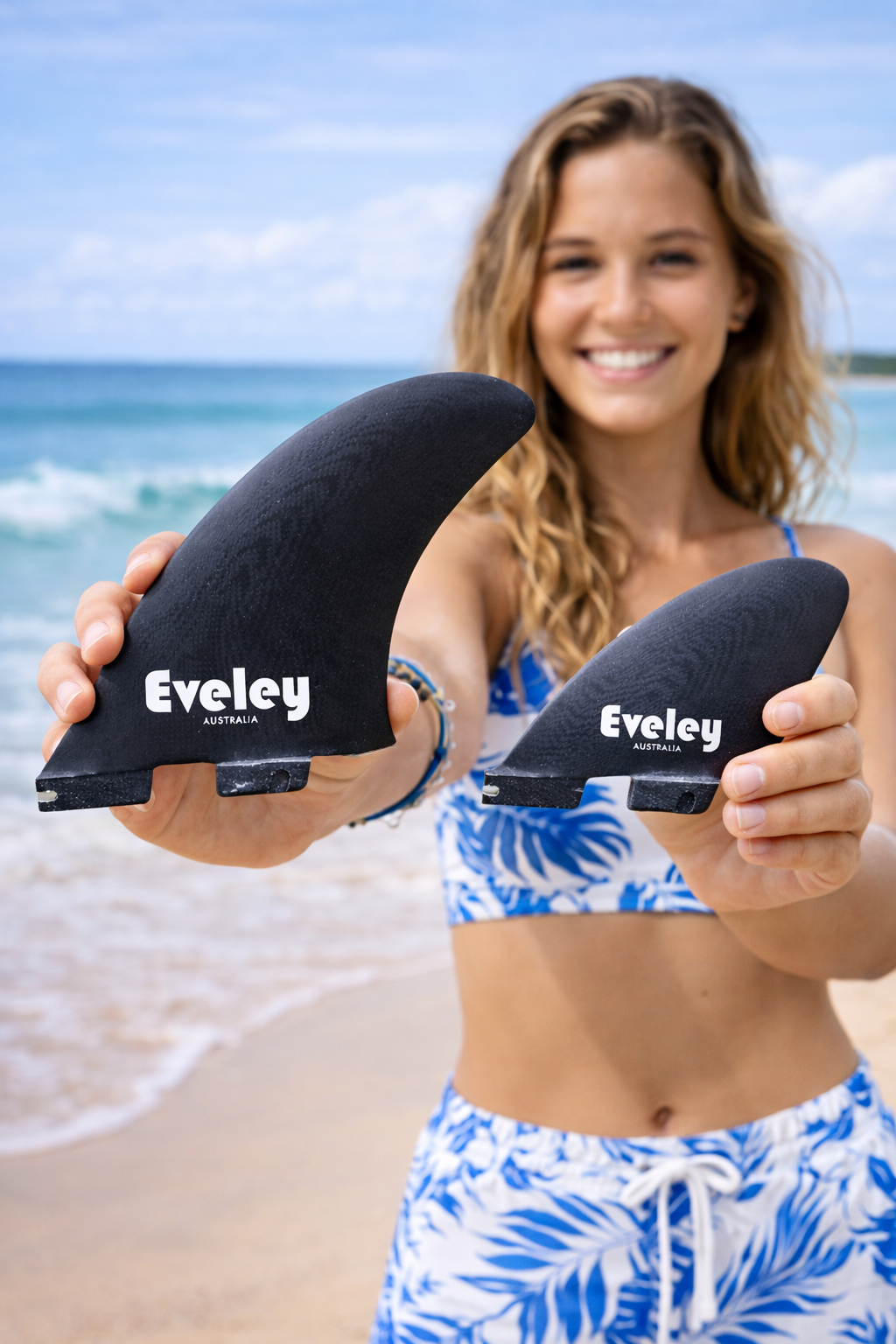
Eveley Quad Fins
Futures™ is a trademark of Futures Fins. Eveley Surf is not affiliated with or endorsed by Futures Fins. All compatibility references to Futures Fins are for descriptive purposes only.
Surfboard Fin Materials Guide
New to surfboard fins? Start with the complete Surfboard Fin Guides overview.
Fiberglass vs Composite vs Carbon Explained
Choosing the right surfboard fin material has a direct effect on how a board feels under your feet.
While template, size, and fin setup determine the overall behaviour of a surfboard, material controls flex, response, durability, and long-term consistency.
This guide explains the three dominant construction types used in modern surfboard fins:
Fiberglass (Pro Glass)
Composite / Honeycomb
Carbon-reinforced constructions
By the end, you’ll know which material suits your surfing, wave conditions, and board type.
Why fin material matters more than most surfers think
Many surfers focus on fin size or brand, but overlook construction.
Material determines:
Flex pattern through a turn
Speed generation vs control
Release at the end of manoeuvres
Durability over time
Consistency between sessions
Two fins with identical templates can feel completely different purely because of construction.
That’s why experienced surfers often settle on a preferred material rather than endlessly changing templates.
Fiberglass fins (Pro Glass)
What fiberglass fins are
Traditional fiberglass fins are built from layered glass cloth saturated with resin, then precision-foiled and finished.
This construction is commonly called:
Pro Glass
Solid fiberglass
Hand-foiled fiberglass
It’s the original performance fin material and remains the benchmark for feel and control.
How fiberglass fins perform
Fiberglass produces a progressive, predictable flex:
Stiff at the base for drive and hold
Controlled flex through the mid-section
Smooth release off the tip
This creates the classic sensation surfers describe as:
“Connected to the wave.”
Key performance traits:
Strong down-the-line projection
Smooth rail-to-rail transitions
Clean turn completion
Reliable behaviour in powerful surf
Durability and lifespan
Fiberglass fins are:
Highly impact-resistant
Structurally stable over time
Less prone to sudden failure than lightweight composites
They may show cosmetic scuffs, but performance remains consistent for years.
This long-term reliability is why fiberglass is still preferred by:
Experienced surfers
Shapers
Performance longboard riders
Surfers in powerful waves
Best surfers and conditions for fiberglass
Fiberglass fins suit:
Intermediate to advanced surfers
Performance surfing
Point breaks and clean waves
Heavier or more powerful surf
Longboards and mid-lengths needing control
They are ideal when feel and projection matter more than light weight.
Examples: 3.6" Classic Side Surfboard Fins – Mid Blue Pro Glass | Futures Compatible
4.9" / 3.1" DTR Quad Fins – Black on Natural Pro Glass | FCS II Compatible
Composite / honeycomb fins
What composite fins are
Composite fins use:
Plastic or polymer bases
Internal foam or honeycomb cores
Fiberglass surface layers
They’re engineered to be:
Lightweight
Responsive
Affordable to manufacture
How composite fins perform
Because they’re lighter and thinner, composite fins feel:
Quick and lively
Easier to pivot in small waves
Less powerful through long carving turns
Flex is typically:
Softer overall
Faster to rebound
Less smooth under heavy load
This makes them popular for:
Small-wave surfing
Beginners
Beach breaks
Surfers wanting a loose feel
Durability trade-offs
Compared with fiberglass:
More prone to tip damage
Can feel less consistent over time
Structural fatigue appears sooner under heavy surfing
However, they offer:
Lower cost
Reduced weight
Easy accessibility for casual surfers
Best surfers and conditions for composites
Composite fins work well for:
Beginner to intermediate surfers
Small or weak waves
Surfers prioritising looseness and light feel
Budget-conscious buyers
They’re less suited to power surfing or large waves.
Carbon and carbon-reinforced fins (TekFlex)
What carbon construction means
Carbon fins combine:
Fiberglass structure
Carbon fibre strips or panels
Reinforced bases or rails
Carbon is added to:
Increase stiffness
Accelerate response
Reduce twist under load
Performance characteristics
Carbon-reinforced fins feel:
Very fast
Highly responsive
Extremely stable at speed
But also:
Less forgiving
Can feel stiff or skatey in weak waves
Require good technique to control
They shine when surfing:
Steep, powerful waves
High-speed point breaks
Performance shortboards at full speed
Who carbon fins suit
Best for:
Advanced surfers
Power surfing
Fast, critical waves
Riders wanting maximum projection and precision
Not ideal for:
Beginners
Soft summer surf
Surfers preferring smooth flex
Direct comparison: fiberglass vs composite vs carbon
Flex feel
Fiberglass: smooth, controlled, predictable
Composite: soft, lively, less powerful
Carbon: stiff, immediate, highly reactive
Speed generation
Fiberglass: strong, flowing projection
Composite: quick in small waves, limited in power
Carbon: fastest in clean, powerful surf
Forgiveness
Fiberglass: balanced and reliable
Composite: very forgiving
Carbon: least forgiving
Durability
Fiberglass: longest lifespan
Composite: moderate
Carbon: structurally strong but performance-specific
Which material should you choose?
Choose fiberglass if you want:
Classic connected feel
All-round performance
Long-term durability
Confidence in powerful waves
For most committed surfers, fiberglass is the benchmark choice.
Choose composite if you want:
Lightweight looseness
Easy turning in small waves
Lower cost
Beginner-friendly response
Best suited to casual or small-wave surfing.
Choose carbon if you want:
Maximum speed and projection
Ultra-fast response
Performance in steep, powerful surf
Ideal for advanced, high-performance surfing.
Why Eveley focuses on Pro Glass fiberglass
Eveley fins prioritise solid fiberglass construction because it delivers:
The most predictable real-world performance
Long-term structural reliability
Consistent flex patterns surfers trust
True performance feel across conditions
Rather than chasing ultra-light marketing trends, the focus remains on:
Control, projection, and durability in the water.
That’s why Pro Glass continues to define the core Eveley fin range.
Final takeaway
Surfboard fin material shapes how a board:
Accelerates
Turns
Holds
Releases
In simple terms:
Fiberglass = balance and performance
Composite = looseness and accessibility
Carbon = speed and precision
For most surfers seeking true performance and longevity,
fiberglass remains the gold standard.
Popular Quad Fins
4.9" / 3.1" DTR Quad Surfboard Fins – Solid Black Pro Glass | Fast Drive & Rail Control for FCS II
4.9" / 3.1" DTR Quad Surfboard Fins – Bright Green Pro Glass Speed & Drive | FCS II Compatible
Delve deeper
How Fin Templates Affect Performance
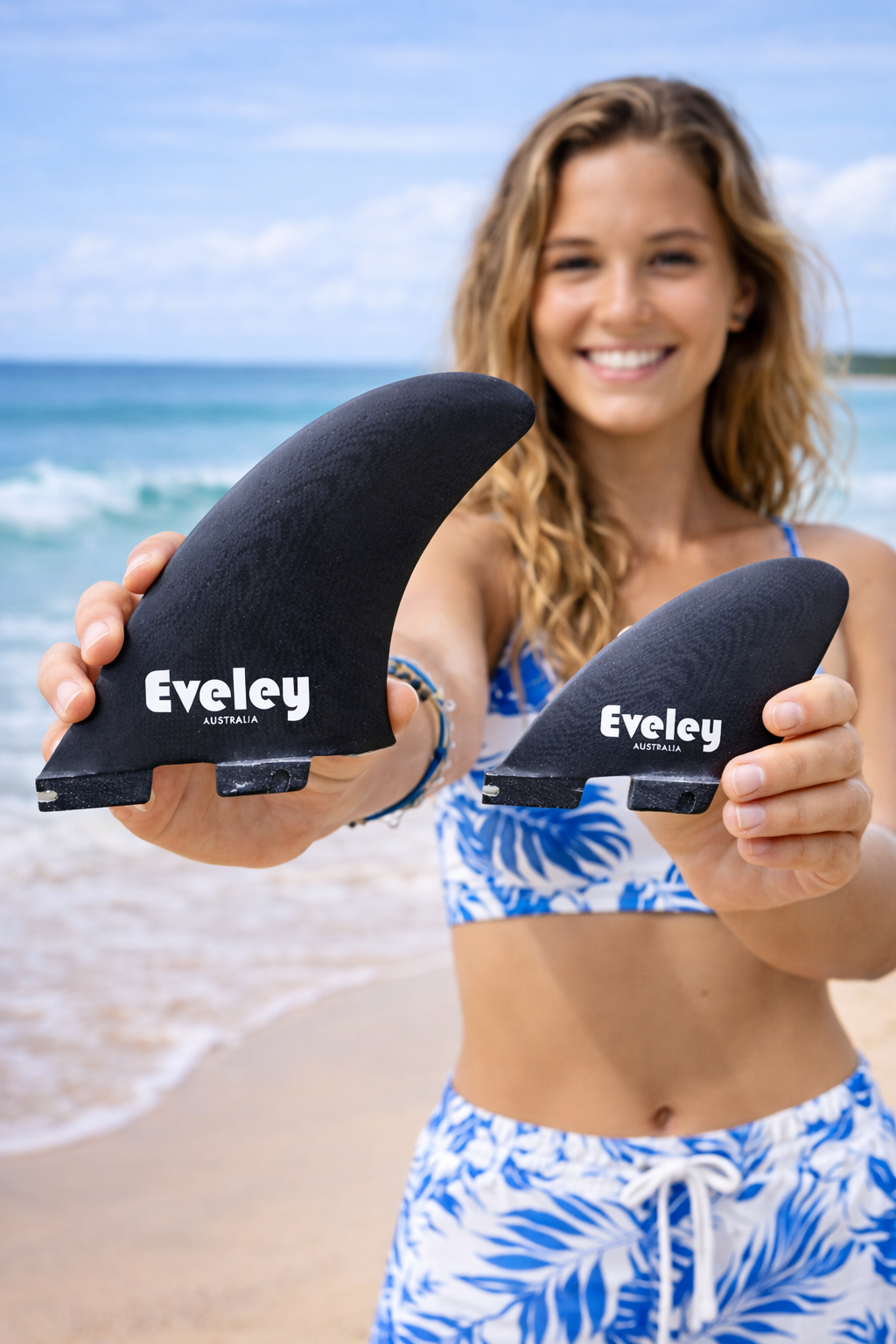
Twin Fin Surfing Guide Australia — Speed, Flow, and Modern Control
Surfboard Fins Guide: Understanding Twin Fin Performance
New to surfboard fins? Start with the complete Surfboard Fin Guides overview.
Twin fins are no longer just retro fish equipment.
Understanding the difference between classic keels and modern upright twins is essential.
Traditional Keel Twins
Keel fins are:
Long and low
Wide at the base
Strongly raked
Heavily foiled
How They Ride
They produce:
Massive down-the-line speed
Strong hold during trim
Smooth, drawn-out turns
Limited vertical pivot
Best suited to:
Retro fish shapes
Wide swallow tails
Small to medium clean waves
Flow-based surfing styles
Keels reward patience, line choice, and rail surfing.
Upright Performance Twins
Modern twins evolved to increase control and manoeuvrability.
They feature:
Shorter height
Narrower base
More upright outline
Reduced rake
How They Ride
They deliver:
Faster turning radius
Easier vertical surfing
Tighter pocket control
More predictable release
Best suited to:
Hybrid shortboards
Twin-plus-trailer setups
Performance-oriented surfing
Wider wave range
These are the twins that blurred the line between retro freedom and shortboard precision.
5.5" Power Twin Fins – Natural Pro Glass | Futures™ Compatible Twin Fin Set
Twin Fin + Trailer (2+1 Twin) — The Modern Bridge
One of the biggest design shifts in the past decade is the twin with trailer configuration.
Adding a small rear stabiliser fin creates:
Extra hold through turns
More control at speed
Reduced slide in critical sections
But importantly:
Speed remains high
Rail flow stays smooth
The board still feels like a twin
This setup is ideal for surfers who want:
Twin speed with near-thruster control.
Popular Eveley Trailer Fin: 3.5" Classic
When Twin Fins Work Best
Twin fins shine in specific conditions.
Small, Clean Waves
This is their natural environment.
They help you:
Generate speed without pumping
Glide through flat sections
Maintain momentum on weak faces
Perfect for:
Beach breaks
Summer surf
Soft point waves
Open Faces and Long Walls
Because twins favour drawn-out lines, they excel on:
Point breaks
Reeling reefs
Long running shoulders
They encourage:
Flow instead of attack.
Medium Surf With the Right Board
Modern twins can handle more power than many surfers expect — especially with:
Upright templates
Stiffer materials
Trailer stabilisers
Still, they remain less secure than thrusters in steep, critical surf.
When a Thruster Is Still Better
Twin fins are not universal.
Thrusters outperform twins in:
Steep pocket surfing
Late drops
Vertical snaps
Heavy waves
Strong back-foot pressure styles
This isn’t a weakness — it’s design specialisation.
Choosing fins is about matching equipment to conditions and style, not ranking one setup above another.
How Fin Size Changes Twin Performance
Fin size is one of the most misunderstood aspects of twin surfing.
Larger Twins
Provide:
More drive
More hold
Better control in stronger waves
Stability for heavier surfers
But reduce:
Release
Playfulness
Smaller Twins
Provide:
Easier turning
More looseness
Faster rail-to-rail feel
But reduce:
Projection
Control at speed
The Real Rule
Choose twin size based on:
Surfer weight
Board width and volume
Wave power
Not marketing labels.
How Fin Construction Affects Feel
Material choice dramatically changes twin behaviour.
Fibreglass / Pro Glass
Delivers:
Predictable flex
Strong drive
Smooth energy return
Classic feel
Best for:
Flow, trim, and reliable control.
Carbon-Enhanced Fins
Provide:
Increased stiffness
Faster response
More projection in turns
Best for:
Performance twins and powerful surfing.
Honeycomb / Composite
Offer:
Lighter weight
Softer flex
Forgiving feel
Best for:
Playful small-wave surfing.
Matching Twin Fins to Board Types
Retro Fish
Use:
Large keel twins
For:
Maximum speed and glide.
Hybrid Groveller
Use:
Upright twins or twin + trailer
For:
Small-wave speed with turning control.
Performance Twin Shortboard
Use:
Medium upright twins
Often with trailer
For:
Modern high-speed surfing.
Common Twin Fin Mistakes
Twin fins must match your fin system. This Futures fin compatibility guide explains what fits Futures boxes.
Choosing Twins for Heavy Waves
They may feel exciting — until control disappears.
Using Keels on Performance Boards
Creates too much draw and not enough pivot.
Ignoring Fin Size
Leads to instability or stiffness.
Expecting Thruster Behaviour
Twins reward flow, not force.
The Real Philosophy of Twin Surfing
Twin fins change how you surf.
They encourage:
Earlier take-offs
Smoother lines
Rail engagement
Style over aggression
Speed through trim rather than pumping
In many ways, twins reconnect surfing to its most fluid foundations.
Are Twin Fins Right for You?
Twin fins are ideal if you want:
More speed in weak waves
A smoother, flowing style
Less reliance on back-foot force
A different feeling from thrusters
They may not suit you if you prefer:
Tight vertical snaps
Heavy critical surfing
Maximum control in steep waves
Popular Side Fins
1.4" Runner Side Fins / Mini Quad Rears – Pro Glass White | FCS Compatible
Delve Deeper
Final Thoughts — Why Twin Fins Matter
Twin fins are not just a retro trend.
They are a distinct performance pathway that continues to evolve through:
Modern templates
Advanced materials
Hybrid stabiliser setups
New board designs
Understanding twins gives you more than another fin option.
It expands how you experience speed, flow, and freedom on a wave.
And that is why twin fins remain one of the most important — and enjoyable — choices in surfing.
Futures™ is a registered trademark of Futures Fins. Eveley Surf is not affiliated with or endorsed by Futures Fins. All compatibility references are for descriptive purposes only.
Longboard Surfboard Fins Australia — Single, 2+1, and Performance Options
Longboard surfboard fin configuration has a greater effect on real-world performance than almost any other equipment choice.
While board length, rocker, and rail shape all influence glide and turning response, the fin setup ultimately determines how a longboard holds, pivots, trims, and accelerates across the wave face.
New to surfboard fins? Start with the complete Surfboard Fin Guides overview.
Choosing the correct longboard fin affects stability, turning response, trim speed, and nose-riding control.
This guide explains how fin size, template shape, and placement influence performance so surfers can select the right configuration for their board and wave conditions.
The focus is on three common longboard setups:
Single fin
2+1 configuration
Performance-oriented smaller center fins
Understanding these variables allows accurate fin selection without guesswork.
Recommended Longboard Fins
If you're choosing a longboard fin setup, these proven templates cover most boards and wave conditions:
• All-round longboard fin: 10" International 4A Center Fin
Balanced hold, trim speed, and smooth carving turns.
• Performance longboard fin: 8" International 4A Center Fin
Faster turning and reduced drag for modern longboards.
• Small center fin for 2+1 setups: 4" Dynamic Center Fin
Ideal for performance longboards and steeper waves.
Selecting the correct longboard center fin size is one of the most important decisions a surfer can make when tuning board performance.
While template shape, flex, and placement all influence feel, fin size ultimately determines the balance between hold, glide, turning freedom and control.
A properly sized center fin allows the board to:
Trim smoothly without excess drag
Hold steady during noserides
Turn with predictable response
Maintain control across varying wave energy
An incorrect size, by contrast, can make even a well-designed longboard feel stiff, unstable, or unresponsive.
See our How To Choose the Right Longboard Fin Size guide for more information.
Why Fin Configuration Matters on Longboards
Unlike shortboards, longboards rely heavily on directional stability and drawn-out rail engagement.
Because of the board’s length and planing area:
Small fin changes create large performance differences
Placement within the sliding center fin box alters turning radius
Side fins can shift the board from classic glide to modern responsiveness
For this reason, experienced longboarders often treat fins as a primary tuning tool, not a fixed accessory.
The Single Fin Setup
The traditional longboard configuration uses one center fin only, positioned in a sliding center fin box.
Performance characteristics
A single fin delivers:
Maximum trim speed and glide
Smooth, drawn-out turns
Strong hold during noseriding
Minimal drag from side fins
Because water flows cleanly along the rail line without interruption, the board feels:
fluid, stable, and classic underfoot.
Fin placement effects
Small adjustments inside the center box dramatically change behaviour:
Further back in the box
More hold and stability
Stronger noseriding control
Slower turning response
Further forward in the box
Looser turning feel
Faster rail-to-rail transitions
Reduced noseride hold
This adjustability is one of the defining advantages of traditional longboard design.
Choosing Maximum Tail Stability for Noseriding, Steep Waves & Classic Trim
When surfers search for a high-hold longboard fin, they are usually chasing one thing:
Stability.
Specifically:
Strong tail anchoring in the pocket
Reduced side-slip during nose rides
Confidence in steeper or faster waves
But “high hold” does not mean the same fin works for everyone.
What Creates High Hold in a Longboard Fin?
Three design variables determine tail stability:
Surface Area
More fiberglass in the water = more resistance against drift.
Larger fins:
Lock into the wave face
Increase nose-riding security
Reduce unwanted slide
Template Shape
Upright templates provide:
Faster pivot resistance
Stronger tail anchoring
More rake (swept-back fins):
Increase flow
Reduce stiffness
Slightly reduce hold
Fin Depth
Greater depth:
Extends further into the water
Engages cleaner flow
Increases leverage
For high-hold setups, depth often matters more than width alone.
The Four High-Hold Categories
10" Pivot Center Fin – Balanced High Hold
Best for:
Everyday traditional longboarding
Moderate noseriding
Clean shoulder-high waves
Provides:
Strong but manageable hold
Smooth turning arcs
Balanced glide
This is the entry-level high-hold option.
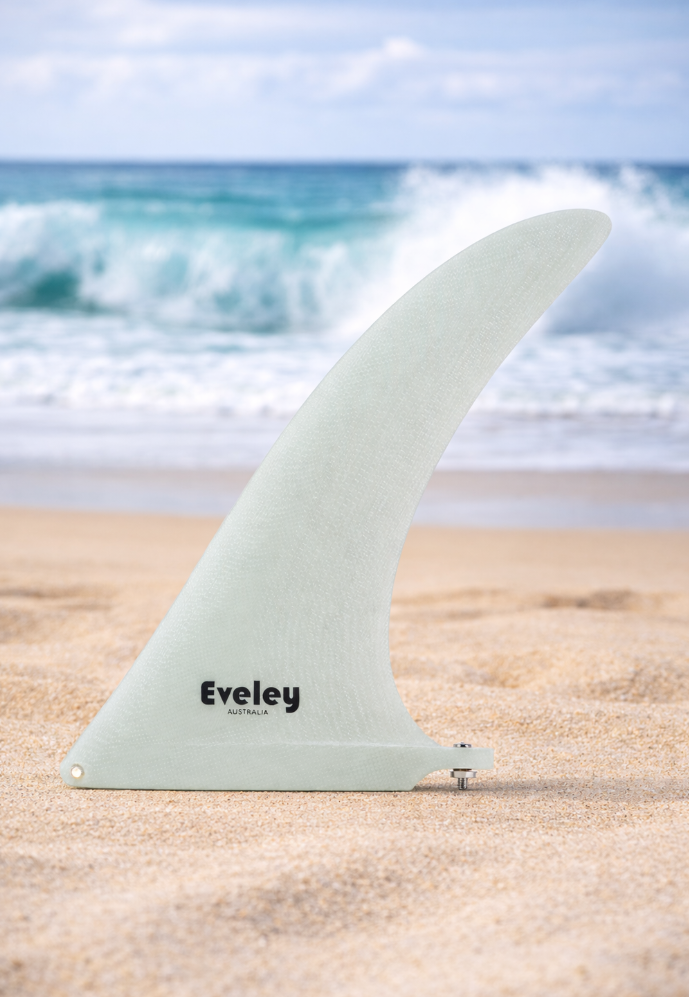
10" 4A Center Fin – Versatile Hold with Flow
Best for:
Surfers blending trim and turning
Mixed conditions
Performance longboards
Provides:
Reliable tail stability
Better drive and rail flow
Less stiffness than logger templates
The 4A is the most versatile high-hold fin.

10.35" Ultimate Center Fin – Increased Stability
Best for:
Heavier boards
Surfers wanting more anchor than 10"
Moderate-to-strong noseriding
Provides:
Enhanced pocket control
Stronger trim stability
Still manageable turning
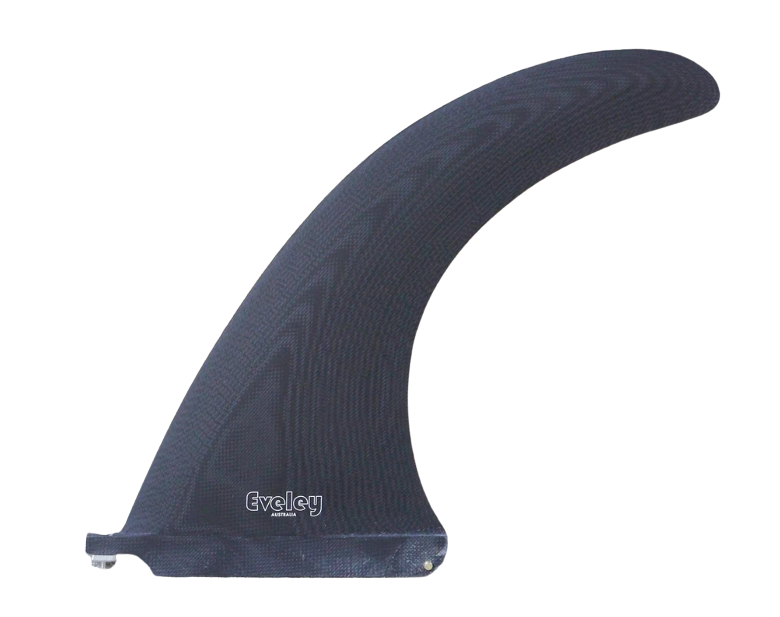
10.5" Logger Fin – Maximum Hold
Best for:
Dedicated noseriders
Steep peeling point waves
Traditional heavy logs
Provides:
Maximum tail lock
Longest nose rides
Strongest pocket anchoring
Most specialised of the group.
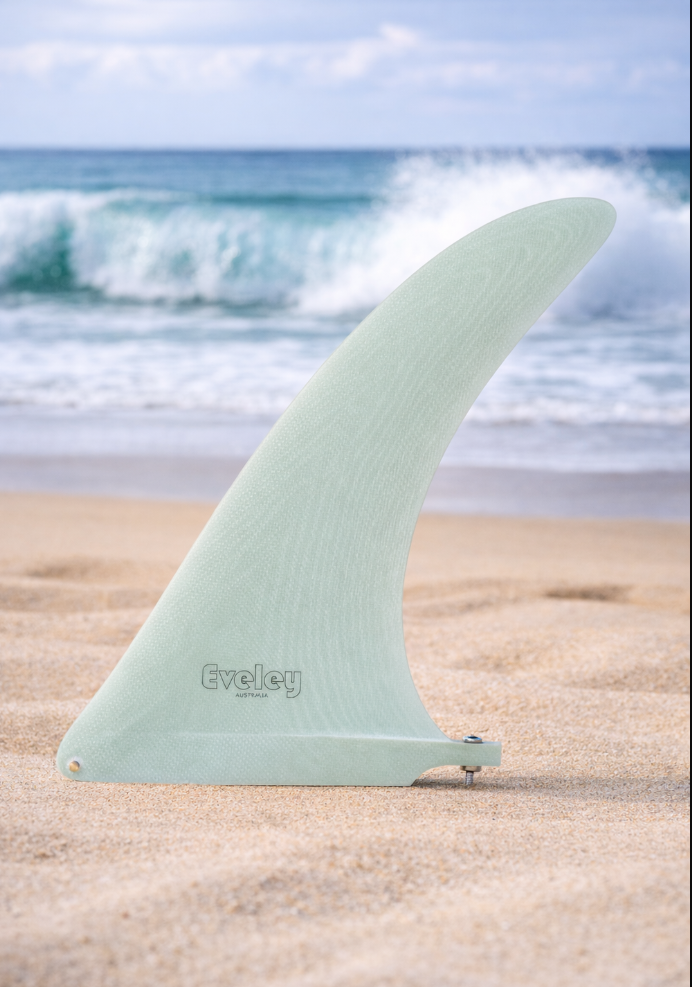
Hold vs Turning Trade-Off
High hold increases stability but reduces looseness.
As hold increases:
Turning speed decreases
Rail-to-rail transitions slow
Trim becomes more planted
Choosing the right level of hold means balancing stability against manoeuvrability.
Wave Type Recommendations
Small, Weak Surf
Use moderate hold like the 10" Pivot or International 4A
Too much fin slows the board.
Clean Point Waves
10.35" Jungle Juice or 10.5” Logger performs best.
Stable pocket riding is rewarded.
Steep, Fast Sections
10.5” Logger or larger upright fins provide maximum control.
Supporting Comparison Articles:
Supporting Knowledge Articles:
Supporting Product Pages:
FAQ’s
What size fin gives the most hold?
Generally 10.5" and above in upright templates.
Is more hold always better?
No. Excess hold can reduce speed and turning freedom in smaller waves.
Which fin offers the best balance?
A 10" pivot or 4A often delivers strong hold without excessive stiffness.
A high-hold longboard fin is essential for:
Noseriding stability
Steep wave confidence
Traditional trim control
But not every surfer needs maximum hold.
For most longboarders:
10" Pivot = balanced stability
4A = versatile control
10.35" Ultimate = enhanced hold
Logger = maximum anchor
Understanding this hierarchy allows you to tune your board precisely to your waves — building longboard performance from the tail up.
The 2+1 Longboard Setup
The 2+1 configuration combines:
A center fin in the sliding box.
Two smaller side fins near the rails. Example: 3.6" Classic Side Surfboard Fins – Mid Blue Pro Glass
The side fins are fitted into Futures fin boxes, or FCS or FCSII fin plugs. These systems are not interchangeable.
Find all the Eveley Side Fins here.
This is the most versatile modern longboard arrangement.
Performance characteristics
Compared with a single fin, a 2+1 provides:
Increased turning response
Greater drive through bottom turns
More control in steeper waves
Reduced reliance on perfect trim
At the same time, it still preserves:
Reasonable glide
Noseriding capability
Smooth rail engagement
This balance explains why 2+1 setups dominate all-round longboarding.
7" International 4A Center Fin — Blue on White Pro Glass
Performance Longboard Fin Arrangements
Performance longboards push closer toward shortboard-style manoeuvrability while keeping longboard paddle power.
These boards often use:
Smaller center fins
More upright templates
Side fins with stronger base drive
Resulting feel
A performance fin arrangement produces:
Faster direction changes
Tighter top-turn arcs
Increased projection in critical sections
However, this comes with trade-offs:
Reduced trim glide
Less stable noseriding
Greater sensitivity to placement errors
Because of this, performance setups suit surfers prioritising:
turning and speed over traditional flow.
Choosing the Right Setup for Your Waves
Small, clean point waves
Best choice:
Single fin
Why:
Emphasises glide and trim
Maximises wave-face speed
Supports classic styling
10" International 4A Center Fin
(all-round longboard fin template)
10.5"+ Logger
(noseride longboard fin)
Beach breaks and steeper peaks
Best choice:
2+1 with responsive side fins
Why:
Added control in drops
Stronger bottom-turn drive
Better hold through sections
High-performance longboarding
Best choice:
Performance-oriented 2+1
Why:
Enables vertical surfing
Improves acceleration
Matches progressive technique
Center Fin Size Guidelines
Although templates vary, general sizing rules help narrow choices.
Logs and traditional noseriders
Larger center fins
Prioritise hold and trim
All-round longboards
Medium center fins
Balance turning and stability
Performance longboards
Smaller, more upright fins
Emphasise manoeuvrability
Correct sizing ensures the board feels:
controlled rather than stiff, responsive rather than loose.
Fine-Tuning Through Placement
Even the correct fin can feel wrong if positioned poorly.
Practical adjustment method
Start with the fin mid-box
If the board feels stiff → move slightly forward
If the board slides or lacks hold → move slightly back
Adjust in 5–10 mm increments only
This measured approach prevents over-correction and reveals the board’s natural balance point.
Common Longboard Fin Mistakes
Oversizing the center fin
Creates:
Slow turning
Excess drag
Reduced responsiveness
Ignoring placement adjustments
Many surfers never move the fin, missing:
Significant performance gains
Better noseride control
Improved turning feel
Using performance fins in traditional logs
Leads to:
Instability
Poor trim
Weak noseriding
Matching template to board design is essential.
How Fin Materials Affect Feel
Most serious longboard surfers prefer solid fiberglass (Pro Glass) construction.
Reasons include:
Predictable flex pattern
Long-term durability
Smooth energy release through turns
Compared with lightweight composites, fiberglass fins provide:
consistent response across a wider range of wave energy.
Recommended Eveley Fins for This Setup
The following Eveley fin templates match the performance characteristics discussed in this guide. Each option is built from solid Pro Glass for consistent flex, durability, and real-world surf reliability.
10" California Dreaming Center Fin
Classic swept template designed for trim speed, glide, and stable noseriding.
→ Shop 10" California Dreaming Center Fin
8" International 4A Center Fin
Balanced all-round template blending smooth turning with dependable hold.
→ Shop 8" International 4A Center Fin
3.6" Classic Side Fins (Pair)
Supportive side bites adding control and drive to versatile 2+1 setups.
→ Shop 3.6" Classic Side Fins (Pair)
Explore the full Eveley fin range to fine-tune your board’s feel, speed, and control across different wave conditions.
FAQ’s
Is a single fin better for noseriding?
Yes.
Single fins provide the cleanest water flow and strongest hold, making stable noseriding significantly easier than multi-fin setups.
Can I convert any longboard to a 2+1?
Only boards with side fin boxes installed can use a 2+1 configuration.
Single-box traditional logs remain limited to center-fin setups.
Does moving the center fin really make a difference?
Yes.
Even small placement changes noticeably alter turning radius, hold, and trim speed.
Conclusion
Longboard fin configuration is not merely a technical detail—it is the core control system shaping how the board trims, turns, and holds the wave.
Single fins deliver timeless glide and stability
2+1 setups provide the broadest real-world versatility
Performance arrangements unlock modern manoeuvrability
By selecting the correct template, size, and placement, surfers can transform the feel of a longboard without changing the board itself.
Understanding these relationships is the key to achieving true longboard flow, control, and speed across changing wave conditions.
Popular Longboard Fins:
FCS vs Futures — Compatibility & Performance Guide
New to surfboard fins? Start with the complete Surfboard Fin Guides overview.
Choosing between FCS and Futures is one of the most common questions in modern surfing.
Both systems dominate the global market, both deliver high-performance surfing, and both are trusted from beginner level through to elite competition.
This guide explains the real differences in compatibility, feel, installation, and performance—so you can confidently choose the right system for your board in 2026.
1. The Core Difference in One Sentence
FCS uses a dual-tab system that locks into plugs in the board.
Futures uses a single tab system that slides into a fin box and is secured with one screw.
Everything else—installation feel, flex response, and compatibility—flows from this structural difference.
2. Compatibility: The Most Important Rule
Fin systems are not interchangeable
FCS fins only fit FCS-style plugs.
Futures fins only fit Futures boxes.
There is no direct cross-fit without special adapters, and adapters are rarely used in performance surfing.
Always match fins to the fin boxes installed in the surfboard.
This is the single most important compatibility rule.
3. FCS System Overview
Construction concept
Two tabs insert vertically into separate plugs in the board.
Modern click-in evolution
FCSII designs allow:
Tool-free installation
Fast fin changes
Secure locking under load
Feel in the water
Because the base is split across two tabs:
Slightly more flex sensation
Smooth, responsive turning
Widely used in performance shortboarding
Many surfers describe the feel as lively and reactive.
4. Futures System Overview
Construction concept
A single continuous tab slides into a box and tightens with one screw.
Structural effect
The uninterrupted base creates:
Strong base connection
Direct energy transfer
Consistent flex pattern
Feel in the water
Often described as:
Solid and drivey
Stable at speed
Smooth through long arcs
Some surfers perceive Futures as feeling slightly stiffer under load.
If your board uses Futures boxes, read the detailed Futures Compatible Fins Explained guide to learn how to identify Futures systems and choose the right fins.
5. Performance Differences in Real Surfing
Speed
Very similar overall.
Speed depends more on fin template and size than system.
Flex response
FCS: slightly more spring sensation
Futures: slightly more base stiffness
The difference is subtle and often preference-based.
Control at high speed
Both systems are used in serious waves worldwide.
Neither has a universal control advantage.
Turning feel
FCS: reactive, quick response
Futures: smooth, connected drive
Again, this is feel, not absolute performance.
6. Installation and Everyday Use
FCS convenience
Fast tool-free insertion in FCSII systems
Easy travel fin removal
Quick experimentation between setups
Futures simplicity
One screw per fin
Strong mechanical hold
Straightforward alignment in the box
Both are reliable when installed correctly.
7. Durability and Repair Considerations
Plug-based systems (FCS)
Individual plugs can be repaired separately
Damage is usually localised
Box-based systems (Futures)
Strong continuous box structure
Major damage may involve larger repair area
In practice, board construction quality matters more than system choice.
8. Availability and Global Usage
Both systems are:
Widely stocked worldwide
Supported by major fin manufacturers
Used by professional surfers
Your local surf shop will almost always carry both.
9. Which System Feels Better?
There is no universal winner.
Surfers who prefer FCS often like:
Quick responsiveness
Easy fin changes
Familiar competition feel
Surfers who prefer Futures often like:
Solid base connection
Smooth drawn-out drive
Simple screw installation
Most experienced surfers adapt easily to either system.
10. Choosing Between FCS and Futures (Simple Guide)
Choose based on your board, not theory
The correct decision is usually:
Whichever system is already installed in your surfboard.
Changing systems requires major board modification, so real-world choice begins with compatibility.
If buying a new board
Consider:
Fin availability where you surf
Personal preference in feel
Recommendations from your shaper
But remember:
Performance differences are smaller than many surfers expect.
11. The Reality: System Matters Less Than Fin Design
Modern testing and real-world surfing show:
Template, size, and flex influence performance far more than the mounting system.
Skilled surfers perform at elite levels on both.
Because of this, the industry focus has shifted toward:
materials
flex tuning
template design
rather than system rivalry.
Final Thoughts
FCS and Futures are both high-performance, reliable fin systems trusted across global surfing.
The real decision comes down to:
compatibility with your board
personal feel preference
availability of the fins you want to ride
For most surfers, mastering fin size, template, and setup will create far bigger performance gains than switching systems.
New to surfboard fins? Start with the Beginner’s Guide to Surfboard Fins – Types, Sizes & Setups Explained for a simple introduction to fin types and sizing.
Futures™ is a registered trademark of Futures Fins. Eveley Surf is not affiliated with or endorsed by Futures Fins. All compatibility references are for descriptive purposes only.
Click here to see all Eveley Futures Compatible surfboard fins.
Quad vs Thruster: Which Fin Setup Is Right?
New to surfboard fins? Start with the complete Surfboard Fin Guides overview.
Choosing between a quad and a thruster is one of the most important performance decisions a surfer can make.
Both setups are proven, widely used, and capable of high-level surfing—yet they feel completely different in the water.
This guide explains how each setup works, when to use them, and how to decide which is right for you.
1. What is a Thruster?
A thruster uses three fins:
Two side fins
One centre fin
This is the most common modern surfboard setup, trusted from beginner level through to world-tour competition.
Thruster feel in the water
Balanced and predictable
Strong pivot off the bottom
Reliable control in steep or powerful waves
Smooth transition between turns
Because of this balance, the thruster is often considered the default performance setup.
2. What Is a Quad?
A quad uses four fins:
Two front fins
Two rear fins
No centre fin
Removing the center fin reduces drag and changes how water flows under the board.
Examples:
4.9" / 3.1" DTR Quad Fins – Black on Natural Pro Glass | FCS II Compatible
Quad feel in the water
Faster down the line
Strong hold when set on rail
Looser release through the lip
Less central pivot compared with a thruster
Quads emphasise speed and flow rather than tight pivot turns.
3. Core Performance Differences
Speed
Winner: Quad
Without a centre fin, quads generate:
Less drag
Faster acceleration
Better glide in weak waves
This makes them especially effective in small or soft surf.
Control in powerful waves
Winner: Thruster
The centre fin provides:
Extra hold
Stronger directional stability
Confidence in steep or hollow sections
Thrusters remain the most dependable setup in critical surf.
Turning style
Thruster turning
Pivots tightly from the tail
Vertical, top-to-bottom surfing
Precise direction changes
Quad turning
Drawn-out carving lines
Rail-driven speed through turns
Fast projection down the line
The difference is often described as:
Thruster = pivot
Quad = drive
Release through the lip
Winner: Quad (for speed)
Winner: Thruster (for predictability)
Quads release quickly because there is no centre fin resistance.
Thrusters release more slowly but with greater control.
4. Which Waves Suit Each Setup?
Small, weak waves → Quad
Why:
Extra speed generation
Better glide across flat sections
Maintains momentum
Many surfers switch to quads when waves drop below waist-to-chest high.
Everyday mixed surf → Either
Choice depends on:
Turning style preference
Board design
Fin template
Both setups work well in average beach-break conditions.
Powerful, steep, or hollow waves → Thruster
Why:
Maximum control
Strong bottom-turn hold
Predictable response at speed
This is why thrusters dominate serious performance surfing.
5. Board Design Matters
Not every board suits both setups equally.
Boards that favour thrusters
Performance shortboards
Narrow tails
High rocker designs
These boards rely on the centre fin for control.
Boards that favour quads
Hybrids and grovellers
Wider tails
Fish shapes
Small-wave performance boards
These designs benefit from extra speed and rail drive.
6. Skill Level Considerations
Beginners
Best choice: Thruster
Reasons:
More stability
Easier control
Predictable turning
Thrusters help develop fundamental technique.
Intermediate surfers
Either setup works
This stage is ideal for:
Testing quad speed
Learning rail-based turning
Understanding fin influence
Experimentation becomes valuable here.
Advanced surfers
Use both
Experienced surfers often switch based on:
Wave power
Board type
Desired surfing style
Modern quivers frequently include both quad and thruster boards.
7. Why Many Surfers Own Both
The quad vs thruster debate is not about which is better overall.
It’s about which is better for the moment.
A common real-world pattern:
Small days → Quad
Good days → Thruster
Owning both setups provides maximum versatility without changing boards.
8. Common Myths
“Quads can’t handle powerful waves”
False.
They can work extremely well—especially in barrel riding—but feel different from thrusters.
“Thrusters are slower”
Partly true.
They create more drag, but the control advantage often outweighs pure speed.
“One setup is more advanced”
False.
Both are high-performance systems used at elite levels.
9. Simple Decision Guide
Choose a thruster if you want:
Maximum control
Tight vertical turns
Confidence in steep waves
One reliable all-round setup
Choose a quad if you want:
Extra speed in weak surf
Long carving turns
Fast down-the-line projection
A lively small-wave feel
10. The Reality: It’s About Versatility
Modern surfers no longer stay loyal to one setup.
Instead, they tune equipment to conditions and goals.
Because fins are easy to change, switching between:
thruster control
quad speed
has become one of the simplest performance upgrades available.
Final Thoughts
Both quads and thrusters are essential parts of modern surfing.
Understanding their differences allows surfers to unlock:
more speed in weak waves
more control in powerful surf
better overall progression
The best setup is not universal—
it’s the one that matches your board, waves, and surfing style.
Click here to see all the Eveley Thruster Fins
Click here to see all the Eveley Quad Fins
The Complete Guide to Surfboard Fins
New to surfboard fins? Start with the complete Surfboard Fin Guides overview.
Surfboard fins are the control system of a surfboard.
They determine speed, hold, turning radius, and overall feel in the water.
Choosing the right fins can transform how a board performs—often more than changing the board itself.
This guide explains everything surfers need to know about fins, from basic function through to advanced performance tuning.
1. What Surfboard Fins Actually Do
Without fins, a surfboard would slide sideways with almost no control.
Fins create:
Directional stability → keeps the board tracking forward
Hold in the wave face → prevents slipping during turns
Drive and projection → converts turning force into forward speed
Release → allows controlled sliding when pushed hard
Every fin choice is a balance between hold, speed, and manoeuvrability.
2. The Main Fin Setups Explained
Thruster (3 fins)
Most common modern setup.
Feel:
Balanced control
Predictable turning
Reliable in most conditions
Best for:
Everyday shortboards and varied surf.
Quad (4 fins)
Removes the centre fin to reduce drag and increase speed.
Feel:
Faster down the line
Strong hold on rail
Looser release off the top
Best for:
Small waves, fast walls, and performance surfing.
Twin Fin (2 fins)
A classic, skate-like configuration.
Feel:
Very fast
Loose and flowing
Less control in steep surf
Best for:
Small-to-medium clean waves and retro boards.
Single Fin
Traditional longboard setup.
Feel:
Smooth and drawn-out turns
Maximum trim and glide
Minimal pivot response
Best for:
Classic longboarding and point waves.
2+1 (Single + Side Bites)
Blends longboard flow with added control.
Feel:
Stable trim
Extra hold in turns
More versatility than a pure single
Best for:
Performance longboards and mixed conditions.
3. Fin Size and Why It Matters
Fin size must match surfer weight, board size, and wave power.
General rule
Larger fins → more hold and drive
Smaller fins → more looseness and release
Using fins that are too small causes sliding.
Too large creates stiffness and slow turning.
Correct sizing is one of the biggest performance upgrades available.
4. Fin Template: Shape Controls Feel
Beyond size, the outline of a fin changes how a board behaves.
Raked fins
Longer sweep
Smooth, drawn-out turns
Strong drive
Upright fins
Tighter turning radius
Faster pivot
Looser feel
Template choice lets surfers tune a board for speed vs manoeuvrability.
5. Fin Construction Materials (2026 Standard)
Fiberglass / Pro Glass
Benchmark performance material.
Consistent flex
Strong durability
Predictable response
Preferred by experienced surfers.
Carbon-reinforced fins
Adds stiffness and faster energy return.
More projection
Sharper response
High-performance feel
Common in modern performance quads and thrusters.
Composite / plastic fins
Entry-level construction.
Lower cost
Softer flex
Reduced precision
Suitable for beginners or softboards.
6. Fin Flex: The Hidden Performance Factor
Flex controls how energy loads and releases through a turn.
Stiff fins → fast, immediate response
Flexible fins → smoother, more forgiving feel
Advanced surfers often choose stiffer constructions for accuracy and speed.
7. Fin Systems and Compatibility
Modern surfboards mainly use two removable systems:
Dual-tab click-in systems
Single-base screw-in systems
Correct compatibility is essential.
Always match fins to the fin box installed in the board.
8. How Different Waves Change Fin Choice
Small, weak waves
Faster setups
Quads or twins
Slightly smaller fins
Medium everyday surf
Balanced thruster or quad
Standard sizing
Powerful or hollow waves
Thrusters for control
Slightly larger fins for hold
Wave energy should guide every fin decision.
9. Common Fin Mistakes Surfers Make
Riding the wrong size for body weight
Using cheap flexible fins on performance boards
Ignoring wave conditions
Not experimenting with quad vs thruster setups
Correcting these mistakes often produces instant performance gains.
10. How to Choose the Right Fins (Simple Method)
Follow this order:
Match fin system compatibility
Choose setup type (thruster, quad, twin, single)
Select correct size for weight
Pick template for turning style
Decide material and flex level
This process guarantees a reliable starting point for any surfer.
11. Why Fins Matter More in 2026
Surfboard design continues to evolve, but fins remain the fastest, cheapest performance upgrade.
Modern surfers now tune:
different fin setups for different waves
carbon vs fiberglass feel
quad vs thruster speed
Because of this, fins are no longer accessories—
they are core performance equipment.
Final Thoughts
Understanding surfboard fins unlocks better speed, control, and flow in the water.
The right combination of:
setup
size
template
construction
can completely change how a surfboard rides.
For surfers wanting real progression,
learning fins is one of the highest-impact steps possible.

FCS vs Futures
New to surfboard fins? Start with the complete Surfboard Fin Guides overview.
This guide explains the compatibility differences between FCS and Futures fin systems, so you can quickly identify which fins fit your board.
If you want a full comparison of performance and feel, read the complete guide:
FCS vs Futures — Full Compatibility & Performance Guide
The most important rule is simple:
FCS fins fit FCS plugs, and Futures fins fit Futures boxes.
FCS vs Futures Compatibility
FCS fins
Fit FCS plugs
Usually fit FCS II plugs (with screws)
Do not fit Futures boxes
FCS II fins
Fit FCS II plugs
Do not fit FCS plugs
Do not fit Futures boxes
Futures fins
Fit Futures boxes only
Do not fit FCS plugs
Do not fit FCS II plugs
If your board uses Futures boxes, read the detailed Futures Compatible Fins Explained guide to learn how to identify Futures systems and choose the right fins.
Futures™ is a registered trademark of Futures Fins. Eveley Surf is not affiliated with or endorsed by Futures Fins. All compatibility references are for descriptive purposes only.
Click here to see Surfboard Fin Systems Explained
Click here to see all Eveley Futures Compatible surfboard fins.
Twin vs Quad Fins Explained: Speed, Hold & Wave Suitability
New to surfboard fins? Start with the complete Surfboard Fin Guides overview.
Surfboard fin configuration strongly influences how a board accelerates, holds through turns, and releases in critical sections.
Two of the most commonly compared setups are twin fins and quad fins. Each creates a distinct balance of speed, drive, looseness, and control.
This guide explains the practical performance differences so surfers can select the correct setup for their board design, wave conditions, and riding style.
What defines a twin-fin setup
A twin fin uses two side fins with no rear center fin.
This creates minimal drag and a fast, flowing feel across the wave face.
Key performance traits of twin fins
Speed generation
Twins accelerate quickly because water flows cleanly off the tail without a center fin adding resistance.
Loose turning response
The absence of a rear stabilising fin allows easier tail release and wider, more flowing arcs.
Reduced hold in steep sections
Without a center fin, grip in powerful or vertical waves is lower than multi-fin setups.
What defines a quad-fin setup
A quad fin uses four fins—two front fins and two rear fins—without a center fin.
Rear fins sit closer to the rail, increasing hold while maintaining speed.
Key performance traits of quads
High down-the-line speed
Quads combine low drag with strong projection, making them fast in weak or running waves.
Increased hold compared with twins
Rear fins add stability and grip, especially through longer carving turns.
Drive through turns
Water channelled between front and rear fins produces strong forward projection.
Speed comparison: twin vs quad
Twin fins
Extremely fast in small to medium clean waves
Speed comes from low drag and free release
Can feel unstable when waves become steep or powerful
Quad fins
Maintain speed across wider wave ranges
Strong projection in soft or flat sections
Better control when wave power increases
Summary:
Twins feel freer and more playful.
Quads feel faster with more control.
Hold and control differences
Twin fins
Limited grip in vertical or hollow sections
Tail can slide under heavy pressure
Best suited to open-face surfing
Quad fins
Noticeably stronger rail hold
Stable through carves and high-speed lines
More reliable in overhead or punchy surf
Turning style and feel
Twin-fin turning character
Smooth, drawn-out arcs
Easy release and slide
Emphasis on flow and trim rather than tight pivots
Often associated with retro fish and mid-length twin designs.
Quad-fin turning character
Strong carving turns with forward drive
Tighter control at speed
Capable of performance surfing in varied conditions
Common on performance shortboards, hybrids, and step-downs.
Wave suitability guide
Best waves for twin fins
Small to medium surf
Clean, open faces
Point breaks and soft beach breaks
Purpose: maximise speed and flow.
Best waves for quad fins
Weak surf needing extra drive
Fast running walls
Overhead or more powerful conditions
Purpose: maintain speed with added control.
Can twins use a stabiliser fin?
Some twin setups include a small center stabiliser (trailer) fin.
Effect of adding a stabiliser
Increases hold and directional control
Slightly reduces looseness
Bridges the feel between twin and quad performance
This is common on modern twin-plus-trailer designs.
Choosing between twin and quad setups
Selection should consider:
board outline and tail shape
rocker profile
wave power and steepness
surfer stance and turning style
General guidance
Choose twin fins for:
maximum looseness and flow
playful surfing in softer waves
retro or fish-inspired board designs
Choose quad fins for:
speed with reliable control
wider wave-condition versatility
performance-oriented surfing
Frequently asked questions
Are quad fins faster than twins?
Quads usually maintain speed across more conditions, but twins can feel faster in clean, smaller waves due to reduced drag.
Do quad fins replace thrusters?
Not entirely. Thrusters still provide the most balanced pivot and control, but quads offer greater speed and projection in many conditions.
Is a twin fin harder to control?
In steep or powerful waves, yes.
Twins prioritise flow and release over maximum grip.
What is a twin-plus-trailer setup?
It is a twin fin combined with a small center stabiliser, adding hold while keeping much of the twin’s speed and looseness.
Explore twin, quad, and stabiliser fins
Browse the range of:
twin-fin sets for speed and flow
quad-fin configurations for drive and control
stabiliser trailer fins for fine-tuning performance
to match fin behaviour precisely to board design and wave conditions.
Click here to see the Eveley Twin Fins
Click here to see the Eveley Quad Fins
Longboard Fin Buyer Guide: Sizes, Shapes & Setup Explained
New to surfboard fins? Start with the complete Surfboard Fin Guides overview.
How longboard fin size affects performance
Fin depth is the primary driver of how a longboard feels in the water.
Larger fins (9"–11")
Typical for traditional logs and nose-riders.
Effect on performance:
Increased hold and directional stability
Smoother drawn-out turns
Stronger trim and nose-ride control
Reduced looseness in tight arcs
Best suited to:
Classic longboards
Slower, softer waves
Surfers prioritising glide and control
Traditional longboards typically perform best with larger center fins.
Examples: 10.35" Ultimate Center Fin – Black Pro Glass Longboard Fin
10.75" Funky Monkey Center Fin – Natural Pro Glass Longboard Fin
See the Classic Longboard Fin Guide
Medium fins (8"–9")
Common across versatile all-round longboards.
Effect on performance:
Balanced hold and manoeuvrability
Predictable turning radius
Good trim speed without excessive drag
Best suited to:
Everyday longboard surfing
Mixed wave conditions
Riders wanting one reliable setup
Smaller fins (6.5"–8")
Used in performance longboards and 2+1 setups.
Effect on performance:
Faster rail-to-rail response
Tighter turning arcs
Reduced drag and increased release
Less nose-ride stability
Best suited to:
Steeper or more powerful waves
Surfers using active footwork
High-performance longboard designs
For a complete overview of surfboard fin selection, read the Complete Surfboard Fin Buyer’s Guide
Longboard fin configuration has a greater effect on real-world performance than almost any other equipment choice.
While board length, rocker, and rail shape all influence glide and turning response, the fin setup ultimately determines how a longboard holds, pivots, trims, and accelerates across the wave face.
New to surfboard fins? Start with the complete Surfboard Fin Guides overview.
Choosing the correct longboard fin affects stability, turning response, trim speed, and nose-riding control.
This guide explains how fin size, template shape, and placement influence performance so surfers can select the right configuration for their board and wave conditions.
The focus is on three common longboard setups:
Single fin
2+1 configuration
Performance-oriented smaller center fins
Understanding these variables allows accurate fin selection without guesswork.
Recommended Longboard Fins
If you're choosing a longboard fin setup, these proven templates cover most boards and wave conditions:
• All-round longboard fin: 10" International 4A Center Fin
Balanced hold, trim speed, and smooth carving turns.
• Performance longboard fin: 8" International 4A Center Fin
Faster turning and reduced drag for modern longboards.
• Small center fin for 2+1 setups: 4" Dynamic Center Fin
Ideal for performance longboards and steeper waves.
Selecting the correct longboard center fin size is one of the most important decisions a surfer can make when tuning board performance.
While template shape, flex, and placement all influence feel, fin size ultimately determines the balance between hold, glide, turning freedom and control.
A properly sized center fin allows the board to:
Trim smoothly without excess drag
Hold steady during noserides
Turn with predictable response
Maintain control across varying wave energy
An incorrect size, by contrast, can make even a well-designed longboard feel stiff, unstable, or unresponsive.
See our How To Choose the Right Longboard Fin Size guide for more information.
Why Fin Configuration Matters on Longboards
Unlike shortboards, longboards rely heavily on directional stability and drawn-out rail engagement.
Because of the board’s length and planing area:
Small fin changes create large performance differences
Placement within the sliding center fin box alters turning radius
Side fins can shift the board from classic glide to modern responsiveness
For this reason, experienced longboarders often treat fins as a primary tuning tool, not a fixed accessory.
The Single Fin Setup
The traditional longboard configuration uses one center fin only, positioned in a sliding center fin box.
Performance characteristics
A single fin delivers:
Maximum trim speed and glide
Smooth, drawn-out turns
Strong hold during noseriding
Minimal drag from side fins
Because water flows cleanly along the rail line without interruption, the board feels: fluid, stable, and classic underfoot.
Fin placement effects
Small adjustments inside the center box dramatically change behaviour:
Further back in the box
More hold and stability
Stronger noseriding control
Slower turning response
Further forward in the box
Looser turning feel
Faster rail-to-rail transitions
Reduced noseride hold
This adjustability is one of the defining advantages of traditional longboard design.
Popular Single Fins:
11" International 4A Center Fin – Pink on White Pro Glass
The 2+1 Longboard Setup
The 2+1 configuration combines:
A center fin in the sliding box
Two smaller side fins near the rails. Example: 3.6" Classic Side Surfboard Fins – Mid Blue Pro Glass
This is the most versatile modern longboard arrangement.
Performance characteristics
Compared with a single fin, a 2+1 provides:
Increased turning response
Greater drive through bottom turns
More control in steeper waves
Reduced reliance on perfect trim
At the same time, it still preserves:
Reasonable glide
Noseriding capability
Smooth rail engagement
This balance explains why 2+1 setups dominate all-round longboarding.
7" International 4A Center Fin — Blue on White Pro Glass
Performance Longboard Fin Arrangements
Performance longboards push closer toward shortboard-style manoeuvrability while keeping longboard paddle power.
These boards often use:
Smaller center fins
More upright templates
Side fins with stronger base drive
Resulting feel
A performance fin arrangement produces:
Faster direction changes
Tighter top-turn arcs
Increased projection in critical sections
However, this comes with trade-offs:
Reduced trim glide
Less stable noseriding
Greater sensitivity to placement errors
Because of this, performance setups suit surfers prioritising:
turning and speed over traditional flow.
Choosing the Right Setup for Your Waves
Small, clean point waves
Best choice:
Single fin
Why:
Emphasises glide and trim
Maximises wave-face speed
Supports classic styling
10" International 4A Center Fin
(all-round longboard fin template)
10.5"+ Logger
(noseride longboard fin)
Beach breaks and steeper peaks
Best choice:
2+1 with responsive side fins
Why:
Added control in drops
Stronger bottom-turn drive
Better hold through sections
High-performance longboarding
Best choice:
Performance-oriented 2+1
Why:
Enables vertical surfing
Improves acceleration
Matches progressive technique
Center Fin Size Guidelines
Although templates vary, general sizing rules help narrow choices.
Logs and traditional noseriders
Larger center fins
Prioritise hold and trim
All-round longboards
Medium center fins
Balance turning and stability
Performance longboards
Smaller, more upright fins
Emphasise manoeuvrability
Correct sizing ensures the board feels: controlled rather than stiff, responsive rather than loose.
Fine-Tuning Through Placement
Even the correct fin can feel wrong if positioned poorly.
Practical adjustment method
Start with the fin mid-box
If the board feels stiff → move slightly forward
If the board slides or lacks hold → move slightly back
Adjust in 5–10 mm increments only
This measured approach prevents over-correction and reveals the board’s natural balance point.
Common Longboard Fin Mistakes
Oversizing the center fin
Creates:
Slow turning
Excess drag
Reduced responsiveness
Ignoring placement adjustments
Many surfers never move the fin, missing:
Significant performance gains
Better noseride control
Improved turning feel
Using performance fins in traditional logs
Leads to:
Instability
Poor trim
Weak noseriding
Matching template to board design is essential.
How Fin Materials Affect Feel
Most serious longboard surfers prefer solid fiberglass (Pro Glass) construction.
Reasons include:
Predictable flex pattern
Long-term durability
Smooth energy release through turns
Compared with lightweight composites, fiberglass fins provide:
consistent response across a wider range of wave energy.
Recommended Eveley Fins for This Setup
The following Eveley fin templates match the performance characteristics discussed in this guide. Each option is built from solid Pro Glass for consistent flex, durability, and real-world surf reliability.
10" California Dreaming Center Fin
Classic swept template designed for trim speed, glide, and stable noseriding.
→ Shop 10" California Dreaming Center Fin
8" International 4A Center Fin
Balanced all-round template blending smooth turning with dependable hold.
→ Shop 8" International 4A Center Fin
3.6" Classic Side Fins (Pair)
Supportive side bites adding control and drive to versatile 2+1 setups.
→ Shop 3.6" Classic Side Fins (Pair)
Longboard fin shapes explained
Beyond size, template shape strongly influences feel.
Pivot templates
Wide base, upright outline, fuller tip.
Characteristics:
Maximum hold while nose riding
Strong directional stability
Slower turning response
Common on traditional logs and dedicated nose-riders.
For dedicated nose-riding and maximum hold, pivot-style fins are ideal.
Example: 10" Pivot Center Fin
Raked templates
Swept-back outline with narrower tip.
Characteristics:
Smoother drawn-out turns
Increased drive through arcs
Reduced pivot compared with upright fins
Typical for all-round and performance longboards.
Flex-tip and performance templates
Refined foil and thinner tip sections.
Characteristics:
Responsive turning under load
Spring-like release exiting turns
Greater sensitivity to rider input
Used on modern high-performance longboards.
Single fin vs 2+1 longboard setups
Single fin configuration
Features:
One adjustable center fin in a sliding center fin box
Clean water flow and traditional feel
Maximum trim and glide
Best for:
Classic longboard surfing
Nose riding
Smooth, flowing style
2+1 configuration
Features:
Center fin plus two removable side fins
Increased hold and turning control
More responsive feel in steeper waves
Best for:
Performance longboards
Beach breaks and faster waves
Surfers blending glide with manoeuvres
Smaller center fins are commonly used in modern longboards and 2+1 setups.
Example performance center fin: 7.5" International 4A Center Fin
Fin placement in the sliding center fin box
Position changes performance significantly.
Fin forward
Looser turning
Easier pivot
Reduced hold while nose riding
Fin centered
Balanced control and manoeuvrability
Reliable everyday setting
Fin back
Maximum hold and trim stability
Stronger nose-ride control
Slower turning response
Small adjustments (5–10 mm) create noticeable differences.
Matching fins to wave conditions
Small, soft waves
Larger center fin
Pivot-oriented template
Fin placed slightly back
Purpose: maintain glide and stability.
Clean shoulder-high waves
Medium all-round fin
Moderate rake
Centred placement
Purpose: balanced trim and turning.
Steeper or faster waves
Smaller center fin or 2+1 setup
Raked or performance template
Slightly forward placement
Purpose: quicker response and control.
Common longboard fin selection mistakes
Choosing too small a fin for board size
Ignoring template shape and focusing only on depth
Forgetting to adjust fin position before changing fins
Mixing incompatible fin box systems
Correct sizing and placement usually solve performance issues without changing boards.
Mixing incompatible fin systems is a common mistake. If your board uses Futures side fins, read the Futures-compatible fins guide before choosing fins.
Related Longboard Fin Guides
Longboard Fins Guide Australia – Single, 2+1 & Performance Explained
Sliding Center Fin Box (US / Bahne Box) Guide
How to Choose the Right Fin Size
Surfboard Fin Compatibility Explained
FAQs
What size fin should a 9' longboard use?
Most 9' longboards work best with 8.5"–9.5" center fins depending on whether the design is traditional or performance-oriented.
Is a bigger fin always better for nose riding?
Generally yes, because increased area improves hold and stability, but placement and template also matter.
When should I use a 2+1 setup instead of a single fin?
Use 2+1 when surfing steeper, faster, or more powerful waves where added control and turning response are beneficial.
Does moving the center fin really make a difference?
Yes.
Even small placement changes noticeably alter turning radius, hold, and trim speed.
Longboard fin configuration is not merely a technical detail—it is the core control system shaping how the board trims, turns, and holds the wave.
Single fins deliver timeless glide and stability
2+1 setups provide the broadest real-world versatility
Performance arrangements unlock modern manoeuvrability
By selecting the correct template, size, and placement, surfers can transform the feel of a longboard without changing the board itself.
Understanding these relationships is the key to achieving:
true longboard flow, control, and speed across changing wave conditions.
→ Twin Fin vs Thruster — Speed vs Control
→ Quad vs Thruster — Which Is Faster?
Choosing the right longboard fin
Accurate fin choice depends on:
board length and rocker
rail shape and tail design
wave power and steepness
surfer weight, stance, and style
Starting with the correct size range, then refining template and placement, provides the most reliable results.
Popular Longboard Center Fins
10" International 4A Center Fin
The most versatile everyday longboard fin.
9.25" Classic Longboard Fin
Balanced trim and turning response.
4" Dynamic Center Fin
Ideal for performance 2+1 setups.
Explore longboard fins
Browse the range of:
single longboard center fins
2+1 compatible center fins
performance and pivot templates
to match fin behaviour precisely to board design and wave conditions.
Explore the full Eveley fin range to fine-tune your board’s feel, speed, and control across different wave conditions.
Futures™ is a registered trademark of Futures Fins. Eveley Surf is not affiliated with or endorsed by Futures Fins. All compatibility references to Futures Fins are for descriptive purposes only.

Surfboard Fin Systems Explained: FCS vs Futures vs Longboard Fin Boxes
New to surfboard fins? Start with the complete Surfboard Fin Guides overview.
Choosing the correct surfboard fin system affects how a board feels in the water, how easily fins can be changed, and which replacement fins are compatible.
This guide explains the three main systems used today:
FCS dual-tab systems
Futures single-tab systems
Longboard sliding center fin box systems
Understanding the differences helps surfers select fins that match their board, wave conditions, and riding style.
The three main surfboard fin systems
FCS fin systems
FCS (Fin Control System) uses a two-tab base that inserts into plugs set into the surfboard.
Key characteristics:
Widely used across shortboards and performance boards
Large aftermarket range of compatible fins
Available in both screw-in and tool-free click-in versions
Easy fin changes for travel or varying wave conditions
FCS systems are common on production surfboards and are often chosen for convenience and availability of replacement fins.
Futures fin systems
Futures uses a single tab that slides into a molded fin box and is secured with a screw at the front.
Key characteristics:
Continuous base connection for strong load transfer
Known for direct drive and stability under power
Broad range of fiberglass and composite fin templates
Popular with performance shortboards, hybrids, and mid-lengths
Many surfers prefer Futures for its structural strength and consistent flex response.
Futures systems use a single-tab base design. For a complete breakdown of installation and compatibility, see the Futures-compatible fins guide.
Longboard sliding center fin box systems
Traditional longboards use a full-length sliding center fin box combined with either:
Single-fin setups, or
2+1 configurations with removable side fins.
Key characteristics:
Fin position can be adjusted forward or back
Enables tuning between pivot, hold, and glide
Compatible with a wide variety of longboard fin templates
Industry standard for performance and classic longboards
This system provides the widest tuning range of any fin setup.
Popular Center Fins:
11" International 4A Center Fin – Pink on White Pro Glass
FCS vs Futures: performance differences
Base connection and flex
FCS: two independent tabs create slightly more localized flex.
Futures: single continuous base distributes load more evenly.
Result:
FCS often feels looser and more reactive.
Futures often feels more planted and drive-oriented.
Installation and durability
FCS: quick to install; individual plugs can be replaced if damaged.
Futures: strong one-piece box; damage is less common but repair is larger if required.
Fin availability
Both systems have extensive fin ranges, including:
thrusters
quads
twins
stabilisers and trailers
Availability is effectively equal in modern surf retail.
When to choose each fin system
Choose FCS if you want:
Fast fin changes
Wide compatibility across many boards
A slightly looser turning feel
Choose Futures if you want:
Strong base connection and drive
Predictable flex under power
Stability in larger or steeper waves
Modern surfboards typically use either FCS or Futures fin systems. This Futures Compatible Fins Explained guide explains exactly how Futures fins fit and how to identify Futures boxes.
Choose a sliding center fin box if you ride:
Longboards or mid-length single fins
2+1 performance longboards
Boards requiring adjustable fin position
How fin systems affect board feel
Fin systems influence:
Drive – how strongly the board accelerates through turns
Hold – grip in steeper wave faces
Release – how easily the tail breaks free
Tuning range – ability to adjust behaviour with fin position or template
While template and size matter most, the connection system still shapes overall response.
Compatibility guide (quick reference)
Performance shortboards
Typically use FCS or Futures fin systems.
Hybrid / groveller boards
Usually fitted with FCS or Futures fin systems.
Twin fins
Commonly designed for FCS or Futures compatibility.
Quad setups
Most often use FCS or Futures fin systems.
Longboard single fins
Use a sliding center fin box.
Longboard 2+1 setups
Use a sliding center fin box for the center fin
plus side fin plugs for the two smaller fins.
Always match fin base type to the installed box system.
Frequently asked questions
Are FCS and Futures fins interchangeable?
No. Each system uses a different base design, so fins are not cross-compatible.
Which system is stronger?
Both are structurally reliable. Futures distributes load through a continuous base, while FCS allows localized flex and easier plug repair.
Do fin systems change speed?
Speed is influenced more by fin template, size, and foil than the box system itself, though base connection can subtly affect drive and stability.
Why do longboards use a sliding center fin box?
It allows precise fin placement, enabling tuning between pivot-style turning and drawn-out glide.
Choosing the right fins for your surfboard
Selecting fins should consider:
board design
wave size and power
surfer weight and style
desired balance of drive, hold, and release
Understanding the installed fin system is the first step before choosing template or material.
Explore surfboard fins
Browse the full range of:
performance shortboard fins
quad and twin sets
stabiliser and trailer fins
longboard single fins and 2+1 setups
to find a configuration matched to your board and conditions.
Futures™ is a registered trademark of Futures Fins. Eveley Surf is not affiliated with or endorsed by Futures Fins. All compatibility references are for descriptive purposes only.