
Quad vs Thruster: Which Fin Setup Is Right?
New to surfboard fins? Start with the complete Surfboard Fin Guides overview.
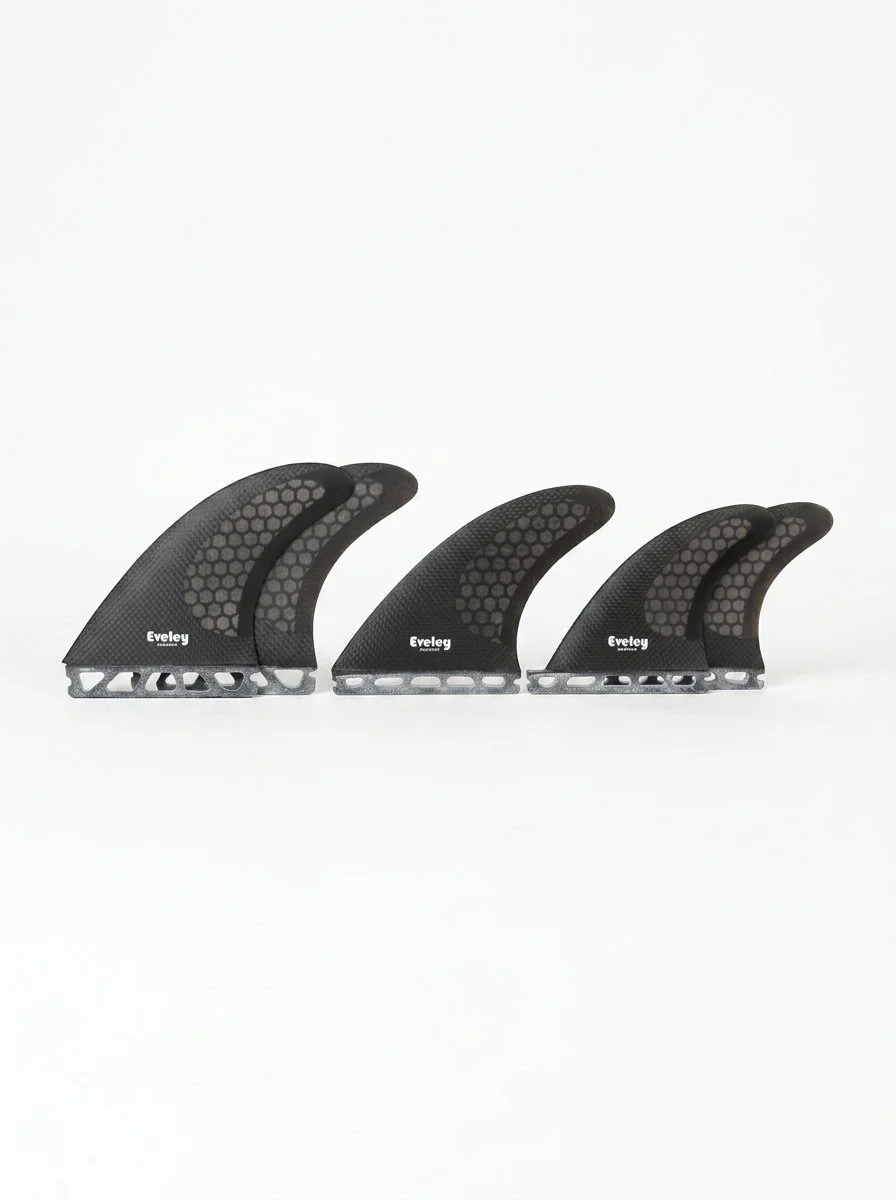
Choosing between a quad and a thruster is one of the most important performance decisions a surfer can make.
Both setups are proven, widely used, and capable of high-level surfing—yet they feel completely different in the water.
This guide explains how each setup works, when to use them, and how to decide which is right for you.
1. What is a Thruster?
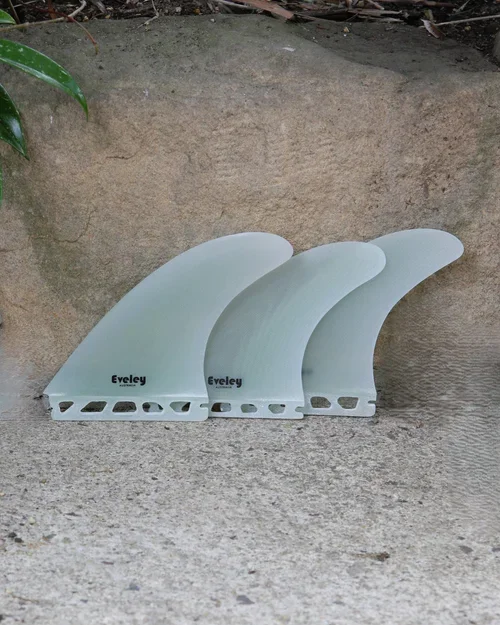
A thruster uses three fins:
Two side fins
One centre fin
This is the most common modern surfboard setup, trusted from beginner level through to world-tour competition.
Thruster feel in the water
Balanced and predictable
Strong pivot off the bottom
Reliable control in steep or powerful waves
Smooth transition between turns
Because of this balance, the thruster is often considered the default performance setup.
2. What Is a Quad?
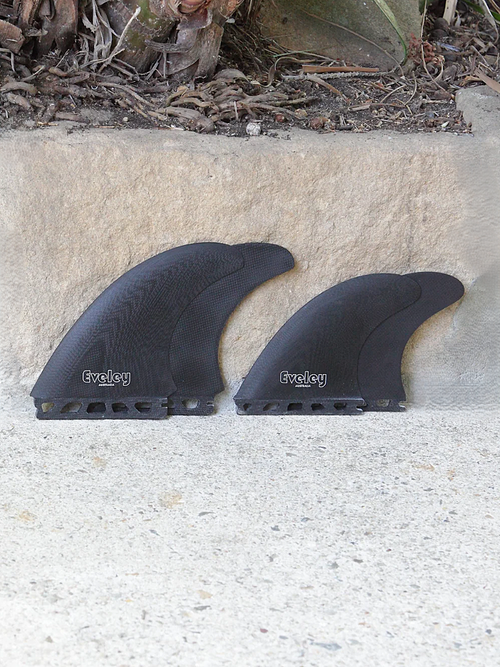
A quad uses four fins:
Two front fins
Two rear fins
No centre fin
Removing the center fin reduces drag and changes how water flows under the board.
Examples:
4.9" / 3.1" RM Quad Fins – Black on Natural Pro Glass | FCS II Compatible
5.2" / 4.35" Big Boy Quad Fins – Black Pro Glass | Futures Compatible (Set of 4)
Quad feel in the water
Faster down the line
Strong hold when set on rail
Looser release through the lip
Less central pivot compared with a thruster
Quads emphasise speed and flow rather than tight pivot turns.
3. Core Performance Differences
Speed
Winner: Quad
Without a centre fin, quads generate:
Less drag
Faster acceleration
Better glide in weak waves
This makes them especially effective in small or soft surf.
Control in powerful waves
Winner: Thruster
The centre fin provides:
Extra hold
Stronger directional stability
Confidence in steep or hollow sections
Thrusters remain the most dependable setup in critical surf.
Turning style
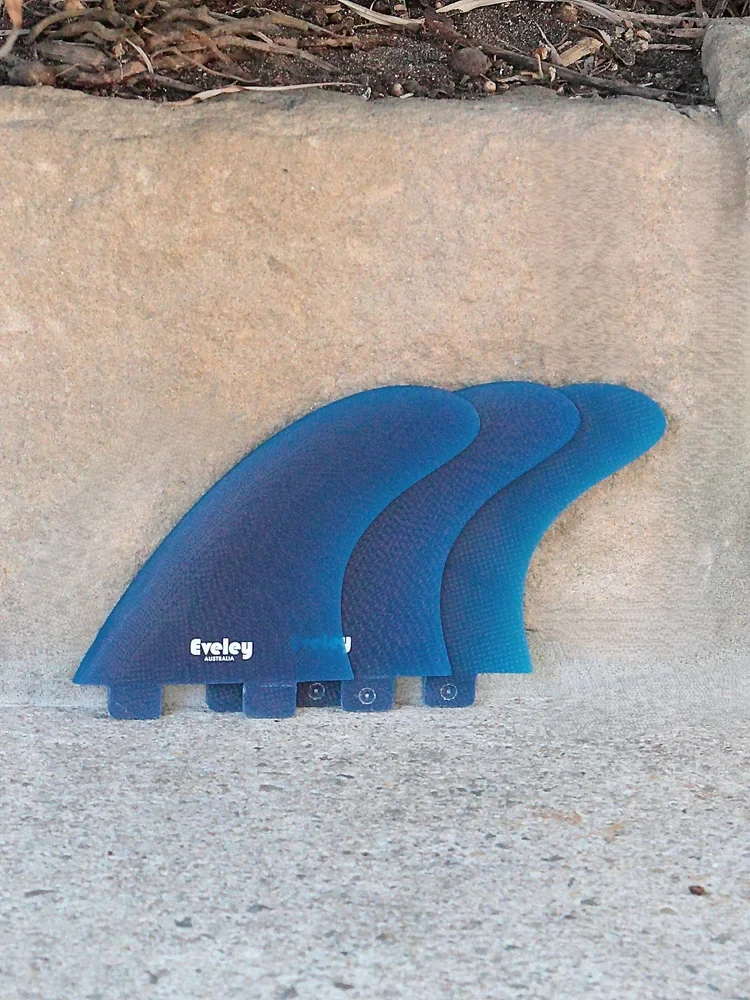
Thruster turning
Pivots tightly from the tail
Vertical, top-to-bottom surfing
Precise direction changes
Quad turning
Drawn-out carving lines
Rail-driven speed through turns
Fast projection down the line
The difference is often described as:
Thruster = pivot
Quad = drive
Release through the lip
Winner: Quad (for speed)
Winner: Thruster (for predictability)
Quads release quickly because there is no centre fin resistance.
Thrusters release more slowly but with greater control.
4. Which Waves Suit Each Setup?
Small, weak waves → Quad
Why:
Extra speed generation
Better glide across flat sections
Maintains momentum
Many surfers switch to quads when waves drop below waist-to-chest high.
Everyday mixed surf → Either
Choice depends on:
Turning style preference
Board design
Fin template
Both setups work well in average beach-break conditions.
Powerful, steep, or hollow waves → Thruster
Why:
Maximum control
Strong bottom-turn hold
Predictable response at speed
This is why thrusters dominate serious performance surfing.
5. Board Design Matters
Not every board suits both setups equally.
Boards that favour thrusters
Performance shortboards
Narrow tails
High rocker designs
These boards rely on the centre fin for control.
Boards that favour quads
Hybrids and grovellers
Wider tails
Fish shapes
Small-wave performance boards
These designs benefit from extra speed and rail drive.
6. Skill Level Considerations
Beginners
Best choice: Thruster
Reasons:
More stability
Easier control
Predictable turning
Thrusters help develop fundamental technique.
Intermediate surfers
Either setup works
This stage is ideal for:
Testing quad speed
Learning rail-based turning
Understanding fin influence
Experimentation becomes valuable here.
Advanced surfers
Use both
Experienced surfers often switch based on:
Wave power
Board type
Desired surfing style
Modern quivers frequently include both quad and thruster boards.
7. Why Many Surfers Own Both
The quad vs thruster debate is not about which is better overall.
It’s about which is better for the moment.
A common real-world pattern:
Small days → Quad
Good days → Thruster
Owning both setups provides maximum versatility without changing boards.
8. Common Myths
“Quads can’t handle powerful waves”
False.
They can work extremely well—especially in barrel riding—but feel different from thrusters.
“Thrusters are slower”
Partly true.
They create more drag, but the control advantage often outweighs pure speed.
“One setup is more advanced”
False.
Both are high-performance systems used at elite levels.
9. Simple Decision Guide
Choose a thruster if you want:
Maximum control
Tight vertical turns
Confidence in steep waves
One reliable all-round setup
Choose a quad if you want:
Extra speed in weak surf
Long carving turns
Fast down-the-line projection
A lively small-wave feel
10. The Reality: It’s About Versatility
Modern surfers no longer stay loyal to one setup.
Instead, they tune equipment to conditions and goals.
Because fins are easy to change, switching between:
thruster control
quad speed
has become one of the simplest performance upgrades available.
Final Thoughts
Both quads and thrusters are essential parts of modern surfing.
Understanding their differences allows surfers to unlock:
more speed in weak waves
more control in powerful surf
better overall progression
The best setup is not universal—
it’s the one that matches your board, waves, and surfing style.
Click here to see all the Eveley Thruster Fins
Click here to see all the Eveley Quad Fins
Futures™ is a registered trademark of Futures Fins. Eveley Surf is not affiliated with or endorsed by Futures Fins. All compatibility references to Futures Fins are for descriptive purposes only.
FCS™ and FCSII™ are registered trademarks of Surf Hardware International Pty Ltd. Eveley Surf is not affiliated with or endorsed by Surf Hardware International Pty Ltd. All compatibility references to FCS and FCSII are for descriptive purposes only.