
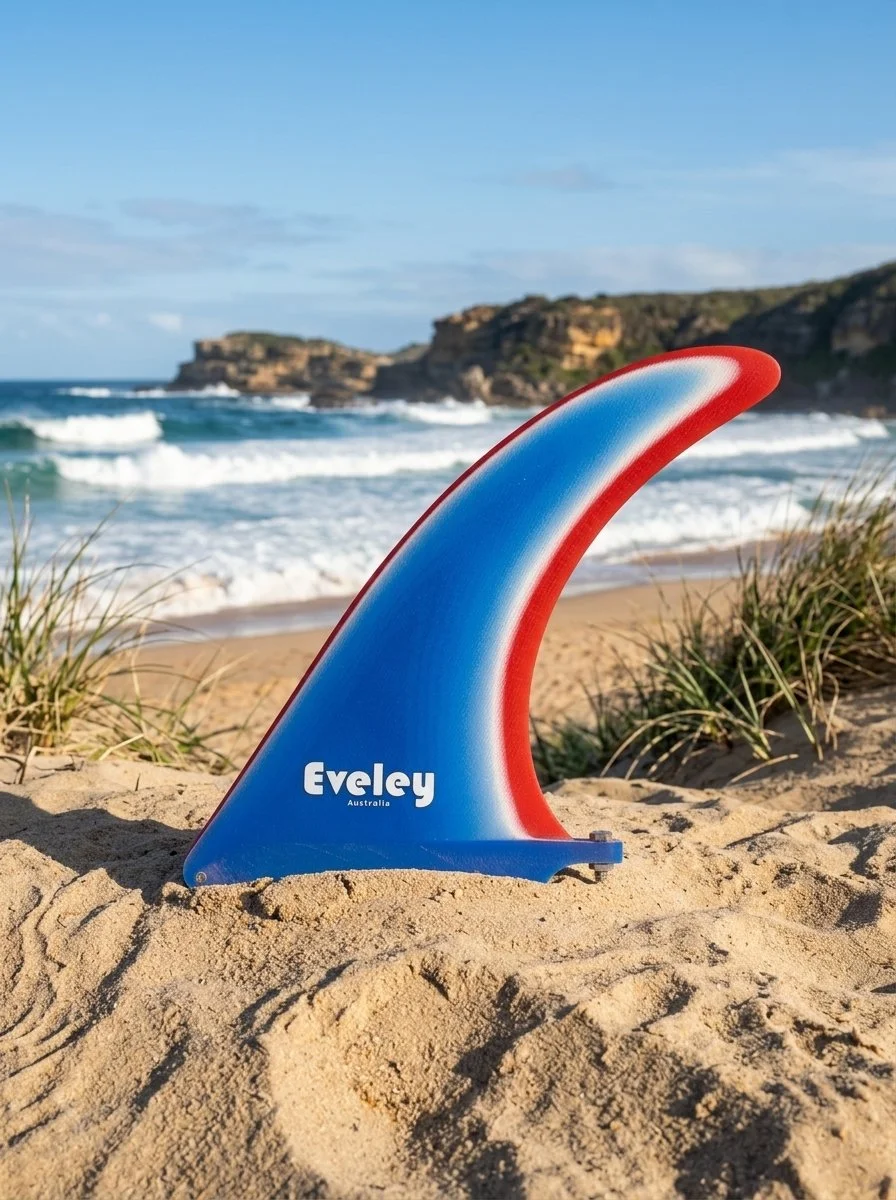
Longboard Fin Buyer Guide: Sizes, Shapes & Setup Explained
Learn how to choose the right longboard fin size, shape, and setup. Complete guide to single fins, 2+1 configurations, fin placement, and performance tuning.
New to surfboard fins? Start with the complete Surfboard Fin Guides overview.
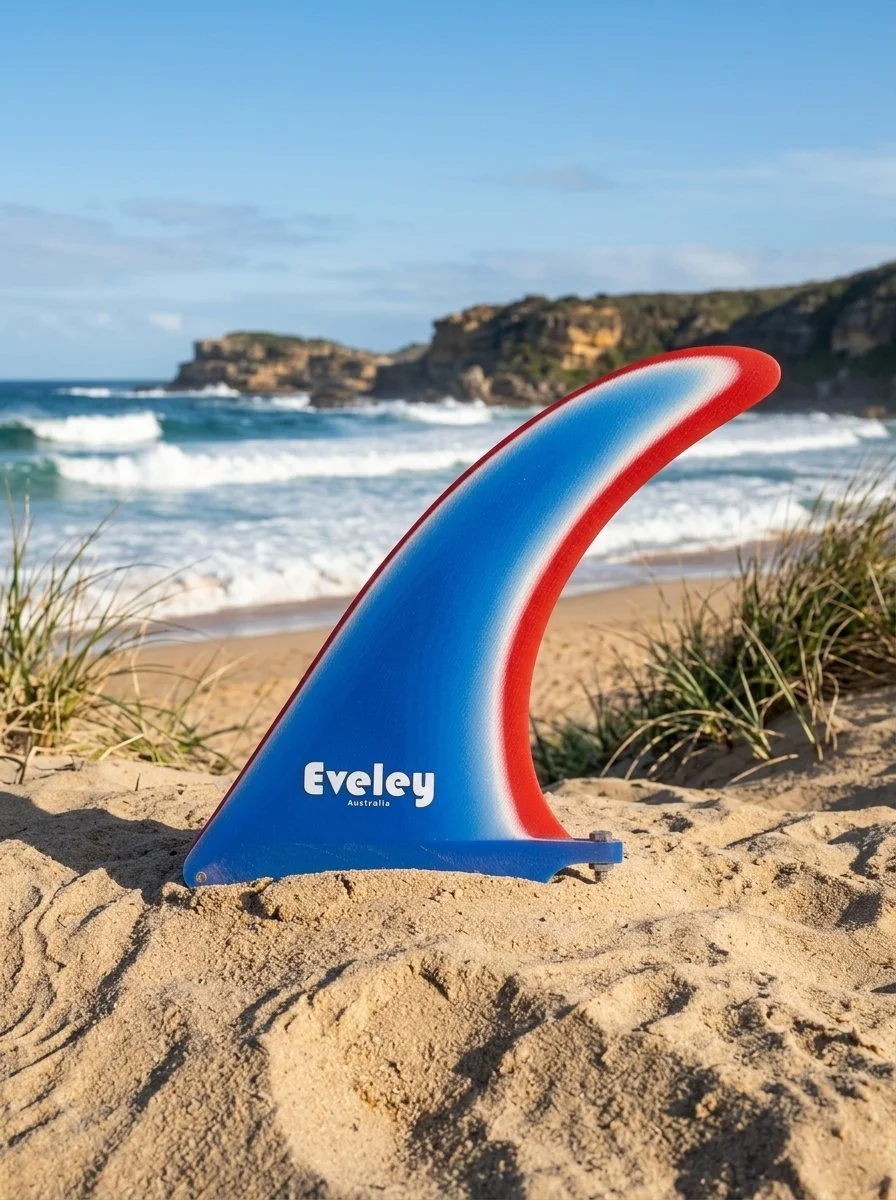
How longboard fin size affects performance
Fin depth is the primary driver of how a longboard feels in the water.
Larger fins (9"–11")
Typical for traditional logs and nose-riders.
Effect on performance:
Increased hold and directional stability
Smoother drawn-out turns
Stronger trim and nose-ride control
Reduced looseness in tight arcs
Best suited to:
Classic longboards
Slower, softer waves
Surfers prioritising glide and control
Traditional longboards typically perform best with larger center fins.
Examples: 10.35" Ultimate Center Fin – Black Pro Glass Longboard Fin
10.75" Funky Monkey Center Fin – Natural Pro Glass Longboard Fin
See the Classic Longboard Fin Guide
Medium fins (8"–9")
Common across versatile all-round longboards.
Effect on performance:
Balanced hold and manoeuvrability
Predictable turning radius
Good trim speed without excessive drag
Best suited to:
Everyday longboard surfing
Mixed wave conditions
Riders wanting one reliable setup
Smaller fins (6.5"–8")
Used in performance longboards and 2+1 setups.
Effect on performance:
Faster rail-to-rail response
Tighter turning arcs
Reduced drag and increased release
Less nose-ride stability
Best suited to:
Steeper or more powerful waves
Surfers using active footwork
High-performance longboard designs
For a complete overview of surfboard fin selection, read the Complete Surfboard Fin Buyer’s Guide
Longboard fin configuration has a greater effect on real-world performance than almost any other equipment choice.
While board length, rocker, and rail shape all influence glide and turning response, the fin setup ultimately determines how a longboard holds, pivots, trims, and accelerates across the wave face.
New to surfboard fins? Start with the complete Surfboard Fin Guides overview.
Choosing the correct longboard fin affects stability, turning response, trim speed, and nose-riding control.
This guide explains how fin size, template shape, and placement influence performance so surfers can select the right configuration for their board and wave conditions.
The focus is on three common longboard setups:
Single fin
2+1 configuration
Performance-oriented smaller center fins
Understanding these variables allows accurate fin selection without guesswork.
Recommended Longboard Fins
If you're choosing a longboard fin setup, these proven templates cover most boards and wave conditions:
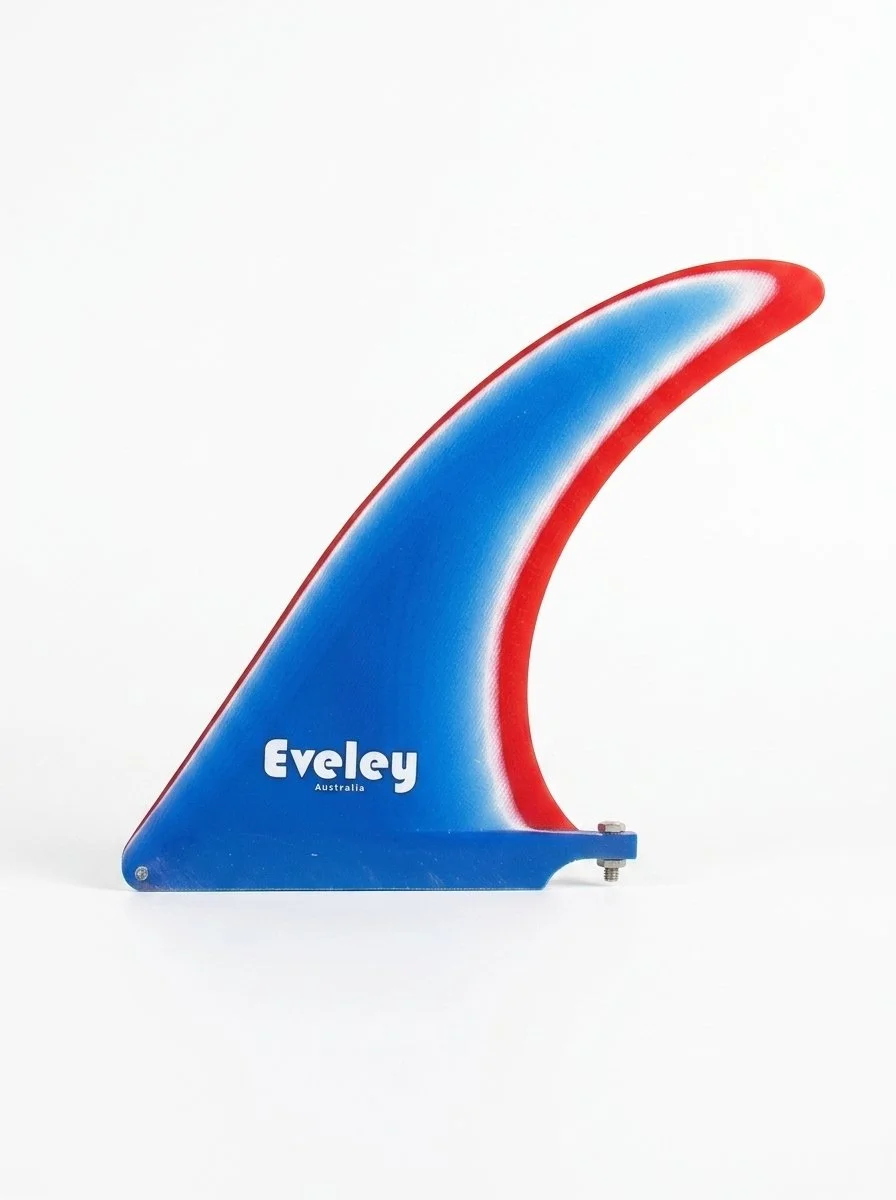
• All-round longboard fin: 10" International 4A Center Fin
Balanced hold, trim speed, and smooth carving turns.
• Performance longboard fin: 8" International 4A Center Fin
Faster turning and reduced drag for modern longboards.
• Small center fin for 2+1 setups: 4" Dynamic Center Fin
Ideal for performance longboards and steeper waves.
Selecting the correct longboard center fin size is one of the most important decisions a surfer can make when tuning board performance.
While template shape, flex, and placement all influence feel, fin size ultimately determines the balance between hold, glide, turning freedom and control.
A properly sized center fin allows the board to:
Trim smoothly without excess drag
Hold steady during noserides
Turn with predictable response
Maintain control across varying wave energy
An incorrect size, by contrast, can make even a well-designed longboard feel stiff, unstable, or unresponsive.
See our How To Choose the Right Longboard Fin Size guide for more information.
Why Fin Configuration Matters on Longboards
Unlike shortboards, longboards rely heavily on directional stability and drawn-out rail engagement.
Because of the board’s length and planing area:
Small fin changes create large performance differences
Placement within the sliding center fin box alters turning radius
Side fins can shift the board from classic glide to modern responsiveness
For this reason, experienced longboarders often treat fins as a primary tuning tool, not a fixed accessory.
The Single Fin Setup
The traditional longboard configuration uses one center fin only, positioned in a sliding center fin box.
Performance characteristics
A single fin delivers:
Maximum trim speed and glide
Smooth, drawn-out turns
Strong hold during noseriding
Minimal drag from side fins
Because water flows cleanly along the rail line without interruption, the board feels: fluid, stable, and classic underfoot.
Fin placement effects
Small adjustments inside the center box dramatically change behaviour:
Further back in the box
More hold and stability
Stronger noseriding control
Slower turning response
Further forward in the box
Looser turning feel
Faster rail-to-rail transitions
Reduced noseride hold
This adjustability is one of the defining advantages of traditional longboard design.
Popular Single Fins:
11" International 4A Center Fin – Pink on White Pro Glass
The 2+1 Longboard Setup
The 2+1 configuration combines:
A center fin in the sliding box. Example:7.25" Classic Center Fin in volan Pro Glass
Two smaller side fins near the rails. Example: 3.6" Classic Side Surfboard Fins – Mid Blue Pro Glass
This is the most versatile modern longboard arrangement.
Performance characteristics
Compared with a single fin, a 2+1 provides:
Increased turning response
Greater drive through bottom turns
More control in steeper waves
Reduced reliance on perfect trim
At the same time, it still preserves:
Reasonable glide
Noseriding capability
Smooth rail engagement
This balance explains why 2+1 setups dominate all-round longboarding.
7" International 4A Center Fin — Blue on White Pro Glass
Performance Longboard Fin Arrangements
Performance longboards push closer toward shortboard-style manoeuvrability while keeping longboard paddle power.
These boards often use:
Smaller center fins
More upright templates
Side fins with stronger base drive
Resulting feel
A performance fin arrangement produces:
Faster direction changes
Tighter top-turn arcs
Increased projection in critical sections
However, this comes with trade-offs:
Reduced trim glide
Less stable noseriding
Greater sensitivity to placement errors
Because of this, performance setups suit surfers prioritising:
turning and speed over traditional flow.
Choosing the Right Setup for Your Waves
Small, clean point waves
Best choice:
Single fin
Why:
Emphasises glide and trim
Maximises wave-face speed
Supports classic styling
10" International 4A Center Fin
(all-round longboard fin template)
10.5" Logger
(noseride longboard fin)
Beach breaks and steeper peaks
Best choice:
2+1 with responsive side fins
Why:
Added control in drops
Stronger bottom-turn drive
Better hold through sections
High-performance longboarding
Best choice:
Performance-oriented 2+1
Why:
Enables vertical surfing
Improves acceleration
Matches progressive technique
Center Fin Size Guidelines
Although templates vary, general sizing rules help narrow choices.
Logs and traditional noseriders
Larger center fins
Prioritise hold and trim
All-round longboards
Medium center fins
Balance turning and stability
Performance longboards
Smaller, more upright fins
Emphasise manoeuvrability
Correct sizing ensures the board feels: controlled rather than stiff, responsive rather than loose.
Fine-Tuning Through Placement
Even the correct fin can feel wrong if positioned poorly.
Practical adjustment method
Start with the fin mid-box
If the board feels stiff → move slightly forward
If the board slides or lacks hold → move slightly back
Adjust in 5–10 mm increments only
This measured approach prevents over-correction and reveals the board’s natural balance point.
Common Longboard Fin Mistakes
Oversizing the center fin
Creates:
Slow turning
Excess drag
Reduced responsiveness
Ignoring placement adjustments
Many surfers never move the fin, missing:
Significant performance gains
Better noseride control
Improved turning feel
Using performance fins in traditional logs
Leads to:
Instability
Poor trim
Weak noseriding
Matching template to board design is essential.
How Fin Materials Affect Feel
Most serious longboard surfers prefer solid fiberglass (Pro Glass) construction.
Reasons include:
Predictable flex pattern
Long-term durability
Smooth energy release through turns
Compared with lightweight composites, fiberglass fins provide:
consistent response across a wider range of wave energy.
Recommended Eveley Fins for This Setup
The following Eveley fin templates match the performance characteristics discussed in this guide. Each option is built from solid Pro Glass for consistent flex, durability, and real-world surf reliability.
10" California Dreaming Center Fin
Classic swept template designed for trim speed, glide, and stable noseriding.
→ Shop 10" California Dreaming Center Fin
8" International 4A Center Fin
Balanced all-round template blending smooth turning with dependable hold.
→ Shop 8" International 4A Center Fin
3.6" Classic Side Fins (Pair)
Supportive side bites adding control and drive to versatile 2+1 setups.
→ Shop 3.6" Classic Side Fins (Pair)
Longboard fin shapes explained
Beyond size, template shape strongly influences feel.
Pivot templates
Wide base, upright outline, fuller tip.
Characteristics:
Maximum hold while nose riding
Strong directional stability
Slower turning response
Common on traditional logs and dedicated nose-riders.
For dedicated nose-riding and maximum hold, pivot-style fins are ideal.
Example: 10" Pivot Center Fin
Raked templates
Swept-back outline with narrower tip.
Characteristics:
Smoother drawn-out turns
Increased drive through arcs
Reduced pivot compared with upright fins
Typical for all-round and performance longboards.
Flex-tip and performance templates
Refined foil and thinner tip sections.
Characteristics:
Responsive turning under load
Spring-like release exiting turns
Greater sensitivity to rider input
Used on modern high-performance longboards.
Single fin vs 2+1 longboard setups
Single fin configuration
Features:
One adjustable center fin in a sliding center fin box
Clean water flow and traditional feel
Maximum trim and glide
Best for:
Classic longboard surfing
Nose riding
Smooth, flowing style
2+1 configuration
Features:
Center fin plus two removable side fins
Increased hold and turning control
More responsive feel in steeper waves
Best for:
Performance longboards
Beach breaks and faster waves
Surfers blending glide with manoeuvres
Smaller center fins are commonly used in modern longboards and 2+1 setups.
Example performance center fin: 7.5" International 4A Center Fin
Fin placement in the sliding center fin box
Position changes performance significantly.
Fin forward
Looser turning
Easier pivot
Reduced hold while nose riding
Fin centered
Balanced control and manoeuvrability
Reliable everyday setting
Fin back
Maximum hold and trim stability
Stronger nose-ride control
Slower turning response
Small adjustments (5–10 mm) create noticeable differences.
Matching fins to wave conditions
Small, soft waves
Larger center fin
Pivot-oriented template
Fin placed slightly back
Purpose: maintain glide and stability.
Clean shoulder-high waves
Medium all-round fin
Moderate rake
Centred placement
Purpose: balanced trim and turning.
Steeper or faster waves
Smaller center fin or 2+1 setup
Raked or performance template
Slightly forward placement
Purpose: quicker response and control.
Common longboard fin selection mistakes
Choosing too small a fin for board size
Ignoring template shape and focusing only on depth
Forgetting to adjust fin position before changing fins
Mixing incompatible fin box systems
Correct sizing and placement usually solve performance issues without changing boards.
Mixing incompatible fin systems is a common mistake. If your board uses Futures side fins, read the Futures-compatible fins guide before choosing fins.
Related Longboard Fin Guides
Longboard Fins Guide Australia – Single, 2+1 & Performance Explained
Sliding Center Fin Box (US / Bahne Box) Guide
How to Choose the Right Fin Size
Surfboard Fin Compatibility Explained
FAQs
What size fin should a 9' longboard use?
Most 9' longboards work best with 8.5"–9.5" center fins depending on whether the design is traditional or performance-oriented.
Is a bigger fin always better for nose riding?
Generally yes, because increased area improves hold and stability, but placement and template also matter.
When should I use a 2+1 setup instead of a single fin?
Use 2+1 when surfing steeper, faster, or more powerful waves where added control and turning response are beneficial.
Does moving the center fin really make a difference?
Yes.
Even small placement changes noticeably alter turning radius, hold, and trim speed.
Longboard fin configuration is not merely a technical detail—it is the core control system shaping how the board trims, turns, and holds the wave.
Single fins deliver timeless glide and stability
2+1 setups provide the broadest real-world versatility
Performance arrangements unlock modern manoeuvrability
By selecting the correct template, size, and placement, surfers can transform the feel of a longboard without changing the board itself.
Understanding these relationships is the key to achieving:
true longboard flow, control, and speed across changing wave conditions.
→ Twin Fin vs Thruster — Speed vs Control
→ Quad vs Thruster — Which Is Faster?
Choosing the right longboard fin
Accurate fin choice depends on:
board length and rocker
rail shape and tail design
wave power and steepness
surfer weight, stance, and style
Starting with the correct size range, then refining template and placement, provides the most reliable results.
Popular Longboard Center Fins
10" International 4A Center Fin
The most versatile everyday longboard fin.
9.25" Classic Longboard Fin
Balanced trim and turning response.
4" Dynamic Center Fin
Ideal for performance 2+1 setups.
Explore longboard fins
Browse the range of:
single longboard center fins
2+1 compatible center fins
performance and pivot templates
to match fin behaviour precisely to board design and wave conditions.
Explore the full Eveley fin range to fine-tune your board’s feel, speed, and control across different wave conditions.
Futures™ is a registered trademark of Futures Fins. Eveley Surf is not affiliated with or endorsed by Futures Fins. All compatibility references to Futures Fins are for descriptive purposes only.
FCS™ and FCS II™ are registered trademarks of Surf Hardware International Pty Ltd. Eveley Surf is not affiliated with or endorsed by Surf Hardware International Pty Ltd. All compatibility references to FCS and FCS II are for descriptive purposes only.
Surfboard Fin Systems Explained: FCS vs Futures vs Longboard Fin Boxes
New to surfboard fins? Start with the complete Surfboard Fin Guides overview.
Choosing the correct surfboard fin system affects how a board feels in the water, how easily fins can be changed, and which replacement fins are compatible.
This guide explains the three main systems used today:
FCS dual-tab systems
Futures single-tab systems
Longboard sliding center fin box systems
Understanding the differences helps surfers select fins that match their board, wave conditions, and riding style.
The three main surfboard fin systems
FCS fin systems
FCS (Fin Control System) uses a two-tab base that inserts into plugs set into the surfboard.
Key characteristics:
Widely used across shortboards and performance boards
Large aftermarket range of compatible fins
Available in both screw-in and tool-free click-in versions
Easy fin changes for travel or varying wave conditions
FCS systems are common on production surfboards and are often chosen for convenience and availability of replacement fins.
Futures fin systems
Futures uses a single tab that slides into a molded fin box and is secured with a screw at the front.
Key characteristics:
Continuous base connection for strong load transfer
Known for direct drive and stability under power
Broad range of fiberglass and composite fin templates
Popular with performance shortboards, hybrids, and mid-lengths
Many surfers prefer Futures for its structural strength and consistent flex response.
Futures systems use a single-tab base design. For a complete breakdown of installation and compatibility, see the Futures-compatible fins guide.
Longboard sliding center fin box systems
Traditional longboards use a full-length sliding center fin box combined with either:
Single-fin setups, or
2+1 configurations with removable side fins.
Key characteristics:
Fin position can be adjusted forward or back
Enables tuning between pivot, hold, and glide
Compatible with a wide variety of longboard fin templates
Industry standard for performance and classic longboards
This system provides the widest tuning range of any fin setup.
Popular Center Fins:
11" International 4A Center Fin – Pink on White Pro Glass
FCS vs Futures: performance differences
Base connection and flex
FCS: two independent tabs create slightly more localized flex.
Futures: single continuous base distributes load more evenly.
Result:
FCS often feels looser and more reactive.
Futures often feels more planted and drive-oriented.
Installation and durability
FCS: quick to install; individual plugs can be replaced if damaged.
Futures: strong one-piece box; damage is less common but repair is larger if required.
Fin availability
Both systems have extensive fin ranges, including:
thrusters
quads
twins
stabilisers and trailers
Availability is effectively equal in modern surf retail.
When to choose each fin system
Choose FCS if you want:
Fast fin changes
Wide compatibility across many boards
A slightly looser turning feel
Choose Futures if you want:
Strong base connection and drive
Predictable flex under power
Stability in larger or steeper waves
Modern surfboards typically use either FCS or Futures fin systems. This Futures Compatible Fins Explained guide explains exactly how Futures fins fit and how to identify Futures boxes.
Choose a sliding center fin box if you ride:
Longboards or mid-length single fins
2+1 performance longboards
Boards requiring adjustable fin position
How fin systems affect board feel
Fin systems influence:
Drive – how strongly the board accelerates through turns
Hold – grip in steeper wave faces
Release – how easily the tail breaks free
Tuning range – ability to adjust behaviour with fin position or template
While template and size matter most, the connection system still shapes overall response.
Compatibility guide (quick reference)
Performance shortboards
Typically use FCS or Futures fin systems.
Hybrid / groveller boards
Usually fitted with FCS or Futures fin systems.
Twin fins
Commonly designed for FCS or Futures compatibility.
Quad setups
Most often use FCS or Futures fin systems.
Longboard single fins
Use a sliding center fin box.
Longboard 2+1 setups
Use a sliding center fin box for the center fin
plus side fin plugs for the two smaller fins.
Always match fin base type to the installed box system.
Frequently asked questions
Are FCS and Futures fins interchangeable?
No. Each system uses a different base design, so fins are not cross-compatible.
Which system is stronger?
Both are structurally reliable. Futures distributes load through a continuous base, while FCS allows localized flex and easier plug repair.
Do fin systems change speed?
Speed is influenced more by fin template, size, and foil than the box system itself, though base connection can subtly affect drive and stability.
Why do longboards use a sliding center fin box?
It allows precise fin placement, enabling tuning between pivot-style turning and drawn-out glide.
Choosing the right fins for your surfboard
Selecting fins should consider:
board design
wave size and power
surfer weight and style
desired balance of drive, hold, and release
Understanding the installed fin system is the first step before choosing template or material.
Explore surfboard fins
Browse the full range of:
performance shortboard fins
quad and twin sets
stabiliser and trailer fins
longboard single fins and 2+1 setups
to find a configuration matched to your board and conditions.
Futures™ is a registered trademark of Futures Fins. Eveley Surf is not affiliated with or endorsed by Futures Fins. All compatibility references to Futures Fins are for descriptive purposes only.
FCS™ and FCSII™ are registered trademarks of Surf Hardware International Pty Ltd. Eveley Surf is not affiliated with or endorsed by Surf Hardware International Pty Ltd. All compatibility references to FCS and FCSII are for descriptive purposes only.