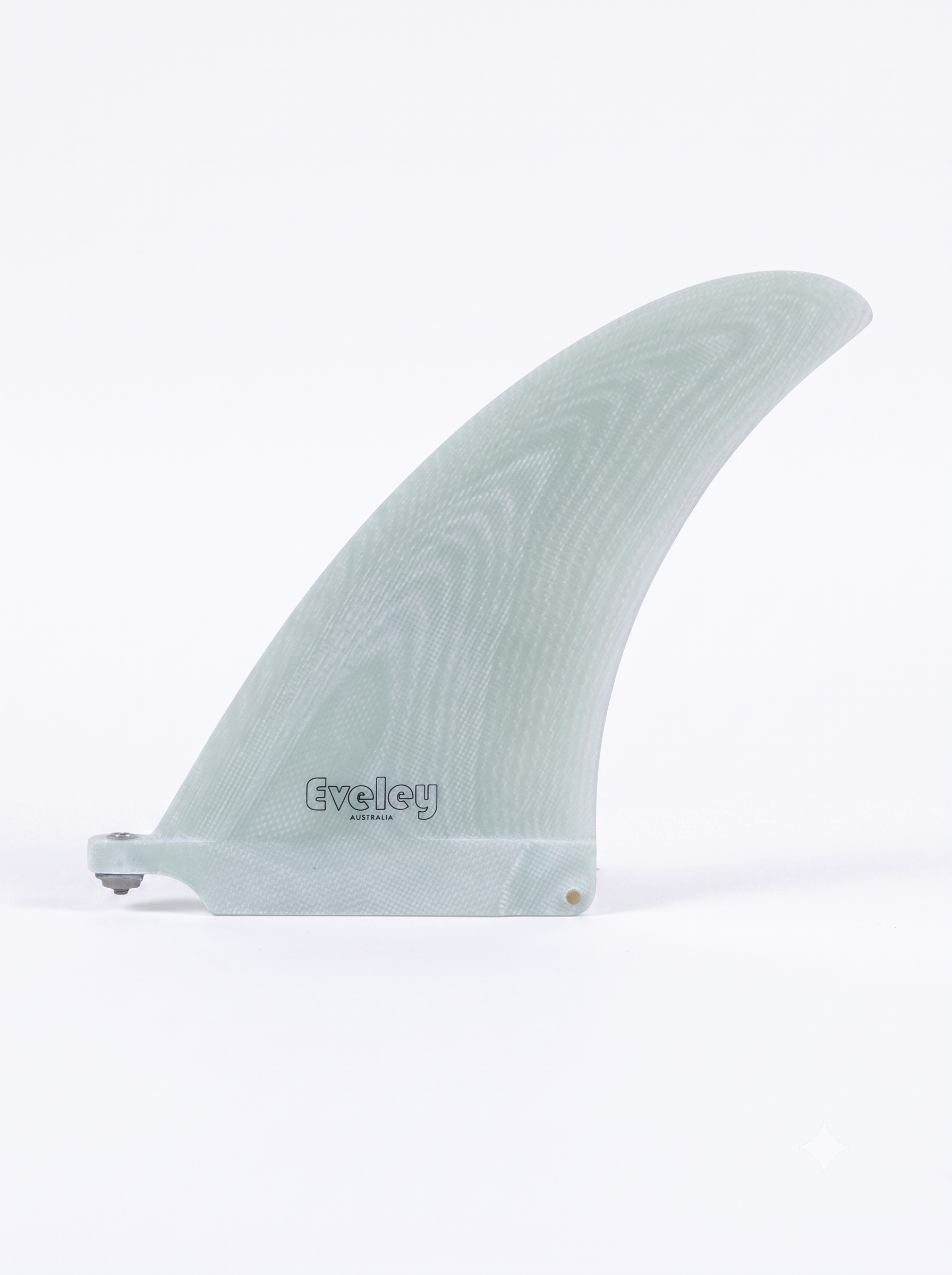
Bonzer Fins Explained – Speed, Drive and Control from a Unique Surfboard Fin Setup
Discover how Bonzer fins combine a larger centre fin with angled runner fins to generate speed, drive, hold and smooth rail-to-rail control.
Bonzer fins are among the most distinctive surfboard fins ever developed. Instead of relying on three similarly sized fins like a conventional thruster, a Bonzer uses a larger centre fin together with two or four smaller runner fins positioned closer to the rails.
The fins work with the board’s bottom contours to organise water flow through the tail. The result is a fast, connected surfing experience with powerful drive, dependable hold and smooth transitions between turns.
Whether you already own a Bonzer or are researching alternative surfboard fin setups, this guide explains how the system works, how Bonzer 3 and Bonzer 5 configurations differ and how to choose the right Bonzer fins for your board.
Fast Overview – Bonzer Fins at a Glance
Fin setup: One centre fin combined with either two or four smaller runner fins.
Performance: Designed to provide speed, drive and dependable hold.
Turning feel: Smooth, powerful and connected through turns.
Best waves: Works especially well in open-faced, lined-up and powerful waves.
Centre-fin sizes: Usually available in 6", 7" or 8", depending on the surfboard.
Runner-fin purpose: Directs water through the tail and provides additional support when the rail is engaged.
Suitable boards: Bonzer shortboards, eggs, mid-lengths and longboards.
Construction: Usually made from solid fibreglass or Volan Pro Glass.
Centre-fin fit: Designed for a sliding center fin box.
Runner-fin fit: The runners must match the fin boxes installed in your surfboard.
What Is a Bonzer Surfboard?
The Bonzer was developed by brothers Malcolm and Duncan Campbell in California in 1970. The original Bonzer 3 used a larger rear centre fin with two smaller side runners. The Bonzer 5 followed in late 1982, adding another pair of runners to the system. The Campbell Brothers describe these as major stages in the design’s continuing evolution.
Unlike a conventional fin setup, a true Bonzer is an integrated surfboard design. Its Bonzer fins, runner angles, rails and deep concaves are intended to work together rather than act as separate components.
This distinction matters. Simply adding Bonzer-style fins to an unrelated board will not necessarily create the same performance. The board’s bottom contours and runner placement help determine how water is directed through the tail.
How Do Bonzer Fins Work?
The primary purpose of the Bonzer fin system is to organise water flow efficiently.
As water passes beneath the board, its concaves channel that flow towards the tail. The angled runner fins then help direct the water down and back, while the larger centre fin provides directional stability and dependable hold.
This interaction can produce four noticeable performance characteristics:
1. Strong Down-the-Line Speed
Bonzers are known for carrying speed naturally once the board is engaged with the wave. The system is designed to manage water flow cleanly rather than relying only on fin area for control.
This makes the board feel fast without necessarily feeling nervous or unstable.
2. Powerful Drive Through Turns
When the surfer loads the rail, the runner fins and centre fin work together to resist sideways movement and redirect that pressure into forward projection.
Rather than losing speed through a carving turn, a well-matched Bonzer setup can accelerate out of it.
3. Reliable Hold
The centre fin creates stability while the angled runners support the engaged rail. This helps the board maintain its line through steeper sections and more committed turns.
Larger Bonzer centre fins generally provide more hold, while smaller centre fins create a looser and more responsive feel.
4. Smooth Rail-to-Rail Transitions
Bonzer runner fins are shorter and more steeply angled than conventional thruster side fins. Their position allows the board to transition between rails without the fins feeling excessively stiff or dominant.
The result is a connected but flowing sensation rather than the sharper pivot associated with many thruster setups.
Bonzer 3 vs Bonzer 5 Fin Setups
Both systems use a larger centre fin, but the number and arrangement of the runners create different performance characteristics.
How Different Fin Setups Feel
Bonzer 3: Uses one centre fin and two smaller runner fins. It delivers a smooth, flowing ride with plenty of speed and power.
Bonzer 5: Uses one centre fin and four smaller runner fins. It feels more responsive and connected, with added control through turns.
Thruster: Uses three similarly sized fins. It provides predictable turning, balanced control and a reliable feel in most conditions.
2+1 setup: Uses one larger centre fin with two conventional side fins. It offers the stability of a centre fin with extra control and drive from the side fins.
Bonzer 3
The Bonzer 3 has one centre fin and two relatively substantial runner fins.
This arrangement generally suits surfers looking for:
Strong projection through longer turns
A flowing, open-face surfing style
Less fin drag than a larger multi-fin cluster
A powerful connection between the rail and centre fin
Classic Bonzer performance
Bonzer 5
The Bonzer 5 uses one centre fin with four smaller runners—two on each side.
This additional fin cluster can provide:
Greater control through faster turns
More rail engagement
A secure feel in powerful surf
Smooth acceleration through direction changes
A more responsive and performance-oriented ride
Neither setup is automatically better. The correct choice depends on the board’s design and the runner configuration intended by its shaper.
What Do Bonzer Runner Fins Do?
Bonzer runner fins are not simply miniature side fins. Their low-profile templates, substantial cant and position beside the board’s concaves allow them to interact directly with water moving through the tail.
Their role is to:
Support the engaged rail
Direct water down and back
Add hold without requiring oversized side fins
Maintain speed through turns
Help the board transition smoothly from rail to rail
Work with the centre fin to reduce unwanted sliding
For a more detailed explanation, read the Eveley guide:
👉 Bonzer Runner Fins Explained – Why Bonzer Fins Feel So Fast
Recommended Bonzer Runner Fins
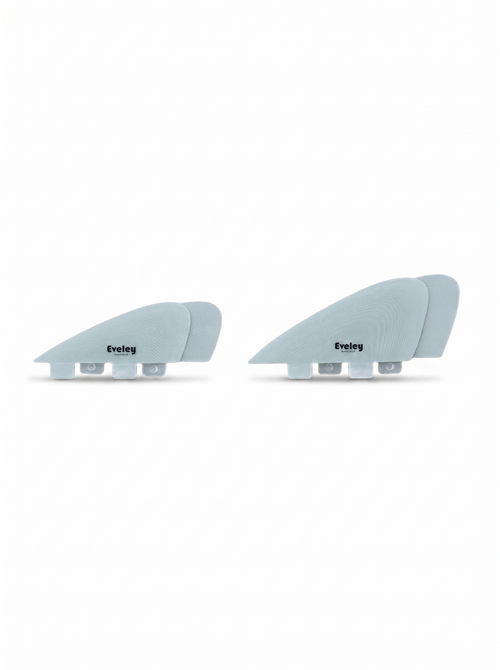
👉 2" / 2.75" Bonzer Runner Fins – Volan Pro Glass, FCS Compatible
This four-fin runner set combines smaller forward runners with larger rear runners. The Volan Pro Glass construction delivers a solid, predictable response while maintaining the traditional appearance associated with Bonzer surfboard fins.
Compatibility note: These runners are made for compatible FCS dual-tab fin boxes. They are not FCS II fins and should only be used in boards with the correct runner-fin boxes and placement.
Choosing the Right Bonzer Centre Fin Size
The centre fin is the primary stabilising fin in the Bonzer system. Its depth, base, rake and position influence how freely the board turns and how securely it holds.
6" Bonzer Centre Fin
A 6-inch centre fin provides a faster turning response with less resistance.
It is generally suited to:
Shorter Bonzer boards
Performance-oriented mid-lengths
Lighter surfers
Smaller or softer waves
Surfers wanting a looser feeling under the back foot
👉 6" Bonzer Center Surfboard Fin – Volan Pro Glass
7" Bonzer Centre Fin
A 7-inch Bonzer fin provides a versatile balance between manoeuvrability, drive and hold.
It is often the strongest starting point for:
Bonzer eggs
Mid-length surfboards
Medium-sized surfers
Everyday Australian wave conditions
Surfers wanting balanced Bonzer performance
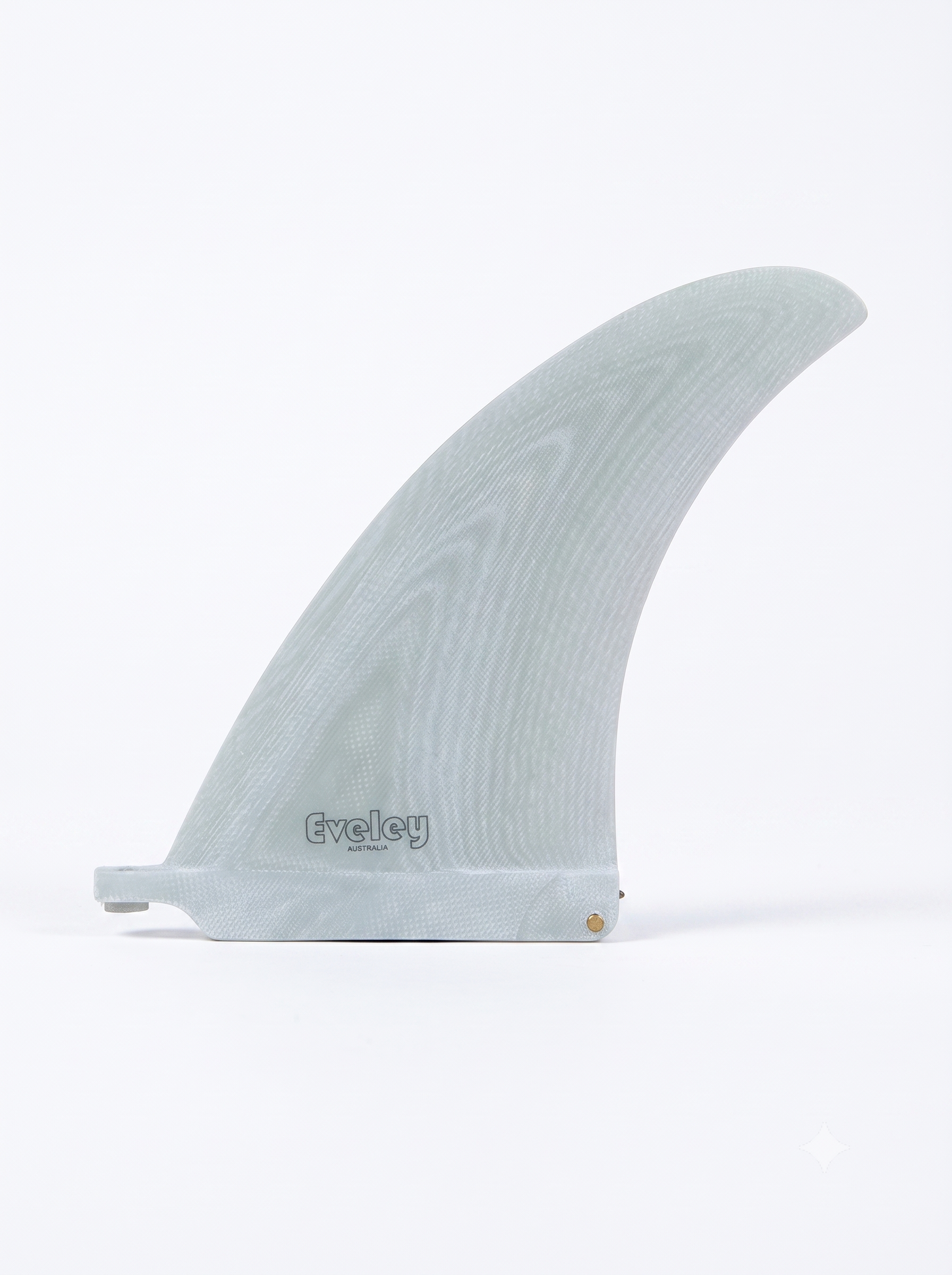
👉 7" Bonzer Center Fin – Volan Pro Glass
8" Bonzer Centre Fin
An 8-inch centre fin creates additional hold and stability.
It is generally better suited to:
Longer Bonzer boards
Bonzer longboards
Larger or more powerful surf
Heavier surfers
Surfers who prioritise control over looseness
👉 8" Bonzer Center Fin – Volan Pro Glass
These are starting points rather than rigid rules. The shaper’s recommendation, board length, tail width, concaves and runner placement should always guide the final decision.
For broader sizing advice, see:
👉 How to Choose the Right Fin Size for Your Board
Bonzer Centre-Fin Position
A Bonzer centre fin installed in a sliding center fin box can usually be moved forward or backward to adjust the board’s feel.
Move the Fin Forward
Moving the fin forward generally creates:
Easier turning
Faster release
A looser feeling
Less resistance during direction changes
Move the Fin Back
Moving the fin towards the tail generally creates:
More directional stability
Stronger hold
Longer, more drawn-out turns
Greater confidence in powerful waves
Start near the middle of the box and make small adjustments of approximately 5–10 mm. Changing one variable at a time makes it easier to feel what the board needs.
Why Volan Pro Glass Works Well in Bonzer Fins
Bonzer setups place considerable load through both the centre fin and the runner cluster. Solid fibreglass construction provides the dependable response needed to convert this pressure into drive.
Volan Pro Glass is particularly well matched to Bonzer surfboard fins because it offers:
Solid lateral stability
Smooth flex rather than abrupt rebound
Predictable hold at speed
Direct feedback through carving turns
Durability under repeated fin loading
A traditional translucent appearance
A fin that is excessively soft can make the board feel delayed or vague. A solid fibreglass Bonzer fin provides a cleaner connection between the surfer, board and wave.
Learn more about this construction:
👉 Volan Fiberglass Surfboard Fins Explained – Why Classic Fins Still Use It
What Waves Suit Bonzer Fins?
Bonzer fins are strongly associated with clean, powerful waves, but they are not limited to large surf.
Small and Soft Waves
A smaller centre fin can make the board easier to redirect and help reduce unnecessary resistance. The Bonzer’s natural drive can be valuable when the wave lacks push, provided the board has enough volume and area to generate speed.
Clean Shoulder-High Waves
This is where many Bonzer setups feel especially balanced. The surfer can draw longer lines, build speed through bottom turns and use the runner fins to hold the rail through open-face carves.
Steep or Powerful Waves
The combination of a larger centre fin, angled runners and controlled water flow can provide excellent security when the board is moving quickly.
A slightly larger or more rearward centre fin usually adds confidence in these conditions.
Hollow Waves
Bonzer fins can produce strong hold when the board is committed to the rail. Correct runner placement and compatible board contours are particularly important because the entire system must work together under speed and pressure.
Bonzer Fins vs most Thruster Fins
A thruster uses three similarly sized surfboard fins to deliver predictable turning, control and release. A Bonzer places more responsibility on the larger centre fin while its runners work with the board’s concaves.
Bonzer Fins Compared with Thruster Fins
Speed: Bonzer fins naturally create and maintain speed down the line. Thruster fins usually require more pumping and active turning to generate speed.
Turning: Bonzer fins produce smooth, flowing and drawn-out turns. Thruster fins feel more direct and allow tighter, sharper turns.
Hold: A Bonzer’s larger centre fin and smaller runner fins work together to provide hold. A thruster uses three similarly sized fins to create balanced control.
Rail engagement: Bonzer fins provide a deep, connected feeling when the rail is engaged. Thruster fins feel predictable and controlled through turns.
Board compatibility: Bonzer fins work best in a purpose-designed Bonzer surfboard. Thruster fins are designed for conventional performance surfboards.
Fin selection: A Bonzer requires a suitable centre fin and matching runner fins. A thruster uses a matched set of three fins.
A Bonzer is not simply a faster version of a thruster. It produces a different relationship between water flow, rail engagement and fin pressure.
For more on conventional three-fin performance, read:
👉 Thruster Surfboard Fins Explained
Common Bonzer Fin Setup Mistakes
Using Conventional Side Fins as Runners
Standard side fins usually have different depth, cant and foil characteristics. They may interfere with the water flow the Bonzer’s contours were designed to create.
Choosing the Centre Fin by Board Length Alone
Board length is only one factor. Tail width, rider weight, wave power, runner size and the board’s intended turning style also matter.
Installing an Oversized Centre Fin
More fin area can add hold, but excessive area may make the board feel stiff and difficult to release.
Moving the Centre Fin Too Far at Once
Large adjustments can completely change the board’s character. Small movements make it easier to identify the most effective position.
Assuming Bonzer Fins Transform Any Board into a Bonzer
The fins are only part of the design. Authentic Bonzer performance depends on the interaction between the fins, runner angles, rails and bottom contours.
Who Should Ride Bonzer Fins?
Bonzer fins are well suited to surfers who value:
Down-the-line speed
Smooth, committed rail turns
Strong projection out of carves
Hold without a conventional thruster feel
Alternative surfboard design
A balance of classic flow and modern performance
Purposeful tuning of centre-fin size and position
They may be less suitable for surfers who want extremely abrupt pivoting or who prefer the familiar neutral response of a conventional thruster.
Frequently Asked Questions
How many fins does a Bonzer have?
A Bonzer 3 has one centre fin and two runner fins. A Bonzer 5 has one centre fin and four runners.
Are Bonzer runner fins the same as side-bite fins?
No. Bonzer runners have specialised templates, angles and placement designed to interact with the board’s concaves. Conventional side bites are made for different fin setups.
Can Bonzer fins be used in any surfboard?
A Bonzer centre fin may physically fit another board with a sliding center fin box, but it will not turn that board into a true Bonzer. The complete design depends on the interaction between the fins and the board’s contours.
What size Bonzer centre fin should I choose?
A 6-inch fin generally produces a looser, more responsive ride. A 7-inch fin provides balanced everyday performance, while an 8-inch fin adds hold for longer boards, larger surfers or more powerful waves.
Do Bonzer fins work in small waves?
Yes. A properly designed Bonzer can work in smaller surf, particularly when paired with a suitable centre-fin size. The board’s volume, outline and bottom contours remain important.
Where should I position the centre fin?
Begin close to the middle of the sliding center fin box. Move it forward for easier turning or backward for greater stability and hold.
Do Bonzer runners fit FCS II fin boxes?
The Eveley Bonzer runner set is made for compatible FCS dual-tab boxes. FCS II and FCS dual-tab systems are different systems and should not be treated as interchangeable.
Bonzer Fin Summary
Bonzer fins consist of a larger centre fin supported by two or four angled runner fins. The system works with purpose-designed surfboard concaves to direct water through the tail, creating speed, drive, hold and smooth rail-to-rail control.
A Bonzer 3 offers a powerful, flowing feel, while a Bonzer 5 adds greater engagement and control. Six-inch centre fins favour manoeuvrability, seven-inch fins provide balanced performance and eight-inch fins increase hold and stability.
For the intended performance, Bonzer surfboard fins should be matched to the board’s runner configuration, bottom contours and sliding center fin box.
Explore the Eveley Surfboard Fin Knowledge Hub
Understanding Bonzer fins is one part of choosing the correct surfboard fin setup. Fin size, foil, template, material and compatibility all influence how a surfboard performs.
👉 Surfboard Fins Australia – Complete Buyer’s Guide
👉 Beginner’s Guide to Surfboard Fins Australia
👉 Best Fin Setup for Mid-Length Surfboards in Australia
Final Word
Bonzer fins remain one of surfing’s most original and effective fin systems. Their performance comes from more than an unusual number of fins: the centre fin, angled runners and bottom contours function as a complete water-flow system.
When correctly matched, Bonzer surfboard fins deliver the rare combination of natural speed, powerful drive, dependable hold and flowing rail-to-rail control.
For surfers who enjoy drawing clean lines and carrying speed through every stage of a turn, the Bonzer offers a riding experience that conventional surfboard fins cannot precisely reproduce.
FCS™ and FCSII™ are registered trademarks of Surf Hardware International Pty Ltd. Eveley Surf is not affiliated with or endorsed by Surf Hardware International Pty Ltd. All compatibility references to FCS and FCSII are for descriptive purposes only.