Longboard Fin Size Guide
How to Choose the Right Center Fin Size for Speed, Hold, and Noseriding
New to surfboard fins? Start with the complete Surfboard Fin Guides overview.
Choosing the correct fin size is one of the most important—and most misunderstood—decisions in longboard surfing.
The center fin controls stability, turning radius, trim speed, and noseriding hold, meaning the wrong size can make even a perfectly shaped board feel slow, stiff, or unstable.
This longboard fin size guide explains:
What each fin size actually does in the water
How rider weight and board length affect sizing
Which sizes suit noseriding, performance turning, or everyday trim
How to fine-tune placement for maximum control
By the end, you’ll know exactly which fin size to ride for your board and style.
Why Fin Size Matters More Than Most Surfers Think
1. The Fin Is the Board’s Anchor
On a single-fin longboard, the center fin provides:
Directional stability
Resistance to side-slip
Control without using rail pressure alone
Too small → the tail slides and feels loose.
Too large → the board feels stiff and hard to turn.
Correct sizing creates balanced glide and control.
2. Size Directly Changes Turning Radius
Fin depth determines how tightly a longboard can pivot:
Smaller fins → tighter turns, faster rail transitions
Larger fins → longer drawn-out arcs and stronger hold
This is why performance longboards ride smaller fins, while classic logs use larger pivot fins.
3. Noseriding Depends on Surface Area
When walking forward, the fin must hold the tail in the wave face.
More surface area equals:
Greater lift at slow speed
Reduced tail drift
Longer, more stable nose rides
This is the key physics behind large noserider fins.
Standard Longboard Fin Size Ranges
8"–8.5" Center Fins
Feel: Loose, fast, highly manoeuvrable
Best for:
Performance longboards
Smaller, lighter surfers
Beach-break surfing
Surfers who turn more than they nose ride
Trade-off:
Less hold for extended tip time.
9"–9.5" Center Fins
Feel: Balanced speed, turning, and stability
This is the most versatile longboard fin size range.
Best for:
Everyday longboarding
Mixed turning and trimming
Occasional noseriding
Mid-weight surfers
For many surfers, this is the ideal starting size.
9.5"–10" Center Fins
Feel: Strong hold with smooth, drawn-out turns
Best for:
Traditional longboards
Clean point waves
Frequent noseriding
Heavier boards and surfers
This range delivers the classic longboard glide most surfers expect.
10"+ Center Fins
Feel: Maximum stability and tail anchoring
Best for:
Dedicated noseriders
Heavy glassed logs
Steep, peeling waves
Surfers focused on long tip time
These fins sacrifice manoeuvrability for pure noseriding control.
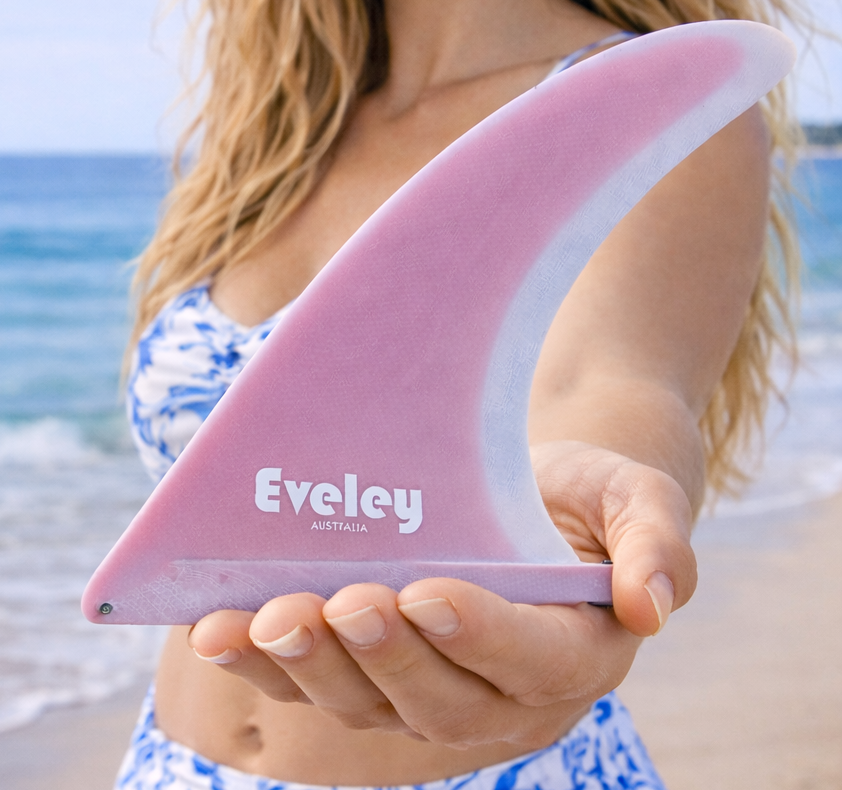
Example: 11" International 4A Center Fin – Pink on White Pro Glass
How Rider Weight Affects Fin Size
Lighter surfers (under ~70 kg)
Can ride smaller fins without losing hold
Typical range: 8.5"–9.5"
Mid-weight surfers (70–90 kg)
Most balanced range: 9"–10"
Heavier surfers (90 kg+)
Need larger fins for stability and lift
Typical range: 9.5"–10.5"+
Weight changes how deeply the rail and fin sit in the water—
so correct sizing restores hydrodynamic balance.
Matching Fin Size to Board Length
8'6"–9'0" boards
Usually suit 8.5"–9.25" fins
9'1"–9'6" boards
Typical range: 9"–9.75"
9'7"–10'+ logs
Often need 9.75"–10.5"+
for proper noseriding hold.
A simple rule:
Longer board = larger fin.
Fin Size by Surfing Style
Performance Turning
Choose:
8"–9" fin
Moderate rake
Forward box placement
Result → quicker response and tighter arcs.
Everyday Trim & Flow
Choose:
9"–9.5" fin
Balanced template
Neutral placement
Result → smooth glide with reliable control.
Dedicated Noseriding
Choose:
9.75"–10.5"+ pivot fin
Upright template
Back-of-box placement
Result → maximum tail hold and longer nose rides.
Fine-Tuning with Fin Placement
Moving the fin only 10–20 mm changes feel dramatically.
Back in the box
More hold
Better noseriding
Slower turning
Forward in the box
Easier turning
Looser feel
Reduced tip stability
Best method:
Start centered → adjust in small steps.
Common Longboard Fin Size Mistakes
Choosing too small for noseriding
→ causes tail slide and instability.
Choosing too large for performance boards
→ makes turning feel stiff and slow.
Ignoring surfer weight
→ leads to poor balance even with correct board length.
Recommended Eveley Fin Sizes by Goal
Performance feel: ~8.5"–9" center fin
All-round longboarding: ~9"–9.5" fin
Classic noseriding: ~9.75"–10.5"+ pivot or logger fin
These ranges match the real hydrodynamic demands of longboard surfing rather than guesswork.
FAQ – Longboard Fin Size Guide
What size fin should a beginner use?
Most beginners do best with a 9"–9.5" fin for balanced stability and turning.
Is a bigger fin always better for noseriding?
Generally yes—up to the point where turning becomes too stiff.
Most surfers find the sweet spot around 10".
Can I use the same fin in different waves?
Yes, but adjusting fin placement can fine-tune hold versus manoeuvrability.
Conclusion
The correct fin size transforms how a longboard feels under your feet.
Whether you want tight performance turns, smooth everyday trim, or long stable nose rides, the answer starts with choosing the right depth and surface area.
For most surfers:
9"–9.5" = best all-round size
10"+ = best for serious noseriding
Dial in size and placement, and your longboard will deliver the
speed, glide, and control classic surfing is built on.
Popular Center Fins
11" International 4A Center Fin – Blue on White Pro Glass